
Global Spices Market Set to Reach US$ 54.75 Billion by 2033 as Consumers Embrace Healthier and More Flavorful Foods
Rising Demand for Natural Ingredients, Ethnic Cuisine, and Functional Foods Continues to Transform the Worldwide Spice Industry

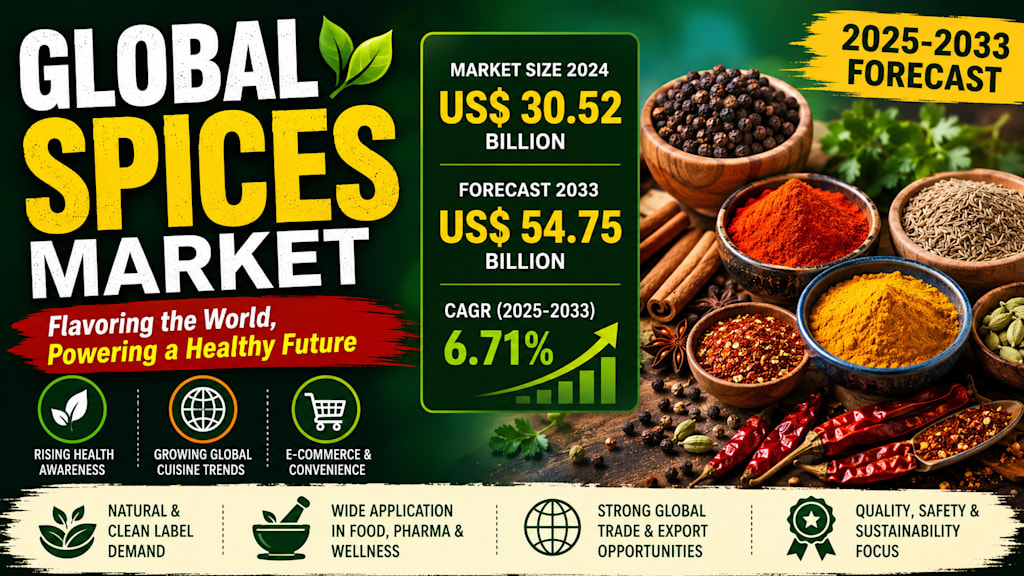
The global spices industry is experiencing a remarkable transformation as consumers around the world increasingly seek healthier diets, authentic culinary experiences, and natural food ingredients. Once considered simple flavor enhancers, spices have evolved into essential components of modern food innovation, wellness products, pharmaceuticals, and functional nutrition.
According to Renub Research, the Global Spices Market was valued at US$ 30.52 billion in 2024 and is expected to reach US$ 54.75 billion by 2033, growing at a CAGR of 6.71% during 2025–2033. This growth reflects changing consumer preferences, expanding global trade, and increasing awareness of the health benefits associated with spices.
As globalization introduces new flavors across borders and health-conscious consumers look for natural alternatives to synthetic additives, spices are becoming increasingly important in both household kitchens and commercial food production.
Understanding the Expanding Role of Spices in Modern Consumption
Spices have been used for centuries in cultures worldwide. Derived from seeds, bark, roots, fruits, and flowers, spices such as turmeric, cinnamon, black pepper, cumin, cardamom, ginger, and cloves play an important role in enhancing flavor, aroma, and food preservation.
Today, their value extends far beyond culinary applications. Scientific research highlighting antioxidant, antimicrobial, and anti-inflammatory properties has elevated spices into the wellness and preventive healthcare space. Consumers increasingly associate spices with immunity support, digestive health, and overall well-being.
This shift is creating significant opportunities for manufacturers, exporters, retailers, and foodservice providers globally.
Health-Conscious Consumers Drive Market Growth
One of the strongest drivers behind the global spices market is the growing focus on health and wellness.
Consumers are actively reducing their intake of artificial preservatives, synthetic ingredients, and highly processed foods. In response, spices are gaining popularity as natural flavoring agents that deliver both taste and health benefits.
Turmeric, known for its curcumin content, has become a staple ingredient in functional beverages and supplements. Ginger is widely recognized for digestive and immune-support benefits. Cinnamon continues to attract attention for its potential role in blood sugar management, while garlic remains popular for cardiovascular health support.
The increasing popularity of organic foods, clean-label products, and natural nutrition solutions is expected to sustain long-term demand for spices across multiple industries.
Globalization of Food Culture Creates New Opportunities
The modern consumer is more adventurous than ever before when it comes to food choices.
International travel, social media, streaming content, food influencers, and cooking shows have introduced consumers to cuisines from every corner of the world. As a result, demand for authentic spice blends and regional flavors continues to increase.
Indian curries, Mexican salsas, Middle Eastern seasoning blends, Thai dishes, and Korean recipes are becoming mainstream across many countries. This growing appreciation for multicultural cuisine directly boosts spice consumption.
Restaurants, food chains, meal-kit providers, and packaged food manufacturers are constantly introducing innovative flavor profiles to satisfy evolving consumer tastes. The result is a rapidly expanding market for both traditional and exotic spices.
E-Commerce Revolutionizing Spice Distribution
Digital commerce has significantly changed the way consumers purchase spices.
Online marketplaces now offer access to thousands of spice varieties from different regions of the world. Consumers can easily compare products, review sourcing information, and purchase premium or organic spices directly from producers.
The rise of e-commerce has also created opportunities for small and medium-sized spice manufacturers to reach global customers without requiring extensive retail networks.
Branded packaged spices featuring transparent labeling, quality certifications, and convenient packaging formats are increasingly preferred by consumers seeking reliability and consistency.
As online grocery shopping continues to expand worldwide, spice companies are expected to invest heavily in digital marketing, direct-to-consumer channels, and personalized product offerings.
Challenges Facing the Global Spices Industry
Despite strong growth prospects, the spices market faces several significant challenges.
Raw Material Price Volatility
Spices are heavily dependent on agricultural production. Weather disruptions, climate change, droughts, floods, and pest infestations can severely impact yields.
Products such as black pepper, cardamom, saffron, and chili peppers often experience price fluctuations due to supply shortages and changing harvest conditions.
These uncertainties create challenges for processors, distributors, and retailers attempting to maintain stable pricing and supply chains.
Quality Control and Adulteration Concerns
Adulteration remains a major issue across certain segments of the spice industry.
Low-quality fillers, artificial colors, and contamination concerns can negatively impact consumer trust and brand reputation. Increasing regulatory scrutiny and consumer awareness are pushing manufacturers to invest in traceability systems, quality certifications, and food safety standards.
Companies that prioritize transparency and product authenticity are expected to gain a competitive advantage in the coming years.
Black Pepper Remains a Global Favorite
Black pepper continues to hold a dominant position in the global spice trade.
Often referred to as the "King of Spices," black pepper enjoys widespread usage across households, restaurants, and food manufacturing facilities. Its strong flavor profile and potential digestive benefits make it one of the most versatile spices globally.
Major producing countries such as India, Vietnam, and Indonesia continue to play a critical role in meeting worldwide demand.
The growing popularity of organic and sustainably sourced pepper products is creating new premium market opportunities for producers.
Ginger Market Benefits from Wellness Trends
Ginger has emerged as one of the fastest-growing spice categories due to its dual role as both a culinary ingredient and a wellness product.
Consumers increasingly use ginger in teas, health drinks, herbal remedies, dietary supplements, and functional foods. The surge in immune-health awareness following the COVID-19 pandemic further strengthened demand.
Its application across food, beverage, pharmaceutical, and nutraceutical industries positions ginger as a highly attractive segment within the broader spices market.
Growing Appetite for Chili-Based Products
The global love for spicy foods continues to support strong demand for chili products.
From Mexican cuisine and Indian curries to Korean and Thai dishes, chili peppers play a central role in many culinary traditions.
Beyond food applications, capsaicin—the active compound found in chili peppers—is widely used in pharmaceutical products and pain-relief formulations.
Increasing consumer interest in bold flavors and innovative food experiences is expected to drive long-term growth in the chili segment.
Meat and Poultry Seasoning Segment Expands Rapidly
The growing popularity of barbecue culture, grilled foods, and ready-to-cook meals has created substantial demand for meat and poultry spice blends.
Seasonings such as Cajun blends, steak rubs, tandoori masala, and barbecue mixes are increasingly used by both consumers and foodservice operators.
As protein consumption rises globally, spice manufacturers continue developing specialized blends designed to enhance flavor while meeting regional taste preferences.
The segment remains particularly strong in North America and Europe, where convenience foods and premium meat products continue to gain popularity.
Powdered Spices Dominate Consumer Demand
Powdered spices represent one of the most widely consumed forms of spices globally.
Products such as turmeric powder, cumin powder, paprika, coriander powder, and chili powder offer convenience, ease of use, and longer shelf life compared to whole spices.
The growth of packaged foods and home cooking trends has further strengthened demand for powdered spice products.
Manufacturers are increasingly focusing on organic, additive-free, and clean-label spice powders to appeal to health-conscious consumers.
Whole Spices Gain Popularity Among Premium Buyers
While powdered spices dominate mainstream consumption, whole spices continue to attract premium buyers seeking authenticity and freshness.
Many consumers prefer grinding whole spices at home to maximize aroma and flavor. Whole spices are also widely used by restaurants, professional chefs, and industrial spice blenders.
Products such as cinnamon sticks, cardamom pods, cloves, and star anise remain particularly popular in traditional cooking markets.
Growing interest in artisanal cooking and gourmet food experiences is expected to support future growth in this segment.
Regional Market Insights
United States
The United States remains one of the world's largest spice-consuming markets. Growing multicultural demographics and increasing interest in international cuisine continue to drive demand.
Consumers are increasingly purchasing organic, non-GMO, and premium spice products. Innovation in seasoning blends and sodium-reduction solutions is creating additional growth opportunities for industry participants.
France
France represents an important market characterized by gourmet cuisine and premium food culture. Demand for imported spices, organic products, and fair-trade ingredients continues to rise among French consumers seeking quality and authenticity.
India
India remains both the largest producer and one of the largest consumers of spices globally. Deep-rooted culinary traditions and strong export activity continue to support market expansion.
Government initiatives focused on productivity improvements, quality enhancement, sustainability, and export promotion are strengthening India's leadership position in the global spice industry.
Saudi Arabia
Saudi Arabia's spice market benefits from strong demand for traditional dishes featuring rich seasoning profiles. Increasing urbanization, premiumization, and demand for convenient spice blends continue to create opportunities for global exporters.
10 Recent Developments Among Leading Spice Companies
1. Ajinomoto Co., Inc.
Expanded focus on food seasonings and flavor-enhancement technologies to support growing demand for natural taste solutions.
2. ARIAKE JAPAN Co., Ltd.
Strengthened investments in premium seasoning and flavor extraction technologies for foodservice applications.
3. Associated British Foods plc
Continued expansion of ingredient and food product portfolios to address changing consumer preferences globally.
4. Baria Pepper Co., Ltd.
Enhanced sustainable pepper cultivation and export capabilities to serve international markets more efficiently.
5. Döhler
Increased innovation in natural food ingredients and botanical extracts to support clean-label product development.
6. EVEREST Food Products Pvt. Ltd.
Expanded spice blend offerings and strengthened distribution channels across domestic and export markets.
7. The Kraft Heinz Company
Introduced new seasoning innovations designed to meet demand for bold and international flavors.
8. Kerry Group plc
Invested in advanced flavor technologies and sustainable ingredient solutions for food manufacturers.
9. McCormick & Company
Expanded product innovation initiatives focused on global flavors, health-conscious seasonings, and premium spice blends.
10. Olam International
Strengthened sustainable sourcing programs and traceability initiatives across its agricultural supply chain.
Final Thoughts
The global spices market is entering a dynamic phase of growth fueled by evolving consumer lifestyles, rising health awareness, and increasing demand for authentic international cuisine. As spices continue to move beyond traditional culinary applications into wellness, pharmaceuticals, and functional nutrition, opportunities for industry participants are expanding significantly.
Companies that prioritize quality assurance, sustainable sourcing, transparency, and product innovation will be best positioned to capitalize on future growth. With the market projected to grow from US$ 30.52 billion in 2024 to US$ 54.75 billion by 2033, the spice industry is poised to remain one of the most vibrant and influential segments within the global food and beverage ecosystem.
About the Creator
Enjoyed the story? Support the Creator.
Subscribe for free to receive all their stories in your feed.
Comments
There are no comments for this story
Be the first to respond and start the conversation.