
Europe Organic Food Market Booms as Consumers Shift Toward Healthier, Sustainable, and Clean-Label Lifestyles
Rising awareness around health, ethical consumption, and environmentally friendly farming is accelerating Europe’s organic food industry across retail and online channels.

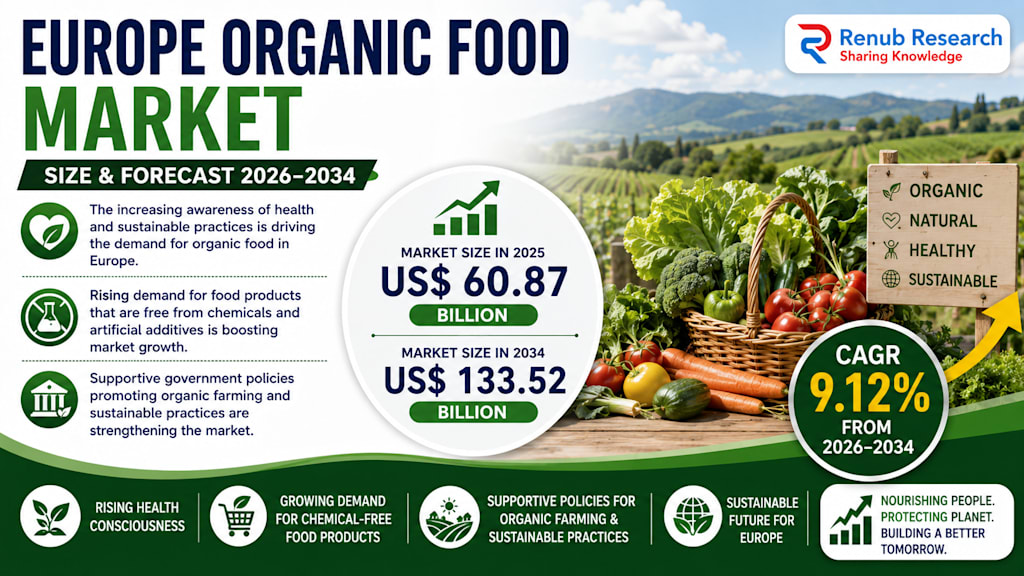
Europe’s organic food market is entering a powerful expansion phase as consumers increasingly prioritize health, sustainability, and clean-label nutrition. According to Renub Research, the Europe organic food market was valued at US$ 60.87 billion in 2025 and is expected to reach US$ 133.52 billion by 2034, growing at a CAGR of 9.12% between 2026 and 2034. Growing demand for chemical-free food products, rising environmental awareness, and strong government support for organic farming are among the primary factors driving this remarkable growth across the region.
Market Overview
Organic food refers to food products produced through farming methods that avoid synthetic pesticides, fertilizers, genetically modified organisms (GMOs), and artificial additives. Organic farming emphasizes environmentally sustainable techniques such as crop rotation, biological pest control, and composting to preserve soil fertility and biodiversity. Organic food products include fruits, vegetables, dairy products, cereals, meat, bakery items, beverages, and packaged foods.
Across Europe, organic food consumption has increased rapidly as consumers become more conscious about long-term health, food safety, and ethical consumption. Climate change concerns, biodiversity loss, and environmental sustainability are also influencing purchasing decisions. Governments and regulatory authorities throughout Europe continue to actively promote organic farming practices through subsidies, policy support, and awareness campaigns.
Rising Health Awareness Driving Consumer Demand
One of the strongest growth drivers for the Europe organic food market is increasing health awareness among consumers. European consumers are becoming increasingly cautious about the potential health risks associated with synthetic chemicals, preservatives, and pesticides commonly used in conventional food production. This has accelerated demand for natural, clean-label, and minimally processed food products.
Organic foods are widely perceived as healthier alternatives because they are free from artificial additives and harmful chemicals. The trend is especially strong among younger consumers, families with children, and urban populations that prioritize preventive healthcare and wellness-focused lifestyles. The increasing prevalence of lifestyle-related diseases has further encouraged consumers to adopt healthier dietary habits centered around organic foods.
The report highlights that approximately 70% of consumers across Europe are focusing more on organic products such as fruits, vegetables, and dairy items. Online sales of organic food products have also risen significantly post-pandemic, growing by around 35% due to changing shopping behaviors and digital convenience.
Government Support Strengthening Organic Farming
Government support and regulatory frameworks continue to play a major role in the growth of Europe’s organic food industry. European countries provide financial assistance, subsidies, and technical support to farmers transitioning toward organic farming practices. Stringent certification standards and labeling regulations also help strengthen consumer trust in organic products.
Organic farmland across Europe reached approximately 19.6 million hectares, while organic agricultural land represented 11.1% of total farmland within the European Union. Countries such as Spain, France, and Italy continue to lead in organic agricultural acreage. Liechtenstein reportedly recorded the world’s highest organic land share at 43.5% in 2024.
The European Union’s sustainability initiatives and organic farming targets are creating a favorable institutional environment for long-term market expansion. Public awareness campaigns and transparency through certifications such as the EU Organic Logo are also helping consumers make informed purchasing decisions.
Sustainability and Ethical Consumption Trends
Sustainability has become a defining factor in Europe’s organic food market. Consumers are increasingly supporting brands that align with ethical sourcing, environmentally friendly farming, and biodiversity protection goals. Organic farming practices are viewed as more sustainable because they reduce chemical use and support soil conservation.
In December 2024, IFOAM Organics Europe renewed its partnership with Diversified Communications to strengthen support for the organic market and organize trade events focused on expanding opportunities within the sector.
The shift toward sustainable lifestyles is also influencing food purchasing patterns, with consumers increasingly preferring products that demonstrate environmental responsibility and transparent supply chains. This trend is expected to remain a major market driver over the coming decade.
High Costs and Supply Challenges Remain Obstacles
Despite rapid growth, the Europe organic food market still faces several important challenges. Organic farming remains labor-intensive and often produces lower yields compared to conventional farming methods. These factors contribute to significantly higher production costs, which are ultimately reflected in premium retail pricing.
The certification process for organic farming also presents challenges. Farmers transitioning from conventional to organic agriculture must follow strict guidelines for extended periods before products can officially be marketed as organic. This lengthy certification process creates financial uncertainty and discourages some producers from entering the organic market.
As consumer demand continues to rise rapidly, maintaining sufficient organic food supply while ensuring regulatory compliance will remain a key challenge for the industry.
Organic Fruits and Vegetables Leading Product Demand
Organic fruits and vegetables represent one of the largest and fastest-growing segments in Europe’s organic food industry. Rising health consciousness, clean eating trends, and plant-based dietary preferences are driving strong consumer demand for chemical-free produce.
Governments across Europe are increasingly supporting sustainable agriculture and organic farming practices, helping expand production capacity within this segment. Consumers are actively seeking fresh produce with minimal environmental impact, which continues to strengthen the market for organic fruits and vegetables.
Organic Meat Market Expanding with Ethical Consumption
The European organic meat market is growing steadily because consumers increasingly prioritize ethical sourcing, food safety, and animal welfare standards. Organic meat products are produced without synthetic hormones, antibiotics, or genetically engineered feed, helping strengthen consumer confidence.
Premiumization trends are particularly important in this segment, as consumers are willing to pay higher prices for transparency, sustainability, and superior product quality. Retail chains and supermarkets are expanding organic meat offerings to meet this growing demand.
Organic Bakery and Processed Foods Gaining Popularity
Organic bread, bakery products, and processed foods are also witnessing strong growth across Europe. Consumers increasingly prefer baked products free from preservatives, artificial ingredients, and genetically modified components. Whole grain, gluten-free, and vegan organic bakery products are becoming especially popular.
The combination of traditional European bakery culture with modern health-focused consumption trends is encouraging food manufacturers to develop innovative organic product offerings. Supermarkets and specialty stores continue expanding shelf space dedicated to organic bakery products.
Convenience Stores Supporting Organic Product Accessibility
Convenience stores are playing an increasingly important role in the distribution of organic foods across Europe. Busy urban lifestyles are encouraging consumers to purchase ready-to-eat organic meals, snacks, beverages, and packaged products through easily accessible retail channels.
Retailers are expanding organic product assortments to accommodate changing consumer preferences. Packaging innovations and improved supply chain efficiency are also helping increase accessibility and convenience for organic food shoppers.
Online Retail Transforming the Organic Food Industry
Online retail has emerged as one of the fastest-growing distribution channels within Europe’s organic food market. Consumers increasingly prefer digital grocery shopping because it offers convenience, product variety, detailed product information, and home delivery services.
The COVID-19 pandemic accelerated online grocery adoption significantly, and the trend continues to reshape the organic food industry. Improvements in cold chain logistics and digital retail platforms are helping online retailers deliver fresh organic products more efficiently across Europe.
United Kingdom Organic Food Market
The United Kingdom organic food market continues to grow steadily due to rising awareness regarding health, sustainability, and ethical consumption. Consumers increasingly prefer products free from chemicals, additives, and GMOs. Organic fruits, vegetables, dairy products, and packaged foods remain highly popular across the country.
In January 2026, Once Upon a Farm announced plans to expand into the UK market through selected Whole Foods Market locations in London, marking its broader European expansion strategy.
Belgium Organic Food Market
Belgium’s organic food market is benefiting from increasing environmental awareness, demand for local products, and rising popularity of vegetarian and sustainable lifestyles. Retailers are expanding organic product offerings to meet consumer demand.
In June 2025, Colruyt Group reaffirmed its leadership in Belgium’s organic food segment through Bio-Planet and an expanding assortment of more than 500 organic products.
Netherlands Organic Food Market
The Netherlands organic food market is growing rapidly because consumers strongly support sustainable agriculture and environmentally friendly food production. Online grocery expansion and efficient agricultural practices are strengthening market growth.
The launch of BioMarktMeter, developed under the Netherlands’ Action Plan for Growth in Organic Production and Consumption 2022–2030, aims to monitor organic market development and support the country’s target of achieving 15% organic farmland by 2030.
Germany Organic Food Market
Germany remains one of Europe’s largest and most advanced organic food markets due to strong consumer demand, strict regulatory standards, and high trust in organic certification systems. Organic food products are widely available across supermarkets, specialty stores, and online platforms.
Germany’s Federal Ministry of Food and Agriculture launched its “Organic Strategy 2030,” aiming to increase organic agricultural land to 30% by 2030 through policy support and supply chain transformation initiatives.
Recent Company and Industry Developments
IFOAM Organics Europe renewed its partnership with Diversified Communications in December 2024 to strengthen support for Europe’s organic market.
Once Upon a Farm announced UK market expansion in January 2026 through selected Whole Foods Market locations in London.
Colruyt Group expanded its leadership position in Belgium’s organic segment in June 2025 through Bio-Planet and an enlarged organic product portfolio.
The Netherlands launched BioMarktMeter to monitor organic food market development under its 2022–2030 organic growth strategy.
Germany launched “Organic Strategy 2030” targeting 30% organic farmland by 2030.
Danone is expected to benefit from growing demand for clean-label dairy and organic nutrition products across Europe. This is an editorial market inference.
General Mills is likely to expand its organic product footprint as demand for natural packaged foods continues rising. This is an editorial market inference.
The Hain Celestial Group could benefit from increased demand for health-focused organic snacks and packaged foods across urban markets. This is an editorial market inference.
United Natural Foods Inc. may strengthen its European distribution capabilities as online retail and convenience channels expand. This is an editorial market inference.
Dole PLC is expected to gain from strong demand for organic fruits and vegetables across Europe’s health-conscious consumer base. This is an editorial market inference.
Final Thoughts
Europe’s organic food market is becoming one of the most dynamic segments within the global food industry. Consumers are increasingly prioritizing health, sustainability, transparency, and ethical sourcing in their purchasing decisions. Government support, online retail growth, and rising demand for clean-label products continue to strengthen long-term market potential.
Although high production costs and certification complexities remain challenges, the long-term outlook for Europe’s organic food sector remains highly positive. Companies capable of combining sustainability, affordability, transparency, and product innovation are expected to emerge as major leaders in the future of Europe’s evolving food economy.
About the Creator
Enjoyed the story? Support the Creator.
Subscribe for free to receive all their stories in your feed.
Comments
There are no comments for this story
Be the first to respond and start the conversation.