
Confectionery Market to Reach US$ 263.38 Billion by 2033 as Premium Treats, Healthier Sweets, and Digital Retail Reshape Global Demand
From artisan chocolates and sugar-free candies to booming online sales channels, the global confectionery industry is evolving to satisfy changing consumer tastes while balancing health, sustainability, and innovation.

The global confectionery industry has long occupied a special place in consumer culture. Whether it is a chocolate bar purchased on impulse, candies gifted during festivals, or premium artisanal sweets enjoyed as an indulgence, confectionery products continue to be deeply integrated into everyday life around the world.
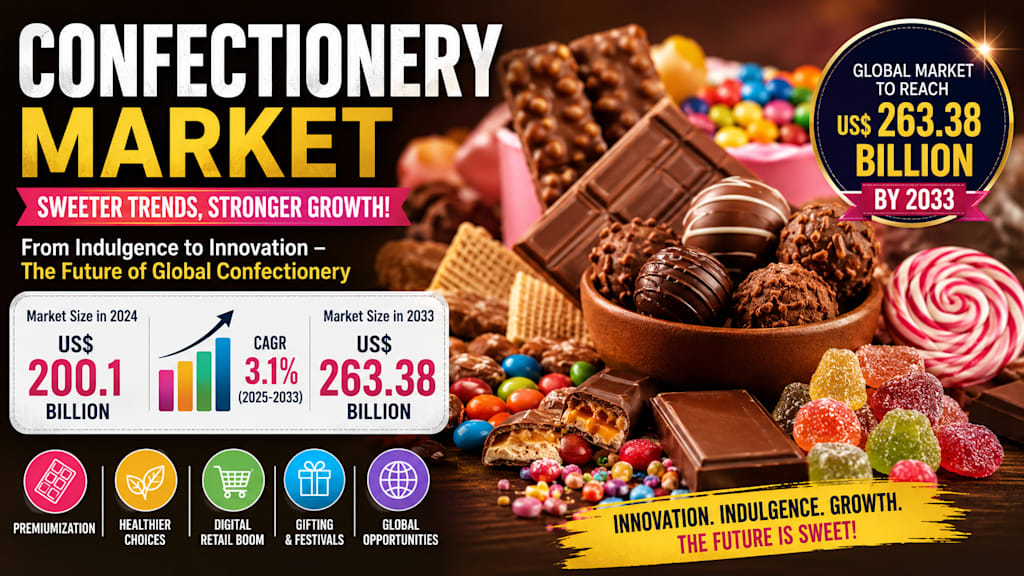
According to Renub Research, the Global Confectionery Market is projected to grow from US$ 200.1 Billion in 2024 to US$ 263.38 Billion by 2033, expanding at a CAGR of 3.1% during 2025–2033. This steady growth reflects the industry's ability to adapt to evolving consumer preferences, embrace product innovation, and capitalize on expanding distribution networks.
Download Free Sample Report:
The confectionery sector today is far more sophisticated than traditional chocolates and candies. Manufacturers are increasingly responding to health-conscious consumers, investing in premium offerings, and utilizing digital platforms to connect with modern shoppers. As a result, the industry is entering a new era where indulgence, convenience, wellness, and sustainability coexist.
A Global Industry Driven by Changing Consumer Preferences
Consumer tastes have evolved dramatically over the past decade. While traditional confectionery products remain popular, shoppers are now looking for products that offer unique flavors, premium ingredients, and memorable experiences.
Modern consumers are willing to explore exotic flavor combinations, limited-edition products, and region-specific confectionery offerings. Younger generations, in particular, seek novelty and personalization, encouraging manufacturers to introduce innovative products that stand out in a crowded marketplace.
The growing demand for convenient snacking has also strengthened confectionery consumption. Busy lifestyles, urbanization, and changing eating habits have made grab-and-go snacks increasingly attractive. Chocolates, candies, cookies, and ice cream continue to benefit from this trend, serving as affordable indulgences during daily routines.
As consumers seek both comfort and excitement in their food choices, confectionery companies are continuously adapting their product portfolios to remain relevant and competitive.
Rising Disposable Incomes Fuel Market Expansion
One of the most important drivers behind confectionery market growth is the increase in disposable income across developing economies.
As economic conditions improve and middle-class populations expand, consumers gain greater purchasing power. This allows them to spend more on discretionary products, including sweets, chocolates, and premium snack items.
Emerging markets across Asia-Pacific, Latin America, and parts of the Middle East are experiencing particularly strong demand growth. Consumers in these regions are increasingly embracing branded confectionery products while simultaneously maintaining cultural traditions that involve gifting and sharing sweets.
The concept of affordable luxury has become especially influential. Premium chocolates and specialty confectionery products offer consumers a sense of indulgence without requiring significant financial commitment, making them attractive across various income groups.
Product Innovation Continues to Transform the Industry
Innovation remains at the heart of the confectionery sector's success.
Manufacturers are investing heavily in research and development to introduce products that appeal to changing tastes and dietary preferences. New flavors, textures, packaging formats, and ingredient combinations are helping brands differentiate themselves from competitors.
Premiumization is one of the strongest trends shaping the industry. Consumers increasingly seek high-quality ingredients, artisanal production methods, and sophisticated flavor profiles. Dark chocolates, gourmet candies, and handcrafted confectionery products continue to gain popularity among consumers willing to pay higher prices for enhanced experiences.
At the same time, companies are exploring healthier formulations. Reduced-sugar products, sugar-free alternatives, plant-based ingredients, and functional confectionery products are becoming more common as brands attempt to balance indulgence with wellness.
Packaging innovation is also playing a crucial role. Eye-catching designs, eco-friendly materials, and personalized packaging help brands create stronger emotional connections with consumers while supporting sustainability goals.
Digital Retail is Changing How Consumers Buy Sweets
The rise of e-commerce has significantly altered the confectionery industry's distribution landscape.
Traditionally, supermarkets, hypermarkets, convenience stores, and specialty retailers dominated confectionery sales. While these channels remain important, online shopping platforms are becoming increasingly influential.
Digital retail offers consumers access to a broader selection of products than many physical stores can provide. Shoppers can easily compare products, read reviews, discover new brands, and receive personalized recommendations.
Artificial intelligence and advanced analytics are enabling retailers to better understand customer preferences and optimize product offerings. This data-driven approach allows businesses to create highly targeted marketing campaigns and improve customer engagement.
Subscription services, direct-to-consumer models, and online-exclusive product launches are further contributing to the rapid growth of confectionery e-commerce worldwide.
Health and Wellness Trends Present New Opportunities
Although confectionery products are traditionally associated with indulgence, health-conscious consumers are reshaping the market.
Growing awareness of obesity, diabetes, and excessive sugar consumption has led many consumers to seek healthier alternatives. As a result, manufacturers are introducing reduced-sugar, sugar-free, organic, and plant-based products to satisfy changing preferences.
Functional confectionery is also emerging as an exciting category. Products containing vitamins, probiotics, fiber, or immunity-supporting ingredients are gaining attention among consumers who want additional health benefits from their snacks.
The challenge for manufacturers lies in maintaining the taste and sensory appeal that consumers expect while reducing sugar and incorporating healthier ingredients.
Companies that successfully balance indulgence with wellness are likely to gain a competitive advantage in the coming years.
Raw Material Volatility Remains a Major Challenge
Despite strong market opportunities, confectionery manufacturers face several obstacles.
One of the most significant challenges is fluctuating raw material costs. Cocoa, sugar, dairy products, and other essential ingredients are vulnerable to supply chain disruptions, climate-related events, geopolitical tensions, and changing agricultural conditions.
Cocoa prices, in particular, can experience considerable volatility due to weather conditions in major producing regions. Similarly, global trade policies and agricultural yields influence sugar and dairy costs.
These fluctuations place pressure on profit margins and force companies to carefully manage pricing strategies, sourcing practices, and supply chain operations.
Manufacturers increasingly rely on long-term supplier relationships, sustainability initiatives, and diversified sourcing strategies to mitigate these risks.
Regional Markets Show Diverse Growth Patterns
United States
The United States remains one of the world's largest confectionery markets. Consumer demand spans traditional chocolates and candies as well as healthier alternatives and premium offerings.
Innovative packaging, seasonal products, and limited-edition launches continue to attract younger consumers. E-commerce expansion and evolving dietary preferences are further shaping market development.
Belgium
Belgium's reputation for premium chocolate production continues to strengthen its position in the global confectionery landscape. Renowned for craftsmanship and quality, Belgian manufacturers are embracing sustainable sourcing, organic ingredients, and premium product innovation.
India
India represents one of the fastest-growing confectionery markets globally. Urbanization, rising incomes, and expanding middle-class populations are driving demand for both traditional and modern confectionery products.
Seasonal gifting during festivals such as Diwali and Raksha Bandhan remains a major sales driver. At the same time, growing health awareness is encouraging demand for sugar-free and low-calorie alternatives.
United Arab Emirates
The UAE confectionery market benefits from strong gifting traditions and a multicultural consumer base. Premium chocolates, luxury packaging, and healthier confectionery options are becoming increasingly popular among consumers.
Digital retail channels are also expanding rapidly, helping brands reach broader audiences across the region.
Supermarkets and Convenience Stores Continue to Lead
Despite the rise of e-commerce, physical retail remains vital to confectionery sales.
Supermarkets and hypermarkets continue to generate substantial revenue due to their extensive product selections and strategic product placements near checkout counters. These locations encourage impulse purchases, which remain a critical component of confectionery sales.
Convenience stores also play an important role by offering quick access to snacks and treats. Their widespread presence in urban environments makes them highly effective distribution channels for confectionery manufacturers.
The combination of physical retail strength and digital expansion provides brands with multiple pathways to reach consumers.
The Future of the Confectionery Industry
The future of the global confectionery market will be shaped by innovation, health-conscious product development, sustainability initiatives, and digital transformation.
Manufacturers that successfully combine indulgent experiences with nutritional considerations are likely to capture greater market share. Investments in premium products, sustainable packaging, and e-commerce capabilities will further strengthen competitive positioning.
As consumer expectations continue to evolve, the industry's ability to innovate while maintaining the emotional appeal of confectionery products will determine long-term success.
With steady growth projected through 2033, the confectionery market remains one of the most resilient and dynamic segments of the global food and beverage industry.
About the Creator
Enjoyed the story? Support the Creator.
Subscribe for free to receive all their stories in your feed.
Comments
There are no comments for this story
Be the first to respond and start the conversation.