
Cocoa Processing Market to Reach US$ 18.88 Billion by 2033 as Premium Chocolate and Ethical Sourcing Trends Accelerate Growth
Global Cocoa Industry Enters a New Era Driven by Sustainability, Artisanal Chocolate, and Expanding Food Applications

Introduction
Chocolate remains one of the world's most beloved indulgences, but behind every chocolate bar lies a sophisticated cocoa processing industry that transforms raw cocoa beans into ingredients used across confectionery, beverages, cosmetics, pharmaceuticals, and functional foods.
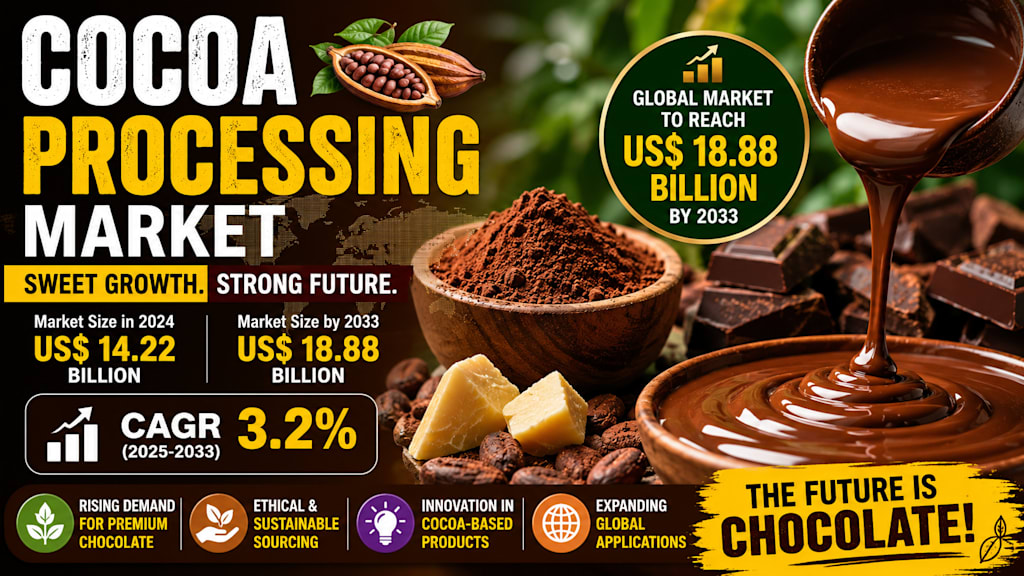
According to Renub Research, the Global Cocoa Processing Market is projected to grow from US$ 14.22 Billion in 2024 to US$ 18.88 Billion by 2033, expanding at a CAGR of 3.2% during 2025–2033. Growing demand for premium chocolates, rising consumer awareness regarding sustainable sourcing, increasing adoption of bean-to-bar manufacturing, and expanding applications of cocoa-derived ingredients are fueling industry growth.
As consumer preferences shift toward healthier, ethically sourced, and premium products, cocoa processors worldwide are investing heavily in innovation, sustainability initiatives, and advanced processing technologies.
Understanding Cocoa Processing
Cocoa processing refers to the series of operations that convert harvested cocoa beans into valuable cocoa products such as:
Cocoa Powder
Cocoa Butter
Cocoa Liquor
Specialty Fats
Other Cocoa Derivatives
The processing journey typically includes:
Sorting
Foreign materials including leaves, stones, and debris are removed from harvested cocoa beans.
Roasting
Beans are roasted to develop their characteristic chocolate flavor and aroma.
Winnowing
The shell is separated from the cocoa nibs.
Grinding
Nibs are ground into cocoa liquor, a thick paste rich in cocoa solids and cocoa butter.
Pressing
The cocoa liquor is pressed to separate cocoa butter from cocoa solids.
Powder Production
Remaining cocoa solids are processed into cocoa powder.
Conching
Chocolate ingredients are refined, aerated, and blended to create smooth texture and enhanced flavor.
This complex process ensures consistency, quality, and flavor profiles demanded by modern consumers and food manufacturers.
Rising Global Demand for Chocolate Fuels Market Expansion
One of the strongest drivers behind cocoa processing growth is the increasing global consumption of chocolate products.
Consumers are increasingly seeking:
Premium chocolates
Dark chocolate products
Organic chocolate
Functional chocolate
Low-sugar alternatives
Artisanal chocolate creations
Growing disposable incomes across emerging economies have enabled consumers to spend more on indulgent food products. Simultaneously, chocolate manufacturers continue launching innovative flavors and premium offerings that require higher-quality cocoa ingredients.
This growing appetite for chocolate directly increases demand for cocoa powder, cocoa butter, and cocoa liquor worldwide.
Bean-to-Bar Movement Reshaping Industry Dynamics
The bean-to-bar movement has emerged as a significant trend influencing cocoa processing.
Consumers increasingly want transparency regarding:
Origin of cocoa beans
Farming practices
Processing methods
Sustainability standards
Bean-to-bar chocolate makers emphasize quality, traceability, and direct relationships with cocoa farmers.
As a result, cocoa processors are adopting advanced quality-control systems and traceability technologies to meet changing consumer expectations.
This trend is creating new opportunities for processors capable of delivering premium and specialty cocoa ingredients.
Chocolate Tourism Creating New Growth Opportunities
An interesting trend contributing to industry expansion is the growth of chocolate tourism.
Visitors increasingly seek immersive experiences such as:
Cocoa plantation tours
Chocolate museums
Chocolate-making workshops
Processing facility visits
Culinary chocolate experiences
These activities educate consumers about cocoa production while strengthening appreciation for premium chocolate products.
As consumer understanding grows, demand increases for ethically sourced and high-quality cocoa ingredients, encouraging processors to maintain rigorous production standards.
Innovation in Cocoa-Based Snacks and Confectionery
Modern consumers continually seek new and exciting snack experiences.
Manufacturers are responding through innovative cocoa-based products including:
Protein bars
Energy bites
Cocoa-coated nuts
Functional snacks
Gourmet truffles
Plant-based chocolate products
These innovations require specialized cocoa ingredients with precise flavor, texture, and nutritional profiles.
Consequently, cocoa processors are investing in research and development to create differentiated cocoa solutions for manufacturers worldwide.
Ethical Sourcing Becomes a Competitive Advantage
Today's consumers are more informed than ever regarding environmental and social issues associated with cocoa farming.
As a result, demand for certified cocoa continues growing.
Popular certification systems include:
Fair Trade
Rainforest Alliance
Sustainable Agriculture Standards
Ethically sourced cocoa assures consumers that products support:
Fair labor practices
Reduced child labor risks
Environmental protection
Sustainable farming methods
For processors, adopting certified sourcing practices not only strengthens brand reputation but also provides access to premium markets where sustainability is becoming a purchasing requirement.
Growing Applications Beyond Chocolate
While chocolate remains the largest application segment, cocoa ingredients are increasingly used in several industries.
Functional Foods and Beverages
Health-conscious consumers are driving demand for cocoa-rich nutritional products containing antioxidants and flavonoids.
Cosmetics Industry
Cocoa butter is widely used in:
Moisturizers
Body lotions
Lip care products
Skin repair formulations
Pharmaceutical Applications
Cocoa derivatives are increasingly incorporated into medicinal and nutraceutical products due to their bioactive properties.
These expanding applications provide additional growth opportunities for cocoa processors beyond traditional confectionery markets.
Key Challenges Facing the Cocoa Processing Industry
Sustainability and Ethical Concerns
The cocoa industry continues to face scrutiny regarding:
Child labor
Deforestation
Farmer income inequality
Supply chain transparency
Meeting sustainability expectations requires significant investment in farmer training, certification programs, and traceability systems.
High Energy Consumption
Processing activities such as roasting, grinding, and conching consume substantial energy.
Processors are under increasing pressure to:
Reduce carbon emissions
Improve energy efficiency
Utilize renewable energy sources
Implement water conservation systems
While these initiatives improve long-term sustainability, they often require substantial upfront investments.
Cocoa Price Volatility
Global cocoa prices are highly susceptible to:
Weather disruptions
Crop diseases
Political instability
Supply chain disruptions
Price fluctuations can significantly impact processor profitability and planning.
Regional Market Insights
United States
The United States remains a mature and highly developed cocoa processing market.
Strong demand from confectionery, bakery, and beverage sectors continues supporting industry growth.
Additionally, growing interest in premium, organic, and plant-based chocolate products is encouraging innovation among processors.
Germany
Germany serves as one of Europe's most important cocoa processing hubs.
The country benefits from:
Advanced processing infrastructure
Strong export capabilities
High-quality manufacturing standards
Growing sustainability commitments
German processors continue adopting ethical sourcing programs to meet evolving consumer expectations.
India
India is emerging as a promising cocoa processing market.
Factors driving growth include:
Expanding confectionery industry
Rising chocolate consumption
Growth of local bean-to-bar brands
Government support for cocoa cultivation
States such as Kerala and Karnataka are becoming increasingly important cocoa-growing regions.
Saudi Arabia
Saudi Arabia's cocoa processing market is expanding alongside rising demand for premium and artisanal chocolate products.
The country's Vision 2030 initiative is encouraging investments in food manufacturing and processing, creating new opportunities for regional cocoa processors.
Market Segmentation
By Type
Cocoa Powder
Cocoa Butter
Cocoa Liquor
Specialty Fats
Others
By Application
Confectionery
Functional Foods & Beverages
Pharmaceuticals
Cosmetics
10 Recent Developments from Leading Cocoa Processing Companies
1. Barry Callebaut Group
Expanded investments in sustainable cocoa sourcing programs and digital farmer support initiatives across West Africa.
2. Cargill Incorporated
Strengthened traceability solutions designed to improve transparency throughout cocoa supply chains.
3. Nestlé SA
Continued expansion of regenerative agriculture programs supporting cocoa-producing communities.
4. Mondelez International
Increased investments in its Cocoa Life sustainability initiative focused on farmer livelihoods and environmental protection.
5. Olam International
Enhanced direct sourcing strategies and digital monitoring systems for cocoa sustainability compliance.
6. Guan Chong Bhd
Expanded cocoa grinding capacities to meet growing global demand for cocoa ingredients.
7. Blommer Chocolate Company
Introduced new premium cocoa ingredient solutions targeting specialty confectionery manufacturers.
8. Ecom Agroindustrial Corp. Limited
Advanced sustainability partnerships aimed at improving farmer productivity and responsible sourcing.
9. Touton S.A.
Strengthened supply chain transparency initiatives supporting ethical cocoa procurement practices.
10. Major Industry Participants
Accelerated adoption of carbon reduction programs and renewable energy technologies within cocoa processing facilities.
Future Outlook
The future of the cocoa processing industry appears increasingly promising.
Several long-term trends are expected to shape the market:
Premium chocolate consumption
Ethical sourcing requirements
Sustainable agriculture adoption
Functional food innovation
Growth in emerging markets
Expansion of artisanal chocolate brands
Digital traceability systems
Cocoa-based health products
Companies capable of balancing sustainability, innovation, and operational efficiency will be best positioned to capture future growth opportunities.
Final Thoughts
The cocoa processing industry stands at the intersection of consumer indulgence, sustainability, and technological advancement. As demand for premium chocolate, ethical sourcing, and innovative cocoa applications continues rising, processors worldwide are transforming their operations to meet evolving market expectations.
According to Renub Research, with the market projected to grow from US$ 14.22 Billion in 2024 to US$ 18.88 Billion by 2033, the industry is poised for steady expansion. Businesses that prioritize sustainability, transparency, product innovation, and responsible sourcing will likely emerge as leaders in the next generation of cocoa processing.
As chocolate lovers increasingly seek quality, authenticity, and ethical production, cocoa processors have a unique opportunity to shape a more sustainable and profitable future for the global chocolate ecosystem.
About the Creator
Enjoyed the story? Support the Creator.
Subscribe for free to receive all their stories in your feed.
Comments
There are no comments for this story
Be the first to respond and start the conversation.