
You Can’t Inherit a Network: What The Godfather Gets Right About Power, Loyalty, and the Names in Your Phone
Vito built relationships. Michael inherited a list. The difference is the whole tragedy.
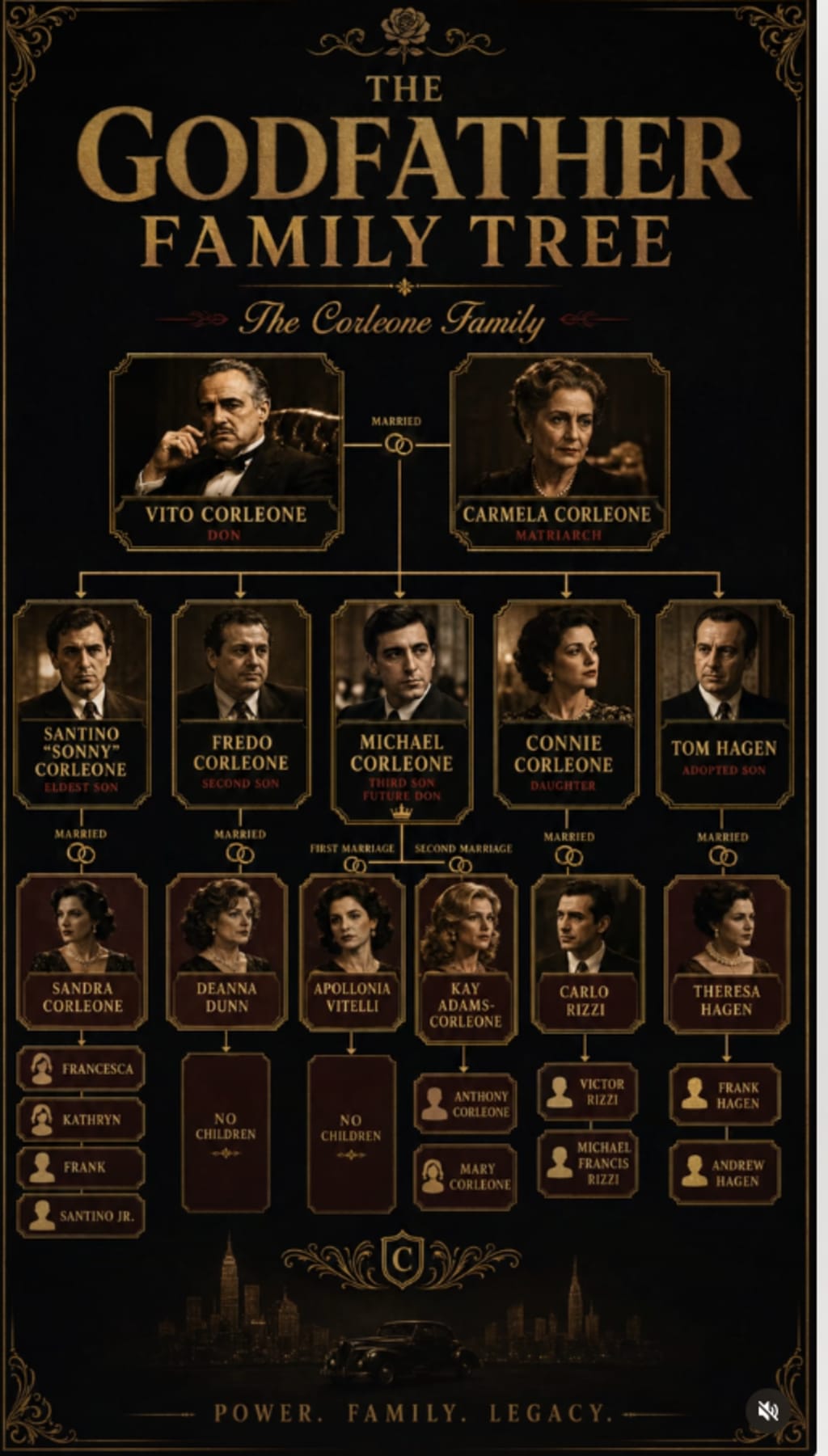
At Vito Corleone’s funeral, men lined up to kiss Michael’s hand. Their lips touched his skin. Their eyes went to the door. Tessio bent low and murmured that he had arranged the meeting with Barzini. Michael nodded. Tessio straightened his coat and walked away. The wind pushed the funeral flowers. The kiss worked like a receipt. It recorded a debt. It did not record love.
A contact is a name. A relationship is an exchange that repeats. Vito understood the difference.
His office smelled of lemon, tobacco, and old paper. Bonasera came in with a hat in his hands and a daughter in a hospital. He wanted justice. Vito said no at first. He said Bonasera had not wanted his friendship before. Bonasera kissed his hand. Vito took the case. In return, Bonasera would owe. The debt lived in memory. The baker came next. His son-in-law needed papers. Vito made a call. The politician needed votes in the Italian precinct. Vito delivered. The policeman needed an envelope. Vito provided. Each favor had a price. Sometimes cash. Sometimes a name. Sometimes silence. Sometimes a favor later. Face set the interest rate on future favors. In a closed community, betrayal was expensive. Word traveled. The grocer knew. The priest knew. The cop knew. So Vito’s network held. It could be stored. It could be passed on, partly.
The wedding showed the ledger in motion. Connie stood in white. The band played. The wine was poured. And in the back room, Vito sat behind his desk while men came to him with problems. One wanted a loan. One wanted a job. One wanted his daughter’s boyfriend beaten. One wanted a song. Vito listened. He did not write anything down. He gave a nod, a name, a phone call. The favor was a deposit. The man who received it would remember. He would vote when asked. He would carry a message. He would keep his mouth shut. He would send an envelope when the time came. The wedding was the business, dressed in flowers and cake.
Then the families married. In Dream of the Red Chamber, the Jia, Shi, Wang, and Xue families tied themselves with brides and grooms. Blood on top of interest. A daughter moved from one house to another. Dowries moved with her. Alliances moved with her. If one family rose, the others rose. If one fell, the others were supposed to cushion the fall. Blood was supposed to be stronger than calculation. It only raised the cost of exit. When the house falls, relatives become strangers. The wedding photos stay in the drawer. The contracts stay in the safe. The aunts stop visiting. The cousins stop writing. Marriage makes exit costly. It does not make exit impossible. When one family becomes a liability, the other cuts. Alliance was the point. Love was the story told afterward, at a smaller table, with fewer dishes.
After his father died, Michael sat at Lake Tahoe. The water was blue and cold. The house had guards, phones, and a gate. Senator Pat Geary came to see him. Geary wanted money. He wanted respect. He called Michael names and then asked for a campaign contribution. He thought he was the one with power. Michael let him talk. Then Michael showed him photographs. A room. A girl. A dead body. Geary’s face changed. His hands went to his knees. He swallowed. He said, “What do you want?” Michael said, “Nothing. Just friendship.” Geary laughed. The laugh stopped. He said, “We’re friends.” He said it the way a man signs a contract. Michael did not smile. The car stopped. Geary got out. He looked back. Michael’s window rolled up. That was Michael’s network. Blackmail and mutual benefit. Not inherited loyalty.
Vito’s currency had been votes, protection, and favors in a community that knew his name. Michael’s currency was casino skim, Cuban investments, and dirt. The old votes were gone. The Italian community was no longer a single bloc. Politicians needed television money, not precinct captains. The Corleone name was in newspapers. Hearings. Cameras. Men who had once kissed Vito’s ring now crossed the street when Michael walked by. They still had his number. They did not answer. Michael had phones. He had addresses. He had a book of names. He did not have equivalent exchange. So he built new relationships. He bought a senator with a secret. He bought a casino with cash. He bought a country with promises. Each relationship had a price. Each price went up.
In Cuba, he stood in a room with men who smiled and smoked. They talked about hotels, casinos, and the future. The future was a roulette wheel. Batista’s men took their cut. The rebels took the hills. Michael put money on the table. He thought he was buying a new life. The revolution came. The tables emptied. The money vanished. The smiles vanished. He flew out with what he could carry. The old network was gone. The new network was not yet his.
In Godfather III, Michael wanted legitimacy. He went to the Vatican. He walked down a marble corridor. His shoes clicked. Men in cassocks passed. Bankers with briefcases passed. No one offered him coffee. He waited. He offered money for Immobiliare. The men in the corridor took the money. They asked for more. They talked about good works. They meant percentages. Michael thought he was entering the legitimate world. He was entering another network. The old black-hand friends wanted a share. Joey Zasa came with a smile and a demand. Michael refused. Zasa’s smile stayed on his face. His eyes did not. The old relationship became an enemy. The new relationship, Vatican bankers, Italian politicians, international financiers, was more polite and more expensive. They did not kiss his hand. They sent invoices. They did not threaten him with guns. They threatened him with audits, delays, and votes in boardrooms. In that corridor, legitimacy had a price, and the price renewed every year.
What can be inherited, then? Not contacts. Not phone numbers. Not loyalty. A platform can be inherited. A name can be inherited. Capital can be inherited. A seat at a table can be inherited. But the seat is rented. Rent is due. The tenant must bring his own exchange. For ordinary families, the same. A father’s old colleague takes your call once. He takes it twice. The third time, he checks what you can do. If you have nothing, he is busy. It is accounting. The ledger does not care about your father’s kindness. It cares about the next entry.
Some things do pass down: a reputation for keeping your word, a skill people need, a profession with an open door, a habit of paying debts before they are called, a family handshake that means something. But even these must be re-earned. Trust works like a credit line. It can be drawn down. It can be revoked. It can be inherited as a starting balance. It cannot be inherited as a permanent income.
Michael sat in the garden in Sicily. The sun was low. The stone bench was warm. He held a book of names. Politicians. Bankers. Priests. Cops. Some were dead. Some were in prison. Some had become friends and then enemies again. The phone on the table was black. It did not ring. He did not answer it. He closed the book. A little dust rose from the spine. The sun moved. The shadows moved. The names were still there. The numbers were still there. The exchange was not.
About the Creator
Jin
Writer of reamstories
https://reamstories.com/jin
Enjoyed the story? Support the Creator.
Subscribe for free to receive all their stories in your feed. You could also become a paid subscriber, letting them know you appreciate their work.
Comments
There are no comments for this story
Be the first to respond and start the conversation.