
The Girl Who Taught Rocks to Sing
A field guide to listening to things that don’t have mouths

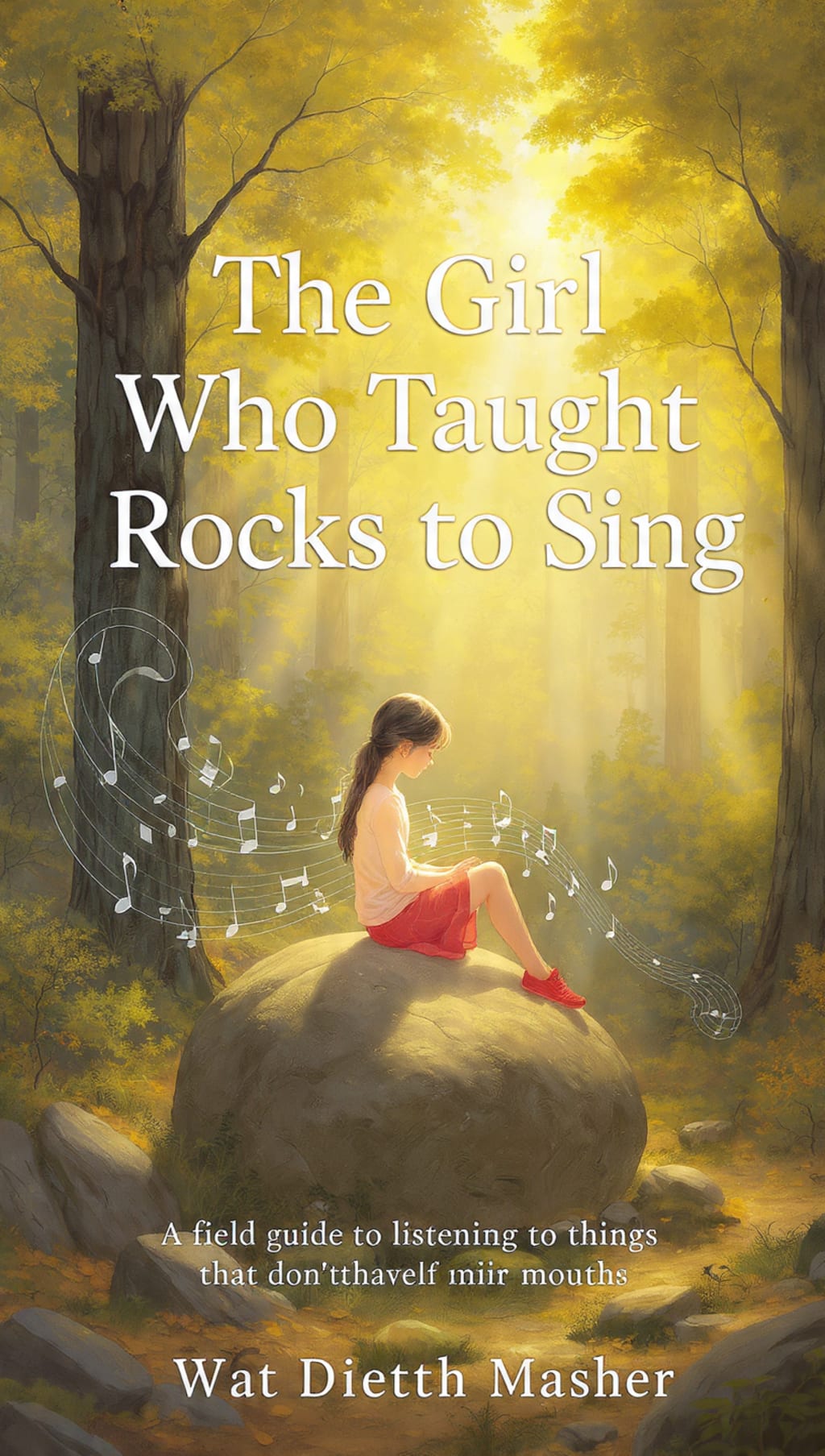
Nina found the first singing rock on a Tuesday, when she was supposed to be collecting soil samples for science class. She was twelve, and she hated science class, because science class was always about taking things apart to see how they worked, and Nina preferred to leave things whole and listen to them. The rock was gray, flat, and warm from the sun. She picked it up to skip it across the creek, and it hummed. Not loudly. Not like a radio. Like a refrigerator, or a faraway bee. A low, steady note that she felt in her teeth. She dropped it. The hum stopped. She picked it up again. The hum returned. “Nina?” Her teacher called from up the hill. “You find anything?” She slipped the rock into her pocket. “No,” she lied. That night, she took it out under her desk lamp. She held it to her ear. The hum was clearer now, and it had a rhythm. Three short, one long. Three short, one long. Morse code, her grandfather would have said. But Nina didn’t know Morse code. She just knew the rock was trying to say something. The next day she went back to the creek with an empty backpack. She didn’t collect soil. She collected rocks. One by one, she picked them up, held them to her ear, and listened. Most were silent. But every tenth rock, or so, hummed. Each with a different note. One was high and thin, like a flute. One was deep, like a drum. One sounded like wind through grass. By Friday she had seventeen singing rocks. She lined them up on her windowsill. On Saturday, she tapped them with a pencil. The first tap made the gray rock hum. The second tap made the flute-rock answer. The third tap made the drum-rock join in. Nina kept tapping, moving down the line, and the rocks made a melody. Simple, but real. A song. She played it for her cat. The cat tilted its head. She played it for her mom. Her mom smiled and said, “That’s nice, honey,” and went back to folding laundry. She didn’t play it for her science teacher. On Monday, she brought the rocks to school. She waited until recess, when no one was around, and she tapped out the song on the picnic table. That’s when she heard the answer. It came from under the table. A low, rumbling note, like the earth clearing its throat. She knelt down and put her ear to the concrete. The picnic table was singing back. Nina spent the rest of the year mapping it. The schoolyard had a bass line. The creek had a treble. The old oak tree hummed in a key she didn’t have a name for. The rocks were the melody. She started carrying a notebook. Not for school. For music. She wrote down where each rock sang, what note it held, how it changed in the rain. Her grades dropped. Her teacher called her mom. “Nina seems distracted,” he said. “She’s always listening to things.” “I am,” Nina said when her mom asked her about it. “To what?” “Everything.” Her mom didn’t get it. But she didn’t stop her, either. The summer she turned thirteen, Nina took her rocks to the top of the hill behind her house. She laid them out in a circle. She sat in the middle. She tapped. The song started small, just her rocks. Then the hill joined in. Then the trees. Then the wind. It wasn’t loud. It wasn’t for anyone else. It was the sound of the world, finally being heard. She closed her eyes and listened. Later, people would ask her how she did it. How she taught rocks to sing. She never corrected them. She didn’t teach them anything. She just listened long enough for them to remember they had a voice.
About the Creator
Enjoyed the story? Support the Creator.
Subscribe for free to receive all their stories in your feed.
Comments
There are no comments for this story
Be the first to respond and start the conversation.