
The 3:37 AM Call That Broke Me — And How I Finally Took My Sleep Back
My mother's anxiety has been a shadow over my life for 24 years. Last week, I stopped answering the phone at midnight.
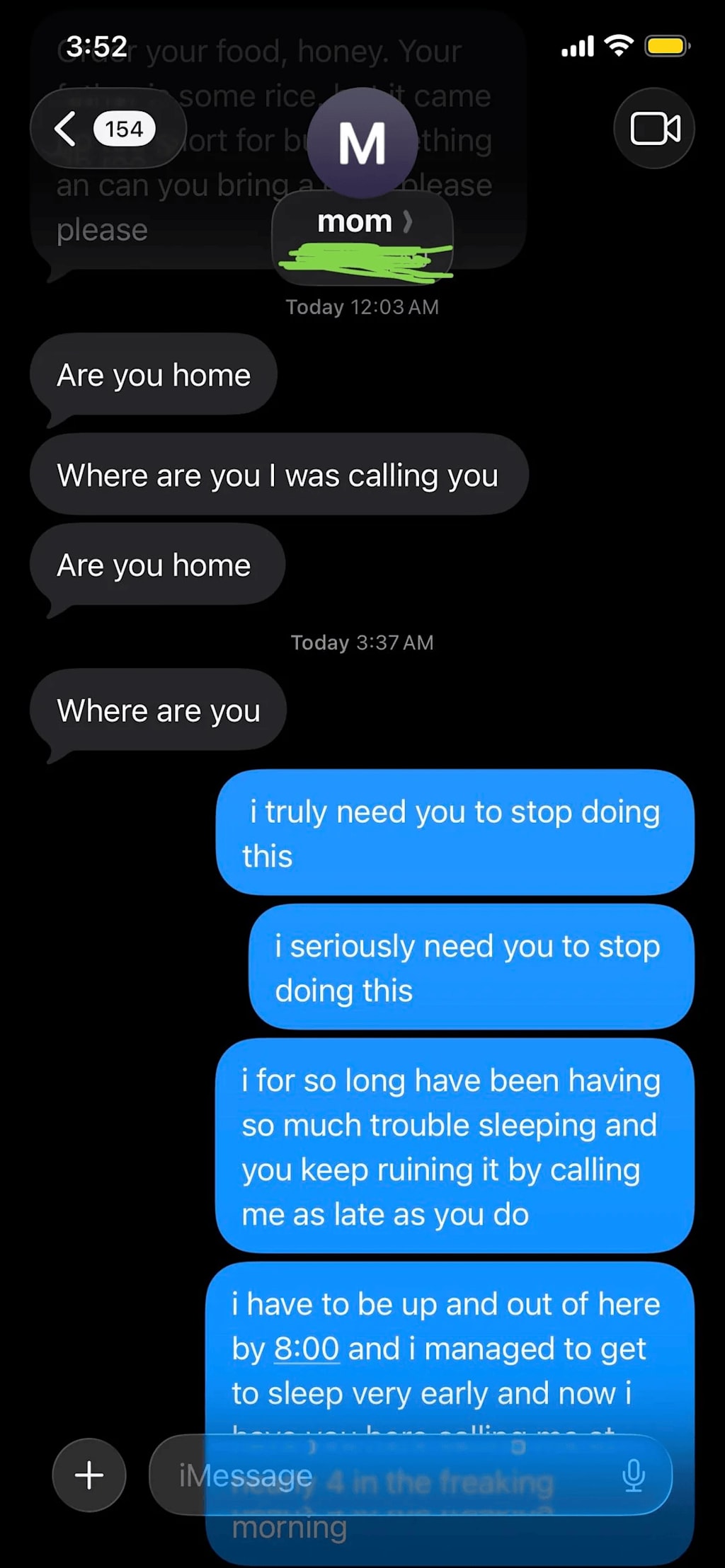
The phone buzzed twice on the nightstand, the device itself shifting half an inch across the wood. I reached out, my fingertips touching the cold edge of the screen, then pressed my whole palm over it to block the glow. The third buzz was a call—a different vibration, like a fly trapped in a glass jar, battering against the walls. I picked up, didn't speak, heard a brief, faint voice on the other end. I said, "Mom, I'm sleeping." Then I hung up.
After that, I didn't check the time or glance at any unread messages. I turned the phone face-down on the table and lay back down. But sleep was gone. The drowsiness that had been stirred up in the bed was like ink in water—once spread, it couldn't gather again. I turned over. The pillow was warm, the back of my neck damp with sweat. The air conditioner's indicator light was a tiny green dot in the dark. I stared at that dot for maybe twenty minutes, then sat up and switched on the bedside lamp.
I work as a substitute teacher in town, three days a week, and deliver pizza the other six. The pizzeria closes at 10; we stop taking delivery orders at 9:45. The town's small—the latest I've ever gotten home was 10:30. Tonight I walked in at 10:07, making hardly any noise, but the security camera at the front door still caught me. My mom insisted on installing that camera. She said it was to deter break-ins. Ever since, she flips through the footage every so often, especially at night.
She was still awake when I came in. I could hear the TV from the master bedroom, the volume turned low. I texted my dad about the car, asking what time the mechanic opened. He replied quickly: 8 a.m.
I lay down. That night I was unusually tired. My sleep has never been good—sometimes I'm still wide awake at one or two—but that night my eyelids were too heavy to keep open. I remember checking the time: 10:29. Then I put the phone by my pillow, turned over, and woke to her call.
She's always been like this. She's afraid of so many things. Crossing the street, she'd make me hold her hand—I was already a teenager and she'd nearly trip me as she yanked me along. In high school, when my classmates planned a weekend bike ride to the reservoir, I said I wanted to go. She didn't say no outright, but the next day, a folded leaflet titled "Drowning Rescue Guide" appeared on my desk, tucked under the mousepad. When I opened it, my fingers came away smudged with printer ink. I never brought it up again. The summer I turned sixteen, I spent an entire afternoon leaning on the living room windowsill, watching the neighborhood kids ride their bikes below. She was folding laundry behind me, very slowly, as if one piece always led to another, and there was never an end to the pile.
And there was that life vest. The water was shallow—the deepest part of the children's pool only came up to my waist. But she made me wear it anyway. The nylon straps chafed under my armpits with every step, and the smell of rubber stung my nose. Other kids splashed around. I stood there like a stake driven into the water. Later I threw that life vest away. When she asked where it went, I said I forgot. That was the year I turned eighteen. After I said, "Mom, I'm not a kid anymore," she brought up the life vest again, accusing me of being ungrateful, saying I didn't appreciate her care, and warning that if something happened, I shouldn't blame her for not looking out for me. We didn't speak for about a week. Eventually, she stopped forcing the vest on me. She switched to texting: "Are you back yet?" "Did you get home?"
Then came the security camera. It catches you coming in. She gets the notification, but she can't tell if it's arrival or departure. So she asks—at midnight, at 3 a.m., at 5:30 in the morning. I reply "I'm home," but it doesn't help. She still checks the video. The video shows me walking in and never walking out, but she can never be certain.
That morning I decided to make it clear. I called my dad to the kitchen table too. There was half a bowl of congee in front of my mom's seat—she'd barely touched it. The spoon rested diagonally across the rim, and a thin skin had formed on the surface. I put my phone on the table, screen facing them, and opened the settings, scrolling to "Do Not Disturb." I said, "Starting today, from 10:30 p.m. to 7 a.m., my phone will be silent. No rings, no vibrations. If there's a real emergency, Dad, call twice—I'll set you as an exception."
My mom sat across from me, silent. She wore that light gray jacket, sleeves pushed up to her forearms, and a pale indentation from her watch strap circled her wrist. She picked up her own phone, glanced at it, then put it down—her hand never leaving the device. She said, "But what if something happens to you on the road at night? How am I supposed to know you're okay?"
I said, "Mom, you can't ever know I'm okay. Any answer you get from me will always be 'I'm fine.' You ask, I answer, you believe it—and then the next worry shows up. Even if I'm sitting right here, you'll still be afraid I might get sick."
My dad had been drinking his water. He set the glass down with a dull thud against the table. He said, "He makes a point. You can't keep him from sleeping every night."
Mom didn't answer. She nudged the bowl forward, and the spoon slipped off the rim, clattered against the tabletop, and a splash of congee spilled out. She wiped at it with her fingers, got them sticky, and drew back. I didn't wipe it for her. I watched that puddle of congee spread slowly across the tabletop, glistening.
That night, I got home at ten and sent a message to the family group: "Home, goodnight." At 10:30, I turned on Do Not Disturb. The screen went dark, and for a moment the room felt quieter—though there had been no real sound, the background hum of "it might ring any second" disappeared.
At 1:03 a.m., the screen lit up. A text from my mom. I glanced sideways, didn't move, and buried my face back in the pillow. At 2:21 a.m., another one. My hand clenched into a fist under the blanket, but I didn't reach out. Sometime past three, the screen must have lit up again, but by then I was already asleep—truly asleep, my breathing deep and even, my back no longer feverish. I didn't know what time it was; I only knew that dawn came quickly, the light seeping through the curtain shifting from gray-blue to pale yellow. I heard the tap run somewhere outside, a rush of water, then silence.
At 7:04, I woke up. I unlocked the phone and saw five unread messages—no missed calls. I stared at the previews for two seconds, then put the phone down and went to brush my teeth. The toothpaste was minty; the toothbrush handle had old, unrinsed residue. I rinsed my mouth, wiped the water off my chin, and only then picked up the phone again to type four words: "Morning. Sleep well?"
After sending it, I set the phone on the table and went to get congee. The bottom of the pot had scorched a little—the porridge carried a faint burnt taste, but it didn't matter. My mom's door was still closed. The steam from the congee rose visibly in the cool morning air, curling upward in rings that dissolved halfway to the ceiling. I sat down, laid my chopsticks across the rim of the bowl, and waited for it to cool.
The phone never buzzed.
About the Creator
Jin
Writer of reamstories
https://reamstories.com/jin
Enjoyed the story? Support the Creator.
Subscribe for free to receive all their stories in your feed. You could also become a paid subscriber, letting them know you appreciate their work.
Comments
There are no comments for this story
Be the first to respond and start the conversation.