
Seven Minutes to Tie a Shoe, Six Days to Die: The Gene Therapy Trial That Took Everything
She was six, slow, and full of life. Her parents just wanted her to run like the other kids. What happened next should never have been allowed.
On the seventh morning, the numbers on the pulse oximeter were dropping.
Six years old. Base editing. Adeno-associated viral vector. Her immune system did not recognize the shell of that vector, took it for an enemy, and attacked itself along with it. On the seventh day, she died of an immune response.
The hospital was fined less than 10,000 yuan.
The paper was published anyway.
In 2026, Science reported this. In that report, there was a detail her parents kept bringing up: from her diagnosis to her death, only a little over two hundred people in the world had ever been diagnosed with the same genetic condition. The disease was not fatal. It did not affect lifespan. It did not get worse. It only made things slow. She spoke slowly, wrote slowly, fell easily when running, and at seven still could not tie her shoes.
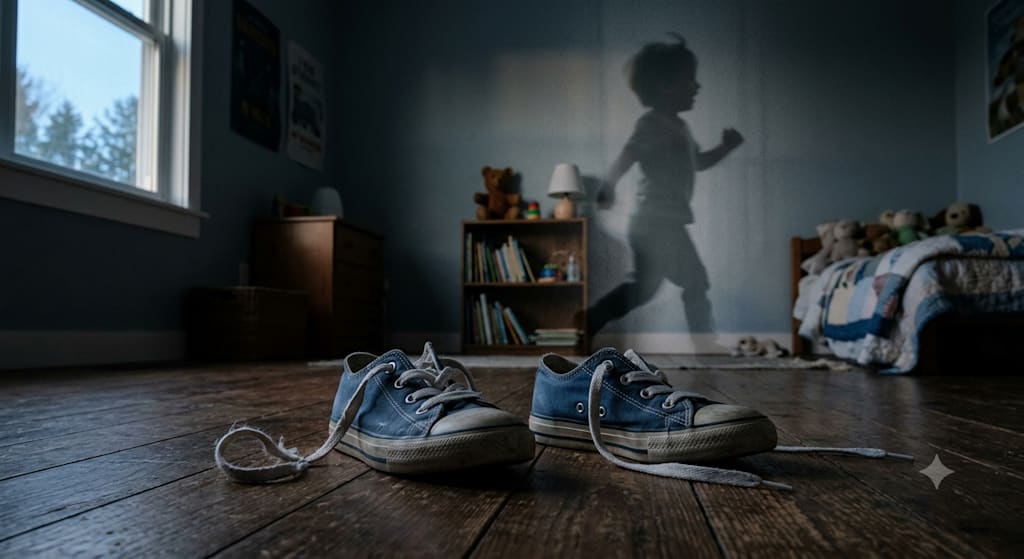
She crouched down, her fingers couldn't loop around. Tried three times. On the fourth, she pulled the laces apart and sat there on the floor, not moving.
Her parents contacted a scientist. He told them about a new technique, base editing, more precise than the first generation of gene editing. No one had ever used it on a human brain. The biggest risk was that the immune system would attack the virus carrying the therapeutic tool, and she could die.
Her parents signed.
This is not about whether it "should have been allowed." This case never even reached the step where "allow or not" applies, because it took a different path: no approval from China's National Medical Products Administration, no independent ethics oversight, and the family paid several million yuan, which is forbidden by regulation. The regulation states clearly: during the clinical research phase, no fees may be charged to research subjects.
They charged.
The informed consent form listed risks. But her parents said it did not mention that AAV-triggered thrombotic microangiopathy could cause death. Meanwhile, in animal trials, monkeys had already shown moderate-to-severe liver and kidney damage. That safety signal was lit before the experiment even began. The ethics committee approved the trial before they had seen that toxicology report.
A six-year-old girl. Her baseline was "alive." The experiment pushed her toward "death." This was not exploration. This was putting a human being on a gambling table.
Some argue: without aggressive science, children with rare diseases will never get treatments.
But the line between "aggressive" and "gambling" is not drawn by courage. It is drawn by rules.
A nonsteroidal anti-inflammatory drug, used for pain relief, also carries a fatal risk: 0.39 out of every 1,000 patients will be hospitalized for severe gastrointestinal events. But that risk is permitted because the probability has been pressed extremely low, and the benefit is clear: a person who could not walk from pain can stand up after taking it. Before prescribing, doctors ask about history of ulcers, about cardiovascular history. After prescribing, they tell you: if your stool turns black, go to the ER immediately.
That is not gambling. That is a trade-off with known probabilities, known countermeasures, known alternatives.
Base editing into the brain, a world first, had no probability data, no reference immune suppression protocol. The team used only short-term prednisone. A stronger immunosuppressant should have been used, but no one had tried it. The dose was unknown. The drug type was unknown. The timing was unknown. Nothing was known, and they moved forward anyway.
She developed a fever on the sixth night. Her oxygen dropped on the seventh morning.
Then a fine of less than 10,000 yuan.
The paper was published anyway.
This is not about blaming those parents. No one standing outside has the right to blame parents who only wanted their child to have a better life. What they saw was not the words "mortality rate." What they saw was the minutes every morning when their child took longer than other kids to put on her shoes. Her mother reheated the baby food three times before the shoes were on. Her father watched her running videos late at night, over and over. She ran, looked down at her feet halfway, afraid of tripping.
Every parent wants their child to live a better life.
That desire carries enough force to crush every rational risk calculation. Precisely because of that, the rules must stop them before they reach the lab. Not because they are foolish, but because they love too much. They love so much they would risk anything. And "anything" includes the decades their child could have had.
They lost the bet. No, they were brought to the table.
If that girl were still alive, she would be in second grade this year. She would probably still write slowly, erasing until the paper tore. She would probably still fall behind everyone when running. But she would laugh. She would call out "Mom" and "Dad." She would stay in bed on Sunday mornings and pull the blanket over her head.
None of these things is "important" by itself. Together, they are a human life.
Medicine is not a tool for rewriting "slow" into "fast." Its first job is to hold on to "alive." Before it secures that, it has no right to say, "I want to make your life better."
Some boundaries should not be crossed for hope. Not because hope is bad. But because after you cross, the one who falls is not the one who hoped. It is a six-year-old girl who could not tie her shoes.
Her parents, from now on, will watch other children tie their shoes. And it will take them only three seconds.
No explanation needed.
About the Creator
Jin
Writer of reamstories
https://reamstories.com/jin
Enjoyed the story? Support the Creator.
Subscribe for free to receive all their stories in your feed. You could also become a paid subscriber, letting them know you appreciate their work.
Comments
There are no comments for this story
Be the first to respond and start the conversation.