product review
Product reviews for those who yearn to learn; a breakdown of the best back-to-school supplies, test prep manuals, online study tools and other resources for students and teachers alike.
What Does Spot Price Really Tell You About Silver Markets?
Understanding What Spot Price Indicates Watch silver trade for a few minutes and you’ll notice something right away. The price doesn’t sit still. It moves constantly. Up, down, sideways, sometimes all within seconds.
By Stefan Gleason5 months ago in Education
How Bitcoin is Changing the Way We Buy Homes
For decades, buying a home has followed a familiar script: save cash, secure a mortgage, and hand over a sizable down payment. But in today’s evolving financial landscape, a new player is reshaping that process—decentralized finance (DeFi) combined with Bitcoin. What once sounded futuristic is quickly becoming reality, as lenders and fintech platforms begin accepting cryptocurrency as part of the homebuying journey.
By AnthonyBTV5 months ago in Education
The Best Ways to Budget in Today’s New Economy
The economy has shifted in ways that many of us can feel every day—rising prices, fluctuating job markets, and evolving financial tools have made traditional budgeting methods feel outdated. What worked five or ten years ago may no longer hold up in today’s environment. The good news? With a few smart adjustments, you can build a budgeting strategy that not only keeps up with the times but helps you stay ahead.
By AnthonyBTV5 months ago in Education
I Tried Drinking More Water Every Day — Here’s What I Noticed
I didn’t think much about how much water I was drinking before. Like most people, I would drink when I felt thirsty and not really pay attention beyond that. Some days I probably drank enough, and other days I didn’t think about it at all.
By Mohammed Ismail5 months ago in Education
Essential Tools for Testing Gold and Silver at Home (Without Overspending)
If you’re wondering what tools you actually need to test gold and silver at home, the answer is simpler than most people expect. You don’t need a lab. You don’t need specialized equipment. You don’t need to spend much money.
By Stefan Gleason5 months ago in Education
What Analysts Are Saying About Silver Right Now, and What It Means for Physical Buyers
If you are asking what experts are saying about buying silver now, the broad answer in 2026 is this: the longer-term backdrop still looks constructive, but no serious analyst is treating silver as a one-way bet. The bullish case rests on continued market tightness and rising physical investment demand.
By Stefan Gleason5 months ago in Education
What makes a Silver Eagle coin valuable?
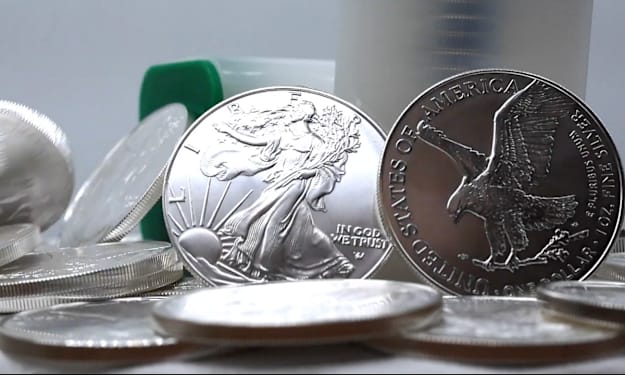
Most people think this is about finding the rarest coin. It’s not. If you’re trying to figure out which Silver Eagle is actually worth the most, you need a way to evaluate it. Otherwise, you’re just reacting to price tags and whatever shows up first in a search.
By Stefan Gleason5 months ago in Education
Gold vs. Silver Prices: What the Difference Means for a Long-Term Physical Buyer
If you are asking, “How do gold and silver prices compare?”, the plain answer is this: gold costs far more per ounce than silver, but the more important difference is not just price. Gold is usually the more compact, stable store of value. Silver is usually the more affordable metal to accumulate in larger ounce counts, but it also tends to swing more sharply. As of April 7, 2026, Reuters reported spot gold around $4,655.89 per ounce, while Forbes listed silver near $73.00 per ounce on April 6.
By Stefan Gleason5 months ago in Education
How easy is it to start trading?
How to Start Trading: A Beginner’s Guide Published for new traders looking to build a strong foundation in the financial markets. Introduction Trading can be a powerful way to grow your money—but without the right knowledge and discipline, it can also lead to significant losses. Many beginners jump in too quickly, chasing profits without understanding the risks. This guide will walk you through the essential steps to start trading the right way, focusing on long-term success rather than short-term gains. 1. What Is Trading? Trading is the act of buying and selling financial assets to profit from price movements. These assets include: Stocks (shares in companies) Forex (currency pairs) Cryptocurrencies Commodities (e.g., gold, oil) Each market operates differently, so beginners should start by focusing on just one. 2. Learn the Basics Before risking any money, take time to understand how markets work. Key concepts include: Supply and demand Market trends (uptrend, downtrend, sideways) Support and resistance levels Volatility and liquidity There are also two main ways to analyze markets: Technical analysis – studying charts and patterns Fundamental analysis – analyzing news and economic data 3. Choose Your Trading Style Different trading styles suit different lifestyles: Style Dscription Day Trading Multiple trades within one day Swing Trading. Trades held for days or weeks Position Trading. ong-term trades over months/years Beginners often benefit from swing or position trading due to lower stress and time commitment. 4. Select a Trading Platform To begin trading, you’ll need a broker or platform. Look for: Strong regulation and security Low fees and commissions User-friendly interface Access to your chosen market A reliable platform is essential for both safety and performance. 5. Practice with a Demo Account A demo account allows you to trade using virtual money. Benefits include: Learning how to execute trades Testing strategies risk-free Building confidence Treat demo trading seriously—it’s your training ground. 6. Create a Trading Plan A trading plan keeps your decisions structured and disciplined. Your plan should include: Entry and exit rules Risk per trade (typically 1–2%) Trading schedule Strategy guidelines Without a plan, trading becomes emotional and inconsistent. 7. Master Risk Management Risk management is the key to surviving in trading. Golden rules: Never risk more than you can afford to lose Always use a stop-loss Avoid overtrading Focus on protecting your capital Even professional traders lose—managing losses is what keeps them profitable. 8. Control Your Emotions Trading is as much psychological as it is technical. Common emotional mistakes: Fear → exiting trades too early Greed → holding trades too long Revenge trading → chasing losses Developing discipline and patience is critical. 9. Keep a Trading Journal Track and review your trades regularly. Record: Entry and exit points Reasons for the trade Outcome and lessons learned A journal helps you identify patterns and improve over time. 10. Start Small and Stay Consistent When transitioning to real money: Begin with a small account Focus on learning rather than earning Build consistency step by step Success in trading comes from steady progress—not quick wins.
By Salem yusuf5 months ago in Education