
Why “Junk Silver” Is a Misleading Name - and Why Investors Still Buy It
Why “Junk Silver” Is a Misleading Name

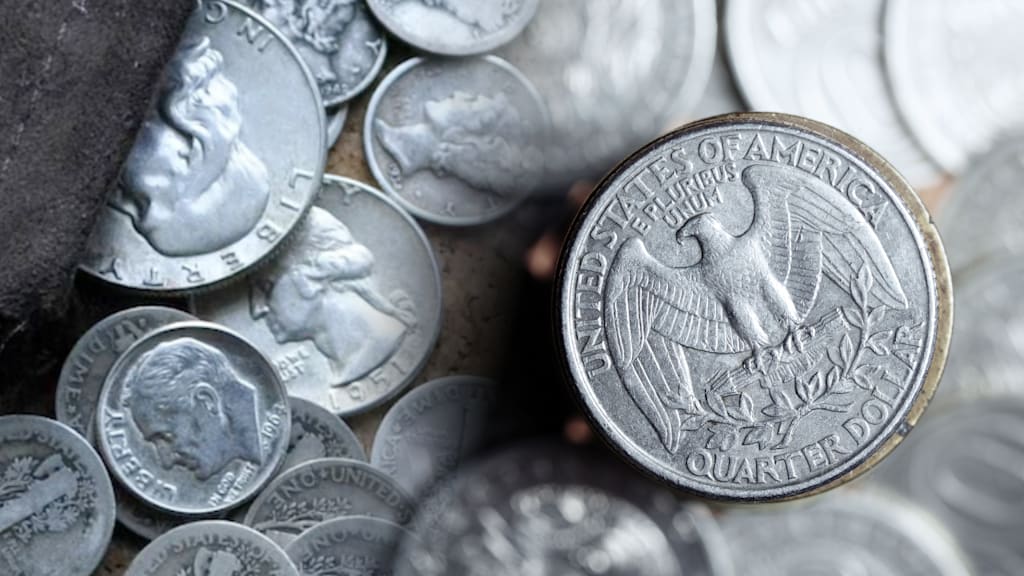
“Junk silver” is a branding problem.
The name sounds like something you’d avoid. Something worn out or second-rate. That first impression is enough to push a lot of people in the wrong direction before they even understand what’s being offered.
The reality is simpler.
Junk silver refers to older coins that contain real silver but don’t carry collector value. In most cases, that means U.S. dimes, quarters, and half dollars minted before 1965. They’re 90 percent silver. They’ve been used in circulation. And they’re priced based on their metal content, not their condition or rarity.
That’s the entire category.
Nothing about it is low quality. Nothing about it is speculative. It’s just silver in coin form, without the added layers that come with modern products.
Once you see that clearly, the name stops mattering.
Why This Question Matters in 2026
The way people buy silver has changed.
There are more options now. More marketing. More variation in pricing depending on what form you choose. A one-ounce coin is no longer just a one-ounce coin. It might carry a higher price because of branding, design, or demand tied to a specific release.
That creates a gap between what something contains and what it costs.
In a steady market, that gap might not stand out. But when demand rises, premiums on popular bullion coins can move quickly. Buyers end up paying well above the value of the metal itself.
That’s when the difference becomes hard to ignore.
Junk silver doesn’t carry the same baggage. It isn’t packaged as a premium product. It isn’t tied to limited runs or special finishes. It’s already been minted, already been used, and already been absorbed into the secondary market.
Because of that, it often trades closer to the value of the silver inside it.
For someone focused on holding metal rather than chasing presentation, that’s a meaningful distinction.
It shifts the decision away from marketing and back toward substance.
What the Term “Junk” Really Means
The word “junk” didn’t come from investors. It came from coin dealers.
They needed a way to separate two types of coins.
On one side, you have coins that are valued for rarity, condition, or historical interest. Those are collectible pieces. Their prices can move based on factors that have nothing to do with metal content.
On the other side, you have coins that don’t carry those premiums. They’re common. They’ve been circulated. Their value comes from the metal they contain.
Those became known as “junk.”
Not because they’re worthless. Because they’re ordinary in a collector’s sense.
That distinction matters.
If you’re buying collectible coins, you’re entering a different market. You’re dealing with grading, rarity, and demand from collectors. Prices can vary widely based on details that have nothing to do with silver content.
If you’re buying junk silver, you’re not playing that game.
You’re buying metal.
That’s a cleaner transaction.
Why Investors Still Buy Junk Silver
Despite the name, junk silver hasn’t gone anywhere. In fact, it’s often the first place experienced buyers look when premiums start to climb elsewhere.
There are a few reasons for that.
Lower Premiums
Start with cost.
Modern bullion coins come with built-in expenses. Minting, distribution, packaging, branding. All of that shows up in the price.
Junk silver doesn’t carry those same layers.
It’s already been produced. It’s already circulated. What you’re paying for is the metal, plus a smaller premium tied to market demand.
That difference adds up.
If you’re buying regularly, even a modest reduction in premium can translate into more ounces over time. That’s the part that matters if your goal is accumulation.
Recognizability and Trust
These coins aren’t new.
They were part of everyday transactions for decades. People have handled them, spent them, seen them in circulation.
That familiarity still counts.
When it’s time to sell or trade, you’re not introducing something unfamiliar. Buyers know what they are. Dealers don’t need to explain them. There’s a shared understanding of value.
In uncertain conditions, that kind of recognition can make transactions smoother.
Divisibility
Junk silver comes in small pieces.
Dimes, quarters, half dollars. Each one carries a fraction of an ounce of silver. That gives you options.
You don’t have to sell a full ounce or a large bar if you only want to move part of your holdings. You can break it down naturally, without cutting or converting anything.
That flexibility is easy to overlook until you need it.
Simplicity
There’s no complexity here.
You’re not evaluating grades. You’re not comparing special editions. You’re not tracking collector demand.
You’re buying coins with known silver content at a price tied to the market.
That’s it.
For many buyers, that simplicity is the appeal. It removes distractions and keeps the focus on what you actually own.
A Practical Decision Framework
Deciding whether junk silver fits into your approach doesn’t require much theory.
It comes down to what you value.
If your priority is getting the most silver for your money, junk silver deserves a close look. Lower premiums mean more of your budget goes into metal.
If you want flexibility, it checks that box too. Smaller denominations give you more control over how you sell or trade later.
If you prefer clean, identical coins that stack neatly and look uniform, junk silver won’t give you that. It’s mixed by nature. Different years, different wear levels.
That’s where modern bullion tends to appeal more.
Most experienced buyers don’t choose one over the other.
They hold both.
Junk silver for efficiency and flexibility. Bullion for consistency and storage. Each serves a purpose, and together they cover more ground.
The key is making that choice deliberately, not by default.
Common Concerns About Junk Silver
The name raises questions. Some of them are worth addressing directly.
Is junk silver lower quality?
No.
The silver content is real. The coins were minted by the U.S. government under fixed standards. Their value comes from that metal.
The term “junk” has nothing to do with quality.
Will it be harder to sell?
In most cases, it’s straightforward.
Dealers trade junk silver every day. Pricing is tied to the silver market. Buyers understand what they’re getting.
You’re not relying on a niche audience.
Why choose this over bullion?
It depends on what you’re trying to do.
If premiums on bullion are high, junk silver often offers a more efficient way to accumulate metal. If you prefer newer coins with uniform appearance, bullion might be the better fit.
There’s no rule that says you have to pick one.
Does wear matter?
A little, but not enough to change the equation.
Circulation wear reduces silver content slightly. That’s already reflected in pricing. Dealers account for it when they quote based on face value.
Over time, movements in the silver price matter far more than small differences in wear.
Seeing Past the Label
The label does more harm than the product.
“Junk silver” suggests something disposable. Something you settle for.
That’s not what it is.
These are circulated coins with real silver content, traded for their metal value and nothing else. No added story. No reliance on collector demand. No premium tied to presentation.
For someone focused on owning silver in a straightforward way, that’s exactly the appeal.
You’re not buying into a narrative. You’re holding a tangible asset with a long history behind it.
Final Guidance
Names can steer decisions in the wrong direction.
If you stop at the term “junk silver,” you might miss what’s actually being offered. Once you understand the definition, the picture changes.
You’re looking at a form of silver ownership that keeps things simple. It focuses on metal content, avoids unnecessary premiums, and stays grounded in something easy to value.
That doesn’t make it the only choice.
Bullion coins and bars have their place. They offer uniformity and can be easier to store in larger quantities.
But junk silver fills a different role.
It gives you a way to build silver holdings without paying for extras that don’t add to the metal itself.
Take the time to compare both. Look at how pricing works in real transactions. Think through how you’d buy, hold, and eventually sell.
Then decide where it fits.
A clear view of what you’re buying goes further than any label ever will.
About the Creator
Stefan Gleason
Stefan Gleason is President and CEO of Money Metals, the company recently named "Best Overall Online Precious Metals Dealer" by Investopedia. A graduate of the University of Florida, Gleason is a seasoned business leader and investor.
Enjoyed the story? Support the Creator.
Subscribe for free to receive all their stories in your feed.
Comments
There are no comments for this story
Be the first to respond and start the conversation.