
The future of our ability to think assertively Part 2
AI overreliance is increasingly linked to measurable declines in memory, attention, creativity, and deep thinking, according to multiple recent studies. All of this raises a deeper question about the future of our ability to think assertively — to stay mentally active, independent, and engaged rather than surrendering our cognitive effort to AI

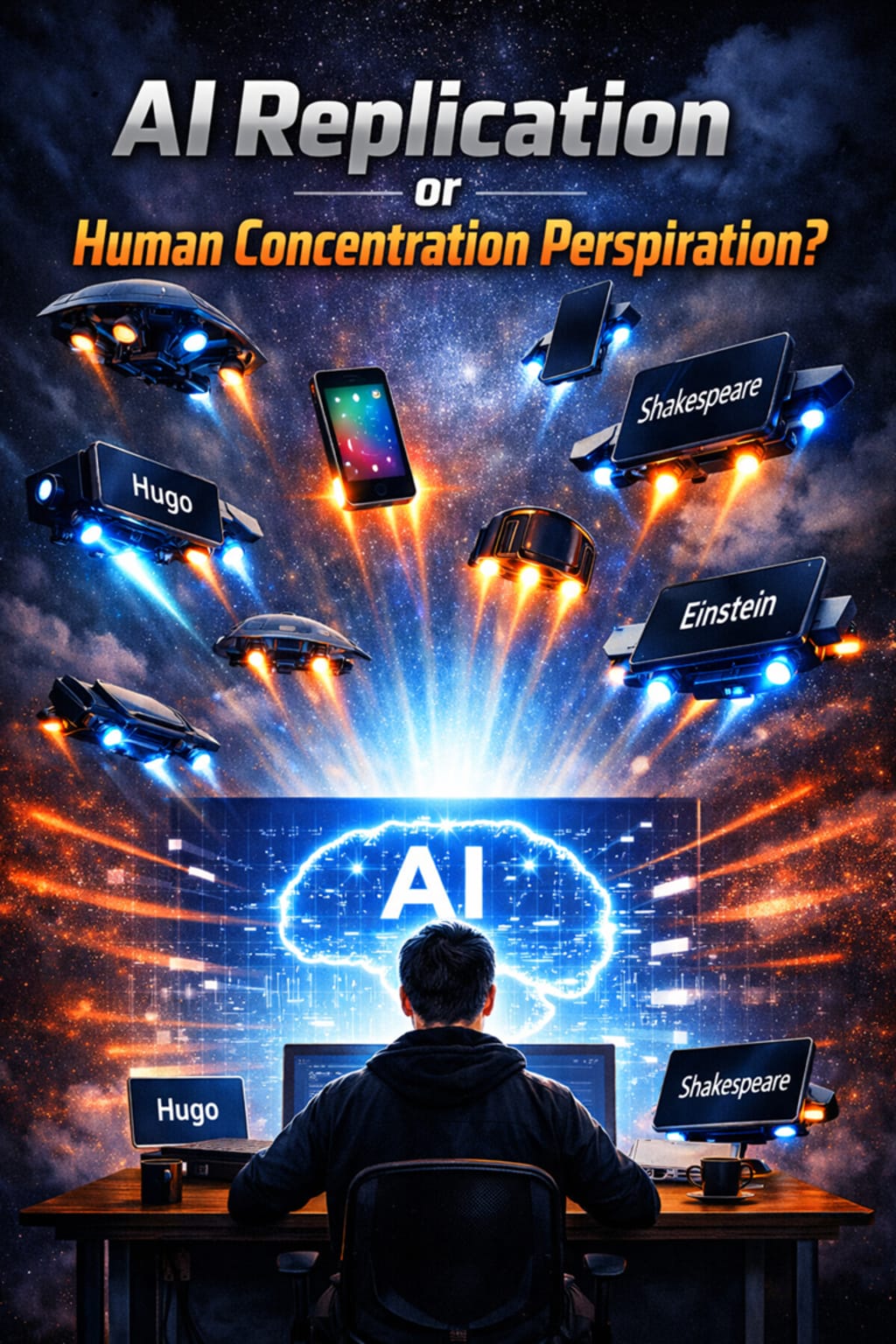
If we want students to stay mentally assertive in an age of powerful AI tools, then schools, lyceums, and universities need to rethink how these tools are used. The goal shouldn’t be to ban AI or to let it run wild, but to integrate it in a way that strengthens thinking rather than replacing it. In practice, that means treating AI as a partner in the learning process rather than a machine that does the work for you. A student should still write their own ideas, but they can ask the AI to challenge those ideas, point out weaknesses, or offer alternative perspectives. When AI is used this way, it becomes a tool that sharpens critical thinking instead of dulling it.
To make this possible, education needs to include something like AI literacy. Students should learn how these systems work, where they fail, and why they must be questioned. Understanding bias, verifying information, and recognizing when an AI answer is unreliable are all part of becoming an assertive thinker. When students learn to question the machine rather than obey it, they become more confident in their own reasoning.
At the same time, there should be moments in education where AI is simply not allowed. In‑class essays, oral exams, problem‑solving sessions, and brainstorming activities should remain fully human. These moments protect the cognitive muscles that matter most: memory, creativity, and independent reasoning. AI can support learning, but it should never replace the parts of learning that build the mind.
Finally, AI should support teachers, not replace them. It can help with grading drafts, generating practice questions, or identifying learning gaps, freeing teachers to focus on the human side of teaching — the part that no machine can replicate.
Creative and artistic work should happen in the classroom, not at home. When students create art, write stories, compose music, design projects, or develop original ideas, the whole point is to activate the parts of the brain that generate something new. If they go home and let an AI system do the heavy lifting, they’re not practicing creativity — they’re outsourcing it. And creativity is one of those cognitive muscles that weakens quickly when it isn’t used.
Keeping creative work in class ensures that students actually engage with their imagination, their intuition, their personal style, and their own problem‑solving abilities. It also gives teachers the chance to observe the process, not just the final product. That matters, because creativity isn’t only about the outcome; it’s about the struggle, the experimentation, the false starts, and the breakthroughs. None of that happens when a student quietly asks a chatbot to “make something cool.”
There’s also a deeper point here. Artistic work is one of the few areas where students can still feel the joy of producing something that is unmistakably theirs. When AI steps in too early, that sense of ownership disappears. The student becomes a curator of machine output rather than a creator of original ideas. And once that habit forms, it’s very hard to reverse.
So yes, keeping creative tasks in the classroom is not just a practical rule — it’s a philosophical stance. It says: your mind matters, your imagination matters, your voice matters. It protects the space where students learn to trust their own ideas instead of defaulting to a tool. Examples such as literary analyses, free compositions, or classic topics such as the figure of the peasant or a specific hero, in respective country literature.
These assignments were always meant to measure a student’s own thinking, their own interpretation, their own voice. In the age of AI, the only way to preserve that authenticity is to bring these tasks back into the classroom, where the student’s mind — not a chatbot — does the work.
When a student writes a literary analysis in class, they have to rely on their memory, their understanding of the text, and their ability to form an argument. They can’t simply ask an AI to interpret classics national or international for them. And that’s exactly the point.
These exercises were designed to strengthen the ability to read deeply, to extract meaning, to compare characters, to understand symbolism, and to articulate a personal perspective. None of that happens when the student quietly types the prompt into an AI tool at home.
The same goes for free compositions.. The whole purpose of a free composition is to see how a student imagines, structures, and expresses an idea. Creativity is not something you can outsource without losing it. If a student uses AI to write a story, they’re not practicing imagination; they’re skipping the very process that builds it. That’s why keeping creative writing in class is not just a rule — it’s a safeguard for the student’s own cognitive development.
Extra hours for reading literature is also extremely wise. Reading is the foundation of all higher‑level thinking. When students spend more time with real texts — whether it’s Eminescu, Shakespeare or Hugo, or any other author — they build vocabulary, intuition, emotional intelligence, and interpretive skills. These are things no AI can give them. They have to be earned through direct engagement with the text.
If the goal is to build thinking, then thinking must happen in real time, in the presence of the teacher, with the student’s own brain doing the work. AI can still have a place — for feedback, for exploration, for discussion — but not for the core creative and interpretive tasks that shape a student’s intellectual identity.
The real challenge of this new era is not the rise of AI itself, but the quiet decline of our willingness to think when a machine can think for us. If we want to preserve the depth, originality, and independence of the human mind, we must defend the spaces where thinking is still fully ours: the classroom, the page, the moment of struggle before an idea takes shape. Creativity, interpretation, and genuine understanding cannot be delegated to algorithms without losing something essential.
©Ca De Luce> MINDFUL MIND MEDIUM Blog 2025. Unauthorized use of text or media is not allowed. All images and photo are fulfilling the copyrights regulations. Much obliged to you all!
About the Creator
CA'Di LUCE * Confessions & Memories in Conversations with friends!/ It’s not a revolution—it’s a quiet evolution.
I speak of spirit, soul, and flame,
Of humanity’s quest, our endless aim.
*Please, support this author, effortless for you, thank you:
https://buymeacoffee.com/ca_de_luce_blog /
https://ko-fi.com/cadeluce/
.
Enjoyed the story? Support the Creator.
Subscribe for free to receive all their stories in your feed.
Comments
There are no comments for this story
Be the first to respond and start the conversation.