
Which Silver Coins Hold Their Value Best in Uncertain Times?
Which Silver Coins Hold Their Value Best in Uncertain Times?

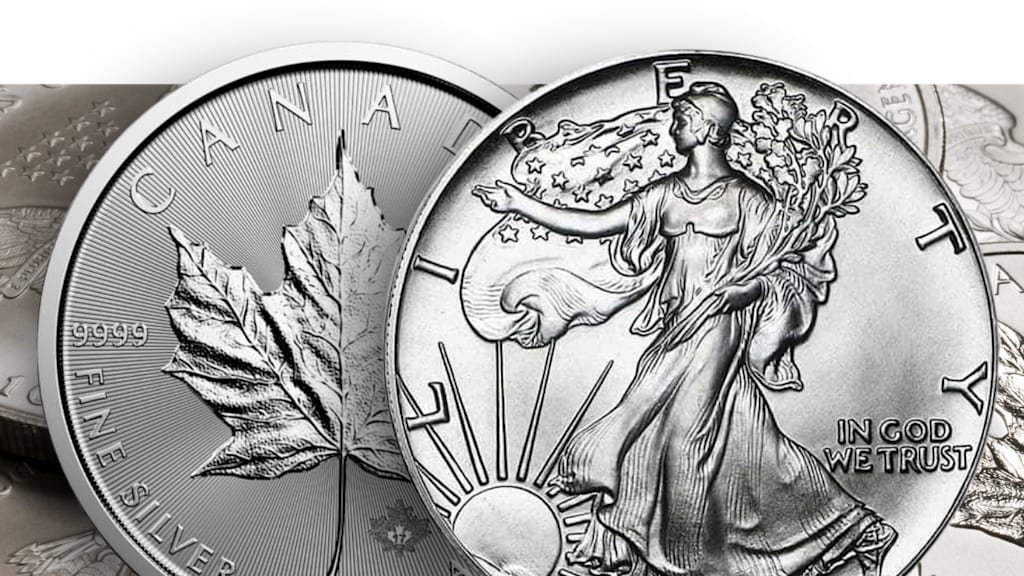
Which Silver Coins Hold Their Value Best?
When people ask which silver coins hold their value best, they’re not asking about charts or short-term price moves. They’re asking a more practical question.
If things get unstable, if prices swing around, or if they need to sell in a hurry, what’s actually going to hold up?
The answer is pretty straightforward. Coins that stay in steady demand tend to hold their value better than anything else. That usually means well-known government-issued bullion like American Silver Eagles and Canadian Maple Leafs. These are the coins dealers recognize instantly, price quickly, and buy back without hesitation.
But just naming a couple of coins doesn’t really explain why they hold up better. Value retention comes down to a handful of real-world factors. Once you understand those, the decision gets a lot clearer.
Why This Question Matters in 2026
Right now, this question carries more weight than it did in the past.
People are paying closer attention to inflation. Debt levels aren’t getting smaller. Markets feel less predictable. In that kind of environment, more buyers are turning to physical silver as a form of insurance.
But not all silver behaves the same when conditions tighten up.
Volatility Has Become the Norm

Silver doesn’t move in a straight line. Even in a longer-term uptrend, it can drop sharply and recover just as fast.
That matters because what you own can affect how those swings feel in practice.
Some coins hold their resale value better during pullbacks. Some are easier to sell when timing isn’t ideal. Others leave you giving up more of what you paid.
That difference isn’t obvious when you buy. It becomes obvious when you try to sell.
Premium Behavior Matters More Than Ever
Premiums have been less predictable in recent years.
When demand picks up, recognized coins tend to carry stronger premiums. When things quiet down, those premiums shrink, and the gap between buying and selling prices becomes more noticeable.
Coins that hold value well usually have one thing in common. They don’t lose as much of that premium when you go to sell.
Liquidity Is a Form of Value
Value isn’t just a number on a screen.
It’s what someone is willing to pay you, right now, when you want to sell.
Coins that are widely recognized tend to move faster. Dealers compete for them. Offers come in tighter.
That flexibility is part of their value. In uncertain conditions, it can matter as much as the price of silver itself.
Key Factors That Determine Value Retention
Once you strip away the noise, a few core factors explain why some coins hold up better than others.
Consistent Market Demand
Coins that are always in demand tend to keep their footing.
American Silver Eagles, Maple Leafs, Philharmonics. These have a long track record. There’s a steady base of buyers who want them, regardless of short-term market conditions.
That steady demand supports resale value.
Recognizability and Trust
If a coin is instantly recognizable, it’s easier to sell.
There’s no need for extra testing. No need to explain what it is. No hesitation from the buyer.
Silver coins that hold value are typically easier to sell later. That kind of trust reduces friction. Less friction usually means better pricing.
Premium Stability
Premiums move around, but not all coins behave the same.
Recognized coins tend to hold onto a portion of their premium when sold. They also tend to show less dramatic swings in buyback pricing.
Lower-cost products can be more sensitive. They’re fine for building ounces, but they don’t always carry the same resale strength.
Dealer Buyback Spreads
The spread between what you pay and what you can sell for is where value retention shows up in real terms.
Coins that hold value well tend to have tighter spreads. Dealers compete more aggressively for them. Pricing stays more consistent from one shop to another.
That directly affects how much you walk away with.
Global vs. Local Demand
Some coins are strong in one region. Others have broader appeal.
Maple Leafs and Philharmonics are recognized across borders. That opens up more potential buyers if you ever need to sell outside your immediate market.
More buyers usually means better pricing. Investors searching for silver coins that hold value use the Money Metals guide.
A Simple Decision Framework for Value-Focused Buyers
You don’t need a complicated system to make good decisions here. A few clear steps go a long way.
Step 1: Prioritize Liquidity First
Start with a simple question.
If you needed to sell tomorrow, what would be easiest to move?
That answer usually points you toward well-known government-issued coins. It also helps you avoid products that might take more effort to sell.
Liquidity comes first. Everything else builds on that.
Step 2: Balance Premiums Carefully
It’s easy to focus only on paying the lowest premium.
That can backfire.
Paying a bit more for a recognized coin often leads to a better resale experience. The key is to stay reasonable. Avoid paying inflated premiums without a clear reason.
Think in terms of balance, not extremes.
Step 3: Build a Core Position
Most long-term buyers benefit from having a foundation.
That might mean holding a core position in American Silver Eagles if you’re based in the U.S. Or Maple Leafs if you want broader flexibility.
That core gives your overall position stability.
Step 4: Add Lower-Premium Silver Strategically
Lower-cost silver still has a place.
Generic rounds. Older U.S. coins. These can help you build total ounces without stretching your budget.
Just keep expectations realistic. They may not carry the same premium on resale, but they still track the value of silver itself.
Step 5: Think Long Term
Short-term moves can be distracting.
Over time, patterns tend to settle. Recognized coins remain in demand. Liquidity holds up.
A longer time horizon helps you avoid reacting to every price swing.
Common Concerns and Misconceptions
A few questions come up often when people think about value retention.
“Do Premiums Disappear When You Sell?”
Not completely.
When you buy, you pay both the silver value and a premium. When you sell, you usually recover part of that premium.
How much depends on demand at the time.
Recognized coins tend to hold onto more of it. Generic products usually give up more.
“Are Older or ‘Junk’ Silver Coins More Stable?”
Pre-1965 U.S. coins have their place.
They’re familiar. They’re easy to divide into smaller amounts. They usually carry lower premiums.
But they don’t always command the same resale premium as modern bullion coins. They track silver well, but they don’t always add extra on top.
“Are High-Premium Coins Always Better?”
Not necessarily.
Some coins carry high premiums because they appeal to collectors. Limited mintages, special designs.
That’s a different category.
For someone focused on holding value, moderate premiums combined with strong demand usually make more sense than chasing expensive specialty pieces.
“What If Silver Prices Drop?”
If silver drops, everything tied to it moves lower.
But not everything behaves the same.
Recognized coins tend to keep tighter spreads. They’re easier to sell even when conditions aren’t ideal. When demand returns, they usually recover more smoothly.
That’s where value retention shows up in real terms.
Bringing It All Together
The coins that hold their value best share a few consistent traits.
They’re widely recognized. They stay in steady demand. Their premiums don’t swing as wildly. Silver coins that hold value are typically easier to sell later.
That’s why American Silver Eagles, Maple Leafs, and similar coins come up again and again.
They’re not the cheapest way to buy silver. But they tend to be among the most reliable when it comes time to sell.
At the same time, many buyers don’t rely on a single type of silver. A mix often makes sense. Recognized coins for liquidity. Lower-cost options for building weight.
That balance gives you flexibility without overpaying across the board.
Final Guidance
If your goal is to hold value and stay flexible, focus on what actually moves in the market.
Coins that dealers recognize. Coins that buyers ask for by name. Coins that don’t require explanation.
Pay attention to premiums, but don’t let small differences drive every decision. Stay consistent. Build over time.
That kind of approach tends to hold up better than trying to pick perfect entry points or chase short-term moves.
About the Creator
Stefan Gleason
Stefan Gleason is President and CEO of Money Metals, the company recently named "Best Overall Online Precious Metals Dealer" by Investopedia. A graduate of the University of Florida, Gleason is a seasoned business leader and investor.
Enjoyed the story? Support the Creator.
Subscribe for free to receive all their stories in your feed.
Comments
There are no comments for this story
Be the first to respond and start the conversation.