college
Maximize your university experience with these tips for all things collegiate–how to achieve a perfect GPA, select the right major, finance your college education and more.
"Understanding Kurtosis and How to Determine if Your Data has a Normal Distribution."
What is Kurtosis? Kurtosis is a statistical term that measures the degree of peaked Ness or flatness of a distribution compared to the normal distribution. A distribution with high kurtosis has a sharp peak and fat tails, indicating that it has a higher probability of extreme values than a normal distribution. On the other hand, a distribution with low kurtosis has a flatter peak and thinner tails, indicating that it has a lower probability of extreme values than a normal distribution.
By ajay mehta3 years ago in Education
"Unlocking the Power of Chi Square: A Guide to Statistical Analysis"
Chi Square Distribution The Chi-Square distribution, also written as χ² distribution, is a continuous probability distribution that is widely used in statistical hypothesis testing, particularly in the context of goodness-of-fit tests and tests for independence in contingency tables. It arises when the sum of the squares of independent standard normal random variables follows this distribution.
By ajay mehta3 years ago in Education
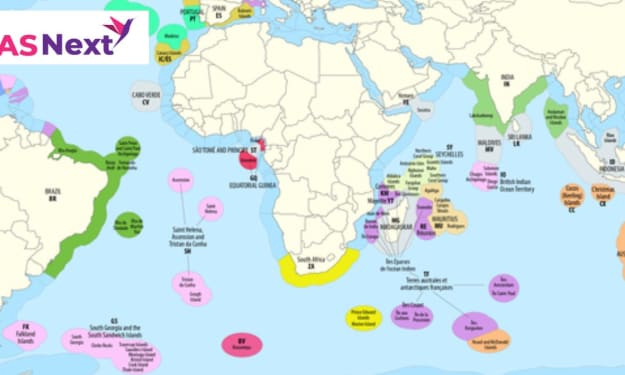
VETASSESS Skill Assessment in Australia
To ensure that skills are assessed accurately and fairly, the Australian government has established the Vocational Education and Training Assessment Services (VETASSESS). In this blog post, we will explore the significance of the VETASSESS skill assessment and its role in helping individuals pursue their professional aspirations in Australia.
By james michel3 years ago in Education
Education system in india
Start writing...Current Education System in India: The education system in India is divided into three levels- primary education (classes 1-5), secondary education (classes 6-12) and higher education (graduation and post-graduation in colleges and universities). The primary education system is free and mandatory for all children between 6 and 14 years of age. The government had also introduced the Right to Education Act in 2009, which promised free and compulsory education for all children between 6 and 14 years of age. However, the Indian education system still has a long way to go when it comes to providing quality education.
By Sakshi Verma3 years ago in Education
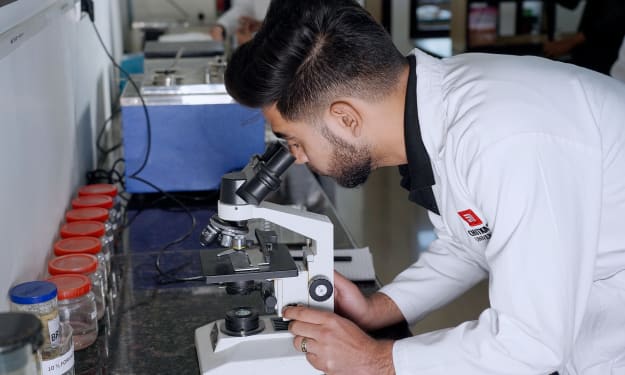
The Science Behind Saving Lives: How a Bachelor's Degree in Medical Laboratory Science Can Make a Difference in the Healthcare Industry
In the fast-paced and ever-evolving world of healthcare, the role of medical laboratory scientists has become increasingly crucial. These highly skilled professionals work diligently behind the scenes, utilizing their expertise in science and technology to save lives and improve patient care. A Bachelor's degree in Medical Laboratory Science equips individuals with the knowledge and skills necessary to be at the forefront of diagnostic medicine. From analyzing blood samples to identifying infectious diseases, medical laboratory scientists play a pivotal role in the accurate and timely diagnosis of various conditions. With advancements in technology and the increasing demand for accurate and reliable laboratory results, the need for qualified professionals in this field has never been greater. If you have a passion for science, a desire to make a difference in the healthcare industry, and a keen eye for detail, a Bachelor's degree in Medical Laboratory Science could be your ticket to a rewarding and impactful career. Discover the science behind saving lives and embark on a journey of innovation and discovery in the healthcare industry.
By Chitkara University3 years ago in Education