Sustainability
The Bench That Faced the River
The bench had been there longer than anyone could remember. It sat at the edge of the riverwalk, facing the slow-moving water, its paint chipped and its wood smoothed by years of weather and waiting. People passed it every day—joggers, couples, tourists with cameras—but only a few ever sat down.
By Yasir khan9 months ago in Earth
The Richest Impact Craters on Earth: How Asteroids Created Geological Wealth
1. Vredefort Crater – South Africa The Creator The Vredefort Crater was created about 2 billion years ago by an asteroid estimated to be 10–15 kilometers wide. The collision released energy greater than billions of nuclear bombs. Crater Formation The impact fractured Earth’s crust deeply, causing extreme heat and pressure. This event altered rock layers across a vast region, redistributing minerals and creating pathways for gold-rich fluids. Economic Importance The crater is closely linked to the Witwatersrand Basin, the richest gold-producing region in human history. Over 30% of all gold ever mined comes from this area Estimated total gold value: trillions of dollars While the asteroid did not directly “bring” gold, it played a major role in concentrating and preserving gold deposits, making Vredefort the most economically significant impact crater on Earth. 2. Sudbury Basin – Canada The Creator The Sudbury Basin was formed around 1.85 billion years ago by a massive asteroid impact. The asteroid is estimated to have been 10 km or larger. Crater Formation The impact melted vast quantities of rock, forming a magma sheet rich in metals. As the molten material cooled, heavy metals settled into concentrated layers. Economic Importance Sudbury is one of the world’s richest mining regions, containing: Nickel Copper Platinum-group metals The metals extracted from Sudbury have been essential for: Stainless steel Electronics Aerospace industries Estimated economic value of Sudbury’s metals exceeds hundreds of billions of dollars, with reserves still remaining underground. 3. Chicxulub Crater – Mexico The Creator The Chicxulub Crater was created 66 million years ago by an asteroid approximately 10–12 km wide. Crater Formation This impact caused: Massive earthquakes Global firestorms A “nuclear winter” effect It is famously linked to the extinction of the dinosaurs. Economic and Geological Importance Although not a major mining region, Chicxulub’s value lies in: Scientific knowledge Oil and gas trapping structures Understanding mass extinctions The crater helped form geological conditions that trap hydrocarbons in the Gulf of Mexico, indirectly contributing to billions of dollars in energy resources. 4. Popigai Crater – Russia The Creator Popigai Crater formed 35 million years ago in Siberia after a massive asteroid impact. Crater Formation The impact generated extreme pressure, transforming carbon into impact diamonds. Economic Importance Popigai is believed to contain the largest diamond deposit on Earth, far exceeding traditional diamond mines. These diamonds are mostly industrial-grade Extremely hard and valuable for cutting and drilling If fully exploited, Popigai’s diamond resources could be worth hundreds of billions of dollars, though mining challenges and environmental concerns limit extraction. 5. Morokweng Crater – South Africa The Creator The Morokweng Crater was created around 145 million years ago by a large asteroid impact. Crater Formation The impact buried the crater deeply under sediments, preserving fragments of the asteroid itself. Economic Importance While not a major mining site, Morokweng is scientifically important because asteroid fragments were found embedded in Earth’s crust. These fragments help scientists understand asteroid composition and early solar system materials. Its value is primarily scientific rather than commercial. 6. Manicouagan Crater – Canada The Creator Manicouagan Crater formed 214 million years ago after a massive asteroid strike. Crater Formation The impact created a large ring-shaped structure still visible today, often called the “Eye of Quebec.” Economic and Environmental Value Though not a major metal source, the crater hosts: Hydroelectric power stations Freshwater resources The hydroelectric value generated over decades contributes billions of dollars in renewable energy. 7. Hoba Meteorite Site – Namibia (Honorable Mention) The Creator Unlike craters, the Hoba meteorite is a massive iron meteorite that landed intact around 80,000 years ago. Economic Value Contains iron and nickel Estimated metal value: millions of dollars However, its scientific and cultural value far exceeds its raw metal worth. Why Impact Craters Become Wealth Centers Asteroid impacts create wealth because they: Fracture deep rock layers Concentrate metals Create heat-driven mineral flows Preserve ancient deposits Without these events, many of Earth’s richest mineral zones would not exist or would be inaccessible. Estimated Combined Wealth of Impact Craters
By Say the truth 9 months ago in Earth
Magnitude 6.5 Earthquake Shakes Southern and Central Mexico, Felt in Mexico City
It was a calm Friday morning — the first working Friday of the year — when a deep, rumbling tremor suddenly disrupted the dawn. People across southern and central Mexico were just settling into their routines, anticipating another ordinary day. Then the ground began to move.
By Raviha Imran9 months ago in Earth
Earthquake Near Me: Why This Search Is Surging Across the United States
Earthquake Near Me: Why This Search Is Surging Across the United States Across the United States, millions of people are suddenly typing the same alarming phrase into their phones and computers: earthquake near me. The spike in this search is not random. It reflects a growing sense of uncertainty, heightened awareness, and fear driven by recent tremors, phone alerts, social media posts, and the memory of past disasters. When the ground shakes, even slightly, people instinctively seek answers. They want to know what happened, whether it will happen again, and how to protect themselves and their families. One of the most common questions people are asking is why they felt shaking when no major earthquake was reported immediately. Small or moderate earthquakes can be felt over wide areas, especially at night when background noise is low. In some cases, vibrations from construction, explosions, or even weather-related events can feel like seismic activity. However, the uncertainty itself pushes people to search for confirmation, reassurance, and real-time information. Another frequent question is whether an earthquake near me means a bigger one is coming. This fear is understandable, but the answer is complex. Earthquakes are difficult to predict, and most small tremors do not lead to larger events. Aftershocks can follow a noticeable quake, but they usually decrease in strength over time. The sudden rise in searches often reflects fear of the unknown rather than evidence of an impending disaster. Many people are also asking which areas in the United States are most at risk. States along major fault lines tend to experience more frequent earthquakes, but tremors can occur almost anywhere. Recent activity in unexpected regions increases public anxiety, as people are reminded that earthquakes are not limited to a single part of the country. This broader awareness is one of the main reasons the phrase earthquake near me spreads so quickly during seismic events. Another popular concern is what to do immediately after feeling shaking. Confusion and panic are common reactions, especially for people who have never experienced an earthquake before. Staying calm, checking for injuries, and avoiding damaged structures are critical first steps. People often search online to confirm whether others felt the same thing and to understand what actions are safest in the minutes that follow. The rise of smartphones and instant alerts also plays a major role in this trend. When phones vibrate with emergency notifications or social media fills with posts about shaking, fear spreads faster than the earthquake itself. Even those who did not feel anything may begin to worry and search for information. This creates a chain reaction where curiosity, anxiety, and caution blend together, driving massive spikes in search activity. Another question people frequently ask is whether earthquakes can be predicted or prevented. The honest answer is that science has not yet reached that point. While technology can detect earthquakes quickly after they begin, predicting the exact time and location in advance remains impossible. This uncertainty fuels public concern and keeps people searching for updates, explanations, and warnings. People are also asking how to prepare for an earthquake if they live in a high-risk or newly active area. Preparation is one of the few areas where individuals have control. Having emergency supplies, securing heavy furniture, and knowing safe spots inside the home can make a significant difference. The surge in searches shows that many people are realizing preparedness matters, even if earthquakes are rare where they live. Another important question is why anxiety spreads so quickly after seismic activity. Earthquakes strike without warning, disrupt daily life, and challenge the sense of safety people rely on. When combined with dramatic videos, breaking news headlines, and personal stories shared online, fear can escalate rapidly. Searching for earthquake near me becomes a way to regain control and understanding in an unpredictable situation. In the end, the popularity of this search phrase reflects more than just geological activity. It reveals how modern society responds to sudden threats. People seek clarity, reassurance, and practical guidance in moments of uncertainty. While not every search indicates real danger, it highlights the importance of awareness and readiness. The surge in searches for earthquake near me is a reminder that natural disasters do not need to be catastrophic to have an emotional impact. Even a brief shake can awaken deep fears and prompt millions to look for answers. Staying informed, prepared, and calm remains the most powerful response when the ground beneath us reminds us how fragile normal life can be.
By America today 9 months ago in Earth
HURRICANE CERBERUS: A DEADLY STORM THAT WILL NOT FORGIVE HESITATION
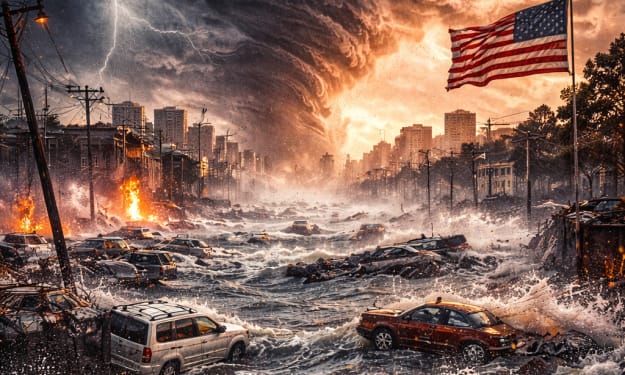
**HURRICANE CERBERUS: A DEADLY STORM THAT WILL NOT FORGIVE HESITATION** Hurricane Cerberus is not an ordinary storm. It represents the most violent expression of nature’s power, a force capable of destroying lives, cities, and entire regions in a matter of hours. Storms of this scale do not simply pass through an area; they transform it beyond recognition. The threat posed by Hurricane Cerberus demands absolute seriousness, immediate action, and zero complacency. When a hurricane reaches this level of intensity, it becomes more than wind and rain. It becomes a moving disaster zone. Winds strong enough to tear buildings apart can turn everyday objects into deadly weapons. Roofs are ripped away, walls collapse, and entire neighborhoods are reduced to debris fields. Power grids fail instantly, plunging millions into darkness and isolation. Once Cerberus makes landfall, survival depends almost entirely on decisions made before its arrival. The most terrifying danger associated with Hurricane Cerberus is storm surge. Massive walls of ocean water can push inland with unstoppable force, flooding coastal cities within minutes. Streets become rivers, homes become traps, and escape routes vanish. Many victims of past hurricanes believed they had more time. They were wrong. Storm surge does not give warnings at the door. It arrives fast, violent, and deadly. Flooding does not stop at the coast. Inland regions face relentless rainfall that overwhelms rivers, dams, and drainage systems. Entire towns can disappear under water. Vehicles are swept away, bridges collapse, and roads become impassable. Emergency services are rendered powerless as responders struggle to reach those in need. In these moments, people are left alone with the consequences of delay. One of the most dangerous illusions during hurricanes like Cerberus is false confidence. People convince themselves that they have survived storms before, that this one will be similar, or that evacuation is unnecessary. History proves otherwise. Every major hurricane disaster is filled with stories of people who waited one hour too long. When evacuation orders are issued, they represent the last safe window to escape. Ignoring them often leads to irreversible outcomes. Hospitals and emergency infrastructure face extreme strain during catastrophic hurricanes. Power outages disrupt life-saving equipment. Flooded roads prevent ambulances from moving. Medical staff are overwhelmed, and resources run out quickly. Those who rely on daily medications, oxygen, or medical devices are placed in immediate danger. In such conditions, emergency systems cannot save everyone. Preparation at the individual level becomes the final line of defense. As Hurricane Cerberus advances, panic becomes as dangerous as the storm itself. Highways clog with vehicles. Fuel shortages leave families stranded. Communication networks fail, separating loved ones when they need each other most. Children, the elderly, and people with disabilities are especially vulnerable. Once conditions deteriorate, rescue operations may be impossible for days. Nature controls the timeline, not human intention. The aftermath of a storm like Cerberus is often worse than the storm itself. Floodwaters contaminate drinking supplies. Food spoils without refrigeration. Extreme heat or cold becomes deadly without power. Disease spreads rapidly in stagnant water. Communities face not only physical destruction, but psychological trauma that can last for years. For many survivors, returning home is not an option because nothing remains to return to. In severe cases, displacement becomes permanent. Families are forced to leave their cities, their jobs, and their memories behind. This is not relocation by choice, but by survival. When recovery timelines stretch into years and infrastructure is destroyed beyond repair, moving elsewhere becomes the only path forward. The cost of staying can be far higher than the pain of leaving. Hurricane Cerberus serves as a brutal reminder that preparation is not optional. It is not fear-driven. It is survival-driven. Knowing evacuation routes, securing essential supplies, and acting early saves lives. Waiting for absolute certainty is the most dangerous mistake anyone can make. In conclusion, Hurricane Cerberus is the kind of storm that punishes hesitation. It does not negotiate, weaken for convenience, or spare those who underestimate it. When warnings are issued, action must follow immediately. Survival belongs to those who prepare early, evacuate when told, and respect the raw power of nature. When the winds rise and the water surges, there will be no second chances.
By America today 9 months ago in Earth
Saudi Arabia and Yemen: A Conflict That Refuses to End
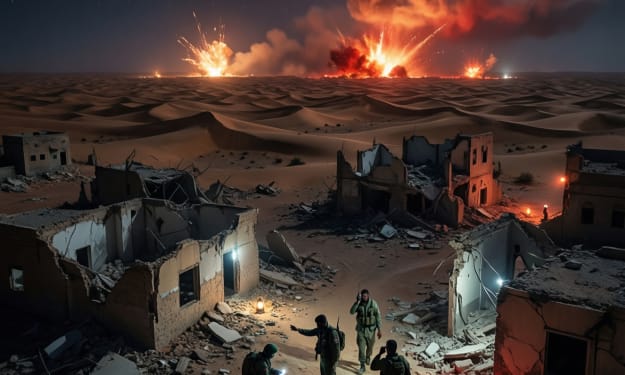
Saudi Arabia and Yemen: A Conflict That Refuses to End The conflict between Saudi Arabia and Yemen is one of the longest and most complex wars in the Middle East. While the intensity of fighting has changed over time, reports of renewed airstrikes and military activity continue to raise concern across the region. Understanding what is happening requires separating confirmed facts from political claims and looking at the broader context of the war.
By Wings of Time 9 months ago in Earth
Hazardous Products Are Everywhere
Most companies don’t intend to sell hazardous products. They design something useful, source parts from reputable suppliers, and assume that if the product looks fine and works, it’s “safe.” But chemical compliance doesn’t work like that. A product can be perfectly functional and still be considered “hazardous” in a regulatory sense—because it contains restricted substances above legal limits, triggers consumer exposure risks without required warnings, or lacks the documentation needed to prove compliance during an inspection.
By Mahgol Nikpayam9 months ago in Earth
Tensions Rise: USA, Israel, and Iran — What We Know”
Tensions Rise: USA, Israel, and Iran — What We Know” In the last few days, world attention turned to a high-profile meeting between U.S. President Donald Trump and Israeli Prime Minister Benjamin Netanyahu at Trump’s Mar-a-Lago residence in Florida. The leaders met to discuss a range of issues, but a major focus was Iran — its ballistic missile program and its nuclear developments.
By Wings of Time 9 months ago in Earth
Stanislav Kondrashov on Repowering: The Silent Engine of the Energy Transition
In the sweeping narrative of the global energy transition, much attention is paid to wind farms sprouting across coastlines and solar panels blanketing rooftops. But beneath the headlines and political fanfare, there is a quieter, technical evolution unfolding — one that may be just as crucial to the future of energy: repowering.
By Stanislav Kondrashov9 months ago in Earth
Stanislav Kondrashov on the Untapped Promise of Geothermal Energy
In a world scrambling for sustainable solutions, geothermal energy remains a quietly humming giant—steady, consistent, and largely overlooked. While solar panels glitter on rooftops and wind farms dominate skylines, the power pulsing just beneath our feet rarely gets the attention it deserves. But if energy expert and commentator Stanislav Kondrashov is right, that’s about to change.
By Stanislav Kondrashov 9 months ago in Earth