Sustainability
Metals in Soil: Hidden Elements That Shape Life
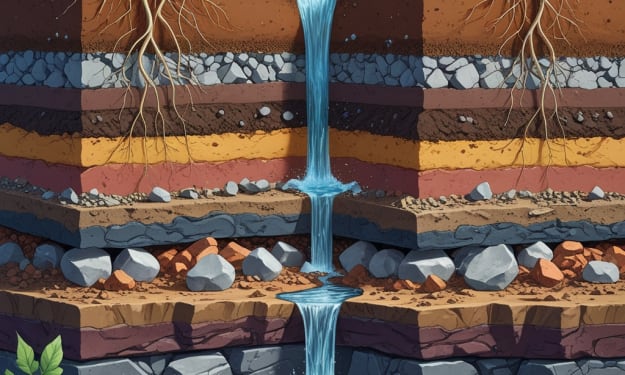
Metals in Soil: Makeup, Role, and Eco Effects Introduction How Metals Reach Soil From Nature Rocks weather over time. Wind, rain, and bugs break them down. This frees metals like iron, aluminum, calcium, and magnesium into soil. Volcano blasts drop ash with metals. Rivers carry metal bits to flat lands. This boosts soil power. From People People add lots of metals to soil. Key ways include: Mining and metal processing Factory waste dumps Farm chemicals and bug killers Sludge from waste plants Car fumes and city dirt Too much buildup harms safe limits. Key Metals for Plants Plants need certain metals to grow well. Iron (Fe) Iron fills soil in big amounts. It helps: Make chlorophyll Run plant enzymes Move energy in plants No iron yellows leaves. Too much cuts air in soil. Calcium (Ca) Calcium builds better soil shape. It cuts acid levels. It: Toughens plant cell walls Grows strong roots Boosts soil bugs Soils high in calcium grow more food. Magnesium (Mg) Magnesium builds chlorophyll. It: Aids light-use in plants Starts enzyme work Raises crop taste Low levels slow plant growth. Potassium (K) Potassium keeps plant water steady. It fights sickness. It: Lifts crop amounts Handles dry spells Betters fruit taste Tiny Metals as Plant Food Small doses of trace metals spark life processes. Zinc (Zn) Zinc runs enzymes and makes seeds. Farm soils often lack it. This cuts crop output. Copper (Cu) Copper aids light and breath in plants. Too much hurts roots and soil life. Manganese (Mn) Manganese helps nitrogen use and light work. High levels poison leaves. Nickel (Ni) Nickel needs tiny bits. It turns poison if built up. Dense Toxic Metals Heavy metals pack weight and poison. Lead (Pb) Lead dirties spots near factories and roads. It: Hurts brain and nerves Cuts soil richness Poisons kids bad Cadmium (Cd) Fertilizers and mine trash bring cadmium. It builds in food plants. It wrecks human kidneys. Mercury (Hg) Coal fires and factories free mercury. It poisons fast and climbs food chains. What Changes Metal Use in Soil Soil Acid Level pH sets how metals dissolve. Sour soils free more metals. They grow toxic. Base soils block plant take-up. Plant Debris Debris grabs metals. It stops their spread. Lots of it cuts heavy metal harm. It heals soil. Soil Feel Clay traps more metals than sand. Its big surface holds tight. Plants Take Metals Roots suck up metals. Some plants grab tons. We call them super-takers. They clean bad soils with plant power. Eco and Health Harm Extra metals spark: Dirty soil Low food crops Bad ground water Sick people and beasts Long contact brings lasting ills. Fix and Care for Soil Fight metal dirt with: Soil checks often Organic waste to cut poison Lime to lock metals Plant clean-up methods Smart care keeps farms going. Metals Face Climate Shifts Wild weather moves metals. Floods and hard rains spread them. Risk of dirt rises. Role in Green Farming Right metal mix gives: Strong crops Safe eats Land safety Soil that lasts New Tools and Studies Tech like: Satellites for watch Smart computers for soil checks Tiny tech fixes Spot and fix soil metals well.
By Say the truth 9 months ago in Earth
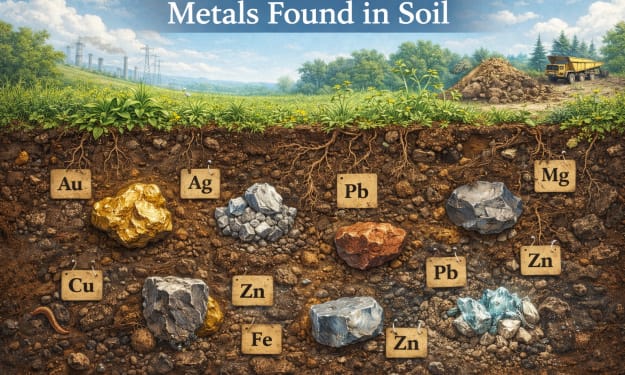
Metals Found in Soil Hidden Elements Beneath the Earth’s Surface. AI-Generated.
How Metals Enter the Soil Metals enter soil through both natural and human-made processes. Natural Sources Weathering of rocks releases metals into the soil over millions of years Volcanic activity adds metal-rich ash River deposits spread metal particles across land Human Activities Mining and smelting Industrial waste disposal Use of fertilizers and pesticides Vehicle emissions and urban pollution Over time, these processes increase the concentration of metals in soil. Common Metals Found in Soil 1. Iron (Fe) Iron is one of the most abundant metals in soil. It gives soil its red or brown color. Importance: Essential for plant growth Helps in chlorophyll formation Improves soil structure Iron-rich soils are commonly found in tropical and subtropical regions. 2. Aluminum (Al) Aluminum is naturally present in most soils. Characteristics: Not essential for plants Can become toxic in acidic soils Affects root growth High aluminum levels can reduce crop productivity. 3. Calcium (Ca) Calcium is a beneficial metal found in soil. Role: Improves soil fertility Helps plant cell wall development Reduces soil acidity Lime is often added to soil to increase calcium content. 4. Magnesium (Mg) Magnesium is an essential nutrient. Importance: Part of chlorophyll molecule Helps enzyme activity in plants Improves photosynthesis Magnesium-deficient soils lead to poor plant growth. 5. Potassium (K) Potassium is widely found in soil minerals. Uses: Enhances plant resistance to disease Improves crop yield Regulates water balance in plants It is commonly added through fertilizers. Trace Metals in Soil Trace metals are present in very small amounts but are extremely important. 6. Zinc (Zn) Essential for plant enzymes Helps seed development Deficiency causes stunted growth 7. Copper (Cu) Required for photosynthesis Supports plant respiration Excess copper can be toxic 8. Manganese (Mn) Aids plant metabolism Helps nitrogen use High levels cause leaf damage 9. Nickel (Ni) Needed in very small quantities Supports enzyme activity Toxic at higher concentrations Heavy Metals in Soil Heavy metals are a serious concern because they can be toxic. 10. Lead (Pb) Comes from industrial waste and old paints Affects human nervous system Dangerous for children 11. Cadmium (Cd) Found near mining areas Accumulates in crops Causes kidney and bone damage 12. Mercury (Hg) Released from coal burning and industries Highly toxic Can enter food chains Benefits of Metals in Soil Not all metals are harmful. Many are essential for life. Positive roles include: Supporting plant nutrition Improving crop yield Maintaining soil structure Supporting microorganisms Healthy soil contains a balanced mix of metals. Negative Effects of Excess Metals Excessive metal concentration can cause: Reduced plant growth Soil pollution Contaminated groundwater Health risks to humans and animals Crops grown in contaminated soil may absorb toxic metals. Metal Absorption by Plants Plants absorb metals through their roots. Some plants, called hyperaccumulators, can absorb large amounts of metals. These plants are used in phytoremediation, a method to clean polluted soils naturally. Managing Metal Levels in Soil To maintain healthy soil: Test soil regularly Use fertilizers carefully Add organic matter Avoid industrial waste dumping Practice crop rotation These methods help control metal concentration. Importance for Human Life Metals in soil indirectly affect human health through food. Balanced metal levels ensure: Nutritious crops Safe drinking water Healthy ecosystems Soil management is crucial for sustainable agriculture.
By Say the truth 9 months ago in Earth
Stanislav Kondrashov on the Role of Journalism in the Age of Energy Transition
In the midst of a global energy transition, journalism finds itself at a crossroads. As industries reimagine their futures and governments draft sweeping climate policies, the media’s task of translating complexity into clarity has never been more critical. Yet, journalism’s relevance in this new energy era is not guaranteed—it must be earned.
By Stanislav Kondrashov9 months ago in Earth
Chemical Recycling Pathways Enabled by Tire Pyrolysis
Chemical recycling of end-of-life tires has moved from experimental validation to industrial deployment. Unlike mechanical recycling, which is constrained by material degradation and limited end-use markets, tire pyrolysis enables molecular-level recovery. It converts complex elastomeric composites into reusable chemical fractions with measurable industrial value. This shift is reshaping how tire waste is positioned within circular economy frameworks.
By Wayne Shen9 months ago in Earth
The AI That Can Predict Your Next Move—And Why Everyone Is Talking About It
Imagine this: You’re scrolling through your favorite app, and suddenly it recommends something before you even knew you wanted it. A movie, a song, an article—it’s eerily precise. Some people call it coincidence. Others call it magic. But the truth? It’s artificial intelligence. And the kind of AI that’s being developed today isn’t just smart—it’s predictive, almost like it can read your mind.
By Yasir khan9 months ago in Earth
Australia HVAC Market Set to Quadruple by 2033 on Smart, Energy-Efficient Growth Wave. AI-Generated.
The Australia HVAC market reached a total valuation of USD 7,072.73 million in 2024 and is expected to grow robustly to USD 27,317.57 million by 2033, reflecting a compound annual growth rate (CAGR) of 16.20% between 2025 and 2033, according to IMARC Group. This rapid expansion underscores how climate control technologies are becoming essential across residential, commercial, and infrastructure segments in Australia, supported by evolving consumer preferences, regulatory drivers, and innovation.
By Rashi Sharma9 months ago in Earth
The Water Crisis That Could Spark Global Tensions
The Water Crisis That Could Spark Global Tensions Water—something we often take for granted—is becoming one of the world’s most precious resources. Across the globe, rivers are drying up, lakes are shrinking, and underground water supplies are disappearing faster than they can naturally refill. What was once a local problem is now a growing international concern, and countries are beginning to clash over access to freshwater.
By Wings of Time 9 months ago in Earth
Stanislav Kondrashov: Why Culture Development Matters in the Age of Energy Transition
As governments, industries, and communities reshape their futures around renewable energy, there’s a quieter, less measurable transition underway—one that Stanislav Kondrashov believes is equally urgent. It’s not about the mechanics of wind turbines or the economics of solar grids, but about people—their values, behaviours, and the cultures that bind them.
By Stanislav Kondrashov9 months ago in Earth
Stanislav Kondrashov on Electrification: A Quiet Revolution in the Energy Transition
In the shadow of global climate summits and high-profile policy shifts, a quieter but equally significant transformation is underway: electrification. Long associated with the conveniences of modern life, electricity now finds itself at the heart of a wider energy transition, reshaping how societies power homes, transport, and industries.
By Stanislav Kondrashov9 months ago in Earth
Stanislav Kondrashov on the Power of Permanence: How Permanent Magnets Are Shaping the Energy Transition
In the ongoing shift from traditional fuels to renewable energy, some of the most transformative technologies of our time are being powered—quietly, invisibly—by materials that rarely make headlines. One of the most underappreciated forces driving this change is the permanent magnet.
By Stanislav Kondrashov9 months ago in Earth
Australia Electric Vehicle (EV) Charging Market Set to Surge to USD 1.69 Billion as Infrastructure Expands Nationwide. AI-Generated.
The Australia electric vehicle (EV) charging market reached a valuation of USD 304.4 million in 2025 and is projected to expand significantly to USD 1,692.2 million by 2034, recording a robust compound annual growth rate (CAGR) of 21.0% between 2026 and 2034 according to IMARC Group data. This reflects a fundamental shift in Australia’s transportation and energy landscape as both public and private stakeholders invest in charging infrastructure to support rapidly rising electric vehicle adoption.
By Rashi Sharma9 months ago in Earth
The Hidden Magic of Ordinary Days
We tend to wait for life to deliver something extraordinary. A huge adventure. A moment that changes everything. A story worth telling. But the truth is, magic doesn’t always arrive with fanfare. Most of it is subtle, tucked into ordinary days, waiting for someone curious enough to notice.
By Yasir khan9 months ago in Earth