Sustainability
Regenerative Agriculture's Quiet Revolution
by Futoshi Tachino Regenerative agriculture — a holistic approach to farming that restores soil health, biodiversity, and resilience — has rapidly gained traction in recent years. This shift remains largely underappreciated by the public; in a 2024 survey, around 43% of U.S. consumers had never heard of regenerative agriculture (and another 28% had only minimal awareness) [4]. Despite this low profile, tangible developments in regenerative farming are delivering robust results. Farmers are proving that it’s possible to maintain high yields with fewer chemical inputs, improve profitability, and enhance ecological outcomes — all at once. This article explores the evidence-backed progress of regenerative agriculture across regions, the policies and technologies driving its adoption, and why this overlooked sustainability success story deserves greater recognition.
By Futoshi Tachino8 months ago in Earth
The Refrigerant Transition
Cooling seldom features in climate headlines, yet it is one of the quietest success stories of the last decade. Under the Kigali Amendment to the Montreal Protocol, countries are phasing down hydrofluorocarbons (HFCs)—super-pollutant refrigerants—while retailers and manufacturers rapidly switch to ultra-low-GWP “natural” refrigerants such as carbon dioxide (R744) and propane (R290). Fully implemented, Kigali alone can avert roughly 0.4–0.5°C of warming by 2100; paired with efficiency improvements, the avoided warming can be closer to ~1°C—an enormous contribution from a single policy family [1–2].
By Futoshi Tachino8 months ago in Earth
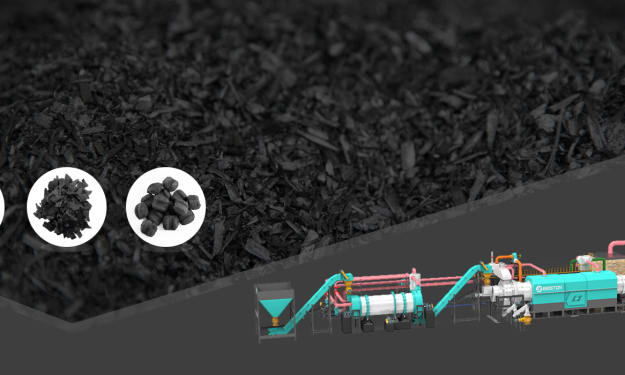
Biochar: Unlocking the Potential for Climate Change Mitigation and Carbon Markets. AI-Generated.
Biochar is created through the process of pyrolysis, where organic materials such as agricultural waste, wood, or even certain types of plastic are heated in the absence of oxygen. This process breaks down the biomass into three main products: gas, liquid (bio-oil), and solid carbon-rich residue—biochar. Unlike organic matter that decomposes naturally, releasing carbon dioxide (CO₂) into the atmosphere, biochar locks carbon in a stable form that can persist in the soil for hundreds or even thousands of years.
By Bestonpyrolysis8 months ago in Earth
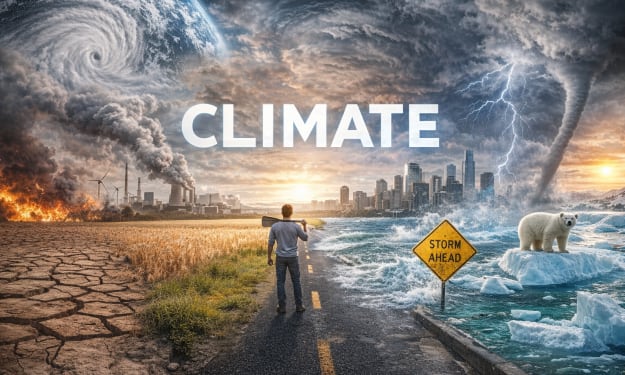
Climate Uncovered: How Earth’s Atmosphere Shapes Our Past, Present, and Future
## Climate Uncovered: How Earth’s Atmosphere Shapes Our Past, Present, and Future Climate is more than just a scientific term or a topic in school textbooks. It is a powerful force that shapes ecosystems, economies, cultures, and daily life across the planet. From the clothes people wear to the food they grow and the cities they build, climate plays a defining role. In recent years, interest in climate has grown rapidly as people seek to understand long-term environmental changes and what they mean for the future of humanity. This article explains climate in a clear and engaging way while answering the most common questions people search for and ask. **What Is Climate?** Climate refers to the long-term average of weather conditions in a specific place over an extended period, usually decades. It includes patterns of temperature, rainfall, humidity, wind, and seasonal variations. Climate tells us what kind of weather is typical for a region, such as cold winters, hot summers, or consistent rainfall throughout the year. Unlike daily weather, which can change quickly, climate changes slowly and reflects broader atmospheric behavior. **What Is the Difference Between Climate and Weather?** Weather describes short-term atmospheric conditions, such as today’s temperature, rain, or wind. Climate, on the other hand, is the long-term pattern of weather over many years. A single hot day does not define climate, but repeated hot summers over decades do. In simple terms, weather is what happens now, while climate is what usually happens. **What Are the Main Types of Climate?** There are several major climate types around the world. Tropical climates are generally hot and humid with frequent rainfall. Dry climates include deserts and semi-arid regions with very little precipitation. Temperate climates have moderate temperatures and clear seasonal changes. Continental climates experience hot summers and cold winters, while polar climates are extremely cold year-round. These climate types influence vegetation, wildlife, and human settlement patterns. **What Is Climate Change?** Climate change refers to long-term shifts in average climate conditions on Earth. These changes include rising global temperatures, altered rainfall patterns, melting ice, and rising sea levels. While Earth’s climate has changed naturally in the past, current changes are happening more rapidly and are closely linked to human activities, especially those that release greenhouse gases into the atmosphere. **Why Is Climate Changing?** Modern climate change is largely driven by human actions such as burning fossil fuels, cutting down forests, and expanding industrial activities. These actions increase the amount of greenhouse gases in the atmosphere, which trap heat and cause the planet to warm. As a result, natural climate systems are being disrupted, leading to long-term environmental changes. **How Does Climate Affect Daily Life?** Climate affects almost every aspect of daily life. It influences agriculture by determining what crops can grow and when. It affects water availability, energy use, and public health. In hot climates, people may rely more on cooling systems, while colder regions require heating. Climate also impacts transportation, housing design, and even cultural traditions and lifestyles. **How Does Climate Change Affect Weather Extremes?** Climate change can make extreme weather events more frequent and intense. Heatwaves may last longer, storms can become stronger, and heavy rainfall may lead to flooding. In some regions, droughts may become more severe, increasing the risk of wildfires and food shortages. These changes happen because a warmer atmosphere holds more energy and moisture, fueling stronger weather events. **Does Climate Change Affect All Regions Equally?** Climate change does not affect all parts of the world in the same way. Some regions experience rising temperatures more quickly, while others face increased rainfall or drought. Coastal areas are particularly vulnerable to rising sea levels, while inland regions may face extreme heat or water shortages. The impact of climate change depends on geography, local ecosystems, and existing infrastructure. **Why Is Climate Important for the Future?** Climate is crucial for planning a sustainable future. Changes in climate can affect food security, economic stability, and human health. Understanding climate trends helps governments, businesses, and communities prepare for challenges such as extreme weather, water scarcity, and environmental damage. A stable climate supports healthy ecosystems and reliable resources for future generations. **What Can Individuals Do About Climate Issues?** Individuals can play a role in addressing climate challenges by making conscious choices in daily life. Reducing energy use, conserving water, minimizing waste, and supporting environmentally friendly practices all contribute to positive change. Education and awareness are also important, as informed communities are better prepared to adapt and respond to climate challenges. **Can Climate Change Be Slowed?** While reversing climate change completely is difficult, its effects can be slowed by reducing greenhouse gas emissions and adopting sustainable practices. Transitioning to renewable energy, protecting natural ecosystems, and improving efficiency in transportation and industry can help stabilize climate trends over time. Collective action at local, national, and global levels is essential. **What Does the Future of Climate Look Like?** The future of climate depends largely on the decisions made today. Continued environmental neglect could lead to more extreme conditions and greater challenges. However, responsible action and innovation offer the opportunity to create a more balanced and resilient climate system. Understanding climate is the first step toward protecting the planet and ensuring a safer future for all. Climate is not just an environmental issue; it is a human issue that affects every part of life on Earth. By understanding how climate works and why it matters, people can make informed choices that contribute to a healthier and more sustainable world.
By America today 8 months ago in Earth
How Wind Energy Works: A Closer Look with Stanislav Kondrashov
As the world pushes further into the 21st century, the demand for sustainable and clean sources of energy has never been greater. At the heart of this shift is wind energy—a technology as old as the first sailboat, yet as modern as the towering turbines dotting coastlines and countrysides. Stanislav Kondrashov, an independent energy researcher and commentator, has long studied the mechanics and potential of wind power. His insights help demystify what’s often seen as a complex system driven by forces we can’t see.
By Stanislav Kondrashov 8 months ago in Earth
Stanislav Kondrashov Explores the Hidden Power of Geothermal Energy
In a world racing to find cleaner, more reliable sources of energy, one solution has remained quite literally beneath our feet: geothermal energy. Often overlooked in favour of flashier alternatives, geothermal power quietly harnesses the Earth’s own heat to produce electricity and heating for homes, businesses, and even entire communities. It’s not new, it’s not loud, and according to energy expert and researcher Stanislav Kondrashov, it might just be one of the most stable paths forward.
By Stanislav Kondrashov 8 months ago in Earth
Stanislav Kondrashov on the Backbone of the Energy Transition: Why Strategic Infrastructures Matter Now More Than Ever
As the world steadily moves away from traditional fuels and toward renewable energy sources, one truth is becoming increasingly clear: the energy transition is not just about new technologies—it's about the infrastructures that support them. For energy systems to evolve in a meaningful, lasting way, the scaffolding beneath them must be reimagined, reinforced, and in some cases, rebuilt entirely.
By Stanislav Kondrashov8 months ago in Earth
Stanislav Kondrashov on the Quiet Power Driving the Energy Transition: Electrification
In the global conversation about the future of energy, it's often the loudest innovations that capture attention—new technologies, sweeping policy changes, and major infrastructure projects. Yet beneath the surface, a quieter revolution is taking place. One that Stanislav Kondrashov believes may ultimately prove to be the backbone of the entire energy transition: electrification.
By Stanislav Kondrashov8 months ago in Earth
Mother Earth Still Breathes
Mother Earth Still Breathes LINK TO SONG! "This song began as a realization that the Earth isn't just a backdrop for our lives, she is a living, humming organism. After a video sparked a conversation with my creative partners, we moved from poetic meditation into Mother Earth Blues.
By Vicki Lawana Trusselli 8 months ago in Earth
Stanislav Kondrashov: The Quiet Power of Policymakers in the Energy Transition
In the unfolding drama of the global energy transition, engineers, entrepreneurs, and environmentalists often take centre stage. Yet, behind the spotlight, it is policymakers who are quietly shaping the script. According to Stanislav Kondrashov, an independent energy analyst and frequent commentator on international energy strategy, the transition is less about technology and more about timing, regulation, and political will.
By Stanislav Kondrashov 8 months ago in Earth
Stanislav Kondrashov on the Frontlines of the Energy Transition: Key Renewable Sources Powering the Future
As the global energy landscape shifts under the weight of climate change, political will, and public pressure, the question of “what comes next” no longer feels abstract. The energy transition is not a distant concept — it's underway. In this changing environment, thought leaders like Stanislav Kondrashov have emerged as measured voices guiding the conversation about which renewable sources hold real promise in the coming decades.
By Stanislav Kondrashov8 months ago in Earth