short story
Top 50 Must-Visit Destinations in Europe: A Journey Through History, Culture, and Natural Beauty
Seven of the top ten most visited countries are European, thanks to the continent's rich cultural heritage, historical landmarks, safety, and efficient infrastructure. Embark on a journey through the top 50 destinations that showcase Europe's diverse allure.
By Sharmin Smrityabout a year ago in Earth
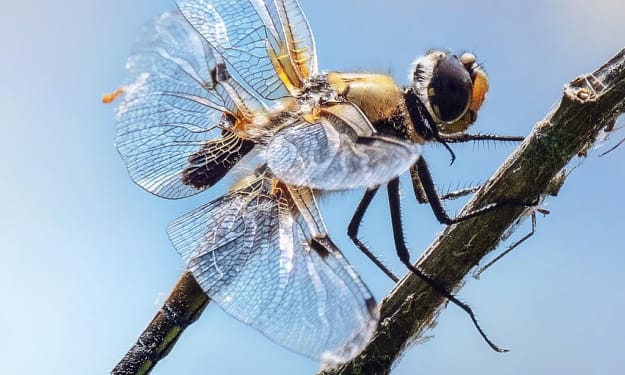
Dragonfly: The Ancient Aviator of the Skies
Introduction The dragonfly, a shimmering symbol of transformation and agility, is not just an insect — it is a marvel of evolution, a predator of precision, and a creature of deep cultural significance. Found across almost every continent, dragonflies have fascinated humanity for millennia. From their prehistoric lineage to their mesmerizing flight mechanics, the story of the dragonfly is as complex and fascinating as the creature itself. --- 1. Evolutionary History: Living Fossils of the Insect World Dragonflies are some of the oldest flying insects on Earth. Their ancestors date back over 300 million years, long before the age of dinosaurs. Fossil records show that ancient dragonflies like Meganeura had wingspans of up to 28 inches, dwarfing their modern descendants. Belonging to the order Odonata, which also includes damselflies, dragonflies are further classified under the suborder Anisoptera. Their primitive features — such as fixed-wing structures and aquatic larvae — highlight their ancient evolutionary roots. --- 2. Anatomy and Physiology: Designed for Speed and Agility Dragonflies are built for flight dominance. With two pairs of independently moving wings, they can hover, glide, fly backward, and even make sharp turns at high speeds. Their flight capabilities have inspired engineers and roboticists studying micro aerial vehicles. Key anatomical features include: Compound eyes: Each eye contains up to 30,000 ommatidia, giving them nearly 360-degree vision. They can detect polarized light and even colors in the ultraviolet range. Thorax: Strong muscles in the thorax control wing movement independently. Abdomen: Long and slender, it balances the dragonfly during flight and aids in mating. Legs: While not used for walking, the six spiny legs are perfect for catching prey mid-air. Dragonflies are ectothermic, relying on environmental heat. Some species, like Pantala flavescens, use a technique called wing-whirring to warm up their flight muscles before takeoff. --- 3. Lifecycle: From Aquatic Predator to Aerial Hunter Dragonflies undergo incomplete metamorphosis, passing through three stages: egg, nymph (larva), and adult. Eggs: Laid in or near water, dragonfly eggs hatch in a few days to several weeks, depending on species and climate. Nymph: This aquatic stage can last from months to several years. Dragonfly nymphs are voracious predators, feeding on mosquito larvae, tadpoles, and even small fish. They use a hinged, extendable lower jaw to snatch prey. Emergence: After molting multiple times, the nymph climbs out of the water and undergoes its final transformation. The adult dragonfly emerges, pumping fluid into its wings to expand them. Most adult dragonflies live only a few weeks to a few months, during which their primary focus is reproduction. --- 4. Behavior and Ecology: Masters of the Air and Water Dragonflies are apex insect predators in both their larval and adult stages. They exhibit complex behaviors such as: Territoriality: Males are highly territorial and often engage in aerial battles to defend prime mating spots near water. Mating: Their unique "wheel position" during mating is iconic. Males use claspers at the end of their abdomen to grip the female behind the head, while the female bends her abdomen forward to collect sperm. Oviposition: Females lay eggs in water or on aquatic plants. Some species dip their abdomens repeatedly into the water to release eggs. Dragonflies help maintain ecological balance by feeding on pests like mosquitoes, flies, and midges. They are sensitive to pollution and serve as bioindicators of water quality. --- 5. Diversity: Over 5,000 Species Worldwide There are more than 5,000 known species of dragonflies, with incredible diversity in size, color, and behavior. Some notable families include: Libellulidae (Skimmers): The largest family, found in a wide range of habitats. Aeshnidae (Darners): Large, strong fliers with distinctive stripes. Gomphidae (Clubtails): Named for their swollen tail segments. Corduliidae (Emeralds): Often metallic green or blue. Tropical regions like Southeast Asia, South America, and Africa are hotspots for dragonfly biodiversity. --- 6. Dragonflies in Culture and Symbolism Dragonflies carry deep symbolic meaning across cultures: Japan: Considered symbols of strength, courage, and happiness. Samurai used them in armor and art. Native American traditions: Associated with swiftness and change. Europe: Once linked with superstition and danger (e.g., "Devil’s darning needle"), modern views are more positive. China: Symbols of harmony, prosperity, and the arrival of summer. In modern symbolism, the dragonfly is often seen as a sign of transformation, adaptability, and self-realization. --- 7. Conservation Status: Threats and Protection Despite their ancient success, dragonflies are under threat due to: Habitat destruction: Wetland drainage, deforestation, and urbanization. Pollution: Pesticides and water contamination harm larval stages. Climate change: Alters migration patterns and breeding cycles. Organizations like the IUCN monitor dragonfly populations. Wetland preservation and clean water initiatives are crucial to protecting them. Some species, such as the Hine's emerald dragonfly (Somatochlora hineana), are listed as endangered. --- 8. Dragonflies and Science: Bioinspiration and Research Dragonflies have become a focal point in scientific research due to their unique features: Aviation and robotics: Their flight mechanics inspire biomimetic drones and micro air vehicles. Neuroscience: Studies of their vision and motion detection contribute to understanding sensory processing. Pest control: Research continues into using dragonflies for natural mosquito population management. Additionally, dragonflies are used in citizen science projects where communities help monitor local species. --- 9. Fun Facts About Dragonflies A dragonfly can fly up to 35 miles per hour, making it one of the fastest insects. Pantala flavescens is the most widespread dragonfly, known for transoceanic migrations over thousands of kilometers. Dragonflies can eat their own body weight in insects every 30 minutes. Their wings beat independently, allowing them to perform aerial feats no helicopter can mimic. --- Conclusion: The Living Jewel of the Natural World Dragonflies are more than just beautiful insects gliding over ponds — they are ancient survivors, ecological warriors, and icons of transformation. In a rapidly changing world, protecting dragonflies means protecting the delicate ecosystems they inhabit. Observing a dragonfly is like glimpsing nature’s artistry and engineering at its finest — a reminder that even the smallest creatures have the power to inspire awe and curiosity.
By Ikram Ullahabout a year ago in Earth
Turning Everyday Sounds into Unexpected Musical Melodies
The underappreciated soundscapes that we encounter on a daily basis are becoming increasingly fascinating in a world full of painstakingly composed music. Our surroundings are a continual source of auditory information, from the pulsing clatter of construction to the rhythmic hum of a refrigerator. By transforming the banal into the melodious and exposing the hidden symphony of the mundane, the intriguing idea of "Turning Everyday Sounds into Unexpected Musical Melodies" explores the creative potential within these seemingly ordinary noises.
By Darren Almeidaabout a year ago in Earth
The Moon: A Mysterious Companion
The Moon—one of the most familiar and captivating objects in the night sky. Since childhood, we’ve heard countless stories, poems, and songs inspired by it. However, the Moon is not just a subject of imagination; it is a scientific wonder as well. Every fact we learn about the Moon opens a new door to understanding space. In this article, we’ll explore the Moon’s formation, history, scientific features, and modern research related to it.
By Fahim Rahmanabout a year ago in Earth
NASA Calculated When Life Will End on Earth: Here’s Our Deadline. AI-Generated.
NASA Calculated When Life Will End on Earth: Here’s Our Deadline The question of how long life will continue to exist on Earth has long intrigued scientists, philosophers, and the general public. While theories about Earth’s end span everything from nuclear war to climate disasters and cosmic collisions, NASA has recently contributed a more scientifically grounded estimate for when life on Earth might ultimately cease — and it’s more chillingly plausible than science fiction.
By Adnan Rasheedabout a year ago in Earth
TMS Treatment in New Jersey
What Is TMS Treatment? TMS (Transcranial Magnetic Stimulation) is a non-invasive, FDA-approved therapy designed to treat depression by targeting underactive areas of the brain responsible for mood regulation. It is especially promising for individuals who have not responded to conventional treatments — often referred to as treatment-resistant depression.
By Yuli Fradkinabout a year ago in Earth
Trump’s Middle East Tour: The Untold Strategic Depth Behind the Diplomatic Show
Introduction: More Than Just a Photo Op When former President Donald Trump embarked on his first international trip to the Middle East in May 2017, the White House presented it as a ceremonial visit—a gesture of goodwill to Muslim allies and a symbolic stand against extremism. Yet, beneath the carefully choreographed handshakes and grand speeches, the tour was a meticulously planned geopolitical maneuver that reshaped U.S. strategy in the region.
By Paradox 269about a year ago in Earth
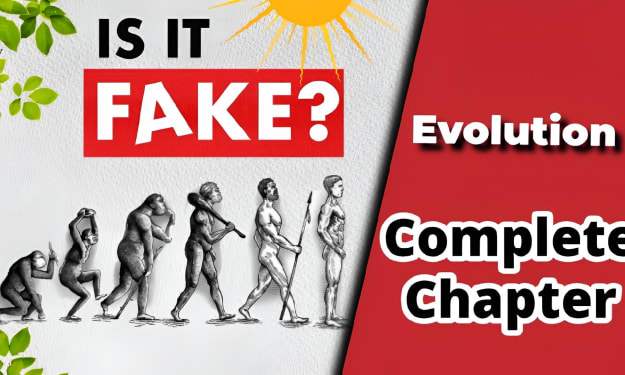
Evolution: Nature’s Timeless Artist . AI-Generated.
From the depths of ancient oceans to the towering skylines of modern cities, the story of life on Earth is one of transformation, resilience, and astonishing complexity. At the heart of this grand narrative lies evolution — nature’s silent, patient process that has sculpted every living being on our planet. The Meaning of Evolution Evolution is not merely a scientific term; it is the rhythm of nature, the unfolding of life’s story over billions of years. It is the process through which simple organisms became complex, where a single cell gave rise to whales, trees, butterflies, and even humans. Far from being a theory locked away in textbooks, evolution is a living truth written into every strand of DNA and every fossil buried beneath our feet. The Dawn of Life Life began nearly 3.8 billion years ago, not with a roar but with a whisper — a microscopic cell floating in Earth's primordial oceans. It was humble, fragile, and unaware of the epic journey it was about to embark on. This cell, through time, adaptation, and countless changes, multiplied, diversified, and evolved. Through a slow dance of trial and error, of extinction and survival, life morphed — fish developed limbs and crawled onto land, reptiles gave rise to birds, and mammals learned to walk upright and think. Charles Darwin and the Turning Point Though the process of evolution had been ongoing for eons, it was in 1859 that a man named Charles Darwin gave it a name and a framework. In his groundbreaking book On the Origin of Species, Darwin introduced the concept of Natural Selection — the idea that nature selects the traits best suited for survival, allowing those individuals to reproduce and pass on their characteristics. Darwin’s ideas were revolutionary. He did not just propose how species changed over time; he showed why and how some species thrived while others vanished. The Evidence for Evolution Today, we are no longer limited to theory. We have overwhelming scientific evidence that supports evolution: Fossils, which serve as nature’s photo album, capturing extinct species and revealing transitional forms. Comparative anatomy, which shows that the bone structure of a human hand is eerily similar to that of a bat’s wing or a whale’s flipper — a sign of shared ancestry. DNA evidence, which reveals deep genetic links between all living beings. For instance, humans share approximately 98.8% of their DNA with chimpanzees. Embryology, which shows that the early development of fish, birds, and humans look remarkably alike — a hint at a common beginning. The Evolution of Us: From Apes to Architects Human evolution is perhaps the most fascinating branch of this great tree of life. About six million years ago, our ancestors began diverging from the common ancestor we shared with modern apes. Walking upright, crafting tools, discovering fire, and developing language — these were not random leaps but part of a long journey shaped by survival and adaptation. Species like Australopithecus, Homo habilis, and Homo erectus paved the way for the emergence of Homo sapiens — us — around 300,000 years ago. We are the only species to look up at the stars and wonder, "Where did we come from?" Ironically, it is evolution that answers that question. Science and Faith: Conflict or Conversation? For some, the idea of evolution appears to challenge religious beliefs about creation. Yet, many thinkers — religious and secular alike — see no contradiction. While science explains the how, religion often seeks to explain the why. Many believe that evolution could very well be the method through which a divine power chose to shape life — an ongoing, majestic act of creation still unfolding. Why Evolution Matters Today Understanding evolution isn't just about knowing the past — it's about navigating the future: In medicine, it helps us understand how bacteria evolve resistance to antibiotics. In agriculture, it allows us to breed stronger crops and protect biodiversity. In climate science, it helps us predict how species might adapt — or fail to adapt — to a changing planet. Conclusion: A Story Still Being Written Evolution is not over. Even now, as you read this, life continues to change, adapt, and evolve. We are not the final chapter — perhaps only a compelling paragraph in a story that began long before us and will continue long after. To understand evolution is to connect with the pulse of nature, to hear the music beneath the silence, and to realize that every living being — from an ancient fern to a newborn baby — is part of one grand, unbroken chain of life. Evolution is not just the story of how we got here. It’s the story of what we are.
By RafiBinYousafabout a year ago in Earth
Car Rental: Your Ultimate Guide to Vehicle Rentals Worldwide
Introduction Car rental services have revolutionized travel, making it easier than ever for individuals and businesses to access vehicles for short-term use. Whether you're looking for car rental near me, planning a trip abroad, or need a truck rental for moving, there's a car hire option to meet your needs.
By John Caudwellabout a year ago in Earth