short story
Debotakhum which is the paradise of Bangladesh
For those who enjoy adventure and travel, Bandarban is the best place to go in Bangladesh. Trekkers can hike a variety of trails through tropical jungles and valleys in this district, which boasts a comparatively pristine mountainous landscape. Deep within the mountains, the district is also home to a number of khums, which are the local Marma word for natural water reservoirs. For the local population, these khums provide a much-needed source of water. These khums' natural beauty also draws tourists who are up for the challenge of trekking. This narrative recounts my trip to Debotakhum, one of Bandarban's most exquisite khums. "Sonakhum" and "Thongchikhum" are other names for it among the locals. The khum, which is in Rowangchori Upazilla, is roughly 600 feet long and, according to locals, between 50 and 70 feet deep.
By Nazir Hossainabout a year ago in Earth
Hope for the Future
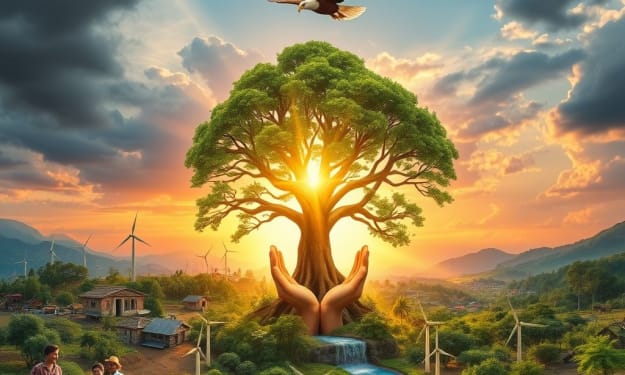
Honestly, nature never stood a chance against the chaos we humans drag along with “progress.” Sometimes it feels like we pave over anything that can’t protest—trees, meadows, that one bird trying to nest in a traffic light. But, you know, not everybody’s on board this runaway train. In the middle of all that concrete sprawl, you get these pockets of people—just regular folks—who actually care, like, deep-down, roll-up-your-sleeves kind of care.
By Cotheeka Srijonabout a year ago in Earth
The Letter I Found After He Died
Hospitals are filled with stories. Some begin with a cry, some end in silence, and some linger long after the heartbeats fade. As a doctor, I often tell myself that I’ve seen everything — the tears, the triumphs, the losses. But I was wrong. One cold evening changed that. It was during my residency, the kind of time in a doctor’s life when sleep is rare, meals are rushed, and emotions are buried beneath protocol and practice. I was assigned to the oncology unit that month — a place where hope lived on a thin wire, and every patient knew they were in a race against time. That’s where I met Mr. Haroon. He was a quiet man in his early sixties, with sharp cheekbones, salt-and-pepper hair, and eyes that carried stories far older than he was willing to share. Stage IV pancreatic cancer. The diagnosis was grim from the beginning, but Haroon never asked how long he had. Instead, he asked for a notebook and a pen. “I like to write,” he said simply. He arrived with no family. No visitors. No flowers. Just a small suitcase, a journal, and a calmness that was unnerving. Unlike many patients, he never questioned the treatments, never cried during chemotherapy, and never asked for extra pain medication. He always thanked the nurses, even when he was too weak to lift his hand. For weeks, I monitored his vitals, adjusted his medications, and watched his body weaken while his spirit remained strangely intact. He filled several notebooks during his time there. Sometimes, I would find him staring at the wall, lips moving silently, as if rehearsing a speech only he could hear. One night, during rounds, I found him sitting up — an unusual sight given his condition. He was scribbling something feverishly. “You should be resting,” I said gently. He looked up and smiled. “Almost done.” I didn’t ask what he meant. I assumed it was another entry in his journal. A few days later, he slipped into unconsciousness. The cancer had spread aggressively to his liver and lungs. We made him comfortable with palliative care. He passed away quietly in the early morning hours, a nurse holding his hand. We cleaned out his room later that day. His suitcase contained nothing but some clothes, toiletries, and several worn notebooks. Most of the staff had grown fond of him. There was something peaceful about Haroon, something that stayed behind even after he left. I don't know what prompted me to open that drawer by his bedside. Maybe it was instinct. Or maybe it was that strange unfinished sentence — “Almost done.” Inside, I found a sealed envelope. On the front, in elegant handwriting, it simply said: "To the doctor who stayed until the end." My heart raced. I took it to the on-call room and sat down. I hesitated before opening it, unsure if I was invading something private. But curiosity and an odd sense of permission compelled me. The letter inside was handwritten: --- Dear Doctor, I don’t know your name. I never asked. I suppose that was by design. I wanted you to be just “the doctor,” because in doing so, you became every doctor — every kind soul who ever helped someone die with dignity. You must be tired. I’ve seen it in your eyes. You walk these halls like a ghost sometimes, burdened by the weight of lives you couldn’t save. But let me tell you something important — you saved me. Not my body, no. That was beyond saving. But you saved my soul. Every time you checked on me without rushing, every time you listened to my silence, you gave me the gift of being seen. Do you know how rare that is for someone who is dying? I came here to die alone. I thought I wanted that. I thought I was ready. But your presence reminded me of something I had long forgotten — the beauty of being cared for. I’ve spent the last few weeks writing letters — to people I loved, people I hurt, and people I never got to know. You fall into the third category. A stranger who meant more to me in my final days than most did my whole life. You may forget me. That’s okay. But I hope you don’t forget what you did for me. I hope you remember that sometimes the quietest kindness speaks the loudest. I am at peace now. Because of you. With gratitude, Haroon --- I read the letter twice. Then a third time. The words swam before my eyes as tears blurred the ink. I had spent my entire medical career chasing precision — diagnoses, charts, reports. But in that moment, I realized something much deeper: we are not just doctors. We are witnesses to life’s final chapter. And sometimes, our presence is the most powerful medicine we can offer. I kept that letter in my coat pocket for weeks. On the hardest days — when a child’s fever wouldn't break, when a family shouted at me in grief, when I questioned why I chose this path — I would take it out, unfold it, and read it again. It reminded me that not every victory is measured in heartbeats restored or tumors removed. Sometimes, it’s simply in making someone feel less alone as they slip away. A year later, I submitted the letter — anonymously — to a medical journal. It was published under the title “The Patient Who Thanked Me After Death.” I didn’t include his name. I didn’t need to. The story wasn’t just his — it was for every patient who leaves behind more than pain, and every doctor who wonders if they’re making a difference. I’ve met hundreds of patients since then. I’ve saved some, lost many. But Haroon stays with me. Not just as a memory, but as a compass — reminding me why I wear this white coat, why I stay the extra hour, why I sometimes sit silently beside a dying patient, even when there’s nothing more I can do medically. We are taught to cure. But we must also learn to comfort. Haroon taught me that. And for that, I will always be grateful.
By Doctor marwan Dorani about a year ago in Earth
The universe
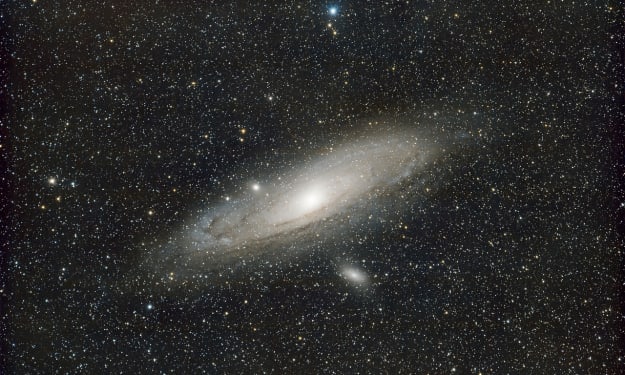
The Universe is everything that exists — space, time, matter, and energy. It includes billions of galaxies, each containing millions or even billions of stars, planets, and other celestial objects. From the smallest subatomic particles to the largest galaxy clusters, the Universe is an awe-inspiring tapestry of complexity and wonder. Yet despite centuries of study, much about it remains mysterious.
By Ratul Hasanabout a year ago in Earth
Whispers of Nature: Tree, Lake, Bloom
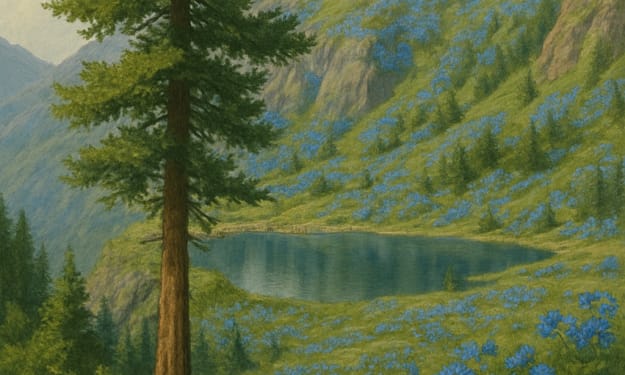
The Harmony of Nature: A Tale of the Mountain Lake and the Tree Below At the foot of a mighty mountain, where the air is fresh and the light dances between the pines, stands a tall, ancient tree. It rises like a silent guardian, its roots deep in the earth, its branches stretching toward the sky. Above, high upon the mountain’s peak, lies a hidden lake, cradled in stone and surrounded by a halo of vivid blue flowers. This tranquil setting, untouched by time, offers a perfect example of nature’s balance and quiet majesty.
By Mukhtiar Ahmadabout a year ago in Earth
10 Places on Earth That Look Straight Out of a Sci-Fi Movie
The world we live in is full of incredible natural wonders and human-made marvels. But some places go beyond breathtaking—they seem completely out of this world. From landscapes that resemble alien planets to caves that glow like something from a fantasy realm, here are ten real-world locations that look like they belong in a sci-fi movie. 1. Zhangye Danxia Landform, China With its rainbow-colored mountains, the Zhangye Danxia Geological Park in China is often referred to as a "painted miracle." The vibrant layers of red, orange, yellow, and green are the result of sandstone and mineral deposits that have been pressed together for over 24 million years. Under the right lighting, this landscape resembles something straight out of a cosmic dream. 2. Waitomo Glowworm Caves, New Zealand Hidden beneath New Zealand’s North Island is a cave system that sparkles like a starry sky. The Waitomo Caves are home to thousands of glowworms that emit a bluish-green light. Floating on a boat through these glowing caves feels like navigating through an alien biosphere. 3. Salar de Uyuni, Bolivia The world’s largest salt flat transforms into a giant mirror after rain. Salar de Uyuni becomes so reflective that it erases the horizon, making it impossible to distinguish sky from earth. This endless reflective surface gives the illusion of walking on clouds or traversing an alien landscape. 4. Antelope Canyon, USA Located in Arizona, Antelope Canyon is a narrow slot canyon known for its wave-like structure and ethereal light beams. The surreal patterns and colors look like a 3D-rendered environment in a futuristic game or film. No wonder it’s one of the most photographed locations in the American Southwest. 5. Deadvlei, Namibia Deadvlei is a white clay pan in Namibia's Namib Desert, surrounded by some of the tallest sand dunes in the world. The dead, blackened camel thorn trees—estimated to be around 900 years old—stand eerily still, contrasting starkly against the orange sand and bright blue sky. The scene could easily be mistaken for a set on Mars. 6. Mount Roraima, Venezuela/Brazil/Guyana Mount Roraima is a tabletop mountain that inspired the setting for Arthur Conan Doyle’s "The Lost World." Its sheer cliffs rise dramatically above the clouds, and the summit is often shrouded in mist. Its isolation has led to unique ecosystems that feel completely untouched by time. 7. Pamukkale, Turkey Meaning “cotton castle” in Turkish, Pamukkale is known for its white travertine terraces formed by mineral-rich thermal waters. The stark white formations combined with turquoise pools make this site appear like a futuristic spa or an alien mineral world. 8. Lake Natron, Tanzania Lake Natron is known for its deep red waters and the ability to calcify animals that fall into it. Due to its high alkalinity and temperatures, the lake is both deadly and strangely beautiful. The contrast of flamingos feeding on its surface with the eerie landscape makes it a scene straight from dystopian sci-fi. 9. The Door to Hell, Turkmenistan Officially known as the Darvaza gas crater, this blazing pit has been burning for over 50 years. Accidentally created by Soviet scientists, it’s a fiery hole in the desert that glows with intense heat and light. At night, it looks like a portal to another dimension. 10. Socotra Island, Yemen Often referred to as the "most alien-looking place on Earth," Socotra is home to flora found nowhere else on the planet. The Dragon's Blood Tree, with its umbrella-shaped canopy and red sap, looks like something from an extraterrestrial jungle. The entire island feels like a lost world from a sci-fi adventure. Conclusion: These destinations prove that Earth is stranger—and more wondrous—than fiction. While science fiction often imagines distant planets and future worlds, sometimes all you need to do is explore the far reaches of our own planet. Whether you’re a traveler,
By Abdul Rahman about a year ago in Earth
Hope for the Future
Honestly, nature never stood a chance against the chaos we humans drag along with “progress.” Sometimes it feels like we pave over anything that can’t protest—trees, meadows, that one bird trying to nest in a traffic light. But, you know, not everybody’s on board this runaway train. In the middle of all that concrete sprawl, you get these pockets of people—just regular folks—who actually care, like, deep-down, roll-up-your-sleeves kind of care.
By Cotheeka Srijonabout a year ago in Earth
Biodiversity: The Key to Earth's Survival
Man, you really gotta hand it to Earth—it’s essentially the ultimate flex when it comes to biodiversity. Seriously! You’ve got the wild rooftop jungles up in the rainforest canopies, the sun-bleached wastelands where cacti still pull off the “eternally hydrated” look, and under the ocean, it’s straight-up finding Nemo meets technicolor fever dream. Life, everywhere, all the freakin’ time.
By Cotheeka Srijonabout a year ago in Earth
Lessons from the Changing Climate
Buried deep in the wildest heart of the woods, there’s this gnarly, towering tree—an honest-to-goodness behemoth called Elder Oak. Locals swear the old thing has seen, well, basically everything. It’s got roots tangled so far into the ground it’s probably eavesdropping on secrets from the center of the Earth or something. This tree isn’t just a tree, you know? It’s the kind that gossips with the wind, soaks up every sunrise, and probably remembers when dinosaurs were a problem.
By Cotheeka Srijonabout a year ago in Earth
The Harmony of the Ecosystem
Alright, let’s drop the flowery, textbook “nature writing” vibe for a second and really dig into what’s happening in a forest when you wake up early—like, deep woods, not your local park with the screaming toddlers and rogue frisbees.
By Cotheeka Srijonabout a year ago in Earth