Science
Natural Disasters Summary
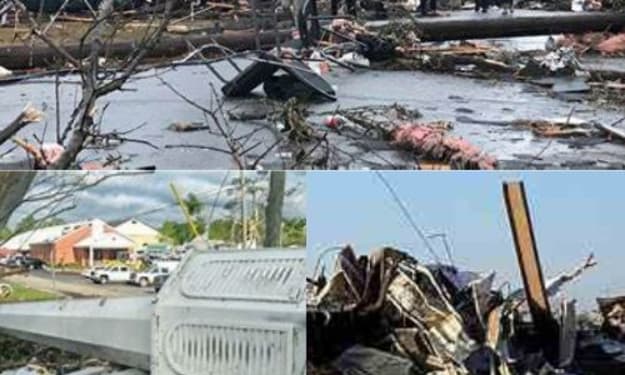
Natural disasters are adverse contest that action in the accustomed world, and they can accept adverse furnishings on animal lives and communities. From floods and earthquakes to hurricanes and wildfires, these contest can account massive accident to homes, infrastructure, and the environment. In this article, we will booty a afterpiece attending at some of the best accepted accustomed disasters, their causes, and the impacts they accept on bodies and the environment.
By Thendralarasu4 years ago in Earth
The Doctor's Book Of Survival Home Remedies
15 Home Remedies That Actually Work, According to Doctors If you're looking for home remedies that work, then you've come to the right place! In this blog post, we'll be discussing 15 home remedies that have been endorsed by doctors and have been proven to help alleviate a variety of common ailments. From natural treatments for colds and flu to tips for managing stress and anxiety, these home remedies have been tested and approved by medical professionals. So, if you're looking for an alternative to expensive over-the-counter medications or medical treatments, read on to discover the power of home remedies that work.
By RYAN DANIEL DALY4 years ago in Earth
Unraveling the Mysteries of the Amazon: Secrets of the World's Most Enigmatic Rainforest
The Amazon is one of the most mysterious and awe-inspiring places on Earth. It is the largest rainforest in the world, covering an area of over 5 million square kilometers and home to an estimated 10 million species of plants, animals, and insects.
By Neaya Chalise4 years ago in Earth
The Impact of the mind seeing light for the first time.
The human mind is a fascinating and intricate organ that has the capacity to process a tremendous quantity of data. Light, which enables us to view the world around us, is one of the most crucial inputs the mind receives. First experiencing light can have a dramatic effect on the human psyche and alter how we view the world.
By Markos Giassa4 years ago in Earth
Climate change in Pakistan
Climate Change in Pakistan: Challenges and Opportunities Introduction Climate change is one of the most critical environmental and socio-economic issues of our time. Its impacts are visible and affecting every country in the world. Pakistan is also one of the countries that are highly vulnerable to the adverse impacts of climate change. The country is already facing numerous challenges in the form of floods, droughts, heat waves, and glacial melting, which are all linked to climate change. In this article, we will discuss the various aspects of climate change in Pakistan, including its causes, impacts, and future prospects. Causes of Climate Change in Pakistan Climate change is caused by the emission of greenhouse gases (GHGs) into the atmosphere, primarily carbon dioxide (CO2) and methane (CH4), which trap heat and warm the planet. These GHGs are mainly emitted by human activities such as burning of fossil fuels, deforestation, and industrial processes. In Pakistan, the major sources of GHG emissions are the energy and agriculture sectors. The country heavily relies on fossil fuels, such as oil and natural gas, to meet its energy needs. Agriculture is another significant source of GHG emissions, accounting for around 41% of total emissions. Livestock production, rice cultivation, and fertilizer use are the primary contributors to agricultural emissions. Impacts of Climate Change in Pakistan The impacts of climate change are severe and wide-ranging in Pakistan. The country has already experienced several extreme weather events, including floods, droughts, and heatwaves, which have caused significant damage to infrastructure, crops, and livestock. The following are some of the significant impacts of climate change in Pakistan: Glacial melting: Pakistan is home to some of the world's largest glaciers, including the Siachen, Biafo, and Baltoro. These glaciers are rapidly melting due to rising temperatures, which has resulted in the formation of glacial lakes and increased risk of glacial lake outburst floods (GLOFs). Water scarcity: Pakistan is an arid country with limited water resources. Climate change is exacerbating the country's water scarcity problem by altering rainfall patterns, increasing evaporation rates, and reducing snowmelt. The country is projected to experience a significant decline in water availability in the coming decades. Agriculture: Agriculture is the backbone of Pakistan's economy, and climate change is already affecting crop yields and productivity. Changes in temperature and rainfall patterns are affecting crop growth and leading to soil erosion and degradation. Health: Climate change is also affecting public health in Pakistan. Extreme weather events, such as heatwaves, floods, and droughts, are causing an increase in waterborne diseases, respiratory illnesses, and malnutrition. Biodiversity: Pakistan is home to a rich variety of flora and fauna, but climate change is threatening its biodiversity. Rising temperatures, changes in rainfall patterns, and habitat destruction are all affecting the country's ecosystems and the species that depend on them. Future Prospects The future of climate change in Pakistan is highly dependent on the actions taken to reduce GHG emissions and adapt to the impacts of climate change. The following are some of the possible future scenarios for climate change in Pakistan: Continued emissions: If GHG emissions continue to rise at the current rate, Pakistan will experience more frequent and severe extreme weather events, water scarcity, and food insecurity. The country's economy and society will be severely impacted. Mitigation: If significant action is taken to reduce GHG emissions, the impacts of climate change in Pakistan can be mitigated. This will require a shift towards renewable energy sources, such as solar and wind power, and the adoption of sustainable agriculture practices.
By Khubaib Ahmad4 years ago in Earth
History of Pakistan
Start writing...Pakistan is a nation in South Asia, bordered by India to the east, Afghanistan and Iran to the west, and China to the north. It has a long and complex history, shaped by a variety of cultural, religious, and political influences over thousands of years. The earliest known civilization in what is now Pakistan dates back to the Bronze Age, around 3300 BCE. The Indus Valley Civilization was one of the world's earliest urban civilizations, with a sophisticated system of trade, agriculture, and governance. The people of this civilization built large cities with advanced plumbing and sewage systems, brick houses, and public baths. The ruins of this civilization can be seen at sites such as Mohenjo-daro and Harappa, which are located in modern-day Pakistan. From the 7th century CE onwards, various Islamic empires ruled over what is now Pakistan. The Umayyad, Abbasid, and Mughal empires all left a lasting legacy on Pakistan's culture and architecture. During this period, the region became a center of Islamic scholarship and culture, producing great thinkers and writers such as the poet Rumi. In the 19th century, the British Empire began to take control of what is now Pakistan. By the mid-1800s, the British had established control over most of the region, and implemented policies that favored the interests of colonial rulers over those of local populations. The British also introduced modern education and infrastructure, which had a significant impact on Pakistan's development. In 1947, India and Pakistan gained independence from British rule. However, the region was divided into two separate nations along religious lines, with India being predominantly Hindu and Pakistan being predominantly Muslim. This partition resulted in widespread violence and displacement, as millions of Hindus and Muslims were forced to migrate to the new nations. Pakistan struggled to establish a stable government in its early years of independence. Its first constitution, adopted in 1956, established a federal parliamentary republic, with a president as the head of state and a prime minister as the head of government. However, the country was plagued by political instability, with frequent changes in leadership and periods of martial law. In 1971, East Pakistan (which later became Bangladesh) declared independence from Pakistan, after a bitter conflict with the Pakistani government. The war resulted in the loss of territory and significant economic and social challenges for Pakistan. Throughout the latter half of the 20th century, Pakistan's politics were dominated by military rule. In 1977, General Zia-ul-Haq seized power in a military coup and ruled the country until his death in 1988. Zia's regime was marked by strict Islamization policies, which included the introduction of harsh punishments for criminal offenses and the imposition of Islamic dress codes. In the 1990s, Pakistan returned to civilian rule, with a series of democratic governments taking power. However, the country continued to face significant challenges, including poverty, corruption, and terrorism. In 2001, Pakistan became a key ally of the United States in its war on terror, which had a major impact on the country's security and politics. In recent years, Pakistan has made progress in some areas, such as economic growth and social development. However, it continues to face significant challenges, including political instability, poverty, corruption, and terrorism. The country's future remains uncertain, but its rich history and diverse cultural heritage provide a foundation for continued growth and development.
By Khubaib Ahmad4 years ago in Earth
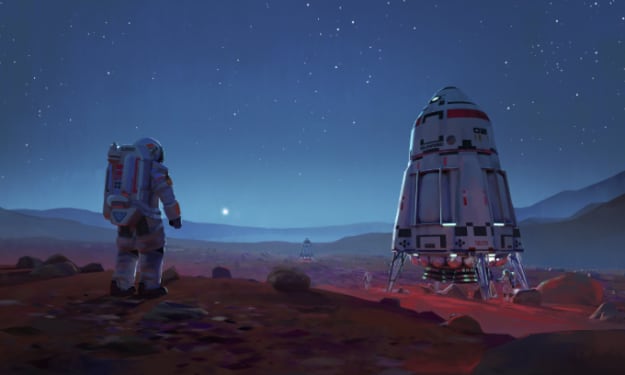
Life On Mars Discovered
Once upon a time, there was a planet named Mars. For centuries, humans had been fascinated by this planet, which appeared as a small red dot in the sky. But it wasn't until the early 21st century that we finally managed to send a mission to Mars to explore the planet's surface and see if there was any evidence of life.
By DELTA WAHAB4 years ago in Earth