Science
The Lifespan of Jellyfish.
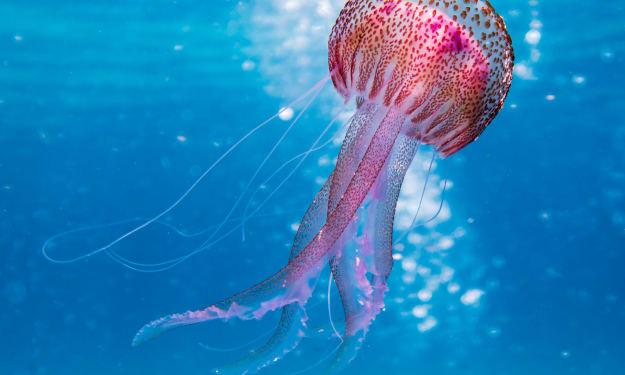
Jellyfish are fascinating creatures that inhabit oceans and other water bodies around the world. These gelatinous invertebrates have been around for over 500 million years, making them one of the oldest animal groups on the planet. While there are many different species of jellyfish, each with its own unique characteristics, one question that often comes up is: how long do they live? The lifespan of a jellyfish can vary greatly depending on the species. Some species, such as the moon jellyfish, have a relatively short lifespan of only a few months, while others, such as the immortal jellyfish, are capable of living for several years. One of the most well-known species of jellyfish is the box jellyfish. These creatures are known for their extremely potent venom, which can be deadly to humans. Despite their dangerous reputation, box jellyfish have a relatively short lifespan of only a few months. The moon jellyfish, another common species of jellyfish, has a slightly longer lifespan than the box jellyfish. Moon jellyfish typically live for around six months to a year, although some individuals may live for up to two years in captivity. On the other end of the spectrum is the immortal jellyfish, also known as Turritopsis dohrnii. This species of jellyfish is unique in that it has the ability to revert back to its juvenile state after reaching adulthood, effectively allowing it to live indefinitely. While there is no limit to how long the immortal jellyfish can live, most individuals are thought to live for only a few years before succumbing to predation or disease. Other species of jellyfish have lifespans that fall somewhere in between these extremes. For example, the lion's mane jellyfish, which is one of the largest species of jellyfish, can live for several years. Some individuals have been known to live for up to five years in the wild, although most individuals live for only a year or two. So, what factors influence the lifespan of jellyfish? One of the most important factors is the environment in which the jellyfish lives. For example, jellyfish that live in warmer waters may have a shorter lifespan than those that live in cooler waters. This is because warmer water temperatures can increase the metabolic rate of the jellyfish, which can lead to faster aging and a shorter lifespan. Another factor that can influence the lifespan of jellyfish is predation. Many species of jellyfish are eaten by predators such as sea turtles and certain species of fish. Jellyfish that are able to avoid predation are more likely to live longer than those that are not. Finally, the reproductive strategy of a jellyfish can also play a role in its lifespan. Some species of jellyfish reproduce sexually, while others reproduce asexually. In general, individuals that reproduce sexually have a shorter lifespan than those that reproduce asexually. This is because sexual reproduction is a more energy-intensive process that can lead to faster aging. Despite their relatively short lifespans, jellyfish play an important role in marine ecosystems. They are a key food source for many marine predators, and their presence can help to indicate the health of a marine ecosystem. Additionally, jellyfish have unique adaptations that allow them to survive in some of the harshest environments on the planet, including the deep sea and polar regions. In conclusion, the lifespan of jellyfish varies greatly depending on the species, with some living for only a few months and others living for several years. Factors such as the environment, predation, and reproductive strategy can all influence the lifespan of a jellyfish. While jellyfish may not live as long as some other animals, they are still an important part of marine ecosystems and have many fascinating adaptations that make them worthy of study and appreciation.
By Mr Royal Honey 3 years ago in Earth
What Lies Beyond: The Unseen World Awaiting Our Absence
Celiwe here. Furthermore, the year 6009 will be the absolute first year beginning around 1961 that a year at the point when written in Hindu-Arabic numerals can be upset nevertheless appear to be identical. In any case, you and I likely won't sufficiently live to partake in the year 6,000 furthermore, nine. Living souls simply aren't adequately long. We will pass up that. What other cool future offense will we be missing? All things considered, as a matter of some importance, you and I will most likely be gone before the consummation of the time pyramid in Wemding, Germany. It will ultimately be a heap of 120 substantial blocks. In any case, the developers are just adding one block like clockwork.
By Celiwe Innocentia3 years ago in Earth
The Wallace Line
The Wallace Line, also known as the Wallace's Line, is one of the most significant biogeographical landmarks in Southeast Asia. Named after the British naturalist Alfred Russel Wallace, who first proposed the idea in 1859, the Wallace Line marks the boundary between two distinct zoogeographical regions. It is a deep underwater trench that separates the biotas of the Asian and Australian continents.
By Muhammad Arslan3 years ago in Earth
No Mow May
Introduction Corporations and the governments in their pockets are doing their damnedest to kill off bees because they see them as pests, seemingly totally ignorant of the fact that without bees, plants would not get pollinated and therefore will not grow.
By Mike Singleton 💜 Mikeydred 3 years ago in Earth
Humans future
The future holds both promise and peril for humanity. As we continue to progress and evolve, we will inevitably face new challenges and problems that will test our resilience, ingenuity, and adaptability. In this article, we will explore some of the major problems that we are likely to face in the future, as well as some potential solutions.
By Positive Thinker3 years ago in Earth
Jellyfish Blooms: Causes, Consequences, and Mitigation Strategies.
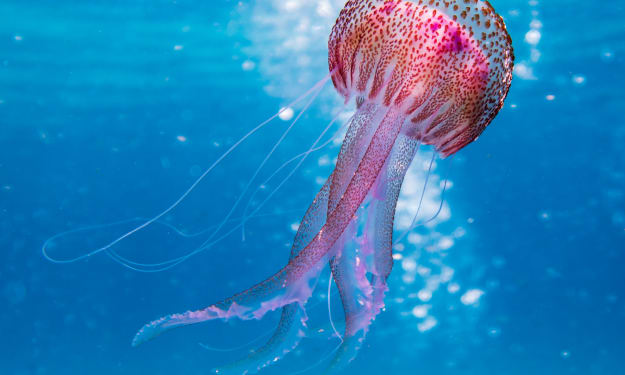
Jellyfish blooms, or large sudden increases in the population of jellyfish, have become a global phenomenon. While jellyfish are natural inhabitants of the world's oceans, the frequency and intensity of jellyfish blooms have increased in recent years, leading to significant ecological and economic impacts. This article will discuss the causes and consequences of jellyfish blooms, as well as mitigation strategies..
By Mr Royal Honey 3 years ago in Earth
The Mystery of the Bermuda Triangle: Separating Fact from Fiction
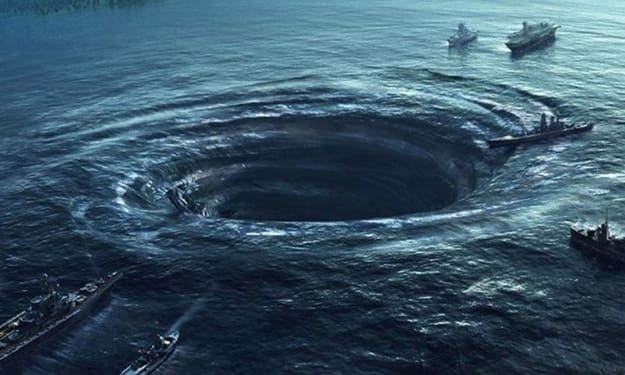
The Bermuda Triangle, also known as the Devil's Triangle, is a region in the western part of the North Atlantic Ocean where a number of aircraft and ships have disappeared under mysterious circumstances. The area is roughly bounded by Miami, Bermuda, and Puerto Rico, and is said to be one of the most dangerous areas in the world for navigation. Over the years, many theories have been put forward to explain the disappearances, ranging from the supernatural to the scientific. In this article, we will explore the facts and fiction surrounding the Bermuda Triangle.
By Saif Zafar3 years ago in Earth
We're all a part of the story of Earth's changing climate.
Since greenhouse gases are increasing the average temperature of the Earth, scientists have been researching our climate for decades and have come to one unavoidable conclusion: if this trend continues, our world will become much more difficult to live on. Extreme environmental events that are difficult to prepare for, experience, and recover from have been brought on by climate change and will continue to be brought on by it. There are things that each of us can do to help protect our planet, ourselves, and each other. We can't change the past, but together we can change the future and meaningfully slow down and stop climate change. This will have effects that will continue to build upon the current inequalities in our world.
By morry page3 years ago in Earth
Jellyfish and the Ocean Ecosystem.
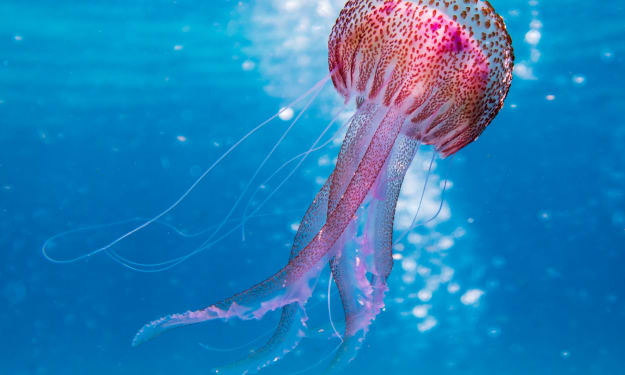
Jellyfish are fascinating creatures that have inhabited the Earth's oceans for millions of years. They are known for their gelatinous bodies and their ability to sting, but their role in the ocean ecosystem is much more complex than that. In this article, we will explore the importance of jellyfish in the ocean ecosystem and their impact on the environment. Importance of Jellyfish in the Ocean Ecosystem Jellyfish are an important part of the ocean ecosystem because they play a vital role in the food web. They are carnivorous and feed on plankton, fish eggs, and small fish. They also serve as a food source for larger marine predators such as sea turtles, sunfish, and some species of fish. Additionally, jellyfish have an important role in nutrient cycling in the ocean. They consume large amounts of phytoplankton, which are microscopic algae that float on the surface of the water. When jellyfish consume these organisms, they release nutrients back into the water, which can then be used by other organisms. Jellyfish also help to keep the ocean's water clean. They filter large amounts of water as they move through the ocean, removing impurities and pollutants. This helps to maintain the overall health of the ocean and its inhabitants. Impact of Jellyfish in the Ocean Ecosystem While jellyfish play an important role in the ocean ecosystem, their population growth and behavior can also have negative impacts on the environment. One of the biggest impacts of jellyfish is their ability to outcompete other species for resources. When jellyfish populations grow too large, they can consume vast amounts of plankton and small fish, leaving little food for other marine organisms. This can cause a chain reaction that disrupts the entire food web and leads to the collapse of fisheries. Jellyfish also have the ability to damage fishing gear and infrastructure. Their slimy bodies can clog fishing nets, and their stinging tentacles can pose a danger to fishermen and swimmers. In addition, jellyfish blooms can have a negative impact on tourism. Large numbers of jellyfish in coastal waters can be unappealing to tourists, and their stings can be a serious health risk. Climate change is also having an impact on jellyfish populations. As the Earth's oceans warm, jellyfish are able to thrive in new areas where they were once unable to survive. This can lead to an increase in jellyfish populations in certain areas, further disrupting the ocean ecosystem. Managing Jellyfish Populations To manage the impact of jellyfish in the ocean ecosystem, it is important to understand the factors that contribute to their population growth. Overfishing, pollution, and climate change are all factors that can lead to an increase in jellyfish populations. One strategy for managing jellyfish populations is to increase the number of natural predators of jellyfish. This can include promoting the protection of sea turtles and other marine predators that feed on jellyfish. Another strategy is to reduce the amount of pollution and plastic waste that enters the ocean. This can help to maintain the overall health of the ocean ecosystem, which can help to prevent jellyfish blooms. Finally, it is important to promote sustainable fishing practices that do not disrupt the natural balance of the ocean ecosystem. This can help to maintain healthy populations of all marine species, including jellyfish. Conclusion Jellyfish are an important part of the ocean ecosystem, but their population growth and behavior can have negative impacts on the environment. Understanding the role of jellyfish in the ocean ecosystem is important for managing their populations and minimizing their impact on the environment. By promoting sustainable fishing practices, reducing pollution and plastic waste, and protecting natural predators of jellyfish, we can help to maintain the health of the ocean ecosystem for generations to come.
By Mr Royal Honey 3 years ago in Earth
The Fascinating World of Jellyfish.
Jellyfish are some of the most fascinating creatures in the ocean. With their translucent bodies and graceful movements, they have captivated humans for centuries. In this comprehensive guide, we will delve into the world of jellyfish, exploring their biology, behavior, and unique characteristics. Biology Jellyfish belong to the phylum Cnidaria, which includes other animals such as sea anemones and coral. They are made up of a gelatinous substance called mesoglea, which gives them their characteristic shape and texture. Jellyfish have a simple body plan, with a bell-shaped body and tentacles that trail below them. One of the most distinctive features of jellyfish is their ability to sting. They have specialized cells called nematocysts in their tentacles that can inject venom into their prey or predators. This venom can cause a painful reaction in humans, although most jellyfish species are not dangerous to people. Behavior Jellyfish are found in all of the world's oceans and can be found at various depths, from the surface to the deep sea. They are often seen drifting with the ocean currents, propelled by the movement of their bells. Jellyfish are opportunistic feeders, meaning they will eat whatever they can catch. They primarily feed on small fish, plankton, and other small organisms. To capture their prey, they use their tentacles, which are covered in thousands of tiny stinging cells. When a potential meal comes into contact with the tentacles, the stinging cells fire and inject venom into the prey. Jellyfish also have a unique reproductive cycle. They start out as tiny larvae that float in the ocean currents before settling on the seafloor and developing into polyps. The polyps then produce tiny jellyfish called ephyrae, which grow into adult jellyfish. This cycle can repeat itself multiple times, with each generation producing new polyps and jellyfish. Unique Characteristicsewhatrheascinatingorldfellyfish Articellyfish are some of the most fascinating creatures in the ocean. Their unique physical characteristics and behaviors have captivated scientists and casual observers alike for centuries. In this article, we will explore the world of jellyfish, including their anatomy, life cycle, behavior, and the roles they play in their ecosystem. Anatomy Jellyfish are members of the phylum Cnidaria, which also includes corals and sea anemones. They are characterized by their gelatinous, bell-shaped body and long, trailing tentacles. The bell of the jellyfish is composed of a soft, transparent material called mesoglea, which is made up of water, protein, and a small amount of connective tissue. The tentacles, which trail beneath the bell, are studded with tiny, stinging cells called nematocysts. These cells are used by the jellyfish to capture prey and defend against predators. Life Cycle Jellyfish have a complex life cycle that includes several different stages. The adult jellyfish, or medusa, produces eggs or sperm, which are released into the water. Fertilization occurs externally, and the resulting larvae, known as planulae, settle on a surface and grow into polyps. The polyp stage is characterized by a small, cylindrical body with a mouth surrounded by tentacles. The polyp feeds on plankton and grows, eventually producing a stack of small medusae on top of its body. These medusae break free from the polyp and swim off to begin the adult stage of their life cycle. Jellyfish have a number of unique characteristics that set them apart from other marine animals. One of these is their ability to bioluminesce, or produce light. Some species of jellyfish are able to produce a bright blue or green light that can be seen in the dark depths of the ocean. Another unique characteristic of jellyfish is their ability to regenerate. If a jellyfish loses a tentacle or even part of its bell, it can regrow the missing body part. This ability allows jellyfish to recover from injuries that would be fatal for other animals. Jellyfish are also important indicators of the health of the ocean. Because they are sensitive to changes in water temperature and pollution levels, their populations can be used to monitor the overall health of the ocean ecosystem. Scientists use jellyfish as a bioindicator to measure the impact of climate change and pollution on marine life. Conclusion Jellyfish are fascinating creatures that have captivated humans for centuries. From their translucent bodies to their unique characteristics, they are unlike any other marine animal. Understanding the biology and behavior of jellyfish is essential for protecting their populations and preserving the health of the ocean ecosystem. By learning more about these creatures, we can better appreciate their beauty and importance in the natural world.Start writing...
By Mr Royal Honey 3 years ago in Earth