Science
Penguin Species Spotlight.
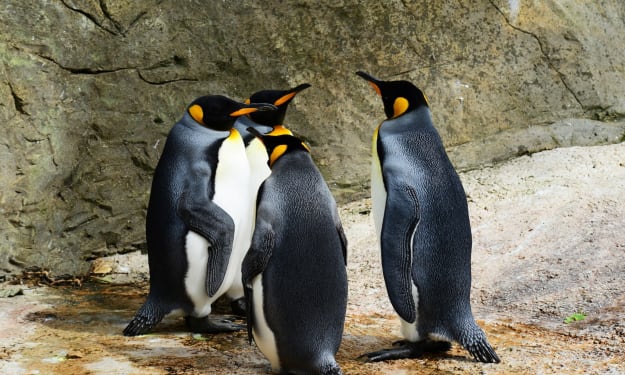
Penguins are fascinating creatures that captivate the hearts and minds of people around the world. With their iconic tuxedo-like appearance and waddling gait, penguins are well-known inhabitants of the Southern Hemisphere. However, many people may not be aware of the incredible diversity that exists within the penguin family. Let's take a closer look at some of the different species of penguins and discover what makes each one unique. Emperor Penguin (Aptenodytes forsteri): The largest of all penguin species, the Emperor penguin is an impressive sight to behold. These majestic birds can reach a height of up to 1.2 meters (4 feet) and weigh as much as 40 kilograms (88 pounds). They are also the only penguin species to breed during the harsh Antarctic winter, enduring temperatures as low as -40 degrees Celsius (-40 degrees Fahrenheit). King Penguin (Aptenodytes patagonicus): Similar in appearance to the Emperor penguin, the King penguin is the second-largest species. They have a distinctive orange-colored patch on their chests and vibrant yellow feathers on their necks. King penguins are known for their elegant and upright posture, and they can often be found in large colonies on sub-Antarctic islands. Adelie Penguin (Pygoscelis adeliae): Adelie penguins are the quintessential Antarctic penguins. They have a white belly, a black head, and a distinct white ring around their eyes. These agile swimmers build their nests using pebbles and are known for their acrobatic leaps out of the water onto the ice. Adelie penguins have a playful and curious nature, often approaching humans with a sense of wonder. Gentoo Penguin (Pygoscelis papua): The Gentoo penguin is recognized by its bright orange-red bill and a white strip across the top of its head. They are known for their remarkable swimming speed and can reach speeds of up to 36 kilometers (22 miles) per hour. Gentoo penguins are also highly vocal and communicate with each other through a series of loud calls. Chinstrap Penguin (Pygoscelis antarcticus): As the name suggests, the Chinstrap penguin has a distinctive thin black band that resembles a chinstrap under its chin. They have a sleek and streamlined body, which allows them to navigate through the water with ease. Chinstrap penguins are known for their extensive breeding colonies, with some populations numbering in the millions. Macaroni Penguin (Eudyptes chrysolophus): Macaroni penguins are known for their flamboyant appearance. They have a vibrant yellow crest on their heads, giving them a somewhat punk-like appearance. Macaroni penguins are excellent divers and can plunge to depths of up to 100 meters (330 feet) in search of food. They are also highly social and can form colonies of tens of thousands of individuals. African Penguin (Spheniscus demersus): Found along the coast of southern Africa, the African penguin is the only species of penguin that breeds on the African continent. They have a unique black and white pattern on their chest and a pink gland above their eyes, which helps them regulate their body temperature. Sadly, the African penguin is listed as endangered due to habitat loss and overfishing. These are just a few examples of the incredible diversity of penguin species that inhabit our planet. Each species has adapted to its own unique environment and developed remarkable characteristics to survive and thrive. By studying and appreciating the diversity of penguins, we gain a greater understanding of the complex ecosystems theyinhabit and the importance of preserving their habitats. Here are a few examples of the incredible diversity of penguin species: Emperor Penguin (Aptenodytes forsteri): The largest of all penguin species, the Emperor penguin is found in Antarctica. They have a distinctive black and white plumage, with a yellow patch on their neck. Emperor penguins are known for their remarkable adaptation to the extreme cold, with a thick layer of blubber and dense feathers that provide insulation. King Penguin (Aptenodytes patagonicus): King penguins are the second-largest penguin species and inhabit the sub-Antarctic islands. They have a vibrant orange-colored plumage on their chest and neck, and their diet primarily consists of fish and squid. King penguins are known for their elaborate courtship rituals and large breeding colonies. Adélie Penguin (Pygoscelis adeliae): Adélie penguins are native to the Antarctic continent and surrounding islands. They have a black head and back, with a distinctive white eye ring. Adélie penguins are known for their agility and speed in the water, using their flippers to navigate through the icy waters. They primarily feed on krill and fish. Chinstrap Penguin (Pygoscelis antarcticus): Chinstrap penguins get their name from the thin black band that runs under their chin, resembling a strap. They breed in large colonies on islands around the Antarctic Peninsula. These penguins have a diet mainly consisting of krill and small fish. Gentoo Penguin (Pygoscelis papua): Gentoo penguins are known for their red-orange beak and white-feathered cap. They breed on the Antarctic Peninsula and nearby islands, as well as sub-Antarctic islands. Gentoo penguins are the fastest swimming penguins, reaching speeds of up to 22 miles per hour (35 kilometers per hour). Magellanic Penguin (Spheniscus magellanicus): Magellanic penguins inhabit the coasts of South America, particularly Argentina and Chile. They have a distinctive black band across their chest and a white belly. Magellanic penguins are known for their burrow-nesting habits and their ability to swim long distances in search of food. These are just a few examples of the diverse range of penguin species found across the Southern Hemisphere. Each species has unique adaptations and behaviors that allow them to thrive in their respective habitats. By studying and appreciating their diversity, we can gain valuable insights into the natural world and the importance of conserving these remarkable creatures and their environments.
By Mr Royal Honey 3 years ago in Earth
Adorable Penguins.
Adorable Penguins: The Fascinating Life of these Tuxedoed Birds When it comes to adorable creatures of the animal kingdom, penguins are often at the top of the list. These tuxedoed birds with their waddling walk and endearing antics have captured the hearts of people worldwide. But beyond their cuteness, penguins lead fascinating lives in some of the harshest environments on Earth. Let's dive into the world of these charismatic creatures and uncover the wonders of their existence. Penguins are flightless birds that are perfectly adapted for life in the cold waters of the Southern Hemisphere. There are 18 recognized species of penguins, each with its own unique characteristics and habitats. They can be found in diverse locations, from the icy Antarctic region to the rocky coasts of South Africa and the tropical Galapagos Islands. One of the most remarkable features of penguins is their ability to survive in extreme cold. Their waterproof feathers, dense layers of fat, and tightly packed bodies help them stay warm in freezing temperatures. Some species even have the ability to control blood flow to their extremities, reducing heat loss and preventing frostbite. Penguins are superb swimmers, thanks to their streamlined bodies and strong flippers. They spend a significant amount of their lives at sea, hunting for fish, squid, and krill, which make up their diet. Some penguins can dive to incredible depths, reaching over 1,500 feet, and stay underwater for several minutes. They use their wings as flippers, propelling themselves through the water with astonishing agility. While penguins are masters of the sea, they also face numerous challenges on land. Most penguins are colonial nesters, gathering in large groups called rookeries. These colonies provide safety in numbers and help them protect their nests from predators. However, living in close quarters also means intense competition for mates and nesting sites. Penguins exhibit fascinating mating rituals. They often engage in elaborate courtship displays, such as head-bobbing, flippers flapping, and vocalizing. Once a pair bond is formed, penguins are typically monogamous for the breeding season. They build nests using pebbles, rocks, or even their own excrement. The males take turns incubating the eggs, balancing them on their feet and covering them with a special brood pouch. During this period, the females go out to sea to replenish their energy reserves. After the eggs hatch, penguin parents take on the responsibility of raising their chicks. This is no easy task, as the parents must go on long foraging trips while leaving their vulnerable offspring behind. To ensure the survival of the chicks, penguins have evolved a unique strategy. They regurgitate partially digested fish, providing their young ones with a high-energy, nutrient-rich substance called "penguin milk." As the chicks grow, they form crèches, large groups of youngsters that huddle together for warmth and protection. They learn essential skills from their parents and gradually gain independence. Once they reach adulthood, penguins return to their breeding colonies, ready to start the cycle of life anew. Unfortunately, penguins face numerous threats in the modern world. Climate change has a profound impact on their habitats, affecting the availability of food and causing shifts in the delicate balance of their ecosystems. Pollution, habitat destruction, and overfishing also pose significant challenges to their survival. Efforts are being made by scientists, conservation organizations, and governments to protect penguins and their habitats. Marine protected areas have been established, research is being conducted to better understand their needs, and education programs raise awareness about their conservation. Penguins are more than just adorable creatures; they are a symbol of resilience in the face of adversity. Their ability to thrive in some of the harst and most extreme environments on Earth is truly remarkable. Here are some key points about penguins and their resilience: Adaptation to Cold Environments: Penguins are mainly found in the Southern Hemisphere, where they inhabit regions such as Antarctica, the sub-Antarctic islands, and parts of South America, South Africa, and New Zealand. These areas experience harsh winters with freezing temperatures and strong winds. To survive in such conditions, penguins have evolved unique adaptations. They have a thick layer of insulating feathers that keep them warm, and their bodies are streamlined, reducing heat loss. They also have a layer of blubber for additional insulation. Efficient Swimming: Penguins are incredible swimmers and spend a significant portion of their lives in the water. They have streamlined bodies and strong flippers that allow them to navigate through the water with ease. Their wings have evolved into flippers, enabling them to propel themselves at impressive speeds and maneuver gracefully. Their streamlined bodies also help reduce drag and conserve energy while swimming. Diving Abilities: Penguins are known for their exceptional diving abilities. They can dive to great depths in search of food, staying submerged for several minutes at a time. Some species, like the Emperor Penguin, can dive as deep as 1,500 feet (450 meters) and hold their breath for up to 20 minutes. Their ability to endure the frigid waters and navigate underwater allows them to access a diverse range of food sources. Social Structure: Penguins exhibit strong social bonds and live in large colonies. This social structure helps them overcome adversity. During extreme cold or blizzards, penguins huddle together in tightly packed groups to conserve heat and protect themselves from the elements. They take turns rotating from the outer edges to the warmer interior, ensuring that every member of the colony has a chance to benefit from the shared warmth. Reproductive Resilience: Penguins face significant challenges when it comes to breeding and raising their young. They typically breed in harsh environments during the Antarctic or sub-Antarctic winters when temperatures drop well below freezing. Male penguins incubate the eggs by balancing them on their feet and covering them with a special brood pouch. They endure extreme cold, high winds, and prolonged fasting while incubating the eggs for several weeks until the females return with food. This demonstrates their remarkable resilience and dedication to ensuring the survival of their offspring. Conservation Efforts: Penguins face threats such as climate change, loss of habitat, overfishing, and oil spills. However, efforts are being made to protect and conserve penguin populations. Conservation organizations work to establish marine protected areas, promote sustainable fishing practices, and raise awareness about the importance of preserving penguin habitats. These initiatives aim to ensure the long-term survival of these resilient and iconic creatures. Overall, penguins embody resilience through their ability to adapt to extreme environments, their remarkable swimming and diving skills, their social structure, and their dedication to raising their young. They serve as a powerful symbol of resilience in the face of adversity and inspire us to appreciate and protect the fragile ecosystems they call home.
By Mr Royal Honey 3 years ago in Earth
Effect of climate change
The impact of technology on society has been significant and far-reaching. From the rise of the internet and social media to the development of artificial intelligence and automation, technology has changed the way we live, work, and interact with one another. In this review, I will explore the positive and negative impacts of technology on society.
By Mjawad Raza3 years ago in Earth
Maximizing the Effectiveness of Bed Bug Fumigation
As, there are many issues emerged in house. Bed bug is a significant challenges and common problem that is facing by the people. It is infamous for giving itchy bites that make you uneasy and restless. There are numerous remedies available, you can choose at our platform to remove your problem. Bed bug fumigation is a pest control method that involves using chemicals to eradicate bed bugs from an infested area. It is small insects that feed on human and animal blood and are notorious for being difficult to eliminate. Infestations of bed insects can be difficult to eradicate and usually require expert assistance, such as bed bug fumigation. Bed bug fumigation is using fumigants, such Vikane gas, to eradicate bed bugs and their eggs from a contaminated location. We provide bed bug fumigation to remove bed bugs.
By Proserv Pest3 years ago in Earth
Why Planes Don't Fly Over the Pacific Ocean
Have you ever noticed that commercial flights tend to avoid flying over the Pacific Ocean? If you look at a flight map, you will see that most flights from North America to Asia take a more northerly route over Alaska, Russia, or Canada, rather than crossing the Pacific. So why is that?
By Daniel Ellison3 years ago in Earth
Scientists Finally Discovered the Truth About Easter Island
Easter Island, also known as Rapa Nui, has been a topic of fascination for centuries. This small island located in the middle of the Pacific Ocean, known for its mysterious statues called Moai, has captivated the world with its enigmatic history. For years, scientists and historians have been trying to unravel the mysteries surrounding this remote island. Recently, a team of scientists has made significant discoveries that shed new light on the island's history.
By Daniel Ellison3 years ago in Earth
Why The Smithsonian | Colossal Collections Preserves Over 600,000 Bird Specimens
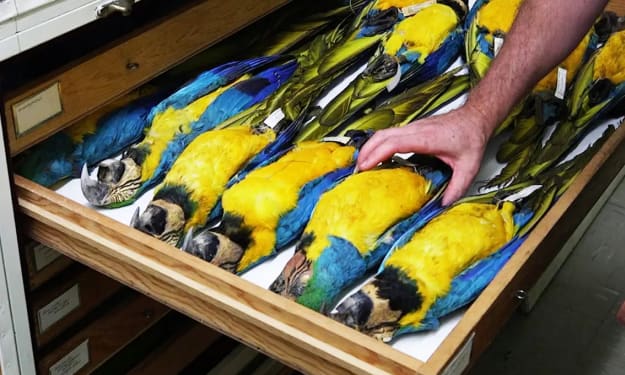
The Smithsonian natural history museum houses over 600,000 bird specimens from the last 200 years and new specimens are added each month thanks to the detailed work of specialists who preserve skin and maintain every bird in the collection but most of these birds never see the museum floor so why do they need to be perfectly preserved the answer research whether it's identifying birds killed by airplanes or discovering evolutionary changes in duck bills. we're not just preparing this bird for use tomorrow we're preparing this bird for use for hundreds of years now. we went to the smithsonian to see how one specimen in the skins collection is added prepared and used for generations to come it starts with acquisition it says here on the label that this ostrich was sent by king mendelek as a present to president. Roosevelt specimens are usually donated by people or organizations this california condor was donated by the u.s fish and wildlife service this bird came from president theodore roosevelt's personal collection and this cooper's hawk died while crashing into a building window it was donated back in 2017 and is about to get its spotlight in an upcoming exhibit but it was initially stored in this freezer. So it's on a left shelf from there our hawk is taken up to the prep lab into the skilled hands of museum specialists like Christina and her husband Brian. Brian did you do that, yes i did put the cotton in the mouth married couples fat this specimen is 996. So i prepared at least that many birds and mammals when you're at about 10000. It shows that you've been doing it for at least probably 20 years or so and you can do it. It was a fun fun exercise and it actually worked blindfolded or not the specialists first thaw weigh and measure the hawk and then they pick up a scalpel to start separating the skin from the muscles and fat since these are going to be stored as dried specimens. We want to remove as much of the muscle from the specimen that we can Brian removes the skin from the body of the bird discarding the soft tissues and oil glands which would cause the specimen to rot and it's crucial to get every piece of fat out without damaging the skin since these specimens are meant to last for years to come that's where gentler tools like his hands become useful. You have to go very slow methodical to get the skin off without ripping it. I'm pushing the skin rather than pulling it so i'm not stretching it brian also uses corn cob dust throughout the process to absorb any body fluids so the specimen is kept clean new people use a lot less dust and more experienced people just cover it with dust when removing the smaller parts of the bird like the head or the eyes the angle of the scalpel also makes a big difference you notice i'm cutting away from the skin there's been times where when you grab the eye it squirts at you sometimes birds that have more fat on their skin need to go through additional cleaning all this white goopy stuff this is all fat that needs to come off otherwise it will get rancid and then it will acidify and it will literally just ooze out of the skin they use this fat wheel machine to remove all the fat until you can see the feather track this is uh takes a little bit of practice because if you press too hard you will rip the skin once the fat is cleared more corncob dust is used to absorb the moisture and then the specimen is washed and dried you want to see me blow the sawdust off okay all right so with this we do it in the fume hood lot of dust everywhere christina uses a forced air dryer to blow off the sawdust and a hair dryer to fluff up the feathers adding a nice sheen to them to get the bird presentation ready brian will first tie the wings together to create a limited range of motion he approximates how far a cooper's hawk would have naturally spread their wings so in the future if somebody grabs the bird and opens up the wing to see the under side of the wing by tying it it'll make it the specimen stronger now the specimen is ready to be stuffed with cotton recreating its original shape we're trying to make a specimen that lasts forever and strong so i'm not a tailor or seamstress but you can sew up a bird pretty good we get the feathers make sure that they're arranged properly in the right order so that'll assist researchers later the last step is pinning the bird onto a board to dry into its permanent position however i end up pinning it that's the way it's going to look the rest of its career at the smithsonian it takes probably close to 100 birds before somebody can go at it alone once they reach a thousand birds then we say that that person is generally an experienced preparator and they can teach other people very well
By Isaac Osah3 years ago in Earth
Should we reflect the sunlight to cool the planet?
Should we reflect sunlight to cool the planet? Well in 1991, a mountain by the name Mount Pinatubo in the Philippines erupted becoming the second largest volcanic eruption of the 20th century. Its ash plume shot up past the atmosphere and into the stratosphere dispersing a layer of aerosol particles around the whole world.
By Mishael Acquah3 years ago in Earth
THE ENIGMATIC DENDERA LIGHT
As an assistant, I have always been fascinated by ancient civilizations and their technological advancements. One civilization that has always captured my interest is ancient Egypt. The land of the pharaohs is known for its pyramids, mummies, and hieroglyphs, but there is so much more to this ancient civilization than meets the eye. In this blog post, we will explore the technological achievements of ancient Egypt and how they have contributed to modern-day society. Introduction to Ancient Egyptian Technology
By Kathryn Dickman3 years ago in Earth
The future of coral reefs.
reefs are some of the most biodiverse ecosystems on the planet, home to thousands of species of marine life. They are also important for protecting coastlines from storms and erosion, and for supporting fisheries and tourism industries. However, coral reefs are under threat from a range of factors, including climate change, overfishing, pollution, and coastal development. In this article, we will examine the current state of coral reefs, make predictions about their future, and discuss possible solutions to help protect them. The current state of coral reefs Coral reefs are already experiencing significant damage from the impacts of climate change, including rising sea temperatures and ocean acidification. When water temperatures rise, corals can expel the algae that live inside their tissues, causing them to turn white, a process known as bleaching. Bleached corals are weaker and more susceptible to disease, and if the stress continues for too long, they can die. In addition, ocean acidification caused by increased levels of carbon dioxide in the atmosphere can make it harder for corals to form their skeletons, making them more vulnerable to damage. Overfishing is also a significant threat to coral reefs, as it can disrupt the delicate balance of ecosystems. When certain species are overfished, it can lead to an increase in the populations of other species, which can in turn have negative impacts on corals. For example, overfishing of herbivorous fish can lead to an increase in algae, which can smother and kill corals. Pollution and coastal development are also taking a toll on coral reefs. Runoff from agricultural and urban areas can introduce nutrients and toxins into the water, which can harm corals and other marine life. Coastal development can also cause physical damage to reefs, such as through dredging and the construction of artificial structures. Predictions for the future of coral reefs Unfortunately, the future of coral reefs looks bleak if current trends continue. The Intergovernmental Panel on Climate Change (IPCC) predicts that global temperatures will continue to rise in the coming decades, which will lead to more frequent and severe bleaching events. In addition, ocean acidification is expected to continue, making it harder for corals to form their skeletons. Overfishing is also likely to continue, particularly in areas with high demand for seafood. This could lead to further disruptions of ecosystems and impacts on corals. Pollution and coastal development are also likely to increase, particularly in developing countries with rapidly growing populations and economies. Possible solutions to protect coral reefs Despite the challenges facing coral reefs, there are still actions that can be taken to help protect them. Here are some possible solutions: Reduce greenhouse gas emissions: The most important step to protect coral reefs is to reduce greenhouse gas emissions to limit the extent of climate change. This can be achieved through a combination of individual actions, such as reducing energy consumption and driving less, as well as policies at the national and international level to promote renewable energy and reduce fossil fuel use. Create marine protected areas: Marine protected areas can help to protect coral reefs by restricting fishing and other activities that can damage them. These areas can also help to build resilience in ecosystems by allowing them to recover from damage. Improve fishing practices: Improving fishing practices, such as through the use of sustainable fishing methods and regulations to limit overfishing, can help to reduce the impacts of fishing on coral reefs. Reduce pollution: Reducing pollution from agricultural and urban runoff can help to protect coral reefs by reducing the amount of nutrients and toxins that enter the water. Develop sustainable tourism practices: Tourism can have both positive and negative impacts on coral reefs. Developing sustainable tourism practices that minimize impacts on coral reefs, such as through responsible snorkeling and diving practices, can help to protect them
By Mr Royal Honey 3 years ago in Earth