Science
The Benefits of Outdoor Education
In today's digital age, children are increasingly becoming disconnected from nature. With the rise of technology, many children spend their free time indoors, glued to screens. This is why outdoor education has become more important than ever before. Outdoor education is a form of experiential learning that involves exploring the natural environment, and it offers numerous benefits to students. In this article, we will explore the benefits of outdoor education and why it is a crucial component of a well-rounded education. Developing Environmental Awareness One of the most significant benefits of outdoor education is that it helps students develop a deep appreciation and understanding of the natural environment. When students spend time in nature, they learn about the ecosystem and the importance of protecting the environment. They become more aware of the impact of human activities on the environment and the need for sustainable practices. Outdoor education teaches students to become responsible environmental stewards, and this can have a significant impact on the future of our planet. Improving Physical Health Outdoor education is also an excellent way to promote physical activity and improve students' health. Children who spend time outdoors are more active, which can help them maintain a healthy weight, improve cardiovascular health, and reduce the risk of chronic diseases. Outdoor education also helps children develop gross motor skills, such as balance, coordination, and agility. Enhancing Social Skills Outdoor education provides an excellent opportunity for students to develop their social skills. When children engage in outdoor activities, they learn to work collaboratively with others, communicate effectively, and solve problems together. These skills are crucial for success in life, and outdoor education helps students develop them in a fun and engaging way. Boosting Cognitive Development Outdoor education has been shown to boost cognitive development in children. When children explore the natural environment, they use all of their senses, which stimulates their brains and enhances their cognitive abilities. Outdoor education has also been linked to improved memory, creativity, and problem-solving skills. Reducing Stress and Anxiety Studies have shown that spending time in nature can reduce stress and anxiety levels in both children and adults. Outdoor education provides a relaxing and calming environment where children can take a break from the pressures of academic and social demands. Outdoor activities such as hiking, camping, and gardening can help students unwind and feel more relaxed, which can improve their mental health and well-being. Fostering a Love for Learning Outdoor education is a fun and engaging way to learn, and it can help students develop a love for learning that will stay with them for a lifetime. When students explore the natural environment, they discover new things, ask questions, and develop a curiosity about the world around them. This curiosity can lead to a lifelong love of learning and a desire to explore and discover new things. Creating Memorable Experiences Outdoor education provides students with memorable experiences that they will cherish for a lifetime. Whether it's camping under the stars, exploring a new hiking trail, or planting a garden, outdoor education creates lasting memories that students will remember for years to come. These experiences can help students develop a sense of self, build confidence, and develop a positive self-image. Incorporating Outdoor Education in the Classroom Incorporating outdoor education into the classroom can be a challenge, but it's not impossible. Here are some ways that teachers can incorporate outdoor education into their lesson plans: - Take students on field trips to local parks, nature reserves, or farms. - Use outdoor spaces, such as school gardens, as a learning environment. - Incorporate outdoor activities, such as hiking, camping, or canoeing, into physical education classes. - Use nature-based activities, such as bird watching or tree identification, as part of science lessons. - Use outdoor spaces as a place for quiet reflection or mindfulness exercises. Conclusion Outdoor education is a valuable component of a well-rounded education. It
By Balamurugan3 years ago in Earth
: Investigating Africa's Worldwide Variety: From the Equator to the Four Halves of the globe
Presentation: Africa, the second-biggest mainland on The planet, is a place that is known for different societies, stunning scenes, and rich normal assets. While many know about its size and geological elements, one entrancing truth that frequently slips by everyone's notice is that Africa traverses each of the four halves of the globe. From the Equator to the Jungle of Malignant growth and the Jungle of Capricorn, this dynamic landmass holds a momentous put on the worldwide stage. In this blog entry, we will dig into the various halves of the globe and investigate the staggering variety tracked down inside the limits of Africa.
By chandrapala perera3 years ago in Earth
The search for extraterrestrial life: Are we alone in the universe?
The search for extraterrestrial life has been a topic of fascination for centuries. From ancient myths and legends to modern science fiction, the idea of life beyond Earth has captured our imaginations. But is there any real evidence to support the existence of extraterrestrial life? And if so, what form might it take?
By Mohamed Aasis3 years ago in Earth
Exploring the Frozen Beauty
Antarctica is a place of wonder, a land of extremes where the beauty of nature is at its most raw and powerful. It is a place where the landscape is dominated by ice, where temperatures can plummet to -70°C, and where the only sounds are the howling winds and the cracking of ice. Antarctica's ice is a unique and fascinating feature of the continent, one that has captivated explorers, scientists, and adventurers for centuries. In this article, we will explore the mysteries of Antarctica's ice, from its history to the wildlife that calls it home, and the dangers and rewards of exploring this frozen wilderness.
By Kathryn Dickman3 years ago in Earth
The Earth
Quite a long time ago, the Earth was a flawless planet, overflowing with life and immaculate by human hands. The timberlands were thick and lavish, the streams ran perfectly clear, and the air was unadulterated and sweet. Creatures wandered uninhibitedly across the land, and the seas were loaded with a rich assortment of ocean animals. The regular equilibrium of the planet was as a unified whole, and everything was as it ought to be.
By George Michael3 years ago in Earth
South Pole
The continent of Antarctica, situated at the bottom of the world, is known to be the coldest and most hostile place on earth. It spans over 5 million square miles and is covered in thick ice sheets that are more than a mile deep. The average daily temperature is a bone-chilling negative 49 degrees Fahrenheit, and the wind speeds can exceed 100 miles per hour. The only inhabitants of this barren land are scientists working in research stations scattered across the continent. Until recently, it was believed that ancient humans never settled in Antarctica due to its inhospitable climate. However, in 2016, satellite images revealed a pyramid-like structure emerging from the ice, leading some researchers to believe that it could be a man-made pyramid. There have been reports of other large pyramids in Antarctica, even bigger than those in Egypt. If true, this raises many questions about who built them, when they were built, and how such massive structures were constructed in such an extreme environment. According to mainstream geologists, Antarctica has been under ice for millions of years, but there is evidence that parts of it may have been ice-free until 4000 BC. In fact, there are stories from Polynesia about culture heroes who reached the Antarctic continent, compiled by a French academic named Argo in his book titled "Out of Antarctica".
By Eddy Sondang3 years ago in Earth
"From Earth to Mars: How Architecture and Design Shape Our Future in Space"
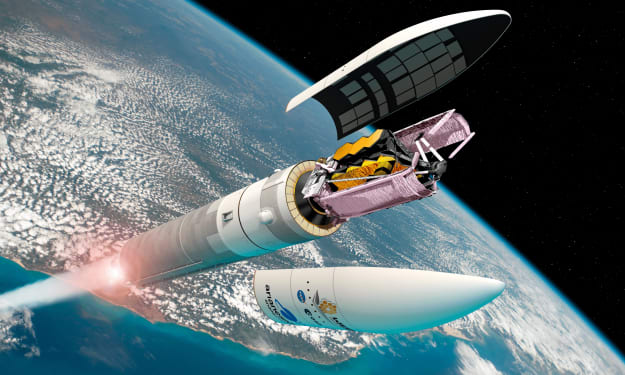
Ladies and gentlemen, are you ready to strap on your helmets and blast off into the vast and mysterious expanse of space? Do you dream of soaring through the cosmos and touching the stars? Well, get ready to join the ranks of the bold and the daring, because Elon Musk is leading the charge to make space travel a reality for all of us. As the mastermind behind SpaceX and a sci-fi fanatic, Musk is on a mission to turn our wildest space dreams into scientific fact. He knows that the survival of our species depends on becoming a multi-planetary civilization, and he's got his sights set on the ultimate destination: the Red Planet itself, Mars. So come on, let's leave the mundane behind and embark on a journey that will change the course of human history forever. With Elon Musk at the helm, we can blast off into a future that's brighter, bolder, and more exciting than we ever thought possible. Join the space race today and become part of a movement that's shaping the very destiny of our species. The stars are waiting – are you ready to reach out and seize them? But not everyone is on board with this grand vision. Some people question why we should invest so much time and resources into Mars habitation and colonization when there are plenty of more pressing matters to address here on Earth. It's a fair question, but the answer is simple: we need to diversify our portfolio if we want to ensure the survival of our species. Climate change is a major threat to our existence, but it's not the only one. Recent history has taught us that we are vulnerable to a wide range of extinction-level events, from pandemics to nuclear war. So, as the old maxim almost goes, why put all our eggs on one planet? By becoming a multi-planetary civilization, we can spread the risk and ensure that even if something catastrophic happens on Earth, humanity will still have a chance to survive. Of course, the journey to Mars won't be easy. It's a long way from Earth – about 140 million miles, to be exact. But it's not just distance that poses a challenge. The biggest obstacle to Mars habitation and colonization is ourselves. We need to overcome our indecision and commit to this goal if we want to make it a reality. Thankfully, we're not alone in this endeavor. NASA's Moon to Mars Architecture Concept Review is a study of the hardware and operations needed for human missions to the Moon and Mars, leading to long-term scientific discovery and human habitation in deep space. With the support of organizations like NASA and visionary leaders like Elon Musk, we can make this dream a reality. So, what will life on Mars look like? It's hard to say for sure, but we can look to contemporary architecture here on Earth for some inspiration. From sustainable buildings to innovative infrastructure, we have plenty of examples of how we can create habitable environments in even the most challenging conditions. With the right technology and innovation, we can create a thriving community on Mars that will serve as a second home for humanity. Of course, the road to Mars won't be without its bumps and setbacks. But that's part of the fun, isn't it? As humans, we thrive on exploration and discovery. The thought of colonizing a new planet and paving the way for future generations is both exhilarating and humbling. It reminds us of our place in the universe and the infinite possibilities that lie ahead. So, are you ready to join the mission to Mars? It won't be easy, but it will be worth it. As Elon Musk says, "If you want to make life multi-planetary, you've got to make it a loveable destination." And what's not to love about a new world full of possibilities and adventure?
By NEERAJ KUMAR SHAMI3 years ago in Earth
a novel about the flying spider
Chapter 1 The sky was an endless expanse of blue, and the sun was shining bright on the small town of Willow Creek. Peter had always loved flying. He was a paragliding enthusiast and spent most of his weekends soaring high above the rolling hills and dense forests that surrounded his hometown. But today, he was in for a surprise.
By ODS ACADEMY3 years ago in Earth