Science
BREAKING THE GLASS CEILING.
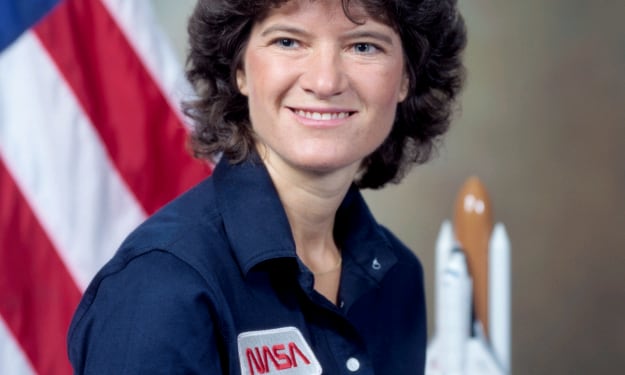
In 1961, Yuri Gagarin became the first human being to journey into space. This historic event marked the start of a new era inhuman exploration, and soon the United States had its sights set on sending astronauts to space as well. It was a male-dominated field, and many people believed that women were not fit for such a mission. But one woman was determined to prove them wrongspace exploration, and sparked a space race between the United States and the Soviet Union. The two superpowers were determined to one-up each other in the realm of space travel, and by the end of the decade, the US had put a man on the moon. But it wasn't until two decades later that the US made another massive leap forward in space exploration, and this time, a woman was at the helm. In 1983, Sally Ride became the first American woman to enter space, breaking the glass ceiling in the world of space travel. Sally Ride was born on May 26, 1951 in Los Angeles, California. She was a bright and ambitious student, with a passion for science and a desire to explore the unknown. She attended Stanford University, where she earned a degree in physics in 1973, and then went on to earn a Ph.D. in physics from Stanford in 1978. Ride's focus was on the study of astrophysics and she conducted research on x-ray astronomy and free-electron lasers. During her studies, she was introduced to Dr. Robert Behnken, an astronaut, who encouraged her to apply to the astronaut program. Sally Ride applied to NASA's astronaut program in 1977, along with thousands of other applicants. She was one of only 35 people selected for the program, and in 1978 she began her astronaut training. Ride's training was rigorous and intense. She had to learn how to fly a jet plane, master the Russian language, and undergo intense physical and psychological testing. But she was determined to succeed and was soon chosen for her first mission. In 1983, Sally Ride made history when she became the first American woman to enter space. She was a member of the crew of the Challenger STS-7 mission, where she served as the mission specialist. During her time in space, Ride conducted experiments on the human body's response to space travel and worked on the development of the shuttle's robotic arm system. She also became the first woman to operate the shuttle's robotic arm in space. Despite the historic nature of her mission, Sally Ride remained humble throughout her career. She did not see herself as a trailblazer or a feminist icon, but simply as a scientist who wanted to explore the universe. Ride went on to serve as a mission specialist on a second Challenger mission in 1984, and later worked on the investigation into the Challenger disaster in 1986. After leaving NASA, Sally Ride continued her work in science education and advocacy for women in science. She founded Sally Ride Science, an organization dedicated to encouraging young girls to pursue careers in science, technology, engineering, and math (STEM). Sally Ride passed away on July 23, 2012, at the age of 61, after a long battle with pancreatic cancer. But her legacy lives on as a pioneer for women in space and an inspiration to young girls everywhere. Sally Ride's accomplishments were groundbreaking, but they were also a reminder of the struggles women still face in STEM fields today. The gender gap in STEM careers is still significant, with women occupying only a fraction of top positions in science and engineering. But Sally Ride's life and career show that gender should not be a barrier to achievement. Her story is an inspiration to women everywhere, and a reminder that even the impossible is possible with hard work, determination, and courage.
By THEOPHILUS David 3 years ago in Earth
The future of space travel
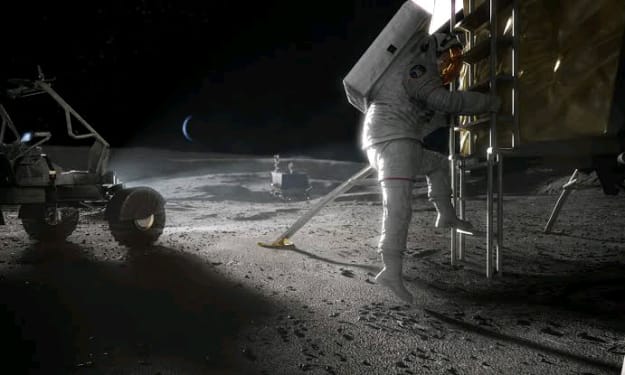
In the past, space travel was limited to government organizations like NASA and other global space agencies. However, in recent years, there has been a shiftin the industry as private companies began investing heavily in space exploration. This shift is due to advancements in technology, growing demand for space tourism and commercial space applications, and the desire to explore and expand humanity’s reach beyond Earth. The most notable private companyin the industry as private companies have entered the game. The rise of companies like SpaceX, Blue Origin, and Virgin Galactic has changed the way we think about and approach space travel. With privatized space exploration, the future of space travel looks promising and is revolutionizing the industry. The Birth of Privatized Space Exploration Privatized space exploration refers to the exploration of space by private entities, rather than government-led space programs. The concept of privatized space exploration was not new, but it was realized with the launch of SpaceX in 2002, led by Elon Musk. SpaceX was created with the goal of lowering the cost of space travel to make it accessible for everyone. It was a game-changer in the space industry as it offered an alternative to the traditional approach of government-led space programs. SpaceX has achieved some remarkable milestones over the years. It became the first private company to send a spacecraft to the International Space Station (ISS) in 2012. In May 2020, SpaceX launched two NASA astronauts into space and successfully brought them back to Earth after completing a mission on the ISS. Additionally, SpaceX has developed reusable rockets, which drastically reduces the cost of space travel. The Benefits of Privatized Space Exploration The rise of privatized space exploration provides several benefits for the industry. One of the most significant benefits is cost reduction. Space programs are expensive, and in the past, only governments could afford to fund significant space missions. Private companies, on the other hand, are profit-driven and must keep their costs down to remain competitive. This shift has led to the development of new technology, such as reusable rockets, which has lowered the cost of space travel. This technology is critical to the future of space exploration as it allows for more frequent launches. Another benefit of privatized space exploration is the potential for innovation. Private companies have more freedom to experiment with new technologies and approaches, unlike government-led programs, which often face bureaucratic hurdles. Private companies can take risks, and they have a sense of urgency to succeed as they must remain competitive in the sector. Privatized space exploration also holds valuable lessons for other industries such as healthcare, telecommunications, and agriculture. Companies engaged in space exploration have to innovate and develop new products and technologies to achieve their goals. The knowledge and skills gained through space travel could be applied to other industries, leading to innovation in other sectors. The Future of Space Travel The future of space travel looks promising with the growth of private space exploration. The development of reusable rockets and other cost-saving technology has significantly lowered the cost of space travel. Companies like SpaceX are already planning missions to Mars and beyond. The development of new technologies, such as 3D printing, could further revolutionize the industry, as it allows astronauts to produce parts and tools in space, reducing the weight of launches and making missions more cost-effective. There is also significant potential for space tourism. Companies like Blue Origin and Virgin Galactic are developing spacecraft that will take tourists to suborbital space. These trips could become mainstream in the coming years, offering anyone the opportunity to glimpse Earth from above and experience zero-gravity. The rise of private space exploration also presents opportunities for scientific research. Private companies are partnering with NASA and other organizations to conduct research in space. For example, in 2017, SpaceX launched the Dragon spacecraft to the ISS to conduct experiments on the effects of microgravity on the human body. The Challenges of Privatized Space Exploration While privatized space exploration presents several opportunities, it also poses some challenges. One significant challenge is safety. Space exploration is dangerous and requires meticulous planning and execution to ensure the safety of astronauts and equipment. Private companies may not have the same level of experience as government-led organizations. Another challenge is the potential impact of privatized space exploration on the environment. Space exploration generates a significant amount of waste, including debris, junk, and unused materials. Private companies will need to develop strategies for managing waste and ensure that their activities do not harm the environment. Conclusion The rise of privatized space exploration is revolutionizing the industry and offering exciting opportunities for the future of space travel. The development of new technology, such as reusable rockets and 3D printing, has significantly reduced the cost of space travel. The potential for innovation and the lessons learned from space exploration could have an impact on other industries. With further advancements in technology, space tourism could become mainstream in the coming years. While there are challenges associated with privatized space exploration, the benefits and opportunities it presents outweigh the potential challenges. It is an exciting time for the industry, and only time will tell what the future of space travel holds.
By THEOPHILUS David 3 years ago in Earth
Octopuses in Popular Culture.
Octopuses in Popular Culture: From Mythology to Modern Movies Octopuses have long captivated the human imagination with their mysterious and otherworldly nature. From ancient mythology to modern movies, these intelligent creatures have become a prominent feature in popular culture. Let's take a journey through time and explore the fascinating presence of octopuses in various forms of entertainment. Mythology and Folklore: The influence of octopuses can be traced back to ancient times, where they held significant roles in mythology and folklore. In Greek mythology, the mighty sea god Poseidon was often depicted accompanied by octopuses, symbolizing their association with the sea and its powers. The Roman poet Ovid even described the monstrous Kraken, a gigantic sea creature resembling an octopus, capable of capsizing ships with its massive tentacles. Octopuses, with their eight long tentacles, bulbous head, and highly intelligent behavior, have captured human imagination for centuries. From mythology to modern movies, these mysterious creatures have been featured prominently in popular culture around the world. In ancient Greek mythology, the octopus was associated with the god Poseidon, who was often depicted holding a trident and riding a chariot drawn by horses with octopus tentacles. The octopus was also believed to have the power to predict the future and was often consulted by ancient Greeks for divination purposes.
By Mr Royal Honey 3 years ago in Earth
Threats to Octopus Populations.
Title: Threats to Octopus Populations: Conservation Challenges in the Oceans Octopuses are fascinating creatures that inhabit oceans around the world. They are known for their intelligence, camouflage abilities, and unique physical characteristics. However, the future of octopus populations is uncertain, as they face a range of threats from human activities and environmental changes. In this article, we will explore the conservation challenges facing octopus populations in the oceans.
By Mr Royal Honey 3 years ago in Earth
Artificial Intelligence
art writing...Artificial Intelligence (AI) refers to the simulation of human intelligence in machines that are programmed to perform tasks that normally require human intelligence, such as learning, problem-solving, perception, and decision-making. AI involves the development of algorithms and models that enable machines to learn from data and improve their performance over time. There are several subfields of AI, including Machine Learning, Natural Language Processing, Computer Vision, Robotics, and Expert Systems. Machine Learning involves the development of algorithms that enable machines to learn from data and improve their performance over time without being explicitly programmed. Natural Language Processing involves the development of algorithms that enable machines to understand and generate natural language. Computer Vision involves the development of algorithms that enable machines to interpret and understand visual data such as images and videos. Robotics involves the development of machines that can perform physical tasks and interact with the physical environment. Expert Systems involve the development of systems that can provide expert-level advice in a specific domain. AI has several applications across various industries and domains, including healthcare, finance, education, transportation, and manufacturing. AI technologies such as machine learning, natural language processing, and computer vision are being used to develop intelligent systems and applications that can assist humans in various tasks, improve efficiency, and reduce costs.There are numerous AI technologies and applications currently in use across various domains. Here are some examples: 1. Natural Language Processing (NLP): NLP is a subfield of AI that enables machines to understand and interpret human language. Examples of NLP applications include chatbots, voice assistants, and language translation tools. 2. Computer Vision: Computer Vision is a subfield of AI that enables machines to interpret and understand visual data such as images and videos. Examples of computer vision applications include facial recognition, object detection, and autonomous vehicles. 3. Machine Learning: Machine learning involves the development of algorithms that enable machines to learn from data and improve their performance over time. Examples of machine learning applications include predictive analytics, recommendation systems, and fraud detection. 4. Robotics: Robotics involves the development of machines that can perform physical tasks and interact with the physical environment. Examples of robotics applications include industrial automation, drones, and surgical robots. 5. Expert Systems: Expert systems involve the development of systems that can provide expert-level advice in a specific domain. Examples of expert systems include medical diagnosis systems, financial analysis systems, and legal advice systems. 6. Speech Recognition: Speech recognition is an AI technology that enables machines to recognize and interpret human speech. Examples of speech recognition applications include voice assistants, speech-to-text software, and interactive voice response systems. These are just a few examples of the different AI technologies and applications currently in use. The field of AI is constantly evolving and new applications and technologies are being developed all the time.AI technologies are developed by individuals, research groups, and companies and are typically not available as a single package or product. However, there are various ways you can access and use AI technologies, depending on your needs and expertise. Here are some ways to get started: 1. Cloud AI Services: Many cloud service providers, such as Amazon Web Services (AWS), Google Cloud, and Microsoft Azure, offer AI services and APIs that allow developers to incorporate AI functionality into their applications. These services include image and speech recognition, natural language processing, and machine learning. 2. Open Source AI Libraries: There are numerous open-source AI libraries available for developers to use, such as TensorFlow, PyTorch, and Scikit-learn. These libraries provide developers with pre-built AI models and algorithms that they can use to develop their own applications. 3. AI Frameworks and Platforms: There are also AI frameworks and platforms available that provide a complete AI development environment, such as H2O.ai, DataRobot, and IBM Watson. These platforms provide tools for data preparation, model development, and deployment. 4. AI as a Service: Some companies offer AI services and solutions that can be used without requiring any AI expertise. These services include chatbots, voice assistants, and image recognition tools. To get started with AI, it's important to have a solid understanding of programming and data analysis. There are many online courses and tutorials available that can help you learn AI programming languages such as Python, R, and MATLAB. Additionally, it's helpful to have a basic understanding of statistics and mathematics, which are essential for machine learning and data analysis.
By JAMSHAID GORAYA3 years ago in Earth
Incredible Octopus.
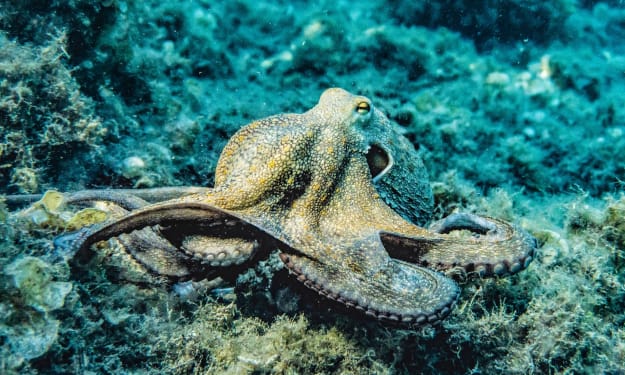
The octopus is a fascinating creature that has captured the imagination of people for centuries. With its eight arms, suction cups, and chameleon-like ability to change color, the octopus is truly one of the most incredible creatures in the underwater world. Octopuses are found in every ocean of the world, from the shallow coral reefs to the deep-sea trenches. They are mollusks, related to clams and snails, but they have evolved in a completely different direction. They have no shell, and instead of a rigid skeleton, they have a soft, flexible body that can squeeze through tight spaces and change shape as needed. The octopus, with its mesmerizing appearance and remarkable abilities, is truly one of the marvels of the underwater world. From its incredible intelligence to its astonishing adaptability, the octopus has captivated scientists and enthusiasts alike. In this article, we will delve into the fascinating world of these extraordinary creatures. One of the most striking features of the octopus is its appearance. With its soft body and eight flexible arms, adorned with suction cups, it is a creature of elegance and grace. Its ability to change color and texture is truly awe-inspiring. Whether blending seamlessly with its surroundings or flashing vivid hues to communicate, the octopus is a master of disguise and communication. But it is the octopus's intelligence that truly sets it apart. With a highly developed nervous system and a complex brain, the octopus exhibits an astonishing level of problem-solving skills. It has been observed using tools, such as coconut shells, to build shelters or protect itself from predators. The octopus is also known for its ability to learn and remember, making it a formidable predator in the depths of the ocean. One of the most impressive features of the octopus is its ability to change color and texture to blend in with its surroundings. They do this using specialized cells in their skin called chromatophores, which can expand or contract to reveal different colors or patterns. This makes the octopus an expert at camouflage, able to hide from predators or sneak up on prey. Octopuses are also known for their intelligence. They have a well-developed nervous system and can learn from experience. In fact, they have been known to solve puzzles, use tools, and even play games. Some scientists believe that octopuses are the most intelligent invertebrates on the planet, rivaling some of the most intelligent mammals like dolphins and chimpanzees. Another remarkable ability of the octopus is its ability to regenerate its limbs. If an octopus loses an arm in an attack, it can grow it back over time. The new arm will be slightly smaller than the original, but it will be fully functional. Octopuses are also masters of escape. They can squeeze through incredibly small spaces, including the openings in a clamshell or a drainpipe. They can also create distractions or release clouds of ink to confuse predators while they make their getaway. Despite their impressive abilities, octopuses are not invincible. They have many natural predators, including sharks, dolphins, and larger octopuses. They are also often caught by humans for food or for aquariums. This is a concern because octopuses are known to be highly intelligent and social creatures, and some scientists believe they may even experience emotions like pleasure and pain. In recent years, octopuses have become the subject of more scientific study and public interest. This has led to some surprising discoveries about their behavior and biology. For example, researchers have found that octopuses can recognize individual humans and even seem to have preferences for certain people. They have also observed octopuses engaging in complex courtship rituals and caring for their young. There is still much to learn about these incredible creatures, but it is clear that they are more than just strange, otherworldly beings. They are intelligent, curious, and adaptable creatures that have much to teach us about the mysteries of the ocean and the nature of intelligence itself. Whether they are gliding gracefully through the reefs or hiding in a crevice waiting for their next meal, octopuses will continue to captivate and amaze us for years to come.
By Mr Royal Honey 3 years ago in Earth
The Fascinating Life Cycle of Penguins.
Penguins are one of the most beloved and fascinating creatures in the animal kingdom. These flightless birds are well adapted to the harsh environments of Antarctica and the surrounding southern oceans. They are known for their striking black and white plumage, their waddling gait, and their endearing personalities. However, perhaps the most intriguing aspect of penguins is their life cycle, from egg to adulthood. Penguins are one of the most beloved and fascinating creatures in the animal kingdom. These flightless birds are well adapted to the harsh environments of Antarctica and the surrounding southern oceans. They are known for their striking black and white plumage, their waddling gait, and their endearing personalities. However, perhaps the most intriguing aspect of penguins is their life cycle, from egg to adulthood. Egg-Laying The breeding season for penguins typically begins in the austral winter, between March and September. During this time, penguins migrate to their breeding grounds and engage in elaborate courtship displays to find a mate. Once a pair has formed, they begin the process of building a nest using rocks, pebbles, and other materials. Female penguins will lay one or two eggs, depending on the species, and both parents will take turns incubating them. The eggs are kept warm by the parent's brood patch, which is a featherless patch of skin on their abdomen. Incubation typically lasts between 30 and 60 days, depending on the species. Hatching When the eggs hatch, the chicks are covered in a thick layer of down feathers to keep them warm. They are also completely dependent on their parents for food and protection. The parent who was not incubating the egg will go out to sea to hunt for food, while the other stays with the chick. The chick's diet consists of regurgitated fish and krill, which the parents bring back to the nest. As the chick grows, it will become more mobile and develop its own unique personality. Some chicks are more adventurous than others and may explore their surroundings, while others prefer to stay close to the safety of the nest. Fledging As the chicks grow and develop, they will eventually reach a stage where they are ready to leave the nest. This process is called fledging and typically occurs between 60 and 130 days after hatching, depending on the species. Before they leave the nest, the chicks will shed their down feathers and develop their juvenile plumage. During the fledging process, the chicks will spend time on the shoreline, learning to swim and catch fish. They will also learn important social skills, such as how to interact with other penguins and how to avoid predators. As they become more proficient in these skills, they will gradually spend more time at sea and less time on land. Adulthood Once penguins reach adulthood, they will return to their breeding grounds to find a mate and start the process all over again. Depending on the species, penguins may breed every year or every other year. During the breeding season, they will engage in courtship displays and build a nest with their mate. The cycle of egg-laying, hatching, and fledging will repeat itself, with the adult penguins taking turns incubating the eggs and caring for the chicks. As the chicks grow and develop, they will eventually fledge and begin their own journey to adulthood. Conclusion The life cycle of penguins is a fascinating and complex process, from the courtship displays to the fledging of the chicks. It is a testament to their resilience and adaptability that they are able to survive and thrive in some of the harshest environments on Earth. Penguins are truly remarkable creatures that capture the hearts and imaginations of people around the world. Egg-Laying The breeding season for penguins typically begins in the austral winter, between March and September. During this time, penguins migrate to their breeding grounds and engage in elaborate courtship displays to find a mate. Once a pair has formed, they begin the process of building a nest using rocks, pebbles, and other materials. Female penguins will lay one or two eggs, depending on the species, and both parents will take turns incubating them. The eggs are kept warm by the parent's brood patch, which is a featherless patch of skin on their abdomen. Incubation typically lasts between 30 and 60 days, depending on the species. Hatching When the eggs hatch, the chicks are covered in a thick layer of down feathers to keep them warm. They are also completely dependent on their parents for food and protection. The parent who was not incubating the egg will go out to sea to hunt for food, while the other stays with the chick. The chick's diet consists of regurgitated fish and krill, which the parents bring back to the nest. As the chick grows, it will become more mobile and develop its own unique personality. Some chicks are more adventurous than others and may explore their surroundings, while others prefer to stay close to the safety of the nest. Fledging As the chicks grow and develop, they will eventually reach a stage where they are ready to leave the nest. This process is called fledging and typically occurs between 60 and 130 days after hatching, depending on the species. Before they leave the nest, the chicks will shed their down feathers and develop their juvenile plumage. During the fledging process, the chicks will spend time on the shoreline, learning to swim and catch fish. They will also learn important social skills, such as how to interact with other penguins and how to avoid predators. As they become more proficient in these skills, they will gradually spend more time at sea and less time on land. Adulthood Once penguins reach adulthood, they will return to their breeding grounds to find a mate and start the process all over again. Depending on the species, penguins may breed every year or every other year. During the breeding season, they will engage in courtship displays and build a nest with their mate. The cycle of egg-laying, hatching, and fledging will repeat itself, with the adult penguins taking turns incubating the eggs and caring for the chicks. As the chicks grow and develop, they will eventually fledge and begin their own journey to adulthood. Conclusion The life cycle of penguins is a fascinating and complex process, from the courtship displays to the fledging of the chicks. It is a testament to their resilience and adaptability that they are able to survive and thrive in some of the harshest environments on Earth. Penguins are truly remarkable creatures that capture the hearts and imaginations of people around the world.
By Mr Royal Honey 3 years ago in Earth
5 Habitable Exoplanets
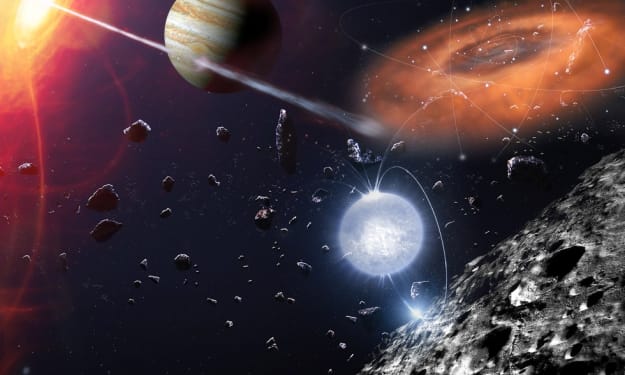
Scientists have been making remarkable discoveries of exoplanets outside our solar system for many years. As of 2023, over 5,000 exoplanets have been identified, and some of them have the potential to sustain life. Now, let's embark on an exhilarating journey through space to explore the recently discovered potentially habitable planets.
By Detail Trends3 years ago in Earth
Plastic Waste and the World’s Seas
Fifty years ago( Feb 10, 1973), Science News published a short composition, “ Setting passage into a plastic ocean. ” The story noted that scientists on a naval passage in the North Pacific “ recorded 53 manmade objects in8.2 hours of viewing ” indeed though “ they were 600 long hauls from Hawaii and far off major shipping lanes. In 1997, twenty- four times latterly, the Pacific scrap patch was “ rediscovered ” by Charles Moore who was returning from a trans-Pacific yacht race. He set up himself in the ocean girdled by plastic bobbing in the swells as far as he could see.
By Dominic Odey3 years ago in Earth
"Peacocks: The Majestic Beauty of the Avian World"
Peacock: The Beautiful Bird with a Majestic Presence Peacocks are one of the most magnificent birds found in the world. Their striking colors, unique patterns, and extravagant feathers have made them a symbol of beauty, grace, and royalty. Peacocks are not just beautiful but also have a fascinating biology and behavior that makes them an intriguing subject of study. In this article, we will delve into the world of peacocks and explore their physical characteristics, behavior, habitat, and cultural significance.
By Milka Rawade3 years ago in Earth