Science
What The Earth Is Really Standing On
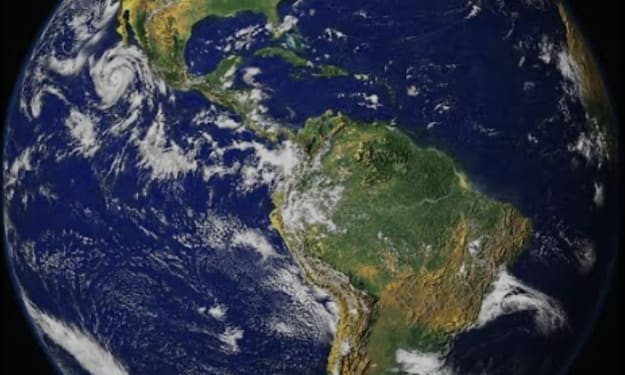
What The Earth Is Really Standing On. The Real Truth In the beginning God created the Heaven and Earth. Some believe in the Big Bang, but it is quite impossible for life to have Arisen as a result of a collision. There is a superior intelligence behind the creation, and it is God. There have been many wonders in the universe, and one of such is the position of the earth and what sustains it. What exactly holds the Earth in Balance? What are the things responsible for its accuracy and precision? From a scientific perspective the Earth is not standing on anything it is a Celestial body that is floating in space and moving in its orbit around the Sun. The force of gravity keeps the Earth in its orbit around the sun, and it also holds the Earth together and prevents it from flying apart. In a more metaphorical sense, some people might say that the Earth is standing on the shoulders of giants, meaning that it is built upon the knowledge and achievements of those who came before us. Others might say that the Earth is standing on a foundation of love compassion and mutual understanding, which are essential for maintaining a healthy and thriving Global community. The question is what is the real truth? Is the earth merely hanging in space? What force is responsible for this? let's delve into the truth. The mystery of how the Earth was made was revealed. long ago in the Holy Bible, but many have trivialized its authenticity and Authority. According to the Bible the force that makes the Earth float in space has been revealed and is captured in the Book of Psalms 24. The Earth is the Lord's and the fullness thereof; the world and they that dwell therein. For he hath founded it upon the Seas and established it upon the floods. According to this scripture, God founded the Earth upon the Seas and established it upon the floods. what does this mean? could it be that there is a connection between the Earth and the water bodies? If that is so, where are the pillars or means of identification? If indeed God founded the Earth upon the Seas and established it upon the floods, what state of matter is it? This leads us to another mystery we all know that water exists in three states solid,liquid and gas. According to the water cycle, water turns into vapor and then condenses to form rain. These are invisible water forces or let me say gaseous water forces, yet we all believe in them. Don't you think the energy that sustains the Earth could be these invisible water forces? If the Bible said God founded the Earth upon the Seas and established the Earth upon the floods, it could only mean that the Seas provide invisible energy that sustains the Earth, which is responsible for how it floats in space. According to science it is confirmed, that the Seas have a huge amount of energy. That's why air Roots avoid flying so long above the oceans due to potential problems and crashes. God is an intelligent being, and how he linked the invisible energy of the Seas and floods to establish the earth needs further research. However this is what the Bible says and it is the truth. Please let us know what you think in the comments section, don't forget to subscribe to this channel for more edifying content, also don’t forget to like and share to loved ones to know the truth, see you next time. God bless you.
By Frankie Seven TV3 years ago in Earth
The Consequences of Dumping Trash into Volcanoes: Unveiling the Dangers
Volcanoes have long fascinated humans with their awe-inspiring eruptions and geological significance. However, the idea of using them as a disposal solution for our mounting waste raises important questions about the potential consequences. While it might seem like an easy way to get rid of trash, the act of dumping waste into volcanoes could have far-reaching and devastating effects on both the environment and our health.
By StorySpinner3 years ago in Earth
The Aftermath of the Dinosaurs' Extinction: A New World Emerges
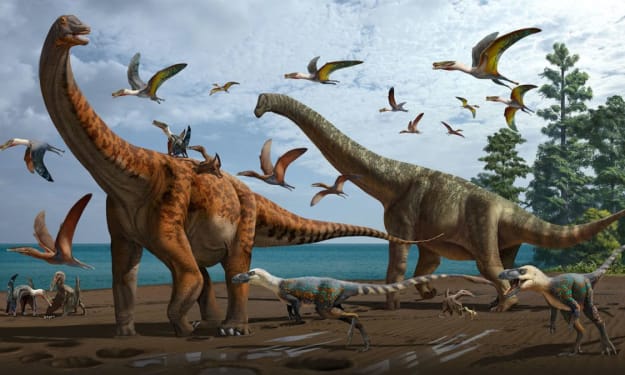
As the dust settled on the catastrophic event that wiped out the dinosaurs, Earth underwent a dramatic transformation. The impact of a massive asteroid in what is now the Yucatan Peninsula, coupled with extensive volcanic activity, led to a catastrophic chain reaction that reshaped the planet's ecosystems. The aftermath was a vastly different world, characterized by opportunities for new life forms to evolve and thrive.
By StorySpinner3 years ago in Earth
Title: The Guardian of Time
Once upon a time, in a quaint little village named Haven brook, there lived a curious young girl named Amelia. She was always fascinated by the wonders of the world, especially the natural beauty that surrounded her. Amelia would often wander through the lush forests, marvel at the shimmering lakes, and gaze at the vast expanse of the starlit night sky.
By Alhagie Manneh3 years ago in Earth
Climate Refugees
The wind howled through the narrow streets of Kolkata, a bustling city once known for its vibrant culture and rich heritage. Now, it was a city on the brink of becoming a memory, haunted by the relentless surge of the rising seas. For Rajesh and his family, it was a heart-wrenching reality they couldn't escape.
By A.C GIDEON3 years ago in Earth
Flat Earth vs. Round Earth
In a world adorned with breathtaking images of our spherical blue planet, one might think that any doubts about the Earth's shape would be dispelled. However, remarkably, a group of individuals still stands firm in their belief that the Earth is flat. In an intriguing quest for understanding, correspondent Mariana van Zeller explores this growing movement in Southern California, where the voices of flat-earthers are on the rise.
By Abdmadjed Nabed3 years ago in Earth
WHAT IF EARTH STOPPED SPINNING FOR 5 SECONDS
hang on because we're about to screech to a halt that's right the earth is going to stop spinning for five seconds how much damage would this sudden stop cause what would you experience in different parts of the world and when the earth starts spinning again would it still be habitable this is what if and here's what would happen if the earth stopped spinning for five seconds the earth makes one full rotation on its axis in one day this gives us day and night the earth is spinning because of collisions that happened when the planet was forming 4.6 billion years ago as a huge disk of gas and dust swirled around the sun dust and rock grains clumped together generating forces that kept the planet rotating in one direction you could imagine it much like a figure skater spinning faster and faster and with almost no forces in space to slow the planet down we keep rotating and we'll continue to for billions of years but if the earth stopped on a dime would you fly right off the surface if the planet came to an abrupt halt the atmosphere would still be in motion that means though everything has lurched to a stop powerful winds would continue to blow and these wouldn't be a strong breeze they would be many times stronger than any storm you've ever encountered now the strength of these winds would differ based on where you were on the planet at or near the equator the earth is rotating the fastest here you'd experience wind speeds of sixteen hundred and seventy kilometers per hour those winds would knock you off your feet but forget about you these winds would be strong enough to tear up the earth's crust so it wouldn't matter if you were out in an open field or inside a steel reinforced building these winds would obliterate you for context the strongest f5 tornadoes have velocities up to 511 kilometers per hour and these storms can move houses off their foundations send cars flying and even tear apart concrete structures the winds from the earth's emergency brake would be three times stronger than that so if the crust under your feet didn't crumble you and a lot of other stuff would likely go flying a great distance but not off the face of the earth the escape velocity or the speed you need to escape the earth's gravitational forces and enter space is about 40 000 kilometers per hour in other parts of the world like new zealand or france you'd experience slightly weaker winds but at 1180 kilometers per hour these would still be much stronger than any storm ever these winds would pretty much destroy everything but they wouldn't be the only hazard you'd need to keep an eye out for in these short five seconds our planet is not a perfect sphere it bulges near the equator due to the centrifugal forces generated by the planet's rotation if the rotation stopped the earth would transform quickly into a perfect sphere all the water gathering near the equator would flow away toward the poles generating a massive tsunami five seconds later when the planet returned to its full speed rotation that water would backtrack a wall of water would slam into everything and everyone twice that's one heck of a storm maybe the only place you'd be safe in this scenario is near the north or south poles here the wind would be the mildest now you must be relieved to hear that the earth has returned to its normal rotation after all this but like i said there would be nothing left on it every building all farmland and all technology would be demolished beyond recognition billions of people if not every single person on earth would die from the brute force of being slammed by the massive gusts of wind so if you're looking to survive this apocalyptic scenario you'd better start building an underground bunker luckily it's expected the earth won't come to a halt any time in the next few billion years yeah and before that the sun would burn out and turn into a red giant.
By Tresor Munyentwali3 years ago in Earth
Utopia: The Quest for the Perfect Society . Content Warning.
Throughout human history, the idea of utopia has captivated the minds of philosophers, writers, and dreamers. Utopia represents an ideal society, a place where peace, harmony, and prosperity prevail, and all human needs and desires are fulfilled. The concept of utopia dates back to ancient times, but it continues to be a subject of fascination and debate in the modern world. This article delves into the origins, evolution, and challenges of utopian thinking, exploring whether a utopian society is achievable or merely a captivating yet unattainable dream.
By Shifat Ibne Shivly3 years ago in Earth
The impact of deforestation on climate change
Once upon a time, in a world filled with vibrant forests, majestic glaciers, and flourishing ecosystems, there thrived a small community nestled in the heart of a dense rainforest. The villagers of Greenbrook lived off the rich resources their environment provided, living in harmony with nature, guided by the wisdom of their ancestors. But as the years passed, the signs of climate change became impossible to ignore. The once predictable seasons turned unpredictable, with prolonged droughts and unexpected floods. The lush green canopy that shielded the village from the scorching sun began to wither, leaving behind a parched and barren landscape. The rivers, once teeming with life, slowly dwindled, leaving the villagers with less and less fresh water for their daily needs. Among the villagers was a young girl named Mia. With a heart as vast as the rainforest itself, she had always felt a deep connection to nature. Every morning, she would venture into the forest, listening to the symphony of birdsong and marveling at the intricate web of life that surrounded her. But as the effects of climate change continued to unravel, Mia's heart felt heavy with a mixture of grief and determination. One day, as Mia explored deeper into the forest, she stumbled upon a secret grove, tucked away from sorrows and worries. The grove was a sanctuary of ancient trees, exuding a sense of resilience. It was there that Mia encountered an ethereal creature known as Alora, the guardian of the forest. With eyes as wise as the moon and a voice as gentle as the wind, Alora sensed Mia's pain. She understood the anguish of witnessing the gradual deterioration of the forest that was once brimming with life. Alora revealed to Mia the grave truth – the delicate balance of nature was being disrupted by human actions, and the consequences were far-reaching. Determined to reverse the damage and protect her beloved village, Mia embarked on a quest. She sought wisdom from the village elders, and together, they formed the Greenbrook Sustainability Alliance. The alliance was a coalition of villagers committed to restoring harmony and healing the land. Mia and her fellow villagers set out on a journey of education and transformation. They organized workshops and shared knowledge about sustainable farming practices, water conservation techniques, and the importance of preserving biodiversity. They worked hand in hand with scientists and nature conservationists to replant indigenous trees and restore damaged habitats. But progress was not without obstacles. Some villagers were resistant to change, comfortably clinging to old habits. Mia knew she had to find a way to ignite empathy and understanding within their hearts. With her vibrant creativity, she organized storytelling evenings around the village fire, where tales of the forest's past glory and the collective responsibility for its restoration were shared. As the stories unfolded, the villagers began to see the intimate relationship between their actions and the health of their environment. Slowly, a collective shift occurred. Together, they implemented renewable energy sources, reducing their reliance on fossil fuels. They built efficient irrigation systems that minimized water waste. And they embraced sustainable livelihoods, like cultivating organic crops and promoting eco-tourism. Years passed, and the transformation of Greenbrook was nothing short of remarkable. The forest began to regenerate – the deep emerald leaves danced with life, and the rivers flowed freely again. The villagers rejoiced as wildlife returned, filling the air with their melodies. Mia, now grown and wise, stood atop a hill overlooking the village she loved so dearly. Her heart swelled with gratitude, knowing that their collective effort had not only saved Greenbrook but had also inspired neighboring communities to take similar actions. The story of Greenbrook teaches us that it's never too late to make a difference. It reminds us that each one of us holds the power to create positive change, to protect and nurture our environment. Through unity, knowledge, and an unwavering connection to nature, we can triumph over the challenges of climate change, and ensure a harmonious coexistence for generations to come.
By Philip Arthur 3 years ago in Earth
Unveiling the Mysteries of Extraterrestrial Life: From Ancient Clues to Modern Explorations
DESCRIPTION OF THE STORY: Throughout human history, the idea of extraterrestrial life has been a subject of fascination, intrigue, and debate. From ancient civilizations to modern scientists and space researchers, the possibility of aliens has captured the human imagination.
By Edwin Kingsly3 years ago in Earth
The difference between the two hemispheres
Planet Earth is often compared to a ball spinning its way through space, and though not a perfect analogy, considering our planet as an approximately spherical object is common. You might expect that the top half (northern hemisphere) of this ball would be similar to the bottom half (southern hemisphere), but in reality, there are significant differences between them that most of us might not realize but which have a considerable impact on people living on both sides.
By taiwo oluwafemi3 years ago in Earth