Science
7 reasons why Electric cars are good for environment
Reasons why Electric Cars are Good? Considering that electric vehicles don’t have exhaust systems and as a result don’t release greenhouse gases when driving, the answer to this question may appear obvious. However, electric vehicles (EVs) have a number of pollution-related drawbacks of their own. Notably, the components in their batteries such lithium demand a lot of energy to source and extract.
By Nidhi Sharma3 years ago in Earth
Exploring the Fascinating World of Time Travel and Time Machine Stories
Time travel and time machine stories have captured the imagination of people throughout the world for centuries. The concept of traveling through time, whether to the past or the future, has been explored in various forms of literature, movies, and other media. These stories often present intriguing scenarios, philosophical questions, and imaginative adventures that captivate audiences of all ages. Let's explore some of the prominent types of time travel narratives and examples from different cultures and time periods.
By Edwin Kingsly3 years ago in Earth
The Garden of Grace
In the heart of a quaint countryside, nestled beneath a canopy of ancient oaks, lay a secret garden, hidden away from the world. This sacred space was known only to a select few – the faithful souls who sought solace, healing, and spiritual renewal. To the Christians who had discovered its profound serenity, it was more than just a garden; it was a sanctuary for mindful prayer.
By Sophia Jirnuya3 years ago in Earth
Impact on Wildlife and Ecosystems
Once upon a time, nestled deep within a lush forest known as the Whispering Woods, a thriving ecosystem existed where a diverse array of wildlife lived in harmony. This enchanted place was teeming with vibrant flora and fauna, each species playing a crucial role in maintaining the delicate balance of nature. The forest was alive with the melodies of chirping birds, the rustling of leaves, and the gentle flow of a crystal-clear river that wound its way through the woods.
By Milind Kundu3 years ago in Earth
The feelings of guilt and helplessness that individuals may experience
Amelia stood on the sandy shore, her gaze fixed on the horizon where the crimson sun was slowly dipping beneath the vast ocean. The waves gently caressed her feet, leaving behind soft traces in the wet sand. Despite the serene beauty of the moment, her heart was heavy with a burden she couldn't shake off - the weight of eco-guilt.
By Progress Victor3 years ago in Earth
Book Review: "The Self-Sufficient Backyard"
The Self-Sufficient Backyard is a comprehensive and captivating guide that delves deep into the world of sustainable living and homesteading, right in the comfort of your own backyard. This book is an invaluable resource for anyone seeking to reconnect with nature, reduce their ecological footprint, and embrace a more self-sufficient lifestyle in today's fast-paced world. With its insightful content and practical tips, this book is suitable for both beginners and experienced homesteaders alike. Let's explore the key aspects of this inspiring book:
By David Ramadhevara3 years ago in Earth
Why do we have crooked teeth when our ancestors didn’t?
All these ancient skulls boast flawlessly straight teeth, a remarkable sight considering they never had the luxury of orthodontic braces. And lest one thinks this is an oddity, the fossil record reveals that our ancestors typically exhibited well-aligned teeth, including the presence of third molars, or wisdom teeth. Surprisingly, the dental issues that drive the modern demand for braces and wisdom teeth extractions seem to be relatively recent phenomena.
By Rayen Ouni3 years ago in Earth
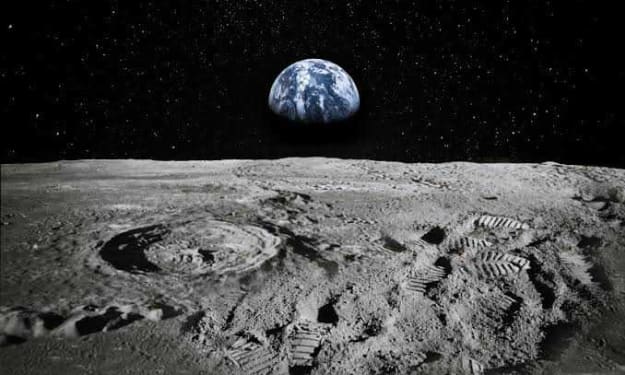
Life on the Moon
Lena had always dreamed of living on the moon. Ever since she was a little girl, she would gaze at the night sky and imagine what it would be like to walk on the dusty surface, to see the Earth from afar, to feel the low gravity. She was fascinated by the stories of the first lunar explorers, the brave pioneers who dared to venture into the unknown. She wanted to be one of them.
By Hilda Mwangi3 years ago in Earth
The Healing Garden
Once, there was a woman named Emma who had always found solace and joy in her lush garden. Each day, she would tend to her plants with care and watch them grow, finding comfort in the simple act of nurturing life. But one fateful day, tragedy struck when Emma lost her beloved husband, David, in a sudden accident. The pain and grief overwhelmed her, and she could no longer bear to step foot in the once vibrant garden they had created together.
By Esther Toluwase3 years ago in Earth
Moon Stimulant Advancement
That sounds fascinating! Using lunar regolith simulant to simulate the moon's soil is a smart way to avoid potential issues during missions. Understanding the unique properties of the Moon's soil is crucial for safe exploration. The availability of simulated lunar regolith samples on the internet is indeed intriguing. It's amazing how technology and scientific curiosity have led to such advancements in space exploration, allowing people to access and study materials simulating the Moon's soil from the comfort of their homes. Indeed, the properties of lunar regolith are incredibly unique and challenging. The absence of atmosphere on the Moon results in a harsh and unweathered surface with sharp particles and dust. The impacts of meteorites and solar wind further alter the minerals, making it an alien material to our earthly experience. The use of simulated lunar soil on Earth has been crucial for testing and preparing hardware before actual missions to the Moon. With the current Moon boom, involving private businesses in large-scale production is a smart approach to meet the growing demands of lunar exploration. It's exciting to see the renewed interest in lunar exploration with NASA's Artemis program and China's goal of landing astronauts on the Moon by 2030. The demand for lunar simulants is on the rise as more missions and private ventures aim for lunar exploration. It's a promising time for the simulant business and space exploration in general. Creating lunar simulants must be quite a challenging process. The team at Exolith Lab faces increasing demand from the community, requiring them to produce larger quantities over time. Understanding the mineralogy of different regions on the Moon, like the Highlands and the Mare regions, is essential for crafting accurate simulants. Sourcing raw materials from mines and suppliers is the first step, and it's fascinating to see how they mix anorthosite, basalt, ilmenite, pyroxene, and olivine to simulate specific lunar terrains. The process of creating lunar simulants indeed resembles a mining operation. Breaking down large boulders into smaller pieces through crushers and sieving helps achieve the desired shape and jaggedness needed to accurately simulate the lunar regolith. It's fascinating to see how much effort goes into crafting these simulants to replicate the unique characteristics of the Moon's soil. . - It's fascinating to see how the process of making lunar simulants is akin to baking, carefully following recipes and mixing the materials until they form a homogeneous mixture resembling moon dirt. The applications of these simulants are diverse, ranging from studying digging techniques, rover navigation, plant growth, to oxygen extraction. Although no single simulant can perfectly replicate all aspects of lunar soil, researchers can choose the appropriate simulants that closely resemble specific features, ensuring accurate testing for various experiments. It's incredible to witness how these simulants aid in advancing our knowledge and preparations for extended lunar missions. . - Understanding the interaction between rocket exhaust and lunar regolith is crucial for ensuring safe lunar landings and long-term plans on the Moon. When a rocket engine fires on the lunar surface, it creates a high-speed plume of regolith particles due to the low gravity and lack of atmosphere. This plume can travel significant distances, making it challenging to find a completely safe zone away from the particles during landings. Researchers like Phil Medsker are studying this phenomenon to address potential hazards and develop strategies to minimize its impact on lunar missions. The example of Apollo 12's landing near Surveyor 3 in November 1969 highlights the significant distance lunar regolith can travel due to rocket exhaust. Even though they landed 160 meters away from the uncrewed NASA craft, the rocket plume still reached it and caused substantial damage. The Surveyor 3 pieces returned to Earth revealed that the coatings were worn off, the paint was penetrated, and the surface was eroded by lunar dust particles. This incident underscores the importance of understanding and mitigating the effects of rocket exhaust on the lunar surface to ensure the safety and longevity of future lunar missions. Absolutely, as lunar exploration and commercial activities increase, the potential hazards posed by lunar regolith plumes become more significant. Damage caused by these plumes could lead to expensive repairs, jeopardize future missions, and even create geopolitical tensions among countries. Violating the Outer Space Treaty, which prohibits causing harm to other countries' assets in space, could have serious consequences. There's also a concern that some countries might attempt to claim large blast zones on the Moon as a way to exploit loopholes and assert de facto territory. It's essential for the international community to address these challenges collaboratively and establish clear guidelines to ensure responsible and safe lunar exploration. It's promising to hear that there are various solutions being explored to address the challenges posed by lunar regolith plumes. Standardizing landing zones and using natural terrain as shields, along with regolith-based construction materials, are some of the approaches being considered. The availability of lunar simulants has played a significant role in advancing research and development for these solutions. As we look beyond the Moon to destinations like Mars, the importance of understanding and working with regolith becomes even more evident. Having access to regolith simulants not only helps in space exploration but also fuels curiosity and research here on Earth, creating a virtuous cycle of knowledge and innovation. Being part of this exciting progress is indeed something to be proud of and hopeful about for the future of space exploration. Indeed, the progress in lunar exploration, like the Artemis program, is incredibly exciting. The availability of lunar simulants is driving more research and innovation, contributing to the rapid development of space exploration technologies. As we continue our journey to other celestial bodies like Mars, understanding and utilizing regolith will become even more critical. The prospect of exploring a planet covered in this unique material is both fascinating and challenging. Just as we continue to learn and prepare for more ambitious missions, it's important to maintain a sense of humor along the way. Sweeping up the Lunar Lander or Lunar Rover would be quite the task!
By sheun adebajo (lovers4real)3 years ago in Earth
The importance of environmental justice
Zoe's footsteps echoed through the narrow alleyways of her neighborhood, the rhythmic tap-tap providing a stark contrast to the chaos that surrounded her. Crumbling buildings leaned precariously over the cobbled streets, their facades a mosaic of faded colors and peeling paint. This was the forgotten corner of the city, where the air seemed thicker, the sky darker, and hope was a rare commodity.
By zama mkhwanazi3 years ago in Earth