Science
The mysterious curse of the evil eye
An unexplained period of ill health, a persistent stroke of bad luck, a sharp decline in fortune, an unexpected job loss, an accident, sudden death, or any other calamity may be attributed to the curse of the "evil eye". This belief in the malevolent effects of the evil eye has persisted for centuries and transcends civilizations, tribes, cultures, religions, countries, and continents. The concept of the evil eye is mentioned in ancient Greek and Roman texts, rabbinic literature, and the sacred books of the Bible and the Koran. It was prevalent among early Mediterranean and Asian tribes, deeply embedded in ancient Egyptian culture, and well-known during the Roman Empire. Even today, the curse of the eye is feared in Asia, the Middle East, and Africa, as well as in the Americas and Europe. The evil eye is also a long-standing symbol in major religions such as Judaism, Christianity, Hinduism, Islam, and Buddhism.
By Austine Ochieng 3 years ago in Earth
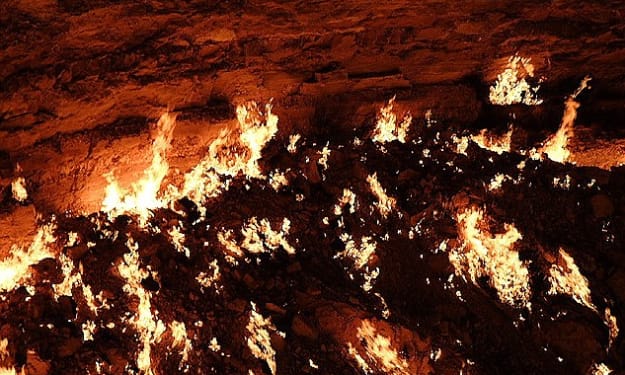
The Real “DOOR TO HELL”: GIANT Hole in Desert Has Been on Fire For Over 40 YEARS
Greetings, my name is Austine Ochieng and I am pleased to inform you that it is nearly the month of October, which happens to be my favorite month of the year. This is due to the fact that fall is my preferred season, as it is neither too hot nor too cold. Additionally, this time of year marks the beginning of the holiday season, starting with one of my favorite holidays, Halloween. During this time, I am working on a few videos for my channel, and while doing so, I stumbled upon a fascinating location that resembles the gates of hell. Before delving into this topic, I would like to take a moment to acknowledge our sponsor for today's video, Audible. More information on this will be provided at the end of the video. Now, let us return to the matter at hand. What if hell existed on earth, and what if it was our fault? This may seem like a dramatic statement, but there is a real place that many believe is worthy of the devil himself. This place is known as the Darwaza gas crater, a nightmarish inferno inadvertently created by human interference. It is located in the Karakum desert in Central Asia and has earned the nickname of the Gateway to Hell. If you are a Star Wars fan, you may compare it to the notorious Sarlacc pit, albeit without the hot breath. Furthermore, you need not worry about being slowly digested, as you would likely burn up in a matter of seconds. However, the crucial question is why this place exists in the first place, and how did the crater come to be? Well, it was all the fault of geologists who arrived from the Soviet Union in 1971. They were attempting to drill for oil but instead caused a massive fire. They realized something was wrong when the ground beneath them began to cave in, but it was too late. They had set up operations in an unstable area containing an underground pocket of natural gas, such as methane. The ground was unable to support the weight of the equipment, and after a terrifying experience, the Darwaza crater was born. It measures 230 feet wide and 65 feet deep, although some claim it is closer to 100 feet. The flames reach a scorching temperature of a thousand degrees Celsius. With so much gas escaping, there was no way to keep going. The geologists had an idea to set fire to the methane, which, as risky as it sounds, is the most effective method of ensuring natural gas does not escape into the air. Shockingly, it only takes five percent of methane to be present in the air before a reaction occurs, resulting in an explosion. There are further dangers in the effect that the gas has on oxygen. Natural gas pushes oxygen away, and as a result of the geologists' mistake, local wildlife was being killed off. The crater was set on fire, and spiders, lots of spiders, were attracted by the flame. They showed up from all directions and started to jump into the pit of fire. While this is probably a natural phenomenon, it is still quite unsettling. The Soviet team hoped that by lighting the crater, the problem would be solved, and it certainly took care of the gas. However, there was one serious problem: there was so much gas that the crater is still on fire today, 50 years later. It is challenging to know what to do with this unusual location. A recommendation was made to fill it in a few years back, but so far, this has not come to fruition. In the meantime, tourists show up to the crater to check it out, although it is not without its dangers. Back in 2015, a scientist named George RunAs was lowered into the depths of the crater to collect soil samples. He was attached to a robot and wore a protective suit. While this may seem insane, there was a serious purpose behind the descent. By studying soil in these extreme situations, scientists hope to gain insight into whether life can exist under flesh-meltingly hot conditions. In conclusion, while the Darwaza gas crater may be a fascinating location, it is also a reminder of the dangers of human interference. It is a place that I would never want to visit, but it is still a natural wonder, albeit one that was accidentally created by us. .
By Austine Ochieng 3 years ago in Earth
Could Chat GPT Talk to Whales?
This is the resonance emanating from the largest-toothed apex predator existing on our planet, a melodic broadcast emerging from the unfathomable depths of the sea – a call that diverges from harmonious melodies characterizing other whales' vocalizations, manifesting more akin to digital data transmissions. This auditory phenomenon has reverberated through the annals of nautical history, echoing through the centuries, ensnaring sailors' imaginations with its eerie wails, erroneously believed to be the lamentations of drowned mariners' spirits. Astonishingly, it wasn't until 1957 that the scientific community realized these sounds originated from cetaceans, and it took until the 1970s to comprehend the complex nature of these undulating clicks and bellowing utterances as a form of communication.
By Nida Rafiq3 years ago in Earth
Why humans should not drink too much water.
Water is essential to life, yet it can also be just as poisonous in the appropriate situation. The extra waste and water in your blood are filtered out by your kidneys, however they can only digest 800 to 1,000 millilitres of water each hour, so if you somehow managed to consume more than that without being sick, you might experience complications because your kidneys cannot keep up with your rate of consumption. As a result, your cells receive the surplus.
By Aiesha Spence3 years ago in Earth
Apollo, the Lunar Dust and NASA's Dirty Problem
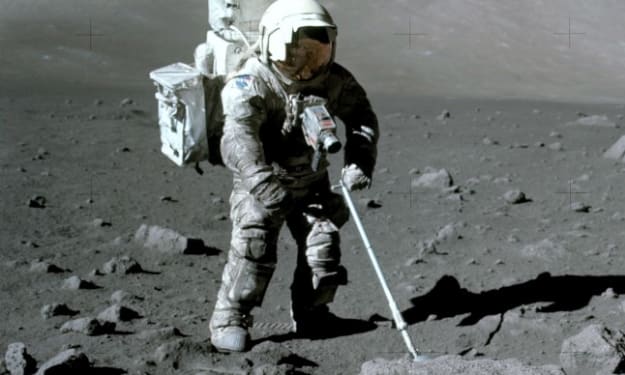
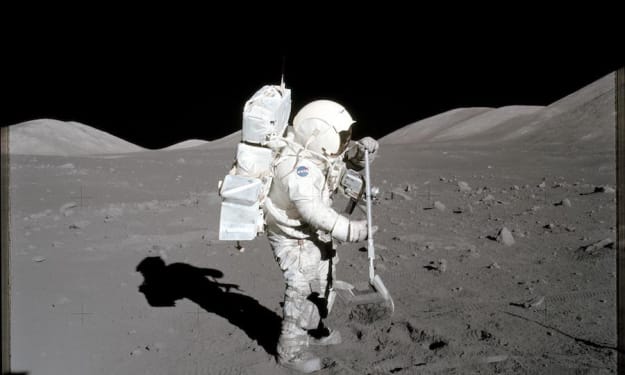
At times, even the most minuscule entities can pose significant challenges. The Apollo missions of 1969-72 encountered a major issue with the tiny particles of lunar dust. This dust, described as being as fine as talc but as rough as sandpaper, possesses properties that may be hazardous for both humans and machines. Some scientists have even cited it as a greater problem for future astronauts than radiation. The lunar surface is covered in a thin layer of dust, which has been created by the bombardment of meteorites and micro meteorites over millions of years. These particles collide with the moon's surface at a speed of about 12 miles or 20 kilometers per second, heating up and pulverizing rocks and dirt that contain silica and metal such as iron. Some of the dust is melted in the extreme heat of the impact, creating tiny glass beads as the silicon melts and then cools and falls back to the surface. This continual smashing shatters the silica and other minerals to produce finer and finer grains of dust. However, because there is no weathering on the moon like there is on Earth, the edges of these tiny shards, which are not only very hard but also remain very sharp and jagged, make it incredibly abrasive and potentially damaging to anything it sticks to.
By Austine Ochieng 3 years ago in Earth
This is why moon dust is such a problem for NASA
In a similar manner to a car battery, this is a simulation of a Lunar Lander arriving at the moon. Although the simulation is crude, it accurately depicts the lunar regolith simulant, also known as fake moon soil, which was created by a laboratory within a small but growing cottage industry. This soil is unpredictable, dangerous, and potentially catastrophic, making it a challenge for experts to work with. Samples of simulated lunar regolith, which experts refer to as lunar soil, dirt, or dust, were obtained by ordering them online. The availability of these samples is fascinating, as the first samples taken during the Apollo program confirmed that lunar regolith is a strange and hazardous substance due to the lack of atmosphere on the moon. Meteorites have pounded the bedrock into a mix of sharp jagged particles and dust, which remains jagged and dusty forever without wind or rain to weather it down. Meteorites also melt the soil on impact, creating little shards of glassy material called Agglutinate. The soil is constantly being backed by solar wind, causing chemical changes in the minerals themselves. To prepare for working on the moon, NASA created fake lunar soil on Earth to better understand how their hardware would perform. Over the years, NASA has made and tested many simulants and has recently enlisted private businesses to help with large-scale production. Exolith Lab is one of NASA's primary suppliers of lunar simulants, and they have developed a process for making the soil from scratch. The process involves sourcing raw materials from mines and other suppliers, crushing and sieving the materials, and mixing them together in the proper ratio. The resulting moon dirt is used for various experiments, such as digging into it, navigating rovers through it, growing plants in it, and extracting oxygen from it. Although no single stimulant is a perfect stand-in for all experiments, different stimulants can get pretty close on individual features, allowing researchers to order the right stimulants for the right test. The use of lunar simulants is crucial for understanding how to spend more time on the moon and overcoming challenges such as the dusty, jagged regolith that can jeopardize long-term plans.
By Austine Ochieng 3 years ago in Earth
Climate Emotions: Stories & Weather
In the small coastal town of Cresthaven, the sunsets had always been breathtaking, painting the sky in hues of orange, pink, and gold. The townspeople would gather along the shore every evening to watch the sun dip below the horizon, a ritual that had been passed down for generations. But as time went on, the sunsets started to lose their vibrancy, the colors muted by a thick blanket of smog that hung over the town. Lucia, a young artist with a heart full of dreams, had grown up cherishing those sunsets. Her paintings captured the beauty of each fleeting moment, and she longed to share this wonder with her future children. One evening, as the fading sun struggled to pierce through the haze, Lucia met Samuel, a scientist who had been studying the effects of climate change on the region. As their paths converged, Lucia and Samuel found themselves drawn to each other. Samuel's research revealed the grim reality – the smog was a result of industrial pollution and the changing climate. The townspeople began to experience the consequences firsthand, as the air grew harder to breathe and the sea grew warmer and more unpredictable. Lucia's heart ached as she realized that the sunsets she had always cherished were fading away, a casualty of the environmental degradation that threatened their way of life. She and Samuel joined forces to rally the townspeople, urging them to take action. Together, they organized beach clean-ups, planted trees, and advocated for renewable energy sources. But change was slow, and the smog persisted. One fateful day, Lucia and Samuel stood on the shore, watching as the sun struggled to break through the thick haze. Tears welled up in Lucia's eyes as she thought about the future she had hoped for – children who would run along the beach, their faces lit up by the golden light of the sun. "They deserve to see a sunrise," Lucia whispered, her voice choked with emotion. Samuel squeezed her hand, his gaze steady and determined. "We can't give up, Lucia. We have to keep fighting for their future." As the months passed, their efforts began to make a difference. The town slowly embraced renewable energy sources, and industries started to clean up their act. The air began to clear, and hope rekindled in the hearts of the people. One crisp morning, Lucia and Samuel stood side by side on the shore. The sky was a canvas of blues and purples, untouched by the smog that had once marred its beauty. And then, as if in response to their unwavering determination, a golden glow began to emerge on the horizon. The sun, vibrant and unobscured, rose in all its glory. Tears streamed down Lucia's face as she watched the sunrise. It was a sight she had feared her children might never witness – a sight that she had fought so hard to preserve. Samuel wrapped his arms around her, his joy and relief mirroring her own. "They'll see it," Samuel whispered. "Our children will know the beauty of a sunrise." Lucia nodded, her heart full to bursting. The journey had been long and challenging, but their love for each other and their town had carried them through. As they stood together, hand in hand, they knew that their fight was far from over. But in that moment, they also knew that they were part of something greater – a community of people who had come together to protect the world they loved. And as the sun bathed the world in its warm embrace, Lucia felt a renewed sense of purpose. She would continue to paint, capturing the beauty of the world around her. But now, her art held an even deeper meaning – a reminder of the power of love, determination, and the ability to create change, even in the face of the greatest challenges.
By Joshua Akindutire3 years ago in Earth
The Last Polar Bear. Content Warning.
In the northern reaches of the world, where the ice met the sea and the cold wind whispered stories of ancient times, lived a young girl named Freya. Her days were filled with the echoes of crashing waves, the songs of seabirds, and the gentle touch of snowflakes on her cheeks. But amidst the beauty, an unspoken sadness hung heavy in the air—the changing world.
By ganesh98663 years ago in Earth
Why china is losing this microchip war?
In 2012, Zongchang Yu took a bold step by leaving his engineering role at ASML, a company known as the sole creator of an extraordinary machine. This machine held the power to produce the most advanced microchips, also known as semiconductor chips, in the world. Following his departure from ASML, Yu embarked on an ambitious journey, establishing two new companies—one based in the United States and the other in China. However, the story takes an intriguing turn as legal battles unfolded between the United States, ASML, and Yu. Allegations surfaced, claiming that Yu had managed to recruit former ASML engineers to join his U.S. venture. These engineers were said to have brought along stolen proprietary information about ASML's revolutionary machine, and shockingly, these actions were allegedly backed by the Chinese government itself. This incident stands as a mere fragment of a much larger narrative—an endeavor by China to overhaul the global semiconductor industry, a sector of immense significance and international reach. What makes this tale even more captivating is that China's efforts, although initially aimed at transforming the semiconductor industry, have gradually led to a formidable clash with its long-standing rival, the United States. This is no ordinary rivalry; it delves into matters of security, not just market share or trade tariffs. So, how did China and the United States find themselves engaged in a veritable Cold War, the battleground being the realm of computer chips? To understand the gravity of this conflict, we must first rewind to the origins of semiconductor technology. In the 1950s, visionary engineers in the United States pioneered the very first semiconductor chip—a small slice of silicon adorned with a mere four transistors. Yet, with each passing year, the capability of these chips grew exponentially, thanks to an astonishing phenomenon known as Moore's Law. In 1965, Gordon Moore, the co-founder of Intel, predicted that computing power would double approximately every year, a prediction that held remarkably true over the decades. In those early days, chip manufacturers were primarily dedicated to serving a singular client: the U.S. government. These chips found utility in guiding NASA spacecraft and missile systems during significant historical events. Recognizing the strategic importance of computing prowess, the U.S. government fostered a close alliance with these chip companies, foreseeing that their partnership would ensure access to cutting-edge technology. Initially, the entire chip supply chain, from design to assembly, was localized within the United States. However, as the years advanced, chip companies realized the potential for greater profits by designing chips for civilian applications. As a result, many manufacturers relocated their production to countries like Japan, Taiwan, South Korea, and Hong Kong, where labor was more cost-effective. This move was not only encouraged but also aimed to strengthen economic ties between the U.S. and its allied nations. Nonetheless, the growing importance of these chips triggered a paradox. While countries like Japan and South Korea mastered chip manufacturing, China found itself lagging behind due to historical circumstances. Mao Zedong's policies had driven away China's finest scientific minds during the 1960s and 70s, leaving the nation with a technological deficit. However, the tides began to shift in the 1990s, as China endeavored to bridge the gap. With the Cold War drawing to a close, the U.S. adopted a more cooperative stance toward China, lifting export controls and paving the way for chip companies to set up assembly operations within the nation. By the 2000s, China had emerged as a dominant force in chip assembly, feeding its burgeoning tech ecosystem. Yet, this progress came with a dilemma: China was heavily reliant on imported chips, creating a vulnerability in its technological foundation. In response, the Chinese government initiated a substantial investment in domestic chip design and manufacturing firms, aiming to establish an autonomous chip supply chain. China's aspiration was to not only design and manufacture chips within its borders but also to assemble them, thereby gaining self-reliance. Despite China's remarkable strides, producing the most advanced chips remained an elusive goal. A major hurdle was the dependency on key players within the global supply chain. For instance, only a handful of American companies held the software essential for designing advanced chips, while ASML stood as the sole producer of a crucial chip-making machine. Additionally, the intricate process of transforming designs into real chips required equipment available exclusively in the U.S. The final step, manufacturing the cutting-edge processor chips, rested solely in the hands of companies from Taiwan and South Korea. Amidst this backdrop, a dramatic turn of events unfolded in 2019. Zongchang Yu, now CEO of his own company, was accused of IP theft, a tale that resonated with similar stories in the chip industry. These incidents underscored China's pursuit to gain a competitive edge by mimicking established technologies, a strategy that backfired and sparked international concern. As the chip rivalry intensified, the U.S. implemented a series of strategic moves to maintain its lead. Export controls were imposed, preventing American companies from selling advanced chips to China. Furthermore, the U.S. invested significant funds in its domestic chip manufacturing sector, solidifying its technological prowess. A groundbreaking deal was struck with Taiwan's TSMC to establish chip manufacturing plants on American soil, reinforcing the U.S. commitment to innovation. Interestingly, China's quest for semiconductor supremacy intertwined with another geopolitical flashpoint: Taiwan. The island nation emerged as a linchpin in the chip supply chain, manufacturing a staggering 63% of all chips and a staggering 92% of advanced chips. However, the U.S. export controls forced Taiwan's chip manufacturers to make a challenging choice: continue trading with China or abide by U.S. restrictions. These decisions hold profound implications, echoing the broader choices nations and corporations may face in an evolving global landscape. The tale of China's semiconductor surge and the ensuing rivalry with the United States encapsulates a complex narrative of innovation, geopolitics, and security. As nations grapple for dominance in this pivotal industry, the lines between economics and national defense blur, culminating in a new type of Cold War—one fought with silicon wafers and microchips instead of traditional arms. The story remains dynamic, a reflection of the ever-changing landscape of international technology and power struggles.
By Shubham Bajaj3 years ago in Earth
What if Earth was Sucked into a Black Hole?
What if Earth was Sucked into a Black Hole Could a black hole devour us all one day? There are millions of them out there just waiting for us, and if we happen to accidentally create a black hole, well you better fasten your seat belts because things are really going to suck.
By Myra Bozeman (Proud Man-Mom)3 years ago in Earth