
Is Achieving the Size of Godzilla-Like Creatures Feasible?
Wonder's of Nature

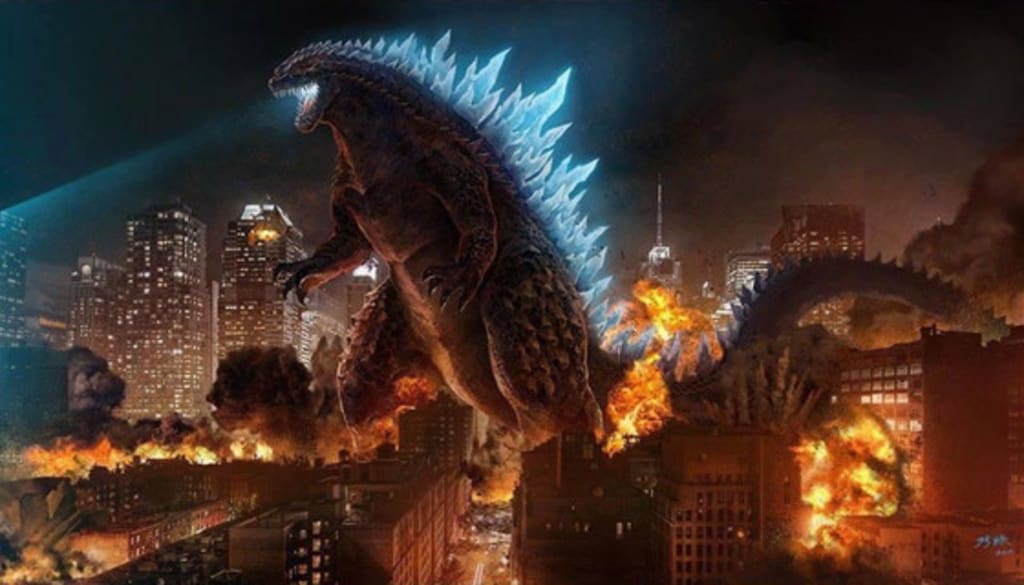
Hold on, before I get into this, let's not forget that life has thrived on Earth for approximately 3.5 billion years, and while the largest creature we currently know of is the blue whale, it's not quite as captivating as those massive, awe-inspiring animals we see in movies. You might be familiar with the iconic roar from various media—television, comic books, video games, and films. In fact, it even received its own star on the Hollywood Walk of Fame for its 50th anniversary. But the question remains: what would it take to bring the legendary Godzilla from the screen to reality?
Now, let's delve into the original 1954 film's colossal creature—Godzilla stood at a towering 164 feet! This height allowed it to ominously overlook the tallest buildings in Tokyo at the time. However, subsequent movies saw Godzilla growing even larger. In theory, this might be the maximum size an animal could attain without succumbing to the overwhelming gravitational pull of our planet. Even if we consider a smaller version, say a 14,000-ton Godzilla, its bones would need to possess extraordinary strength to support such immense weight. As objects expand, their volume grows faster than their surface area, posing a unique challenge.
But let's start on a smaller scale. Cells, the fundamental units of life, come in a variety of shapes and sizes. However, cells encounter a problem when they attempt to grow too large. As they expand, their surface area fails to keep pace with their volume. This discrepancy can be likened to having a spacious mouth but a tiny stomach—difficulty in taking in enough nutrients. This analogy is particularly relatable, especially when raiding the fridge for a late-night snack.
When cells become too large, they struggle to efficiently exchange nutrients and waste due to their limited surface area. The analogy is akin to living in a vast house with just a single small entrance. Additionally, large cells must be able to divide and replicate, a task that becomes increasingly complicated as their size increases. Microtubules, providing structural support, are vital for this process.
Nonetheless, nature finds ways to defy the norm. Certain invasive algae, for instance, have managed to challenge the limitations. These algae, resembling aquatic ferns, can grow up to 31 inches long and consist of a single massive cell with multiple nuclei. Some bacteria have also formed symbiotic relationships with these algae, assisting one another—a bit like roommates in a sprawling house.
Another example is the "sailor's eyeball" algae—a single cell that resembles a giant green slime ball, growing up to two inches in diameter. Similarly, a personal favorite is a single-cell organism with a stem and cap resembling a tiny umbrella, capable of reaching up to four inches in height.
As we move to larger organisms, there are inherent limits to their size. This is akin to constructing an exceedingly tall tower, eventually reaching a point where the weight surpasses the foundation's support capacity. Similarly, when an animal grows too large, its bones and muscles must adapt to sustain the additional weight. This adaptation becomes increasingly challenging.
Consider the sauropods, long-necked dinosaurs that could attain lengths of up to 131 feet and weigh as much as 70 tons. These creatures had a clever feeding strategy, moving their necks to access food without excessive movement. Nonetheless, this plan is impractical for many large creatures that need to hunt for their meals.
The world of giant carnivorous dinosaurs includes the Spinosaurus, approximately 50 feet in length, which primarily fed on fish and aquatic creatures. While the idea of having a real-life Godzilla is tantalizing, the complexities of maintaining such colossal proportions while pursuing prey make it improbable.
In reality, the largest meat-eating dinosaurs pale in comparison to the size of sauropods. Furthermore, issues like blood circulation to the brain or temperature regulation become more challenging as an animal's size increases. For instance, if Godzilla were a reptile, it would require copious sunbathing to maintain warmth. Conversely, if it were a mammal, excessive body heat could pose a danger.
As we explore the limits of animal size, we inevitably confront physiological restrictions. While the sauropods achieved impressive dimensions, these are exceptional cases. An animal with the scale of Godzilla would face considerable challenges in terms of support, activity, and sustenance.
Now, turning to the realm of plants, some trees have already achieved remarkable heights. The General Sherman tree, the planet's largest living tree, stands over 275 feet tall and holds nearly 53,000 cubic feet of wood. However, even for plants, growing tall presents challenges. They must navigate issues such as water transport and structural support.
But it's not just trees—organisms like Pando, a male Aspen forest in Utah, cover an astounding 107 acres and collectively weigh around 6,000 tons. Fungi, too, can reach impressive sizes; consider the honey mushroom, spanning 90 acres in Michigan and weighing approximately 400 tons. These examples underscore that colossal organisms exist across various kingdoms of life.
In conclusion, while the notion of Godzilla-sized creatures captivates the imagination, physical limitations and evolutionary adaptations impose restrictions on the size of living beings. Nature has achieved remarkable dimensions in certain cases, but realizing creatures akin to the mythical Godzilla comes with an array of hurdles that challenge the feasibility of such immense proportions.
About the Creator
Solomon
Curious Explorer 🌍🔍 | Passionate about vibrant discussions on science, culture, tech, and more. Let's unravel ideas together! 🚀 #CuriousConversations
Enjoyed the story? Support the Creator.
Subscribe for free to receive all their stories in your feed.
Comments
There are no comments for this story
Be the first to respond and start the conversation.