Science
What happens when we get attracted by a Black Hole in the space?
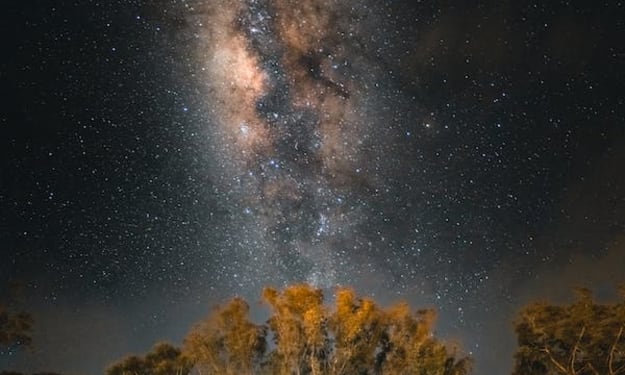
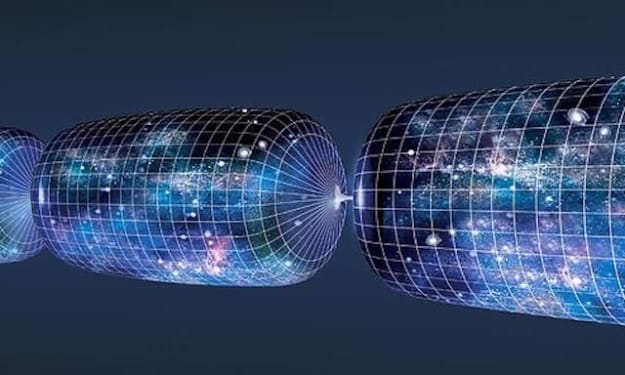
Black Holes Space-time in which we live can be conceptualised as a grid. Any object which possesses a mass distorts space-time forming around it a gravitational well. If another object is close by, then it will get attracted and spiral down the gravitational well like a marble in a bowl. The greater the mass of the object, the stronger the attraction and the quicker the attracted object must move to free itself from the gravitational pull. If the mass of the object becomes huge without the object growing in size then the gravitational well created will be so great that the speed required to escape it would be greater than the speed of light. Since nothing can move faster than the speed of light then nothing will be able to escape this attraction, even light if it gets too close will be captured. This is a black hole. At its core, a black hole holds a gravitational singularity. This is a point in space at which the curvature of space-time becomes infinite. The further we move away from this singularity the weak of the gravitational pull. Once we reach a limit known as the event horizon, the gravitational pull becomes weak enough for light passing by to escape the black hole. As such, all entities outside the horizon can hope to escape the black hole but as soon as an object moves within the horizon it is destined to fall into the black hole without ever being able to come back.
By Mohamed Abdallah Abdoul-Halim3 years ago in Earth
The Impact of the Polar Vortex on Earth in the Coming Decade
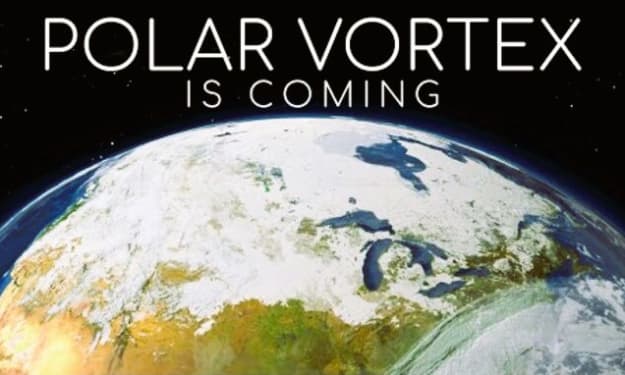
Welcome to our article on the Polar Night Jet and its crucial role in Earth's weather patterns. In this article, we'll explore the comparison drawn by Alex McColgan between the Polar Night Jet and the massive wall in Game of Thrones that holds back the armies of the Night King. We'll also dive into the science behind the Polar Night Jet, how it acts as a barrier around the stratospheric polar vortex at the North Pole, and how it prevents the powerful icy force to the north of Earth from overflowing its bounds and rushing southward. While the Polar Night Jet provides relatively tranquil conditions in nations to the south, we'll discuss how disruptions to its path can cause extreme weather conditions that can be devastating if not properly prepared for.
By Saomai20033 years ago in Earth
Scotched Earth
The year 2023 will forever be etched into the collective memory of Australia as the year when the nation faced a relentless onslaught of bushfires. These fires, more ferocious and widespread than ever before, raged across the country, leaving behind a trail of destruction, devastation, and a renewed urgency to address the undeniable role of climate change.
By Febi Danso Yeboah3 years ago in Earth
Climate Grief and Anxiety
Sarah sat alone on the rocky shore, her eyes fixed on the relentless waves crashing against the jagged cliffs. It was a place she used to come to find solace, but today, the rhythmic sound of the ocean offered no comfort. The weight of tomorrow bore down on her, just as it had for so many sleepless nights.
By Febi Danso Yeboah3 years ago in Earth
Journey to the Sun: Unveiling Solar Mysteries
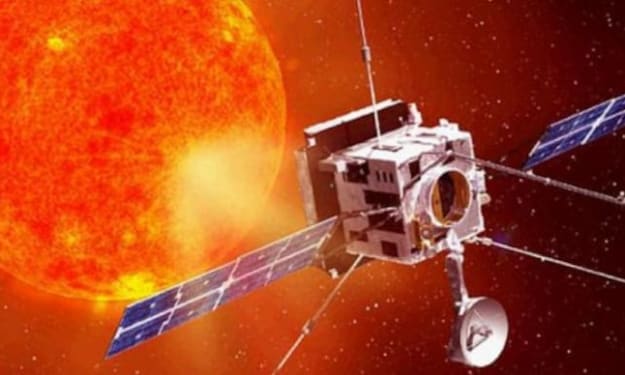
In a significant stride towards unraveling the mysteries of the universe, India embarked on a groundbreaking mission on September 2, 2023. The nation's inaugural space probe, Aditya-L-One, set forth on a remarkable odyssey destined to journey nearly one million miles to join a select group of spacecrafts stationed at LaGrange Point One. What sets this Indian mission apart is its unique approach. Aditya-L-One isn't merely a spacecraft; it's a pioneering observatory equipped to probe not one, but three fundamental questions that have long perplexed scientists.
By Julia Smith3 years ago in Earth
Science . Content Warning.
ADVANTAGES OF SCIENCE IN OUR WORLD 1. Advancements in Medicine: Science has played a crucial role in the development of life-saving medications, vaccines, and surgical techniques. It has helped in the prevention, diagnosis, and treatment of various diseases, ultimately improving the quality of life for many people.
By Noah Armah3 years ago in Earth
"Whispers of the Earth: A Symphony of Change"
In a small coastal town nestled between the rolling hills and the endless sea, there lived a woman named Isabella. Her life was a testament to the power of art and creativity in conveying the urgency of the climate crisis and inspiring action. Isabella was not a scientist or a politician; she was an artist, a musician, and a writer. Her work was her voice, and her voice spoke of the beauty and fragility of the world she loved.
By Md Monir Hossain Bhuiyan3 years ago in Earth