Science
The Silent Extinction
The Earth is currently facing a silent crisis of unparalleled magnitude - a crisis that often goes unnoticed amid the hustle and bustle of our daily lives. This crisis is the silent extinction, driven by global warming and climate change. It is a sobering reminder of the catastrophic consequences of our actions on the environment and the diverse species we share our planet with. This essay delves into the intricate web of cause and effect, exploring how global warming is pushing countless species towards the brink of extinction.
By chathumkaushika60023 years ago in Earth
A Journey of Hope. Content Warning.
Once upon a time, in a quaint coastal village named Oceantide, there lived a humble fisherman named Elias. His weathered hands and salt-encrusted boots told the story of a life intertwined with the sea. Oceantide had prospered for generations, its lifeblood being the bounty of the ocean. But, as the years passed, Elias noticed a change in the waters that troubled him deeply.
By Oshilim Anwuli First3 years ago in Earth
Why don’t we cover the desert with solar panels?
Every day, the sands of the Sahara Desert reach temperatures up to 80° Celsius. Stretching over roughly nine million square kilometers, this massive desert receives about 22 million terawatt hours of energy from the Sun every year. That’s well over 100 times more energy than humanity consumes annually. So, could covering the desert with solar panels solve our energy problems for good? Solar panels work when light particles hit their surface with enough energy to knock electrons out of their stable bonds. On their journey back to stability, these electrons produce electricity. However, there’s a limit to how much power panels can generate. Solar panels can only interact with certain wavelengths of light, making it impossible to convert over half the sunlight they receive. And even light particles they can convert often bounce off them without ever hitting an electron. But thanks to clever scientists and engineers and substantial government investment, solar panels are generating more electricity than ever. Anti-reflective coatings and patterns on the panels’ surface create more opportunities for incoming light particles to hit electrons. These techniques have increased commercial solar panel efficiency from the low-teens to 25%, with experimental models reaching up to 47%. What’s more, solar has gotten 89% cheaper over the last decade, thanks in part to global supply chains for other technologies that use the same materials. Together, these factors have made solar power the cheapest source of electricity on Earth. Countries including India, China, Egypt, and the US, have already taken these new panels into the desert. Their massive solar farms range from 15 to 56 square kilometers, and when the sun is high in the sky, these plants can provide energy for hundreds of thousands of local residents.But these farms also get extremely hot. Light that solar cells don’t convert or reflect is absorbed as heat, which reduces a panel’s efficiency. And the cooling systems employed by many farms can use huge amounts of energy powering fans or moving water to maintain optimal temperatures. Even with these systems, solar panels in the desert absorb far more heat than the natural sandy environment. This hasn’t been a problem on the scale of existing solar farms. But if we tried to cover the Sahara,this effect could create massive changes in the region's climate. Constructing solar farms already disrupts local ecosystems, but a plant of this scale could dramatically transform the desert landscape. Thankfully, solar panels aren’t our only option. And some of the largest solar plants in the world are trying a new approach: giant mirrors. Morocco’s Noor Power Plant, which will eventually cover roughly 30 square kilometers of the Sahara, is a concentrated solar power plant. This design reflects light onto a receiver, which converts that energy to heat, and then electricity. These mirrors still create a dangerous temperature shift for local wildlife, but they have less potential to transform the landscape. And since it takes time for the materials being heated to cool off, these plants often continue producing electricity past sunset. Whether they use panels or mirrors, industrial solar farms are often easy to fit into existing energy infrastructure. However, getting their electricity beyond local power grids is much more difficult. Some countries are working on ways to connect electric grids across the globe. And many farm store energy in massive batteries, or convert their electricity into clean gas that can be used later. But right now, these techniques are still too expensive and inefficient to rely on. Worse still, industrial renewables can share some of the same problems as fossil fuels,relying on destructive mining operations and carbon-emitting global supply chains. Fortunately, solar can exist on many scales, from industrial solar farms to smaller installations that power individual buildings and rural communities. These projects can supplement energy use or provide a passive source of energy for regions off the grid. And since solar panels rely on a few simple components, they’re quick to install and relatively easy to update. In fact, it’s this flexibility that enabled solar to become so cheap and ubiquitous over the last decade. So if we want to keep up with humanity's rising energy use, we'll need answers both big and small.
By Antonín Valda3 years ago in Earth
Imagining a Sky Full of Planets: If the Moon Were Replaced
Title: Imagining a Sky Full of Planets: If the Moon Were Replaced Introduction The Moon, Earth's celestial companion, has been a constant presence in our night sky for as long as humanity has existed. Its beauty and gravitational influence have shaped our planet and culture. But what if, hypothetically, the Moon were replaced by other planets from our solar system? In this imaginative exploration, we will contemplate the fascinating consequences of such a scenario, from altered tides to the transformation of Earth's nightscape.
By Pravin choudhary 3 years ago in Earth
Dark Matter and Dark Energy: Unveiling the Cosmic Mysteries Beyond the Visible
When we look up into the night sky, we are greeted by the myriad of sparkling stars, galaxies, and other cosmic wonders that illuminate the universe. However, concealed in the vastness of the universe are two mysterious elements known as dark matter and dark energy. These forces continue to be unobservable and evasive, which complicates our ability to comprehend the universe. In this piece, we go out on an adventure to investigate the great secrets of dark matter and dark energy, which together make up the majority of the stuff in the universe.
By Stephen Keith B. Labto3 years ago in Earth
The Enigmatic "Wow! Signal": A Cosmic Mystery Still Unsolved
A long time ago, in the depths of the infinite universe, a puzzling signal from outside our solar system captivated the attention of astronomers and others who were interested in space in general. This amazing cosmic phenomena, which has been referred to as the "Wow! Signal," has remained an unexplained conundrum for several decades. In this piece, we go out on an adventure to investigate the history of the Wow! Signal, its significance, and the ongoing investigation into its roots.
By Stephen Keith B. Labto3 years ago in Earth
The Unthinkable Dream: Landing on the Sun
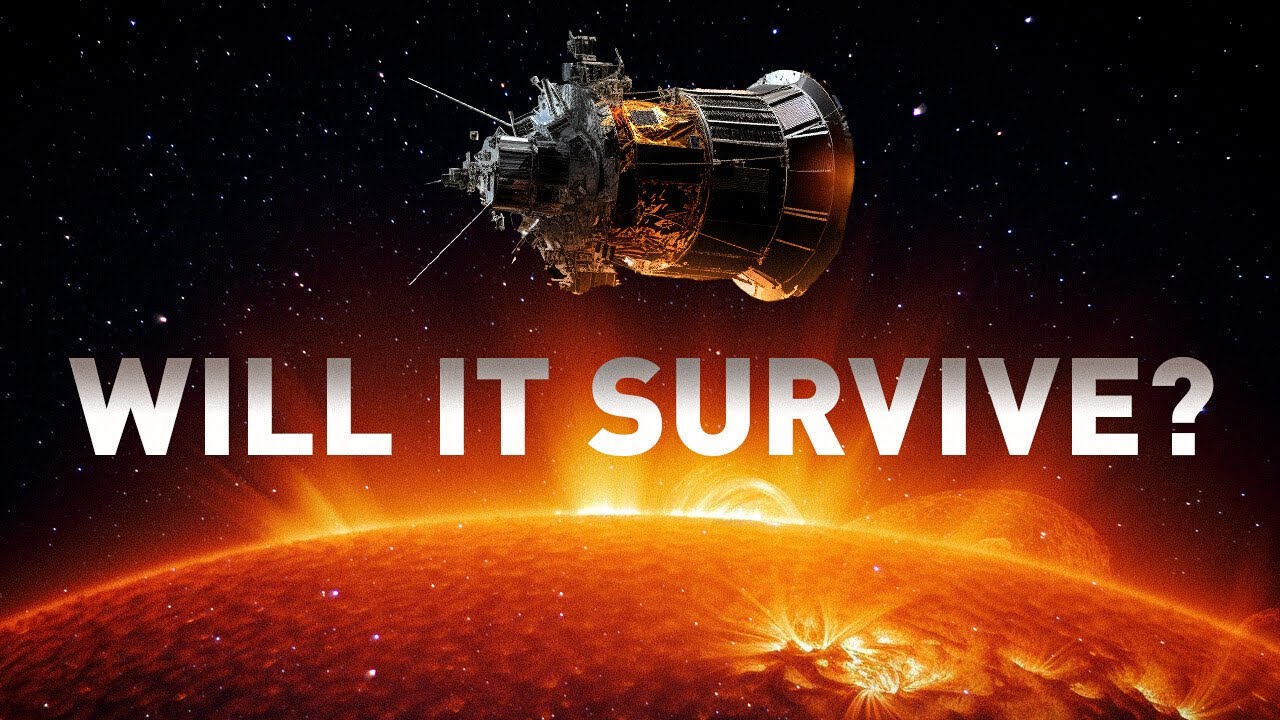
Title: The Unthinkable Dream: Landing on the Sun Introduction: The idea of landing on the Sun, Earth's life-sustaining celestial neighbor, is a concept that piques the imagination and curiosity of science enthusiasts and dreamers alike. However, while the notion of journeying to the heart of our solar system's most prominent star is undeniably captivating, it is important to recognize that landing on the Sun remains a fantastical dream rather than a scientific endeavor on the horizon. In this article, we delve into the myriad of reasons why landing on the Sun remains a challenge that transcends the boundaries of current human capabilities.
By Pravin choudhary 3 years ago in Earth
What If All Planets Were Earth-Sized?
Title: What If All Planets Were Earth-Sized? Introduction: The universe is a vast and mysterious expanse, filled with celestial bodies of all shapes and sizes. Among these, Earth stands as a unique gem, known for its diverse ecosystems and ability to support life. But what if all planets in our universe were Earth-sized? How would this hypothetical scenario impact the cosmos and our understanding of the universe? In this article, we embark on a journey of imagination to explore the possibilities and implications of a universe where every planet is Earth-sized.
By Pravin choudhary 3 years ago in Earth