Science
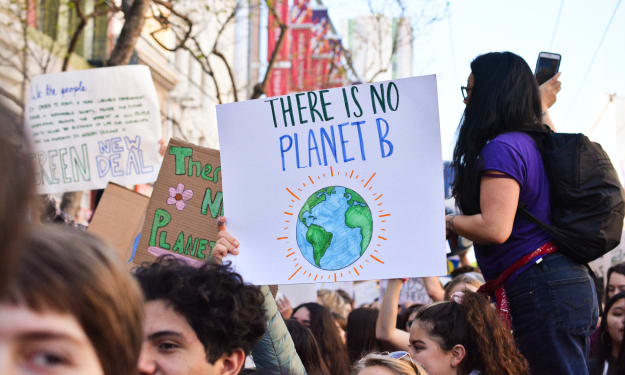
Concern for environment ignited a passionate fire within our heart
In a small coastal town named Harmony Bay, nestled between lush green hills and the azure sea, lived a young girl named Maya. From her earliest memories, she had been captivated by the beauty of the natural world around her. The whispering waves, the rustling leaves, and the gentle caress of the breeze were her closest companions.
By Abolade Olumide3 years ago in Earth
Unlocking the Cosmic Enigma: How the Universe's Astonishing Fine-Tuning Stuns Scientists!
The universe is an incredibly vast and complex place, filled with galaxies, stars, planets, and the unimaginable forces of nature. Yet, amidst this vastness and complexity, there is an astonishing fact that has baffled scientists and philosophers for centuries - the universe appears to be finely tuned for the existence of life. In this article, we will explore the intriguing concept of fine-tuning in the universe and delve into the various theories and arguments surrounding this fascinating phenomenon.
By Gufran Kandemir3 years ago in Earth
The Healing Garden
There's a secret oasis known only to a lucky few in the heart of a bustling city. It is known as the "healing garden". This peaceful retreat is hidden behind a modest structure and protected from busy streets by high ivy-covered walls. The garden serves as a place of refuge and renewal, where people come to heal their exhausted souls.
By WILLIAM SHAKESPEARE3 years ago in Earth
Sustainable Agriculture: Nurturing the Earth and Feeding the Future. Content Warning.
In a world of increasing population and environmental challenges, the future of agriculture stands at a critical crossroads. As we strive to feed a growing global population while mitigating the impacts of climate change, sustainable agriculture emerges as a beacon of hope. This multifaceted approach to farming not only ensures the production of food but also safeguards the planet's natural resources for future generations. In this comprehensive exploration, we delve into the importance of sustainable agriculture, its innovative practices, and its potential to address some of the most pressing challenges of our time.
By Peter Kaan3 years ago in Earth
Survival Admidst The Ice: A Saga of Fear and Resilience
The history of our species, Homo sapiens, is a tale intricately interwoven with the environmental conditions of our planet. While much of our history is defined by cultural achievements and technological innovations, there is a chapter, a profound era, etched into the very core of our being—the ice ages. This epic period, characterized by plummeting temperatures and relentless glaciation, forged the emotional landscape of early humans. Fear, survival, and the indomitable human spirit took center stage during these harsh times.
By Edward Flojera3 years ago in Earth
iPhone15 Pro & Pro Max
If you are the proprietor of a brand-new iPhone 15 and have been experiencing the device getting too warm to deal with, you will need to replace it with iOS 17.0.3 as soon as possible. Over the weekend, Apple showed that it became privy to some problems causing the iPhone 15 to overheat.
By Quazi Qudrat-E-Mowla Ruhel3 years ago in Earth
Unveiling the Microbial Marvels
In the grand theater of climate change mitigation, scientists and environmentalists often cast a spotlight on high-profile actors like renewable energy sources, carbon capture technologies, and reforestation efforts. Yet, in the shadowy wings, an ensemble of unsung heroes quietly works its magic: microbes. These microscopic organisms, inhabiting every corner of our planet, are emerging as unexpected champions in the ongoing battle against climate change. In this comprehensive exploration, we will delve deep into the remarkable world of microbes and unveil their astonishing contributions to mitigating climate change, all while shedding light on their potential applications in building a more sustainable future for our planet.
By asdasd asd3 years ago in Earth
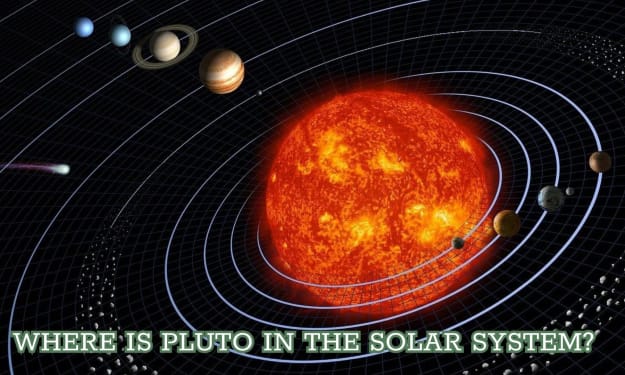
Where is Pluto in the solar system? Secrets of Pluto
I showcase the journey New Horizons took in order to get to Pluto, its moons, geological features, and Pluto's atmosphere. In 2015, the space community was abuzz with excitement as the New Horizons space probe flew by Pluto, providing us with unprecedented detail and fidelity of the dwarf planet and its moons. Prior to this, the best image we had of Pluto was a few blobs of color variation captured by the Hubble telescope. The New Horizons mission was part of NASA's New Frontiers program, and it was launched in 2006 with the goal of exploring Pluto as soon as possible. The spacecraft used Jupiter as a gravity assist to shave three years off its arrival time and also took remarkable videos and images of the planet and its moons during the trial run. After the successful trial, the spacecraft went into hibernation mode to prevent wear and tear of its instruments. Leading up to its approach in 2015, the team turned the systems back online, and every day, the spacecraft sent back images of the Pluto system. On July 14th, 2015, the New Horizons probe made its closest approach to Pluto at only 12,500 km from the surface of Pluto. The spacecraft sent back spectacular images of mountain ranges, ice plains, glaciers, and an atmosphere. One of the most interesting things observed was Pluto's unusual relationship with its moons. For example, Charon, Pluto's biggest moon, orbits very closely to Pluto and is also very big in comparison. This means that the barycentre of the two objects is outside of the primary object, and they both orbit around a point in space. Additionally, both objects are tidally locked to each other, which means that if you stand on one, the other won't move from that point in the sky.
By Saomai20033 years ago in Earth
World News
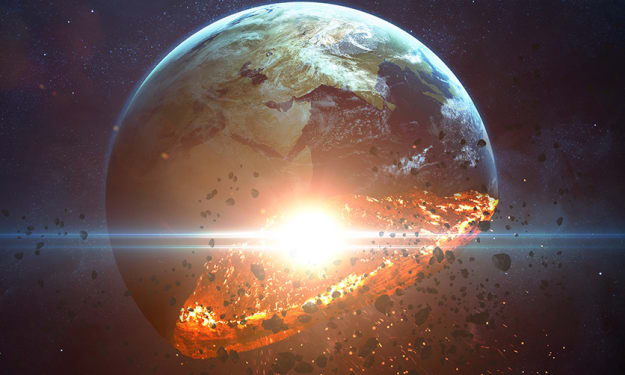
Revelation is long considered the most controversial book in the Bible. In their cryptic language, many see a timeline for destruction at an unprecedented level. Some maintain that the timeline will end, abruptly and violently, in this century. We live in a world that is changing profoundly and rapidly, and facing threats that seem apocalyptic to us. We worry about global warming and overpopulation. It is only necessary to open the newspaper or turn on CNN to see the headlines that, in the eyes of some readers of the Apocalypse, will be sure proof that biblical prophecies are finally being fulfilled. Just think about how we've seen devastating hurricanes in recent years. We have seen devastating tornadoes. We have found earthquakes very high on the Richter scale. If you look at how quickly they are happening and how close they are coming, as we get closer to the end of the days, they will almost overlap on top of each other. The prophecy of Revelation suggests that as the seven seals of Revelation are broken one by one, we are approaching the end of the timeline. Some biblical experts maintain that the seals have already begun to break, setting the stage for a final cataclysm. If this is true, what could occur and when? Exactly where are we on the timeline? There will be terrible suffering, wars, diseases, a series of disasters, and catastrophes, that will affect the Earth, and the human beings living on the Earth, as the end of the world approaches. And in the end, we will witness the final destruction of the Earth on which mortal human beings live. But what forces will bring about this final destruction? How would we know that the most important seal of all, The seventh, has been broken? The Apocalypse says that the final punishment for humanity's wickedness will be announced by the sound of heavenly trumpets. You see seven angels, each with a trumpet. And they go out, and then the series of trumpet judgments begins. Some believe these trials will be natural disasters of unprecedented magnitude. They look to science for answers while theorizing that the cryptic text of Revelation may allude to physical forces on Earth or beyond. Some New Testament scholars say that this and biblical references to fire falling from heaven could be interpreted as asteroids. A collision between an asteroid and Earth may be the catastrophic event predicted in another verse of Revelation. The third angel sounded his trumpet and a great star, burning like a torch, fell from heaven. The star's name is Wormwood. Some believe that the author of Revelation, John, does not specify a star in this passage, but rather a comet or an asteroid. It is widely accepted that ancient observers could not have understood the difference between different types of celestial bodies. Although no star is named after Wormwood, There is strong scientific evidence that an asteroid impact could play a major role in the mass extinction of life on Earth. Astronomers now believe that all three generations of dinosaurs, Triassic, Jurassic, and Cretaceous, became extinct, at least in part due to extraterrestrial collisions, giant comets, and asteroids that collided with Earth. If something that big happened, humanity would not survive. Today, a collision between Earth and an asteroid only a few kilometers in diameter can release as much energy as 1,000 nuclear weapons detonated simultaneously. And the third part of the son was wounded, and the third part of the moon, and the third part of the stars, so that the third part of them was darkened. If a large asteroid or comet were to hit Earth in our lifetime, it would send millions of tons of debris into our atmosphere for years. This would practically imprison us in a cloud of dust, isolated from the life-giving sun. Is this the scenario described in the Apocalypse? In any case, its author writes that more trumpets will sound and even greater anarchy will develop.
By S.I.E.R.R.A3 years ago in Earth