Science
Eruption Under the Pacific Ocean Will Make the Water Fizz
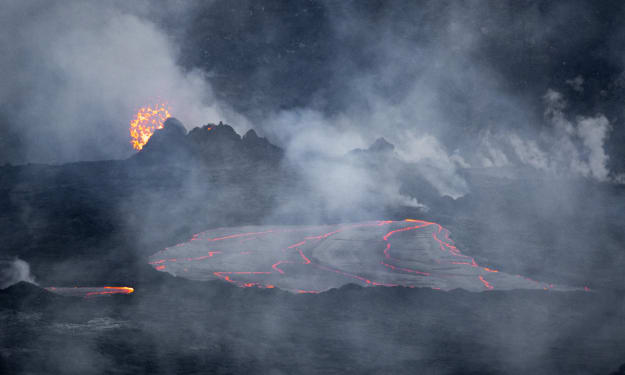
Emission Under the Pacific Sea Will Make the Water Bubble The Remote ocean Show Unfurls In the secretive profundities of the Pacific Sea, an unprecedented occasion is fermenting, promising a display not at all like some other. A volcanic ejection is set to happen underneath the sea's surface, and it's supposed to make the water bubble like a monster, regular soft drink wellspring. This peculiarity isn't just an enamoring show of nature's crude power yet additionally a basic area of study for researchers looking to grasp the elements of submerged volcanism and its more extensive ramifications.
By robail shahzadi2 years ago in Earth
Exploring the Depths: Unveiling the Mysteries of Deep Sea Creatures
1. The Five Deeps Expedition: Discovering Alien Worlds In 2019, the Five Deeps Expedition marked a historic milestone in deep-sea exploration. Led by deep-sea pioneer Victor Vescovo, the expedition aimed to reach the deepest points of the world's five oceans, including the Puerto Rico Trench in the Atlantic and the Java Trench in the Indian Ocean. Using the revolutionary deep submergence vehicle "Limiting Factor," the team descended to unprecedented depths, uncovering a wealth of new species and geological formations. During their descent into the Java Trench, approximately 7,180 meters below the surface, the expedition stumbled upon a creature previously unknown to science a gelatinous stalked sea squirt. Resembling a balloon attached to a string, this ethereal organism floated through the frigid waters, its ghostly silhouette a testament to the alien landscapes found in Earth's deepest recesses. 2. Fangtooth: The Predator of the Abyss Among the most iconic denizens of the deep sea is the Fangtooth fish, a creature with a visage straight out of a nightmare. Inhabiting depths up to 5,000 meters, these fish boast the largest teeth relative to body size of any known species. Their formidable appearance is matched by their predatory prowess, as showcased in BBC's Blue Planet II, where the Fangtooth's savage attacks on prey reveal the brutal reality of survival in the abyss. Despite their fearsome reputation, Fangtooth fish exhibit remarkable adaptations to their extreme environment. Able to withstand the crushing pressures of the deep sea, they possess a unique resilience that allows them to survive even when brought to the surface for study—an anomaly among many deep-sea creatures. 3. Bobbit Worm: Nature's Underwater Assassin Few creatures epitomize the blend of horror and fascination found in the deep sea like the Bobbit Worm. Named after Lorena Bobbitt for its ruthless hunting technique, this ambush predator lurks in sandy burrows, awaiting unsuspecting prey. Armed with venomous spines and lightning-fast reflexes, the Bobbit Worm can strike with such force that it slices its victims in half, dragging them into its lair for consumption. The Bobbit Worm's predatory prowess is matched only by its mysterious biology. Capable of regenerating and splitting into multiple parts, these worms are a testament to the adaptability and resilience required to survive in Earth's most extreme habitats. 4. Gulper Eel: Enigma of the Deep The Gulper Eel, also known as the Pelican Eel, is one of the most peculiar and elusive creatures found in the deep sea. Despite its widespread distribution, little is known about its behavior and life cycle due to its rarity and inaccessible habitat. Sporting a large, expandable mouth capable of swallowing prey larger than itself, the Gulper Eel's bizarre anatomy reflects its adaptation to the challenges of life in the abyssal plains. Recent advancements in deep-sea research, including the detection of Gulper Eels in their natural habitat, have shed light on their feeding habits and ecological role. These discoveries underscore the importance of continued exploration and conservation efforts to protect these mysterious creatures and their fragile ecosystems. 5. White Margin Stargazer: Master of Camouflage and Ambush In the shallow coastal waters of the Indo-Pacific region, the White Margin Stargazer lurks, employing a unique strategy to capture its prey. Buried in sand with only its eyes and mouth exposed, this ambush predator waits patiently for unsuspecting fish and crustaceans to pass by. With a venomous and electrically charged tongue-like appendage, it strikes swiftly and decisively, creating a vacuum that sucks its prey into its waiting jaws. The Stargazer's ability to blend seamlessly into its surroundings and its lightning-fast attack mechanism highlight the ingenuity of nature in adapting to diverse and challenging environments. Studying these creatures not only enhances our understanding of marine biodiversity but also underscores the importance of protecting coastal habitats essential to their survival. Conclusion The exploration of deep-sea ecosystems remains a frontier of discovery, offering glimpses into a world largely untouched by human hands. Each encounter with these remarkable creatures not only expands our scientific knowledge but also emphasizes the need for responsible stewardship of our oceans. As we embark on future expeditions and advancements in technology, the mysteries of the deep sea are poised to reveal even more astonishing marvels, challenging our perceptions and enriching our understanding of life on Earth.
By Sam Aurélio2 years ago in Earth
The Most Incredible Scientific Discoveries of the Last Decade
1. Pluto's Surprising Secrets In 2006, Pluto was reclassified as a dwarf planet, marking a shift in our solar system's planetary hierarchy. However, its demotion did not diminish its allure. The launch of NASA's New Horizons spacecraft in 2006 set the stage for an unprecedented journey to the edge of our solar system. Arriving at Pluto in 2015, New Horizons unveiled a world far more dynamic than anticipated. Instead of a barren, frozen sphere, Pluto revealed moving glaciers, floating ice mountains, and even a vast frozen sea of solid nitrogen. These discoveries reshaped our understanding of distant celestial bodies and sparked new questions about the nature of dwarf planets. 2. The Discovery of the Higgs Boson The quest for the Higgs boson, often dubbed the "God particle," culminated in a historic announcement in 2012 at CERN's Large Hadron Collider. This elusive particle, theorized in 1964 as a crucial component of the Standard Model of particle physics, provides fundamental insights into the origins of mass in the universe. Its discovery not only validated decades of theoretical physics but also opened new avenues for exploring the mysteries of the subatomic world. As researchers continue to probe deeper into particle physics, the implications of the Higgs boson discovery reverberate across scientific disciplines. 3. Kepler and the Exoplanetary Revolution For millennia, humanity gazed at the stars, wondering if other planets orbited distant suns. The Kepler mission, launched in 2009, revolutionized our understanding by detecting thousands of exoplanets through the subtle dimming of distant stars. By the end of the decade, Kepler's observations confirmed over 4,055 exoplanets, including some potentially habitable worlds. This flood of data suggests that planetary systems similar to our own are commonplace in the Milky Way, igniting hope for discovering extraterrestrial life and reshaping our cosmic perspective. 4. Climate Change Awareness The last decade underscored the urgent reality of climate change, driven largely by human activities. Accelerated ice loss in Greenland and Antarctica, along with rising sea levels, highlighted the profound impact of global warming on our planet's ecosystems and coastal communities. Scientific observations revealed alarming trends, such as the endangerment of species and ecosystem disruption, emphasizing the need for decisive action to mitigate climate impacts. The decade marked a critical turning point in global climate awareness, setting the stage for concerted efforts to address environmental challenges in the years ahead. 5. Unveiling the Mysteries of Black Holes Black holes, once regarded as cosmic enigmas, became focal points of discovery in the 2010s. In 2016, the detection of gravitational waves from colliding black holes validated Einstein's theory of relativity and opened a new era of observational astronomy. However, the pinnacle came with the Event Horizon Telescope's 2019 capture of the first-ever image of a black hole's event horizon in the galaxy M87. This groundbreaking achievement offered a glimpse into the gravitational behemoths that anchor galaxies, confirming long-standing theories and providing new insights into the physics of extreme environments. Conclusion The past decade stands as a testament to human curiosity and perseverance in unraveling the mysteries of our universe. From the outer reaches of our solar system to the depths of black holes, each discovery has expanded our knowledge and challenged our understanding of natural phenomena. As we embark on a new decade of scientific exploration, the lessons learned from these discoveries will guide us towards a deeper appreciation of our world and our place within the cosmos. In summary, the 2010s were not just a decade of scientific progress but a testament to the boundless potential of human intellect and exploration. As we look ahead, the discoveries of the past decade serve as beacons of inspiration for the future of scientific inquiry and discovery.
By Sam Aurélio2 years ago in Earth
Sea Creatures That Can Ruin Your Trip
The Pacific Lamprey: An Underwater Vampire Deep in the ocean lurks a creature that would make Dracula proud: the Pacific Lamprey. This eel-like parasite has been around since before dinosaurs roamed the Earth. Lacking bones and a jaw, it still manages to hunt effectively. With a sucker mouth surrounded by teeth, it latches onto prey and sips their body fluids like an underwater vampire. The Pacific Lamprey has a storied history, even influencing English royalty. One monarch loved this fish so much he defied doctors' orders to stop eating its flesh, which led to severe illness and ultimately his demise. Despite this, lampreys have survived at least four mass extinctions, evolving over 450 million years. The Australian Box Jellyfish: A Deadly Swimmer Seemingly harmless, the Australian box jellyfish is the most venomous marine animal. Unlike other jellyfish that drift with the current, this one swims and can reach impressive speeds. Its tentacles are covered with tiny, poison-loaded darts. A sting can cause excruciating pain and even be fatal within minutes. Out of around 50 species, only a few have venom lethal to humans. The most dangerous ones are found in the Indo-Pacific region and northern Australia. While some species are less harmful, it's best to keep a safe distance. The Blue-Ringed Octopus: A Tiny Terror Despite its cute appearance, the blue-ringed octopus is extremely dangerous. Found in sandy bottoms, tide pools, and coral reefs, it uses color-changing organs to display blue rings as a warning. Its venom is a thousand times more potent than cyanide, used to hunt crabs, shrimp, and small fish. There is no known antidote for its venom, so avoiding this creature is crucial. It typically won't attack unless provoked, but if it does, the bite is painless, making it easy to miss until it's too late. The Reef Stonefish: Master of Disguise Reef stonefish are masters of camouflage, blending into rocks, coral reefs, or the seabed. Found in tropical marine waters of the Indo-Pacific, their invisibility makes them dangerous. They ambush and swallow their prey whole. If disturbed, their dorsal spines deliver a venomous sting that can be extremely painful and even lethal if untreated. The Cone Snail: Beautiful but Deadly With its intricate shell patterns, the cone snail looks harmless but is far from it. Found on the seafloor, it uses a sharp proboscis to inject venom into its prey, paralyzing it instantly. While humans aren't its typical target, stepping on or disturbing a cone snail can trigger a venomous attack. Only a few of over 700 species can kill humans, but it's not worth the risk. Sea Snakes: Venomous but Shy All 52 known species of sea snakes are venomous, with the beaked sea snake being one of the most dangerous. Found in warm tropical waters of the Indian and Pacific Oceans, sea snakes prefer to avoid conflict. Bites are often painless initially but can lead to severe consequences. Most incidents occur accidentally, such as when fishermen free them from nets. The Blue Dragon: A Tiny but Dangerous Beauty Blue dragons are small, rarely larger than a grape, and swim belly-up to blend in with the ocean. They feed on venomous prey and store the stinging cells, making them hazardous even after death. Avoid picking up or stepping on these creatures to stay safe. When enjoying the ocean, awareness and caution can help you avoid these dangerous sea creatures and ensure your trip remains enjoyable.
By Sam Aurélio2 years ago in Earth
Baffling phenomena of the natural world
A tapestry of marvels, the natural world is woven with fascinating patterns and perplexing occurrences that have long captured the human mind. This tapestry also contains a lot of mysteries. Our globe is a treasure mine of inexplicable wonders that continue to test our knowledge and stimulate our interest. These marvels may be found anywhere on our planet, from the depths of the underwater world to the heights of the mountains.
By victor archibong2 years ago in Earth
Cities that will be underwater by 2050
Cities That by the Year 2050 Will Be Submerged in Water More and more coastal towns throughout the globe are facing a frightening future as a result of the acceleration of climate change and the increase in sea levels. These communities are at risk of being fully submerged underwater within the next few decades. It is anticipated by specialists that by the year 2050, a number of big urban regions would be flooded in either a partial or complete manner, which will have terrible effects on millions of people.
By victor archibong2 years ago in Earth
What Have Scientists Discovered on Jupiter?
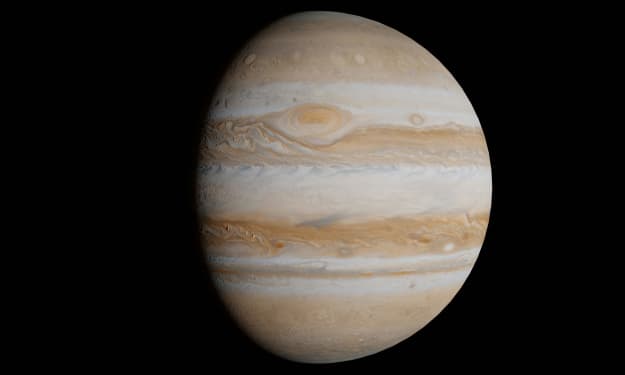
Jupiter is a massive, terrifying planet that has managed to hide some things from us up until this point, including planetary cannibalism and giant spots you've never seen before. We're going to reveal all of Jupiter's dark secrets, despite being studied for centuries and even being visited by nine space probes in the last 50 years. Okay, so you've undoubtedly heard of Jupiter's Great Red Spot, the enormous storm that has been raging for hundreds of years. It's freakishly big wider than Earth, kind of big and if Earth had a storm like that raging on its surface, well, there wouldn't be an Earth as we know it today. However, you may not be aware that there's a new, massive storm in town called the Great Cold Spot. This one is peculiar in that it's almost as large as the Great Red Spot and it's the coldest place in Jupiter's clouds, which is how it got its name. How did we miss this enormous hurricane? I believe we were simply enthralled by the gas giant's swirling clouds and neglected to look closely at Jupiter's poles. The Great Cold Spot is actually difficult to observe because it is hidden by Jupiter's intense auroras, which are similar to Earth's Northern Lights but far more potent. Moreover, unlike the Great Red Spot, which is not likely to alter much, the Great Cold Spot is volatile, constantly changing in size over weeks or even days as scientists struggle to keep up with it, and they still don't fully understand how it formed. I mean we know that the Great Red Spot is powered by Jupiter's swirling gases but the great cold spot could be fueled by auroras and Jupiter's auroras would be a remarkable sight to see they aren't exactly like the ones on Earth we get our space light shows thanks to the sun's solar wind but Jupiter's auroras don't rely much on the Sun they appear thanks to the charged particles inside Jupiter's unimaginably huge magnetosphere most of these particles come from Jupiter's volcanic moon IO if the great cold spot is really formed by auroras then it might be thousands of years old way older than the Great Red Spot and it's not the only mysterious spot lurking in Jupiter's deadly atmosphere among the gas giants beautiful swirling gases there lies a dark Vortex with an intriguing name the great Abyss this is one of the most baffling features scientists discovered on Jupiter and let me remind you we've sent nine probes to this giant from Pioneer 10 the first spacecraft to fly by Jupiter in 1973 to Juno the most recent space probe to do an in-depth study of the planet it took Juno 20 passes to finally notice and capture this dark center of the great Abyss and yet scientists don't know exactly what this pitch black hole is or how it formed I would call it Jupiter's Great black hole but I guess that name would be a little bit confusing besides the great Abyss isn't anything like a black hole it's the very dark center of a vortex might run deep but at least it wouldn't suck you in like a black hole would likely not The gas giant Jupiter has an extremely frightening atmosphere. It is mostly composed of hydrogen and helium, but its clouds are far more dangerous than that. At the top, there is only ammonia ice, and as you go deeper beneath the bright patterns, you will probably come across ammonium hydrosulfide crystals. At the very bottom of the gas giant, there is water ice and vapor. Yes, that's correct. Jupiter is a strange planet without a solid surface. Despite being the largest planet in the solar system and having more mass than all other planets put together, Jupiter is essentially a freezing cold cloud floating in space with a massive hydrogen ocean in its center. There are also winds on Jupiter. Jupiter's winds are incredibly powerful, capable of pushing more material around the planet than three Earths' worth. At the equator, they can reach speeds of up to 540 km/s, and they may even be blowing deep into Jupiter's atmosphere. The magnetic field of Jupiter is off. No other planet in the solar system can match Jupiter's enormous magnetosphere, which is 21 times the planet's diameter. As if that weren't enough, this gas giant has not one, not two, but three magnetic poles: one near the equator, one at the North and South Poles, and one that was only recently discovered by Juno and named the Great Blue Spot. Is it just me, or do you think Jupiter's place names could be a little more creative? scientists have noticed how the gas Giant's magnetic field changes over time and now they think the intense winds might be causing these changes well that's just mind-blowing but you know what's even more stunning than that it turns out Jupiter is a planetary cannibal in the early days of our solar system the gas giant was one of the first planets to form it really explains why it's so gigantic but despite being so gassy Jupiter has a lot of heavy elements inside it and thanks to Juno we now know that this monstrous planet has about 30 Earth's worth of heavy elements in it all because Jupiter is literally gobbling up other planets okay they're not exactly planets more like infinitesimals these are clumps of dust and rock that can be hundreds of kilometers across if Jupiter hadn't eaten them for breakfast well these clumps could have become a new planet like Mars or Earth just imagine what having another rocky planet in the solar system would be like well sure it could have pushed Earth out of the habitable zone or this new planet could have crashed into Earth leaving us without any chance to thrive here but it could also be pretty cool if there was another Earth-like World nearby I wouldn't mind another planet like Kepler-22b wandering around the solar system well put on your spacesuit and jump into the spaceship because that's a story for another what if thank you
By Ellen J Williams2 years ago in Earth
Scary sounds in space
An Investigation into the Chilling Sounds of Other Universes It is common to portray space, which is considered to be the last frontier, as a nothingness that is quiet and where no one can hear you scream. On the other hand, this is not a completely correct statement. We now have access to some of the most horrifying and awe-inspiring noises that come from the depths of the cosmos, and this is all because to the progress that has been made in technology and the inventiveness of scientists working for NASA.
By victor archibong2 years ago in Earth
What Would Happen if the Earth Stopped Spinning for 5 Seconds?
Envision our dynamic, ever-spinning home planet Earth abruptly stopping for a mere five seconds. Though the duration may appear insignificant, the outcomes would be far from it. The equilibrium of forces that control the environment and life on our planet is preserved in large part by the rotation of the Earth. A sudden halt would have disastrous consequences and drastically change the world as we know it.
By Ellen J Williams2 years ago in Earth
Facts that prove that the ocean is scarier
Over seventy percent of our globe is comprised of the water, which is a fantastical, enigmatic, and often dangerous domain. The depths of the ocean may give the impression of being calm on the surface, but they really contain a myriad of terrifying facts that demonstrate that it is one of the most terrifying places on the planet. This article will provide you with some of the most unsettling facts that will cause you to reconsider your decision to go into the profound blue water.
By victor archibong2 years ago in Earth
Why Uranus and Neptune swapped places
Uranus and Neptune, the two planets in our solar system that are located at the furthest reaches of the solar system, are believed to have moved about at some point in the past. This incredible event has piqued the curiosity of both astronomers and scientists due to the fact that it provides significant new insights into the evolution of our solar system. Within the scope of this study, we will investigate the factors that lead to this remarkable event, as well as the implications that it has for our understanding of planetary migration.
By victor archibong2 years ago in Earth
Human fleet enters the battlefield (short sci Fi story). AI-Generated.
Raxan remained on the scaffold gazing at the Strategic presentation it showed the worn out stays of the Confederate Armada dispersed and muddled after one more lamentable commitment another dozen Capital boats lost their pummeled bodies floating dead in space the number of more might they at some point bear to lose before the Rebel Armada overpowered their protections completely relatively few he thought their economy was stressed to the limit providing new ships and Teams transport yards were working nonstop yet it wasn't enough for each new vessel that joined the battle two appeared to be obliterated it was straightforward math and the numbers were not in support of themselves except if something endlessly changed fundamentally Alliance space would fall yet what their partners were not many and those that remained were in no situation to offer significant Guide no if they somehow managed to win this contention it would need help from a strong obscure help from he wondered whether or not to try and think it a hazardous obscure he entered the Comm suite and enacted the solid channel to the Confederate Capital the holographic showcases sprung to life showing the essences of the decision comforts what is happening becomes desperate Raxan started without Prelude our powers are extended As far as possible regardless the Maverick armadas Advance we should think about uncommon activity or acknowledge that rout appears to be unavoidable the control center mumbled G RM understanding express your genuine thoughts Chief of naval operations what strategy do you suggest in this Dull Hour Raxan calmly inhaled I propose we connect with mankind and solicitation their tactical guide quiet welcomed his proclamation the control center traded stressed looks reaching an outsider species however unstable and crude as Humankind might have been massively dubious their improvement of quicker than light travel was still in its outset and they had fearsome conflict machines in spite of their general disconnection how might Mankind answer open contact with an Interstellar People group all the more critically might their armadas at some point be confided in a conflict against another Influence are you sure this game-plan is shrewd Chief naval officer Representative Parnas said cautiously humankind is capricious and their way of life remains inadequately comprehended including them in our Undertakings could have unanticipated results I don't make the idea daintily Raxan answered yet we should confront realities our flow systems are fizzling and we'll see our subjects vanquished or killed in the event that the Rebels are not halted from what little knowledge we have Humankind Fields warships and weapons that far surpass even our most progressive plans with their guide and admittance to their specialized information we could switch our Fortunes in this contention and assuming that they would not help or More terrible decide to take advantage of our debilitated Express another control center asked forcefully Raxan met her look Duty then our decision is now made for us give up or battle to The Last Boat yet I say we should take the risk disagreeable however reaching Humankind might be he stopped then included activity will see our end no less certainly than an ominous contact I say the gamble is worth the effort for even the chance of Salvation the delegates presented quietly for a few minutes no question discussing the monstrous dangers and compensations of olving Mankind straightforwardly at long last Chamber Parnas talked by a greater part order we will approve first contact with Earth's tactical initiative and solicitation their guide you accept Humankind's conflict influence could switch things around yes Diplomat from all markers Mankind's battling ability surpasses even that of the Rebels with their support I accept we could not just end the Maverick at any point advance yet begin a mission to recover lost universes Parnas gestured seriously then you have our pass on to make your proposition straightforwardly we might dare to dream Humankind demonstrates open to collaboration the destiny of our kin currently rests in their outsider hands safe excursion Naval commander Raxan Alliance order out the channel fell letting Raxan be on the obscured Scaffold again he turned around to the Strategic presentation concentrating on the places of the foe armadas even currently driving ever more profound into confederate at space on the off chance that his bet fizzled on the off chance that Humankind rejected their proposition, all future lost yet he had played his last card and presently could stand by upon the turn of Destiny Chief of naval operations Harris scowled as he filtered the message one last time an outsider specialty unidentified in setup yet apparently tranquil in position had entered High circle over Earth 3 days prior it had taken no unfriendly actions except for kept a consistent perception circle and discontinuous sub space communicates on all standard e key correspondence frequencies at last in the wake of surveying interpretation examinations the outsider message had been somewhat decoded they mentioned an immediate gathering to examine matters of shared key revenue obviously that could matter from a proposal of Collusion to an interest for give up yet they found come as one and obviously needed to talk his senses sharpened by Many years of administration told him disregarding such a critical occasion conveyed incredible gamble he shut the dossier and stood fixing his uniform structure earthcom sat were answering the outsider art and have my van prepared for guaranteed flight objective the guest's Mothership it was time mankind ventured out into the Stars the bus penetrated circle an hour after the fact speeding up consistently on a capture course Harris watched the odd vessel fill in the viewport taking in everything about was tremendous almost a kilometer long tear molded with a complex grid of obscure Compounds shaping its Frame plainly crafted by a high level development one that had long excursion between the stars as they gravitated toward it matched course and speed masterfully to permit mooring Harris felt vibrations through the structure as attractive mooring clasps drew in followed by compression murmurs as the balancing force fields communicated his Marine Separation checked weapons and reinforcement one last time cap fixed the airtight chamber widened open men of honor history anticipates Lock and Burden stray development we should find out what our new companions need to say as the airtight chamber got done with compressing Chief naval officer Harris lifted a hand in sign to his Marines consistent young men how about we find out what's holding up the entryways opened with a murmur Naval commander Raxan remained solitary on the opposite side limbs collapsed in what people deciphered as a serene unarmed position invite Chief naval officer Harris of Earth I'm naval commander Raxan of the cosmic Alliance I value you consenting to meet without prior warning said flawlessly his English conveyed just an unpretentious complement from interpretation Harris gestured tersely Chief naval officer how about we get down to business until further notice and get serious you said you had a question of key revenue to talk about I'm tuning in the event that Raxan was disturbed by the human's lively way he offered no hint obviously the Alliance ends up in a desperate conflict against an expansionist influence known as the Rebel armadas we have lost over a portion of our part universes and our armadas are severely debilitated except if the tide changes soon we Face all out rout I am sorry for any apparent discourteousness Naval commander yet I neglect to perceive how a conflict among outsider Realms concerns Humankind Harris answered coolly in itself it doesn't anyway we have followed your species fast mechanical progression with extraordinary premium your coordinated energy weapons plasma drives and full scale abilities to design far out strip even our most developed plans with your help the our examiners accept the Mavericks could be halted in the Conflict I in return we would offer admittance to our own logical advances what like better FTL drives in gravity control collaboration between our kin could get Triumph and start another period of participation and thriving among mankind and the Stars Harris considered the outsiders words peacefully while he still had doubts the open door was too vital for even consider overlooking wild you propose a noteworthy organization Raxan one that could tie down Earth's guard for a long time into the future yet we will expect undeniably more data prior to carrying out valuable Armada resources from our lines show me your conflict room and let me know all that then we will choose how or then again assuming that Mankind will become associated with your Conflict Raxan bowed nimbly obviously Chief of naval operations if it's not too much trouble, follow me the post-op interview required hours as Raxan spread out the Essential circumstance exhaustively shows and Visualizations showed the region's Lost setback reports and the persistent Rebel Advance across three areas Harris listened eagerly sporadically posing testing inquiries when they dismissed to the war room wreck Lobby night had fallen over Earth Harris gazed into his proportion pack craving gone these Rebels battle without Leniency or restriction in view of your records they appear to be minimal better than murderous savages he commented dismally Raxan gestured precise evaluation Naval commander they spread Dread through Success Annihilating obstruction my kin have persevered through unspeakable monstrosities in this war we battle now only for endurance Harris considered his next words cautiously your predicament moves me Raxan yet Humankind committed to at absolutely no point in the future send its Children and Little girls to battle on Far off Shores for unfamiliar causes we should consider cautiously about the dangers I comprehend this is a huge choice one that could modify the destiny of Realms all I ask is you convey a little fight bunch as a spectator Power observer firsthand the could of the Mavericks in open clash then, at that point, choose if a coalition with us could switch things around Harris Rose choice made very well Chief naval officer I'll commit team Aurora three fight Cruisers and backing ships their central goal will be to accumulate knowledge on the foe and survey what is going on yet commit no error that they are not soldiers and this gets you just a chance to demonstrate your cases Raxan bowed profoundly in appreciation you have my significant says thanks to Chief of naval operations this little step could be the start of another period of collaboration between our people groups Aurora left FTL week after the fact showing up at Raxan's forward base among a demolished arrangement
By Tresha Kevin2 years ago in Earth