Science
Weather Warnings for Snow
Weather warnings for snow are an important tool to help people prepare for challenging conditions. Snow can be beautiful and exciting, but it can also bring dangers, such as icy roads, power outages, and freezing temperatures. This article explains what snow warnings mean, how they are issued, and how you can stay safe during snowy weather.
By Farhan Sayed2 years ago in Earth
Making Major Decisions Based on Shared Spiritual Beliefs
Shared spiritual beliefs play a vital role in shaping the framework for decision-making in relationships, families, and communities. They provide a common ground for evaluating options, assessing moral and ethical implications, and aligning goals with a higher purpose. When individuals or groups share spiritual values, these beliefs often influence priorities, guide actions, and foster unity during critical moments. Below is an exploration of how to make major decisions based on shared spiritual beliefs, with practical steps and examples.
By Badhan Sen2 years ago in Earth
What Was Earth Like 2 Billion Years Ago? A Journey Through Time
Imagine stepping back in time, two billion years into Earth's past—a period teeming with life yet fraught with peril. This epoch was marked by significant evolutionary advancements and catastrophic events that would shape the planet as we know it today. Understanding this ancient world not only reveals the origins of modern life but also highlights the fragility of ecosystems and the impact of mass extinction events. As we explore what Earth was like during this time, we will uncover how these ancient conditions continue to influence our environment and existence.
By mayta emily2 years ago in Earth
Boxing Day tsunami: here’s what we have learned in the 20 years since the deadliest natural disaster in modern history.
As coastal engineers who specialise in tsunamis and how to prepare for them, we have seen how the events of 2004 reshaped our global disaster management systems. Among the lessons learned since that day, three themes stand out.
By Viona Aminda2 years ago in Earth
The Secret Power of Laughter: Unlocking the Hidden Benefits You've Never Heard Of. AI-Generated.
Why Do We Laugh? Ever found yourself in a situation where someone cracks a joke that isn’t remotely funny, but you laugh anyway? Or perhaps you’ve laughed at a meme that didn’t even make sense? Welcome to the wonderfully weird world of laughter—a curious phenomenon that’s as baffling as it is entertaining. The Basics of Laughter: What’s the Big Deal? Let’s start with the basics. Laughter is a universal human experience. Babies giggle, adults chuckle, and even some animals seem to have their own version of laughter. But why do we do it? Is it merely a response to humor, or is there something more profound at play? Well, let’s dig in. Picture yourself at a comedy show. The comedian delivers a punchline, and the crowd bursts into laughter. This is the most straightforward case: we laugh because something is funny. Humor triggers a response in the brain, causing us to break into laughter. It’s as if our brain says, “Hey, that’s funny! Let’s make some noise!” The Social Glue: Laughter as a Bonding Tool But wait, there’s more to the story. Laughter isn’t just about finding something funny. It plays a crucial role in social bonding. Think about the last time you laughed with friends. Laughter creates a sense of connection and camaraderie. It's like a social glue that binds people together. Imagine you’re at a party. Someone tells a joke, and everyone laughs. In that moment, barriers break down, and people feel more connected. Laughter fosters a sense of belonging and unity. It's no wonder that people who laugh together often form stronger bonds. So, the next time you laugh with friends, know that you’re not just having fun; you’re strengthening your social ties. The Stress Buster: Laughing Your Worries Away Laughter also has some pretty fantastic psychological benefits. Ever heard the phrase, “Laughter is the best medicine”? It’s not just a cliché. Laughter can actually reduce stress and anxiety. When you laugh, your body releases endorphins—those feel-good hormones that can boost your mood and reduce pain. Picture this: you’ve had a rough day at work. Everything that could go wrong did go wrong. You come home, put on your favorite comedy show, and soon find yourself laughing uncontrollably. Suddenly, your worries seem a little lighter. That’s the power of laughter. It’s like a mini-vacation for your mind, helping you relax and recharge. The Social Signal: Laughter as Communication Interestingly, laughter can also serve as a form of communication. Think about it. How often have you laughed in situations where nothing particularly funny was said? Maybe during an awkward pause in a conversation or to ease tension in a stressful situation. Laughter can signal a variety of social cues. For instance, nervous laughter often occurs in uncomfortable situations. It’s like your brain’s way of saying, “I’m not sure what’s going on, but let’s laugh to lighten the mood.” Similarly, polite laughter—like when someone tells a joke that’s not funny, but you laugh anyway—serves to maintain social harmony. It’s a way of saying, “I appreciate your effort, even if your joke fell flat." The Workout You Didn’t Know You Needed Believe it or not, laughter can also give you a mini workout. When you laugh heartily, you engage various muscles in your face, abdomen, and even your diaphragm. It’s like a fun workout that doesn’t require a gym membership! Imagine a group of people laughing so hard they can’t catch their breath. Not only are they having a great time, but they’re also getting a bit of exercise. It’s a win-win situation. So, the next time you burst into laughter, just know that you’re giving your body a bit of a workout too. The Evolutionary Perspective: Why We Evolved to Laugh From an evolutionary standpoint, laughter may have played a role in human survival. Some researchers believe that laughter evolved as a way to signal safety and social cohesion. In ancient times, when early humans gathered around a campfire, laughter could have indicated that the environment was safe and that social bonds were strong. Imagine a group of early humans sitting around a fire, sharing stories, and laughing. This shared laughter would have created a sense of trust and cooperation, which was crucial for survival. So, in a way, laughter helped our ancestors thrive in a challenging world. The Health Benefits: Laugh Your Way to Wellness Let’s not forget the numerous health benefits associated with laughter. Studies have shown that laughter can boost the immune system, improve cardiovascular health, and even increase pain tolerance. It’s like a natural remedy for various ailments. Consider this: you have a cold, and you’re feeling miserable. A friend visits, armed with funny anecdotes and jokes. As you laugh, you start to feel a little better. Your immune system gets a boost, and your overall well-being improves. That’s the magic of laughter—it’s a holistic healer that works wonders on both the mind and body. Laughter Yoga: Yes, It’s a Thing! Did you know there’s an entire practice called laughter yoga? It combines laughter exercises with yogic breathing techniques. The idea is that even fake laughter can trigger genuine bouts of laughter, leading to all the benefits we’ve discussed. Picture a group of people in a park, laughing for no apparent reason. It might seem odd at first, but soon enough, the laughter becomes contagious. Before you know it, everyone is laughing genuinely, reaping the benefits of this unique practice. Laughter yoga is a testament to the power of laughter to transform our mood and health. The Curious Case of Contagious Laughter One of the most fascinating aspects of laughter is its contagious nature. Ever found yourself laughing simply because someone else was laughing? Laughter is highly infectious. When you hear someone laughing, it’s almost impossible not to join in. Imagine a room filled with people. One person starts laughing uncontrollably, and soon, everyone else is laughing too. It’s like a domino effect of giggles. This contagious laughter can create a ripple of joy, transforming the mood of an entire group. Conclusion: Embrace the Giggles! So, why do we laugh? It’s a complex interplay of humor, social bonding, stress relief, communication, and even evolutionary survival. Laughter is more than just a response to funny jokes—it’s a multifaceted phenomenon with profound social and psychological functions. In a world filled with challenges and uncertainties, laughter is our constant companion, reminding us to find joy in the little things and connect with others. So, the next time you find yourself laughing, remember that it’s not just a reaction to humor; it’s a celebration of life itself. Embrace the giggles, share the laughs, and let the magic of laughter enrich your days. After all, as the saying goes, “A day without laughter is a day wasted.” Keep laughing and spreading joy! 🎉🤣
By Vishnu venugopal 2 years ago in Earth
Exploring the Grim Realities of Dying on Other Planets: A Cosmic Perspective
Landing on Venus would be a catastrophic experience. The planet's atmosphere is incredibly dense, exerting a pressure 92 times greater than that of Earth. This crushing force would reduce a human body to the equivalent of a crumpled plastic bottle within milliseconds. As the spacesuit fails, bodily fluids would boil due to the extreme pressure drop, leading to rapid unconsciousness and death in mere seconds.
By mayta emily2 years ago in Earth
Rising Tides, Rising Concerns
In the mystical realm of Aethoria, where the skies were painted with hues of sapphire and amethyst, the land was alive and vibrant. The ancient trees swayed gently in the breeze, their leaves rustling with an otherworldly language. The creatures of Aethoria lived in harmony with the land, their footsteps quiet on the earth.
By Kevin Richard 2 years ago in Earth
The End of the World by 2030: A Chilling Tale of Humanity’s Last Days
It all started with a warning. Scientists had long predicted that humanity was heading toward disaster due to unmitigated climate change, resource depletion, and escalating conflicts. But warnings fell on deaf ears, drowned out by political agendas, economic greed, and societal apathy. By the year 2025, the Earth was already showing signs of collapse—extreme weather events became routine, freshwater sources dwindled, and ecosystems began to vanish at alarming rates. By the time humanity realized the severity of the situation, it was already too late. Governments scrambled to take action, but the damage done over centuries proved irreversible. The countdown to the end of the world had begun.
By Prashant Sharma2 years ago in Earth
The Creator of the First World Map: Anaximander and the Origins of Cartography. AI-Generated.
The creation of the world map, an attempt to represent the vast expanse of the Earth on a flat surface, is a monumental achievement in the history of human knowledge. While many cultures over the millennia contributed to the development of cartography, one of the earliest recorded individuals to create a world map was Anaximander, a Greek philosopher and geographer from the 6th century BCE.
By Matilda Otu2 years ago in Earth
Understanding Texas Weather: Storms and Tornadoes 🌪️☔. AI-Generated.
Texas, known for its vast landscapes and diverse climate, often faces the unpredictable wrath of storms and tornadoes. These natural events shape the geography and the lives of its residents. Let’s dive into the causes, impacts, and safety measures to better understand Texas’ tumultuous weather.
By Yogesh Shivaji Indalkar2 years ago in Earth
Only Feminism Can Prevent Global Warming
Global warming is one of the most serious challenges of our time, threatening ecological, economic, and human lives on an international scale. The planet is already feeling the effects of climate change, including rising temperatures, melting ice sheets, melting cyclones, floods and droughts Tackling international warming requires addressing its root causes, which can be forced to address the larger in social policy and practice. Feminism offers a unique perspective and variation on multiple approaches to climate marketing resistance. Feminism, as a movement that advocates for gender equality and empowerment, plays a central role in shaping the policy issues that undergird environmental degradation and addressing climate change.
By Muhammad Javed Arif2 years ago in Earth
Who Owns Greenland? . AI-Generated.
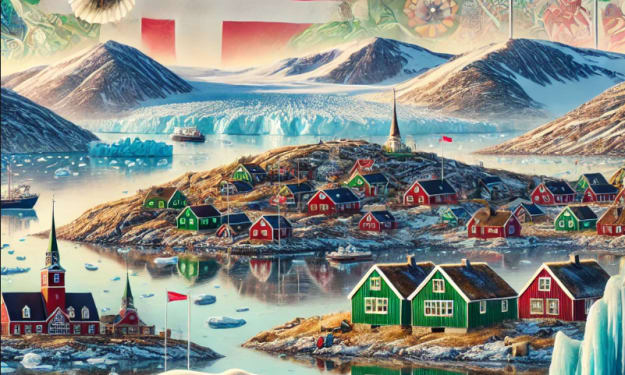
Who Owns Greenland? Greenland, the world’s largest island, is a fascinating territory often associated with its vast ice sheets, unique Arctic wildlife, and strategic geopolitical location. While it’s commonly thought of as an independent region, the ownership and governance of Greenland involve a complex relationship with Denmark and its indigenous Inuit population. This article delves into the historical, political, and cultural aspects of Greenland’s ownership and explores its global significance.
By Yogesh Shivaji Indalkar2 years ago in Earth