Science
Who Owns the Panama Canal?
Who Owns the Panama Canal? Understanding the History, Control, and Global Importance of This Strategic Waterway The Panama Canal is one of the most strategically and economically significant waterways in the world. Connecting the Atlantic and Pacific Oceans, this engineering marvel has been a cornerstone of global trade since its completion in 1914. However, its history of ownership and control is a fascinating tale of geopolitics, international negotiations, and national sovereignty.
By Yogesh Shivaji Indalkar2 years ago in Earth
Understanding Cratons and Earth’s Ancient Crust. AI-Generated.
Introduction Earth's geological history is marked by fascinating structures that tell the story of our planet's evolution. One of the critical components in this narrative are cratons — ancient, stable parts of the Earth's crust that date back billions of years. This article delves into what cratons are, their significance, the processes affecting their stability, and a recent case study of the North China Craton.
By Rich city9002 years ago in Earth
Newly Discovered Lamprey Species and Their Ecological Significance
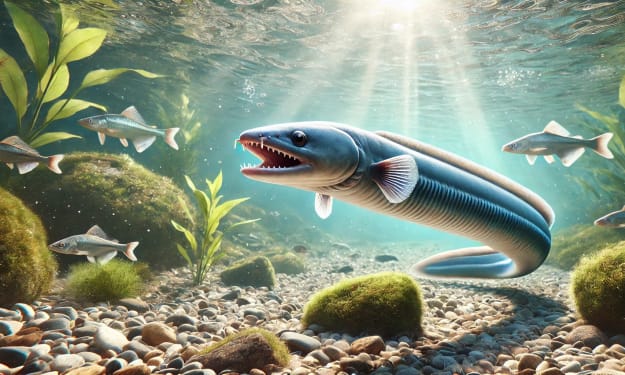
Never heard of a lamprey? Even before dinosaurs, these fascinating creatures have been living on Earth for hundreds of millions of years. Scientists have just found a new type of lamprey. So, let’s learn a little more about these incredible animals, why they are important, and how we can help protect them.
By Mudassar saleem2 years ago in Earth
"The Sun's Majesty: Earth's Tiny Comparison"
The Immense Ability of the Sun: A Allegory with Earth and Its Resources The Sun, our abutting star, is a colossal apple of afire hot claret that dominates the solar arrangement with its immense size, energy, and influence. To absolutely butt the Sun's calibration and resources, we charge analyze it to our home planet, Earth, and analyze its abstruse acceptation to activity and activity systems. The Sun vs. Earth: A Admeasurement Comparison The Sun’s admeasurement is amazing back compared to Earth. It has a bore of about 1.39 actor kilometers (864,000 miles), authoritative it about 109 times the bore of Earth.
By Say the truth 2 years ago in Earth
The Impact of AI in Agriculture. AI-Generated.
Artificial Intelligence (AI) is transforming industries across the globe, and agriculture is no exception. With the world population steadily increasing, the demand for food production is projected to rise significantly in the coming decades. This surge in demand is challenging farmers to produce more food using fewer resources, all while minimizing their environmental footprint. AI technologies are stepping in as game-changing tools that empower farmers to optimize their operations, improve efficiency, and embrace sustainable practices.
By shreyash-hexa2 years ago in Earth
THE CHILDREN OF THE RISING SEAS
Now, more than ever, the tide was coming in. On the edge of what had been Asha's front yard, her bare feet sank into the wet sand. Like the playground, the walk to the village market, and her garden, it had been seized by the water. Now there was nothing but a narrow strip of land, just big enough to accommodate their dilapidated houses.
By Charles Otu2 years ago in Earth
Why Zebras Remain the Wild Striped Stars: The Un-domesticated Chronicles. AI-Generated.
Picture this: a peaceful savanna, the sun setting in a blaze of glory, and a herd of zebras trotting gracefully across the landscape. Sounds idyllic, right? But let’s imagine a different scenario where zebras are grazing in your backyard, casually mingling with your pet dog. While this might seem like a cool concept straight out of a whimsical dream, there are solid reasons why zebras remain the wild, un-domesticated equine wonders they are. Let's dive into the zany world of zebras and explore why these stripey creatures aren’t following in the hoofprints of horses or cows into the realm of domestication. The Temperament Tango: Zebras' Wild Streak First off, let’s talk about temperament. Zebras are the ultimate rebels of the animal kingdom. Unlike horses, which have been selectively bred for docility and workability over thousands of years, zebras have a feisty streak that's as bold as their stripes. They are known to be skittish, unpredictable, and, let’s be honest, a bit moody. Imagine trying to saddle up a zebra for a nice ride in the park. Cue the circus music, because what follows would be a comedy of errors – bucking, biting, and bolting. Zebras are not keen on playing nice; they’ve developed their wild behaviors as survival mechanisms to evade predators in the harsh African savannas. So, while your dreams of a zebra-drawn carriage may be romantic, the reality would be far from a fairy tale. Zebra Zippity: Speed and Agility Zebras are built for speed and agility, not for carrying human loads or pulling plows. They’ve evolved to outrun the likes of lions and hyenas, zipping through their habitat with remarkable finesse. When you're built for the chase, slowing down to accommodate a saddle or cart isn’t exactly appealing. A zebra’s flight instinct kicks in at the slightest hint of danger (which could be anything from a rustling bush to a sudden noise), and they can zigzag their way out of trouble like seasoned escape artists. Training such a free-spirited creature to stay put and obey commands would be like convincing a rock star to stick to a strict 9-to-5 schedule – highly unlikely and probably resulting in a dramatic exit. Social Structure Shenanigans: Herd Dynamics Horses have a relatively straightforward social hierarchy that humans have learned to navigate and manipulate over centuries. Zebras, on the other hand, have complex social structures within their herds. They form tight-knit family groups led by a dominant stallion and a harem of mares, each with their own pecking order. Disrupting this delicate balance for the sake of domestication is like trying to untangle a bowl of spaghetti – messy and not worth the effort. Zebra herds are all about unity and mutual defense, with intricate social bonds that make them incredibly loyal to each other but wary of outsiders, including humans. While a horse might see you as the benevolent provider of hay and occasional treats, a zebra might view you as an intruder or, worse, a potential predator. The Stripes Enigma: Camouflage and Confusion Those striking stripes aren’t just for show – they serve a practical purpose. Zebras use their unique black-and-white patterns as a form of camouflage, blending into the tall grasses and confusing predators. This optical illusion, known as disruptive coloration, makes it hard for predators to single out individual zebras in a herd. Now, domesticate a zebra, and you strip away its natural advantage. Imagine your zebra trying to blend into a suburban backyard – it’s not happening. The poor thing would stick out like a sore thumb, making it a prime target for any potential threats. Nature equipped zebras with stripes for survival in the wild, not for accessorizing your garden. Diet Dilemmas: Picky Eaters Zebras have evolved to graze on tough, fibrous grasses found in their natural habitats. Their digestive systems are finely tuned to handle this roughage, which is different from the more diverse diets domesticated livestock are used to. Trying to replicate a zebra’s diet in captivity would be an ongoing challenge. Moreover, their foraging habits are tied to vast migrations in search of fresh grazing grounds. Keeping a zebra in a confined space would not only be nutritionally challenging but also psychologically distressing. Zebras are roamers at heart, and restricting their movement would be akin to putting a bird in a cage – it just wouldn’t work out well. Health and Husbandry Headaches Domesticated animals benefit from centuries of breeding that have minimized their susceptibility to various diseases. Zebras, however, are still very much wild animals with wild immune systems. They can carry diseases that are transmissible to domesticated horses, creating health risks that complicate their domestication. In addition, the expertise required to care for a zebra is beyond that of your average livestock farmer. Veterinary care, dietary management, and handling techniques for zebras are specialized fields that few are equipped to handle. Your local vet might have a heart attack upon seeing a zebra in the waiting room – it’s a far cry from treating a lap dog. The Wild Card: Instinct Over Intellect Ultimately, zebras are governed by their wild instincts. While domesticated animals have adapted to rely on humans for food, shelter, and protection, zebras remain fiercely independent. They don’t seek human approval or companionship the way domesticated animals do. Their survival instinct overrides any potential for training or domestication. Conclusion: Wild at Heart So, why aren’t zebras domesticated? Because they’re wild at heart. Their fiery temperament, incredible agility, complex social structures, and natural adaptations make them uniquely suited to life in the wild. Trying to tame such a creature would not only be a monumental task but also a disservice to the zebra’s natural way of life. Next time you find yourself daydreaming about having a pet zebra, just remember – some stars are meant to shine brightly in their natural habitat, undomesticated and untamed. Zebras are the quintessential symbols of wild beauty, and maybe it’s best that we let them gallop freely across the savannas, just as nature intended. So, let’s tip our hats to these striped wonders and appreciate them from afar, where they belong – wild, free, and fabulously untamed.
By Vishnu venugopal 2 years ago in Earth
Battling an Earth-wide temperature boost: Procedures for a Maintainable Future. Content Warning. AI-Generated.
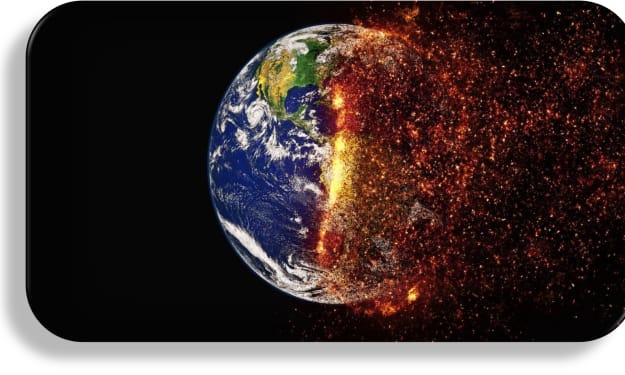
Battling an Earth-wide temperature boost: Procedures for a Maintainable Future An unnatural weather change, as an outcome of the new year, has become difficult to disregard. Rising temperatures and climate-related disasters are existential threats to the world, and a radical action is necessary to sustain the collapse of precious ecosystems. Combating global warming requires the collective effort of adopting sustainable practices and innovative strategies. Despite the fact that this large number of difficulties might cause it to appear to be uphill, there is still space for a sound future. In this article, we investigate a scope of procedures toward fighting an Earth-wide temperature boost and making ready toward a greener, better planet. From sustainable power sources to reforestation projects, go along with us in realizing which are the arrangements that can assist us with building a superior world. All things considered, the approaching all the more unfavorably over our planet danger of a worldwide temperature alteration makes it much more basic to battle this ecological emergency effectively. Climbing temperatures, liquefying ice covers, and outrageous climate occasions are a portion of the terrifying outcomes of an unnatural weather change. Yet, in this earnestness, there is trust. World researchers, activists, and trailblazers are working earnestly to lay out ways of diminishing ozone-harming substance discharges and give a supportable future to their relatives. In this article, you will find numerous strategies and projects that are at the very front of the fight to battle an Earth-wide temperature boost. A sustainable wellspring of energy up to a reforestation drive, we welcome you to go along with us for a revelation venture where we will find the arrangements that will assist with making a greener and better world in our grasp. Together, we can accomplish more.
By Shariq Mehmood Khan2 years ago in Earth
Alarming pollution levels in Lahore: a crisis that reaches millions . Content Warning. AI-Generated.
Alarming pollution levels in Lahore: a crisis that reaches millions Introduction: The Lahore air quality crisis Lahore, Pakistan—a city famous for the upbeat rhythm of its cultural heartbeat and historic monuments—has emerged with a dubious distinction, which places it amongst the most polluted cities in the world. Normally, Lahore's Air Quality Index often crosses thresholds into dangerous zones, especially for the exposed populations. This is a crisis of pollution levels impacts life, health, and their environment for the 11 million people who live here. Solutions to this emergency are as intricate as they are multifaceted—industrial emissions, vehicle exhaust, seasonal burning of crops. Understanding Lahore's pollution levels plays a prime role in finding sustainable solutions to address the public health emergency.
By Shariq Mehmood Khan2 years ago in Earth
5 Amazing Finds from James Cameron's Mariana Trench Dive
5 Jaw-Dropping Discoveries from James Cameron's Mariana Trench Dive Exploring the Mariana Trench offers a glimpse into a mysterious underworld that remains largely uncharted. With its staggering depth, the trench holds secrets waiting to be uncovered. James Cameron's historic dive in 2012 pushed the limits of human exploration and technology, leading to several surprising discoveries that changed our understanding of this dark realm.
By VETTI BOYS2 years ago in Earth
From the Himalayas to Your Health: How Mad Honey and Shilajit Are Redefining Natural Wellness
The Himalayas have given a home to some of the highest peaks in the world and, for the longest period of time, are a source of so many very potent natural substances. Of these, two of the most interesting are mad honey and shilajit-used for health benefits with centuries of traditional usage. But as the global wellness movement increasingly shifts to all things natural and sustainable, these Himalayan treasures are standing out for their uniqueness and potency. This article examines changes in attitudes toward natural wellness with two of these products-mad honey and shilajit.
By Pragya Mahara2 years ago in Earth