Science
Astronomers say they’ve found strongest ever ‘hints’ of life beyond our solar system
The strongest ever "Hints" of life beyond our solar system are discovered by astronomers. Astronomers have reported the strongest evidence yet suggesting the possibility of life beyond our solar system, in a groundbreaking development that has the potential to reshape our understanding of the cosmos. The discovery, made through the James Webb Space Telescope (JWST), focuses on the atmospheric analysis of a distant exoplanet where signs of potential biological activity have been detected.
By GLOBAL NEWSabout a year ago in Earth
“India’s Hidden Wealth: A Deep Dive into the Net Worth of Its Natural Resources”. AI-Generated.
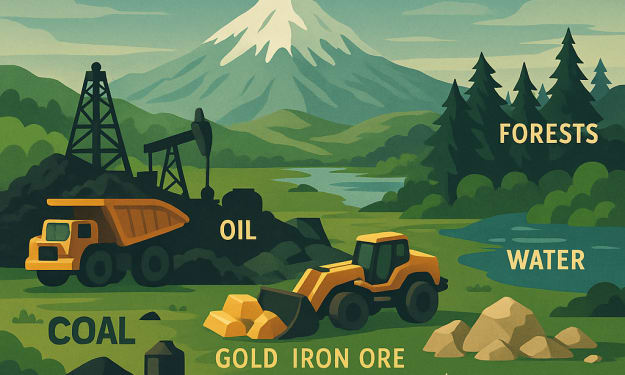
India’s Hidden Wealth: A Deep Dive into the Net Worth of Its Natural Resources India is not only a land of cultural and spiritual richness but also a nation blessed with an extraordinary bounty of natural resources. These natural endowments — including minerals, fuels, forests, water, and renewable energy sources — have powered India's civilization for millennia and continue to serve as the bedrock of its modern industrial and economic development. A Legacy Rooted in Nature From the time of the Indus Valley Civilization, India's terrain has yielded everything from precious gems to vast timber forests. Historical texts, including those from travelers like Marco Polo and Ibn Battuta, speak of India as a land of gold, spices, and mineral treasures. The colonial powers, particularly the British Empire, exploited these resources extensively, laying down the groundwork for modern mining and industrial infrastructure. After independence, India took aggressive steps to regulate and develop its resource-based sectors, creating national organizations such as the Oil and Natural Gas Corporation (ONGC), Coal India Limited, and Indian Bureau of Mines. These institutions have been instrumental in discovering and quantifying the country's natural wealth. Mineral Wealth India’s mineral reserves are among the largest in the world: Coal: India holds the fifth-largest coal reserves globally, estimated at over 319 billion tonnes. These are primarily located in Jharkhand, Odisha, Chhattisgarh, and West Bengal. With energy demands on the rise, coal continues to be India's primary source of electricity. Iron Ore: Rich deposits in states like Odisha and Karnataka make India one of the leading iron ore producers in the world. Annual production exceeds 200 million tonnes. Bauxite and Manganese: India’s reserves of bauxite — the ore for aluminum — are among the top five in the world. These are located in Gujarat, Jharkhand, and Madhya Pradesh. Gold: While not on the scale of Australia or South Africa, India’s Kolar Gold Fields and new discoveries in Uttar Pradesh are noteworthy. Estimated mineral net worth: India’s known mineral wealth is estimated at around $10–12 trillion, with coal, iron, and bauxite forming the core. Oil and Natural Gas India’s oil and gas resources are significant, although still underdeveloped compared to Middle Eastern giants: Oil Reserves: India has approximately 4.5 billion barrels of proven oil reserves, mainly located in the Western Offshore (Mumbai High), Assam, and Gujarat. Natural Gas: The Krishna-Godavari basin is a major hub, along with the Cambay basin. India’s gas reserves are around 1.3 trillion cubic meters. Estimated net worth: As of current global prices, the total value of India’s oil and gas reserves exceeds $1.5 trillion. Forests and Biodiversity India’s forests, covering roughly 24% of its total area, are home to valuable timber species like teak, sal, and sandalwood. Additionally, India is one of the most biodiverse countries in the world, with immense potential in medicinal plants and eco-tourism. Estimated ecological resource value: Including ecosystem services and bio-resource value, the worth of India’s forests and biodiversity is estimated to be over $3 trillion. Water Resources India is endowed with major river systems — the Ganges, Brahmaputra, Godavari, and Krishna, to name a few. Water powers agriculture, which employs over 40% of the population, and is also essential for energy (hydropower) and drinking supplies. Estimated value: In economic terms, India’s water resources contribute nearly $1 trillion to its GDP, factoring in agriculture, hydropower, and ecosystem services. Renewable Energy Potential India has immense potential in solar, wind, and hydroelectric power: Solar Energy: With over 300 sunny days a year, India’s solar capacity is currently at 72 GW and growing rapidly. Wind Power: Coastal states like Tamil Nadu and Gujarat offer high wind speeds ideal for turbine installation. Hydropower: India ranks 5th in the world in hydropower generation. Estimated value: The long-term potential of renewable energy development in India is projected to be $2 trillion by 2040. Putting It All Together: India’s Natural Net Worth Combining coal, oil, gas, minerals, forests, water, and renewables, the estimated total net worth of India’s natural resources surpasses $18–20 trillion. This figure could be higher with the discovery of new reserves and improvements in extraction technologies. Strategic Importance India’s natural resource wealth plays a crucial role in: Energy security: Reducing dependence on oil imports. Industrial growth: Supporting steel, aluminum, cement, and manufacturing sectors. Economic independence: Potential for export-driven growth. Geopolitical power: Ability to influence global markets and trade policies. Conclusion India’s natural resources are not just numbers on a ledger — they are the legacy of millions of years of geological evolution and centuries of civilization. The country’s strategic management of this wealth, combined with sustainable development practices, can elevate India into a global economic powerhouse. With innovation, policy reforms, and conservation, India can ensure that its natural treasures remain a source of prosperity for generations to come.
By Say the truth about a year ago in Earth
"Vietnam's Wealth Uncovered: A Journey Through Economic Growth, Natural Riches, and National Prosperity"
Vietnam’s Wealth Uncovered: An Exploration of Its Economic Ascendancy and National Value From the remnants of conflict to the luminous skyline of Ho Chi Minh City, Vietnam has emerged as one of Southeast Asia’s most vibrant economies. This article investigates the economic evolution of Vietnam, examining its GDP, national assets, industries, and estimated value, while emphasizing the elements driving its extraordinary advancement. Vietnam, once emblematic of the harrowing struggle that shook the 20th century, is now acknowledged as a rapidly expanding economic force in Southeast Asia. Over the preceding four decades, the nation has transformed from a war-ravaged territory into a contemporary economy characterized by strong manufacturing, agriculture, tourism, and a burgeoning technology sector. But what precisely is Vietnam’s "value"? To comprehend this, it is essential to evaluate its natural resources, industrial expansion, infrastructure, workforce, and gross domestic product (GDP). 1. Historical Context: From Recovery to Reform After the Vietnam War, the nation encountered substantial economic obstacles, including poverty, inflation, and restricted foreign trade. However, in 1986, the Vietnamese government initiated the Đổi Mới (Renovation) reforms, converting its centrally regulated economy into a market-focused one. These reforms opened the country to international investment, fostered entrepreneurship, and rejuvenated sectors such as textiles, rice cultivation, and electronics. 2. The Economic Engine: GDP and Beyond As of 2024, Vietnam’s GDP is approximately US$430 billion, positioning it among the top 40 largest economies globally. With an average annual growth rate of 6–7% over the past two decades, Vietnam’s economy is regarded as one of the fastest-growing in Asia. When assessing a country's "value," economists also consider: National assets: land, structures, and infrastructure. Natural resources: oil, gas, minerals, and cultivable land. Human capital: the worth of a skilled and productive workforce. Sovereign wealth: national reserves and overseas investments. Taking these factors into consideration, Vietnam’s estimated national value ranges from approximately US$1. 1 trillion to US$1. 3 trillion. 3. Natural Resources: The Concealed Wealth Vietnam is endowed with abundant natural resources. The nation possesses significant deposits of bauxite (utilized in aluminum production), coal, and rare earth elements. Offshore oil and gas reserves also play a vital role in government revenues. The Mekong Delta, one of the most fertile agricultural areas worldwide, enables Vietnam to be a leading exporter of rice, coffee, pepper, and cashews. This agricultural proficiency contributes an additional layer to the country’s wealth. 4. The Industrial Surge Vietnam’s manufacturing sector serves as a key driver of growth. Multinational corporations such as Samsung, Apple, Intel, and Nike operate substantial facilities in the country. Electronics now constitute approximately 30% of total exports, with textiles, furniture, and machinery closely following. The increase in foreign direct investment (FDI)nearly US$36 billion in 2023 aloneis a clear indication of Vietnam’s rising significance in global supply chains, particularly as companies seek alternatives to China. 5. Tourism and Cultural Value Vietnam's cultural legacy, varied landscapes, and economical travel expenses have established it as a prominent tourist destination. Prior to the pandemic, the nation attracted over 18 million visitors each year, generating more than US$32 billion in revenue. As global travel resumes, this amount is anticipated to exceed US$40 billion by 2026. 6. Urban Development and Real Estate Cities such as Hanoi, Ho Chi Minh City, and Da Nang have experienced remarkable expansion in infrastructure, real estate, and smart city initiatives. Skyscrapers, metro systems, technology parks, and luxury resorts are swiftly altering the urban horizon. Vietnam's real estate sector alone is appraised at over US$300 billion, rendering it a notable contributor to the nation's overall net worth. 7. Challenges Ahead Despite its achievements, Vietnam confronts obstacles: Environmental deterioration and climate variations, particularly in the Mekong Delta. Corruption and administrative inefficiencies. An aging demographic and escalating labor costs. To sustain progress, Vietnam must invest in education, innovation, and sustainable technologies. Conclusion Vietnam’s evolution from a war-torn state to a flourishing economy is one of the most remarkable success narratives in contemporary history. With a projected national net worth surpassing US$1. 2 trillion, it exemplifies resilience, reform, and ingenuity. As the nation advances further onto the global platform, its wealthquantified not solely in financial terms, but also in culture, talent, and opportunitycontinues to expand.
By Say the truth about a year ago in Earth
Found Strongest Ever ‘Hints’ of Life Beyond Our Solar System - Astronomers
The search for extraterrestrial life has taken a monumental leap forward. Astronomers have detected what they describe as the strongest ever “hints” of life beyond our solar system. This groundbreaking discovery revolves around the detection of potential biosignatures—chemical indicators of life—on a distant exoplanet. While scientists remain cautious, the findings have ignited excitement across the scientific community and beyond.
By Jahin Khanabout a year ago in Earth
Astronomers Detect a Possible Signature of Life on a Distant Planet"
Astronomers have discovered a possible sign of life on an exoplanet more than 100 light-years away, which could be one of the most significant scientific breakthroughs of the 21st century. Using advanced telescopic technology and spectroscopy, scientists have identified the presence of a rare chemical compound in the planet's atmosphere—one that, on Earth, is predominantly produced by living organisms.
By Nahian ebneabout a year ago in Earth
The strongest evidence of life on an exoplanet has been found by scientists.
Scientists have obtained using the the James Webb Space Telescope that they call the strongest signs yet of possible life beyond our solar system, detecting in an exoplanet’s atmosphere the chemical fingerprints of gases that on Earth are produced only by biological processes. Two gases are observed in the planet named K2-18 b are dimethyl sulfide or DMS, and dimethyl disulfide or DMDS - which are generated on Earth by living organisms, primarily microbial life such as marine phytoplankton algae.
By Preyonjit Chakrabortyabout a year ago in Earth
Withthegrid, Backed by Venture Capitalist Rajat Khare, Scales Energy Infrastructure Monitoring Across Europe
Founded in 2016, the Dutch energy tech firm is ramping up innovation, expanding its advisory board, and securing critical partnerships to address the growing need for real-time infrastructure monitoring.
By The Biz Timesabout a year ago in Earth
Hoatzin: The Living Herbivorous Dinosaur of the Amazon Rainforest
Found in the swamps, mangroves, and riparian forests of South America, this eccentric looking, chicken-sized bird can be seen clumsily moving through the foliage searching for its leafy dinner. Hoatzin is a neotropical species that lives in social groups around slow-moving rivers and lakes in the Amazon. Being herbivorous, they are often fumbling through foliage, making them pretty easy to spot. What makes this weird avian stand out in a crowd of over 3,200 other birds? Surprisingly, there's a few attributes Hoatzin have that aren't found in any other species.
By The Observant Maskabout a year ago in Earth
Trump again calls for Fed to cut rates, says Powell’s ‘termination cannot come fast enough’
Trump reiterates his attack on the Federal Reserve, demands immediate rate cuts, and demands Powell's ouster. On April 17, 2025, amid growing economic and political tensions, former President Donald Trump has rekindled his attacks on the Federal Reserve and its chairman, Jerome Powell, in a familiar return to a long-standing feud. Trump, who is currently the most likely Republican candidate for president in 2024, reiterated his call for an immediate decrease in interest rates and slammed Powell's leadership, stating that "his termination cannot come fast enough." The new criticism was voiced at a campaign rally in Ohio and later appeared in posts on Trump's Truth Social social media platform. Trump accused the Fed of "suffocating the economy" with what he labeled as “reckless and unnecessary” interest rate hikes that, in his view, are slowing economic growth and burdening American families.
By GLOBAL NEWSabout a year ago in Earth
Dammed If We Do: How India’s Giant River Fish Is Dying in Silence
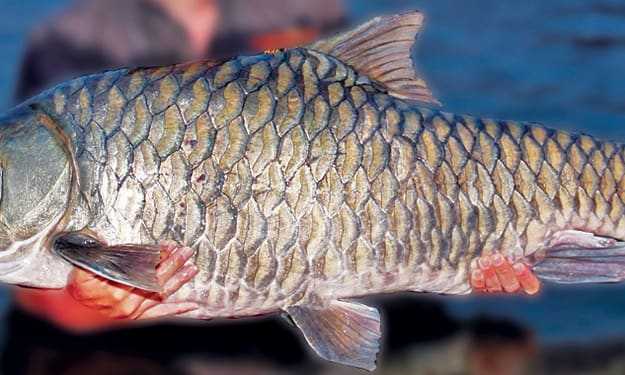
In the stillness of a summer afternoon, deep in the Cauvery River, something once stirred. A creature the size of a human child, orange-finned and hump-backed, glided through the cool, fast-flowing waters. Locals called it the "Tiger of the Cauvery," a fish so strong it bent rods and broke records. But today, that legend is fading.
By Basil Sargurohabout a year ago in Earth