Nature
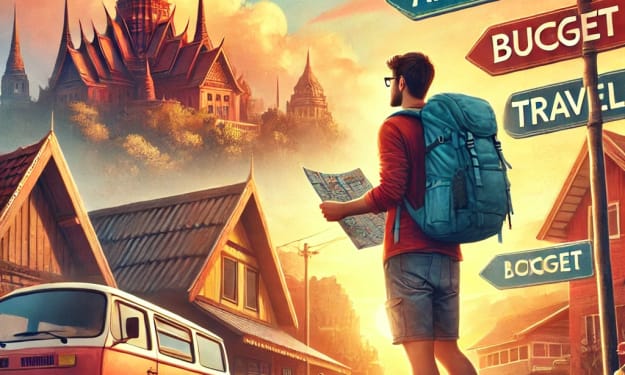
How to Travel the World on a Budget: Explore More, Spend Less
**How to Travel the World on a Budget** Traveling the world is a dream for many, but the idea of high costs often discourages people from pursuing it. However, exploring the globe doesn’t have to break the bank. With smart planning and creativity, you can experience amazing destinations, immerse yourself in different cultures, and make lifelong memories—all on a budget. Here’s how to make it happen. --- ### **1. Plan Ahead for Success** While spontaneous travel can be exciting, careful planning is essential for budget travel. Start by researching destinations, seasons, and costs. Some locations are significantly cheaper during off-peak periods when accommodations and flights are less expensive. For example, Europe is generally more affordable in winter (excluding the holiday season), while Southeast Asia offers excellent value year-round. Use tools like Google Flights or Skyscanner to find the best deals on airfare. #### Tips for Planning: - Set a travel budget that includes transportation, accommodation, meals, and activities. - Create a rough itinerary to avoid unnecessary expenses. - Use travel forums and blogs for insider tips on saving money in specific destinations. --- ### **2. Travel During Off-Peak Seasons** Traveling during off-peak times can save you a fortune. Tourist-heavy destinations charge premium prices during peak seasons, but you’ll find discounts and fewer crowds if you visit during quieter months. For instance, visiting Italy in November or Thailand during the rainy season (June to October) can significantly reduce costs. Plus, off-peak travel often provides a more authentic and relaxed experience. --- ### **3. Find Affordable Flights** Flights can be one of the biggest expenses when traveling, but there are ways to cut costs: - **Be Flexible:** Being open to flying midweek, early in the morning, or late at night can help you score cheaper tickets. - **Use Budget Airlines:** Carriers like Ryanair, AirAsia, and Frontier offer low-cost fares—just watch for extra fees. - **Set Price Alerts:** Platforms like Hopper and Skyscanner allow you to track flight prices and get notifications when they drop. - **Fly to Alternative Airports:** Smaller or secondary airports often have lower fees, making flights more affordable. --- ### **4. Embrace Budget Accommodation** Luxury hotels aren’t the only option when it comes to staying in comfort. Consider these alternatives: - **Hostels:** Perfect for solo travelers or small groups, hostels are cost-effective and offer a social atmosphere. - **Guesthouses and Homestays:** These provide a more local experience and are often cheaper than hotels. - **Vacation Rentals:** Platforms like Airbnb and Vrbo let you rent affordable apartments or homes. Sharing with other travelers can further reduce costs. - **Work for Accommodation:** Websites like Workaway and Worldpackers connect travelers with hosts who offer free accommodation in exchange for work. --- ### **5. Eat Like a Local** Dining out can add up quickly, especially in tourist-heavy areas. Instead, embrace the local food culture by eating where residents dine. Street food, food markets, and small local restaurants often provide authentic, delicious meals at a fraction of the cost of tourist restaurants. #### More Budget-Friendly Food Tips: - Cook your own meals if your accommodation has a kitchen. - Skip the expensive hotel breakfast and grab something from a local café or bakery. - Avoid overpriced drinks by sticking to water or local beverages. --- ### **6. Use Public Transportation** Getting around can be expensive if you rely on taxis or ride-hailing services. Instead, use public transportation. Buses, trains, and subways are usually much cheaper and provide an opportunity to see how locals travel. For long distances, consider overnight buses or trains. These can save you the cost of one night’s accommodation while covering a lot of ground. --- ### **7. Take Advantage of Free Activities** Every destination offers free or low-cost activities if you know where to look. Many cities have free walking tours, museums with no entrance fees on certain days, and beautiful public parks. Here are some ideas: - Explore beaches, hiking trails, and scenic viewpoints. - Attend local festivals or cultural events. - Visit historical landmarks and monuments. --- ### **8. Travel Slowly** Hopping from one destination to another quickly can add up in transportation costs. Slow travel allows you to fully immerse yourself in each location while saving money. Staying in one place for longer often means lower accommodation rates, as many hosts offer discounts for extended stays. --- ### **9. Use Travel Reward Programs** Take advantage of credit cards, airlines, and hotel reward programs to save on flights and stays. Accumulate points or miles by signing up for travel rewards credit cards, especially ones that offer welcome bonuses or waive foreign transaction fees. Ensure you pay off your balance in full each month to avoid interest charges. Over time, these points can add up to significant savings on flights, hotels, or car rentals. --- ### **10. Be Creative with Work and Travel** If you want to travel long-term, consider working while on the road. Many opportunities allow you to fund your travels while exploring the world: - Teach English abroad or online. - Freelance in writing, graphic design, or other skills you can offer remotely. - Work seasonal jobs, such as picking fruit, working at ski resorts, or managing hostels. --- ### **11. Travel Insurance Is a Must** While it may seem like an unnecessary expense, travel insurance can save you thousands in case of unexpected events, like medical emergencies or canceled flights. Look for affordable plans on platforms like World Nomads or SafetyWing. --- ### **12. Connect with Other Travelers** Networking with fellow travelers can save you money and provide valuable tips. Join travel communities on platforms like Couchsurfing, Meetup, or Facebook groups. Other travelers may share rides, split costs, or recommend affordable options they’ve discovered. --- ### **Final Thoughts** Traveling the world on a budget is not only possible but incredibly rewarding. By planning ahead, embracing budget-friendly options, and staying flexible, you can create incredible experiences without draining your savings. The key is to prioritize what matters most to you—whether it’s immersing yourself in local culture, exploring natural wonders, or simply relaxing in a new environment. Remember, the journey is just as important as the destination. So pack your bags, get creative, and start exploring the world—without breaking the bank!
By Nora Ariana2 years ago in Earth
8 Countries Whose Names Begin egin With Letter " I "
When it comes to geography, the world is a fascinating tapestry of cultures, landscapes, and histories. Among the 195 countries on Earth, eight of them proudly bear names starting with the letter “I.” These countries—India, Indonesia, Iran, Iraq, Ireland, Israel, Italy, and Iceland—offer a rich diversity of experiences. Let’s explore what makes each of these nations unique. 1. India: A Land of Diversity and Heritage
By INFO INSIDER 2 years ago in Earth
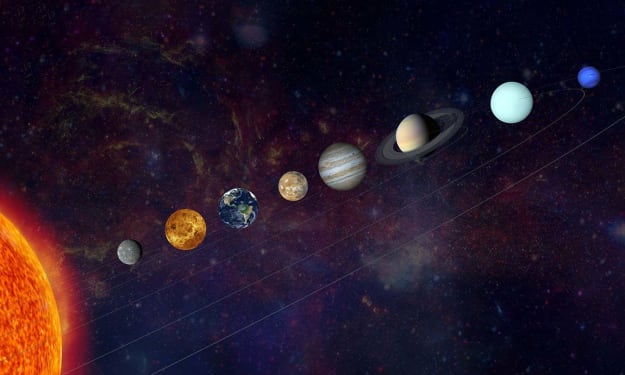
How to See All the Planets of the Solar System in the Night Sky at Once
How to Observe All the Planets of the Solar System in the Night Sky Simultaneously: Sky enthusiasts (who are often passionate) dream of witnessing all the planets in our solar system at once. Such rare phenomena occur only under specific conditions, which require careful planning, observation skills and the right tools. 1. The Rare Opportunity of Planetary Alignment: The planets of the solar system—Mercury, Venus, Earth, Mars, Jupiter, Saturn, Uranus and Neptune—follow their respective orbits. However, occasionally they align in such a manner that they can all be observed from Earth simultaneously. This event is referred to as a planetary alignment, although it does not happen frequently.
By Adnan Rasheed2 years ago in Earth
Discovering the Charm of Devon, England: A Traveler's Paradise . AI-Generated.
Devon, England, is a destination that effortlessly captures the hearts of all who visit. Known for its stunning landscapes, historical landmarks, and charming villages, Devon offers an unforgettable experience for nature enthusiasts, history buffs, and adventure seekers alike. Whether you’re planning a peaceful retreat or an action-packed getaway, Devon has something for everyone.
By Amayah Adalee2 years ago in Earth
Everest High Pass Trek . AI-Generated.
The Everest High Pass Trek, often referred to as the Three Passes Trek, is one of the most adventurous and scenic trekking routes in the Everest region of Nepal. This trek takes you through three formidable high-altitude passes — Kongma La, Cho La, and Renjo La — each over 5,000 meters, combining the thrill of high-altitude adventure with the breathtaking beauty of the Himalayas. Here's a comprehensive guide to embarking on this epic journey in 2025.
By Carme Brun Gasca2 years ago in Earth
Everest Base Camp Trek Guide: Everything You Need to Know. AI-Generated.
The Everest Base Camp (EBC) Trek is one of the most iconic treks in the world, attracting adventurers from all over the globe who seek to witness the breathtaking beauty of the Himalayas and stand at the foot of the world’s highest mountain. Here’s a comprehensive guide to help you plan your journey to Everest Base Camp, ensuring that your adventure is safe, memorable, and enjoyable.
By Lucifer Smith2 years ago in Earth
Annapurna Circuit Trek: The Ultimate Himalayan Adventure. AI-Generated.
The Annapurna Circuit Trek is a bucket-list adventure that promises a thrilling blend of dramatic landscapes, diverse cultures, and breathtaking mountain views. Starting in the lush lowlands of Besisahar, this epic trek takes you through the heart of Nepal’s Annapurna region. With each passing day, the scenery transforms dramatically, revealing terraced fields that stretch endlessly, cascading waterfalls that glisten under the sun, and majestic snow-capped peaks that rise into the skies. This ever-changing landscape creates a sense of anticipation, making every step of the journey unique and memorable.
By Oliver Backman2 years ago in Earth
Crop Circles: A Mystery Unraveled – The Truth Behind the Phenomenon and Its Artistic Legacy
Recollect how odd examples started to show up on fields with corn and weed during the '90s and toward the start of the 2000s in Southern Britain? Many individuals believed these were messages from extrasolar civilizations. Hollywood even made motion pictures dedicated to this peculiarity, but then for some reason, all the examples vanished. Maybe they quit being in vogue and the inhabitants of different planets decided not to draw flattened crops anymore. As a matter of fact, this is somewhat true; the justification for their vanishing relates to a specific art form becoming disagreeable. But to understand what it means, we must first find out where these circles came from. The original reports of odd examples in fields showed up in the seventeenth century in certain handbooks and scientific publications. People wrote about flattened crops. The reports were not convincing and had no proof. In the late 60s of the twentieth century, people in Australia began reporting odd mathematical imprints in the fields. At the same time, a similar situation was described by the inhabitants of Wiltshire, Britain. Nevertheless, no one provided any proof. Then news about bizarre flattened crops showed up in Australia during the '60s of the twentieth century, but this time, people managed to solve the mystery of this phenomenon. It turned out that pieces of folded floating reeds in the tidal pond made designs that seemed as though they were handcrafted. Such circles were common during the rainy season when little hurricanes swept over the tidal ponds. A local farmer then said he saw a space object flying over the fields and making designs, but locals dismissed this myth and uncovered the truth. Stories about extraterrestrial civilizations became well known in the '40s because of the famous story of a spaceship that crashed in New Mexico. Rumors said that CIA agents took the crew to secret bases. News about it spread all around the US. The public truly believed that scientists were studying the advancements of the space visitors and conducting probes on their bodies. Many even believed that people still saw odd flying objects, circles over Nevada. The appearance of bright lights in the night sky of New Mexico became a frequent event, and many travelers came to see something like this with their own eyes. But it was all fiction. Those secret bases were, and are, merely proving grounds for reconnaissance planes. Of course, many of them looked unusual, and people believed they had seen ships from other galaxies, and that object that fell in New Mexico was a regular weather balloon. All these crop circle stories and legends about secret bases became a topic of discussion for two friends, Doug Bickett and Dave Laugh, in the late '70s. They liked hanging out near Winchester, Britain, and they started thinking about how to trick people using these Flying Saucer stories. That night, they decided to create mathematical patterns in the fields together and wait for society to react. Eventually, they arrived at a certain farmer’s field in South Britain and started carrying out their plan. They used ropes, a bit of wire attached to a baseball cap, and boards to make a beautiful design. When the task was finished, nobody attached any significance to this. Then, two friends began drawing circles in different fields for a while. They made paintings that stunned local farmers, but after the media learned about the baffling phenomenon, the work of Bickett and Laugh became famous worldwide. The artists were in no rush to reveal the origin of the circles, so thousands of tourists and enthusiasts of extraterrestrial civilizations started coming to the south of Britain. Oh, by the way, people who believed in the remarkable idea of these examples got the nickname “cropies.” The examples in the fields reached the peak of their popularity, and the artists admitted how they had created them. Sure, many cropies were disheartened, but the work of the two friends inspired many others to make similar things. Despite there being nothing mysterious about this phenomenon, it was still quite impressive. Many artists started drawing flattened crops for the purpose of promotion. For example, during the Olympic Games in London in 2012, a group of farmers made the Olympic symbol of five rings by flattening grass in a field. Many claimed that these were the greatest Olympic rings in history. A couple of years later, locals saw a huge pattern with odd mathematical shapes in the south of San Francisco. Nobody had seen anything like it. Even the circles made by the two friends from Britain weren’t so odd. Of course, many media outlets said that spaceships from different planets had left a message for Earth. But these fantasies were quickly dispelled because Nvidia admitted to creating the example. The odd drawing in the field was the image of a new chip the company wanted to introduce at the upcoming CES exhibition. Flattened crops have become a popular phenomenon in some countries. Many people like painting graffiti on the walls, others decorate asphalt with bright calligraphic patterns, and some have become fond of creating hints of extraterrestrial developments in cornfields. Artists use wooden boards to stomp on the shapes with smooth lines and a high bite mark. They walk inside the grooves left by work vehicle tires. Consequently, the example appeared to be made by a spaceship that didn’t touch the ground: triangles, spinners, sickles, and complex mathematical examples. Artists try to make beautiful and extravagant designs. Of course, many people don’t like this art. Imagine you're a farmer, and these circles frequently appear in your field. You lose crops and money because of a group of fans who love to express them as alien messages. One Illinois paper called these designs a plague during the '90s because artists made them repeatedly, ruining sowed fields. One of the most famous instances of this phenomenon is known as the Julia set. In 1996, large circles appeared near Stonehenge. Nobody attached much significance to them, but the odd truth in the story was that a local pilot was flying over the field an hour before the designs appeared and didn’t see anyone there. Such a massive circle could never have been made in an hour. So many believed in its extraordinary origin. Once again, journalists interviewed local residents and got different versions. Some claimed that the circles had been left by a flying saucer, while others said it was the work of an artist. Then, the creator of the Julia set went out and admitted that he had done all the work the night before the pilot saw them. Around the same time, other baffling circles showed up in a rural field in the English town of Chiseldon. Nobody paid much attention to them, as they were obviously just another work by local artists. But then, 8 years later, this pattern became famous again because of an odd stone found in Roswell, New Mexico. A farmer saw an unusual pattern carved on the surface of a smooth stone. He photographed it and posted it online. Users immediately noticed similarities between the pattern on the stone and the flattened crops in Chiseldon. They named the stone the Roswell Rock. The unusual relic attracted interest due to its magnetic properties. It started turning when a magnet was nearby. Its smooth surface, perfectly engraved design, and magnetic properties led people to believe that the fine might have been a piece of a spaceship from another planet that left the patterns and etched it. Further investigations showed that the Roswell Rock had no odd properties. X-rays and computed tomography revealed nothing extraordinary. Clearly, it was the work of the very same artist who had made those circles around and around. Despite all the exposure, myths about the strange examples persist, and people continue to believe in them. Some hope that there is intelligent life somewhere among the stars, while others love fan networks and gather at themed festivals dedicated to extraterrestrial life. But today, we don’t hear much about this phenomenon because it’s not so popular anymore. Well, maybe it’s time for the cropies to create something new and show us astounding things that will make people believe in life from other planets once more.
By Nora Ariana2 years ago in Earth