Nature
The Ice Age Uncovered: Myths, Facts, and the Reality of Earth's Frozen Past
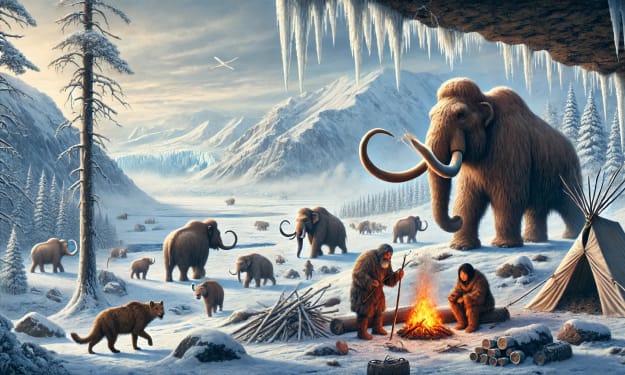
When we hear "Ice Age," many of us imagine a frozen planet in an eternal winter, where humans huddle in shelters, and mammoths and saber-tooth tigers roam vast icy landscapes. However, this idea isn't entirely accurate. Let’s dive into what the Ice Age really was, how long it lasted, and whether we might be heading for another one. First, it's important to clarify that there wasn’t just one Ice Age. Earth has experienced at least five major ice ages. The first occurred between 2.4 and 2.1 billion years ago, while the most recent began 2.6 million years ago and lasted until about 11,500 years ago. Some scientists even argue that we’re still in an Ice Age. Why? Because Earth continues to experience warm and cold phases, and the planet hasn’t fully reverted to a non-glacial state. An Ice Age consists of two main stages. The **glacial period**, or the colder phase, is when global temperatures drop, glaciers expand, and sea levels fall as water becomes locked in massive ice sheets. During the last glaciation, ice covered large parts of Canada, Greenland, Scandinavia, Eurasia, and even parts of South America. Despite this, not the entire planet froze. Even during the coldest periods, regions like Africa and the tropics remained relatively warm, though temperatures there were about 10°F cooler than today. For example, if modern-day Africa averages 77°F, it would have been closer to 67°F during the Ice Age—chilly but livable. Humans were already around during the last Ice Age. Early Homo sapiens, along with other human species, lived primarily in Africa. Around 2 million years ago, some groups began migrating to colder climates, including Europe and Scandinavia. These regions could be harsh, with average annual temperatures in places like Germany dropping to 32°F, similar to modern-day Iceland. Yet humans not only survived—they thrived. The colder climate encouraged innovation. Humans began sewing clothes to keep warm, developing tools for hunting, and building shelters. Hunting required strategic thinking, which spurred the development of intelligence. Survival became a mental exercise, and this necessity likely accelerated human advancement. During the Ice Age, humans hunted animals that were well-adapted to the cold. Mammoths, for instance, were covered in thick fur, providing excellent material for clothing. Their bones were used for construction, and their meat was a vital food source. Mammoths survived harsh conditions thanks to stored fat reserves that sustained them during times of scarcity. Other animals included saber-tooth cats, which were fearsome predators, and giant ground sloths, towering up to 12 feet tall. Interestingly, many Ice Age animals were much larger than their modern counterparts, a phenomenon linked to evolutionary adaptations before the Ice Age. The end of the Ice Age brought significant changes. As glaciers melted, water trapped in ice caps was released, causing sea levels to rise dramatically—by as much as 400 feet in some cases. Land that was once exposed became submerged. This transition marked the beginning of the **interglacial period**, a warmer phase that started around 11,500 years ago. Some scientists believe we’re still in this period today. The interglacial phase follows a natural cycle triggered by solar radiation, which warms the Earth. Melting glaciers release carbon dioxide (CO2), further accelerating the warming process. While this cycle has occurred for millions of years, human activities in the last 150 years—such as industrialization and deforestation—have amplified the warming trend, leading to climate change concerns. In conclusion, the Ice Age wasn’t a time of unrelenting cold and snowball Earth scenarios. Instead, it was a complex era with fluctuating temperatures, thriving human communities, and giant animals. As Earth continues to warm, we might be witnessing the final stages of the most recent Ice Age—a reminder of the planet's ever-changing climate.
By Nora Ariana2 years ago in Earth
Asian Animals Laos and Lebanon
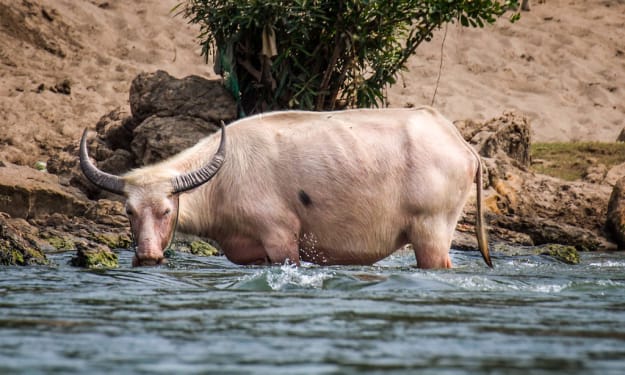
Wildlife of Laos Laos is a Southeast Asia country that Cambodia, China, Myanmar, Thailand, and Vietnam border. Half of the country's woodlands are covered by evergreen tropical rainforests. Among the country’s nicknames is the “Kingdom of a Million Elephants”.
By Rasma Raisters2 years ago in Earth
The Quantum Divide
Chapter 1: The Rise of NeuroLink In 2050, the world was no longer divided by borders but by access to technology. At the heart of this divide was NeuroLink, a groundbreaking quantum neural interface that connected human consciousness to an ever-evolving AI ecosystem. Developed by SynerTech Corp, it promised to revolutionize humanity, allowing people to work, learn, and live through an augmented reality overlay.
By Mirhadi Tahsin2 years ago in Earth
The Los Angeles Wildfires and the Urgency of Rethinking Global Warming
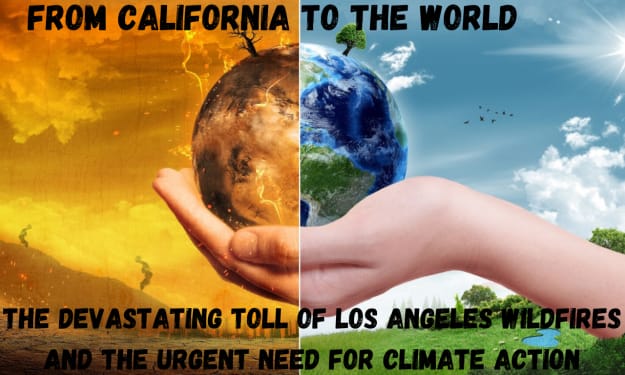
The skies over Los Angeles are shrouded in a smoky haze, a stark reminder of the wildfires that have become an increasingly devastating feature of California’s landscape. These fires, fueled by rising global temperatures and prolonged droughts, serve as a fiery warning: we must reevaluate our understanding of global warming and its driving forces.
By mureed hussain2 years ago in Earth
Lunar New Year: A Celebration of Renewal and Tradition. AI-Generated.
Lunar New Year, also known as Chinese New Year or Spring Festival, is one of the most significant festivals in many East Asian cultures, including those of China, Vietnam, Korea, and others. Celebrated according to the lunisolar calendar, it marks the beginning of a new year, symbolizing a time of renewal, family reunion, and the welcoming of good fortune.
By Carme Brun Gasca2 years ago in Earth
The Panama City Beach . AI-Generated.
Panama City, Florida, has officially declared a local state of emergency following an unusual winter weather system that brought snow to the panhandle. The declaration, announced on the evening of January 21, 2025, underscores the serious impact of Winter Weather System Enzo on the region. The storm's rare snow event, coupled with its potential risks to people and property, has prompted city officials to take swift action.
By Tanushree Das2 years ago in Earth
Gokyo Ri Trek: A Complete Guide to a Himalayan Adventure. AI-Generated.
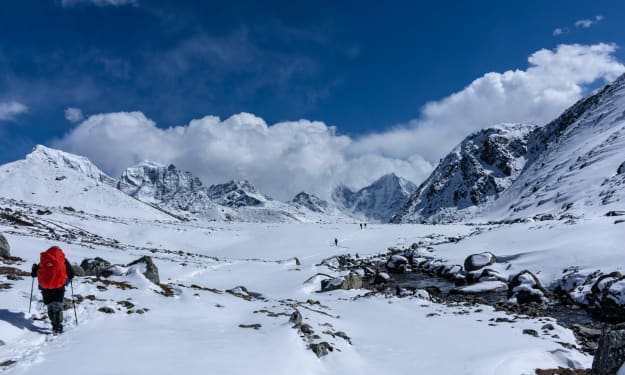
If you’re looking for an extraordinary trekking experience in Nepal, the Gokyo Ri Trek is a fantastic choice. This trek, set in the heart of the Everest region, offers spectacular views of some of the highest peaks in the world, including Mount Everest, Makalu, Lhotse, and Cho Oyu. As someone who’s trekked this beautiful route, I can tell you that it’s one of the most rewarding experiences for both seasoned trekkers and those seeking a challenge in the Himalayas.
By Lucifer Smith2 years ago in Earth
Lobuche Peak Climbing: A Journey to Himalayan Heights. AI-Generated.
Lobuche Peak, nestled in the Everest region, offers an exhilarating climbing experience that combines breathtaking landscapes, moderate technical challenges, and an unforgettable cultural immersion. As one of Nepal’s most sought-after trekking peaks, Lobuche East provides the perfect opportunity for climbers to test their skills while basking in the grandeur of the Himalayas. Here’s what makes Lobuche Peak climbing so remarkable.
By Oliver Backman2 years ago in Earth