Humanity
Hope and resilience
Climate change has undoubtedly become one of the defining challenges of our time, presenting a daunting array of environmental, social, and economic impacts. The gravity of the situation often leaves individuals feeling overwhelmed, fearful, and even despondent. However, amidst the crisis, there is a powerful force that emerges: hope. This article explores the emotional power of finding hope and resilience in the face of climate change. By examining inspiring stories of individuals and communities who are taking positive action, we will delve into the transformative nature of hope and its potential to drive collective change. 1. The Emotional Toll of Climate change: Before delving into stories of hope and resilience, it is important to acknowledge the emotional toll that climate change exacts on individuals and communities. The staggering loss of biodiversity, extreme weather events, and rising sea levels can trigger feelings of grief, anxiety, and helplessness. By recognizing these emotions, we lay the foundation for understanding the significance of hope as a catalyst for action. 2. Stories of Hope and Resilience: In this section, we will delve into inspiring stories of individuals and communities who have found hope and resilience in the face of climate change. These stories serve as beacons of light, showcasing the power of human determination, innovation, and collective action. a) Community-led Initiatives: Highlighting the efforts of communities that have come together to tackle climate change at the grassroots level. Whether through sustainable farming practices, renewable energy projects, or reforestation initiatives, these communities embody the spirit of resilience and demonstrate the impact that localized action can have. b) Youth Activism: Shedding light on the extraordinary efforts of young activists who have mobilized global movements demanding urgent climate action. Their unwavering dedication, resilience, and ability to inspire millions around the world highlight the immense potential of youth in shaping a sustainable future. c) Indigenous Wisdom and Stewardship: Exploring the profound connection between indigenous communities and their natural environments. Drawing from their traditional knowledge and sustainable practices, indigenous peoples are not only at the forefront of climate adaptation but also exemplify the resilience of ancestral wisdom in the face of change. d) Innovative Solutions: Showcasing groundbreaking technologies and innovative solutions that hold promise in mitigating the effects of climate change. From renewable energy advancements to carbon capture technologies, these stories demonstrate the power of human ingenuity and the potential for technological breakthroughs. 3. The Transformative Power of Hope: Building upon the stories of hope and resilience, this section delves into the transformative power of hope as a driving force for change. By examining psychological research and testimonies from individuals who have experienced the transformative effects of hope, we shed light on how hope can motivate action, foster resilience, and inspire collaboration. a) Psychological Perspectives: Exploring the psychological underpinnings of hope and its impact on individual well-being and motivation. Research suggests that hope can serve as a coping mechanism, empowering individuals to take action and overcome adversity. b) Amplifying Hope: Highlighting the role of storytelling, media, and communication in amplifying narratives of hope. By sharing success stories and showcasing positive action, hope can spread contagiously, mobilizing wider support and catalyzing collective action. 4. Nurturing Hope and Resilience: In this section, we delve into practical strategies to nurture hope and resilience in the face of climate change. From personal actions to collective efforts, we explore ways in which individuals, communities, and organizations can cultivate and sustain hope in the long term. a) Education and Awareness: Emphasizing the importance of educating and raising awareness about climate change and its solutions. By providing accurate Addressing climate change requires a multi-faceted approach that encompasses various sectors and stakeholders. Here are some key solutions for mitigating and adapting to climate change: 1. Transition to Renewable Energy: Shifting from fossil fuels to renewable energy sources such as solar, wind, hydro, and geothermal power is crucial. Governments can incentivise the development and implementation of renewable energy technologies through policies, subsidies, and research funding. 2. Energy Efficiency and Conservation: Promoting energy efficiency in industries, buildings, and transportation sectors can significantly reduce greenhouse gas emissions. Governments can establish energy efficiency standards, provide financial incentives for energy-saving technologies, and raise public awareness about the importance of conservation. 3. Sustainable Transportation: Encouraging the use of public transportation, promoting electric vehicles, and investing in cycling and pedestrian infrastructure can help reduce carbon emissions from the transportation sector. Governments can provide incentives for eco-friendly transportation options and expand public transportation networks. 4. Forest Conservation and Reforestation: Protecting existing forests and restoring degraded areas through reforestation efforts can help sequester carbon dioxide and preserve biodiversity. Governments can implement policies to prevent deforestation, promote sustainable forest management practices, and provide support for tree-planting initiatives. 5. Circular Economy and Sustainable Consumption: Shifting towards a circular economy, which emphasizes recycling, reuse, and waste reduction, can significantly reduce resource consumption and waste generation. Governments can introduce regulations and incentives to promote sustainable practices, such as extended producer responsibility and eco-labeling. 6. Climate-Smart Agriculture: Encouraging sustainable farming practices, such as agroforestry, organic farming, and precision agriculture, can reduce emissions from the agriculture sector and enhance resilience to climate change. Governments can provide training, financial support, and access to technology for farmers to adopt climate-smart practices. 7. Adaptation and Resilience Building: Investing in adaptation measures, such as developing climate-resilient infrastructure, improving water management systems, and implementing early warning systems for extreme weather events, can help communities cope with the impacts of climate change. Governments can allocate funds for adaptation projects and integrate climate resilience into urban planning. 8. Green Building and Urban Planning: Promoting energy-efficient and sustainable building designs, encouraging green building certifications, and implementing sustainable urban planning strategies can reduce emissions from the construction and urban sectors. Governments can provide incentives, enforce building codes, and invest in green infrastructure. 9. Education and Awareness: Raising public awareness about climate change, its impacts, and the importance of individual and collective action is crucial. Governments can invest in educational programs, public campaigns, and media initiatives to promote climate literacy and behavior change. 10. International Cooperation: Climate change is a global issue that requires international cooperation and collaboration. Governments can engage in diplomatic efforts, participate in climate negotiations, and work towards global agreements to reduce emissions, provide financial support to developing nations, and share knowledge and technology for sustainable development. It is important to note that these solutions should be implemented in a holistic and integrated manner, considering local contexts and the specific challenges each region faces. Collaboration among governments, businesses, communities, and individuals is key to effectively combatting climate change and building a sustainable future.Start writing...
By Favour Gabriel3 years ago in Earth
The Ripple Effect of a Good Heart
Once upon a time, in a small town nestled amidst rolling green hills, there lived a young man named Ethan. Known far and wide for his exceptionally good heart and unwavering kindness, Ethan became a symbol of compassion and empathy in a world that sometimes seemed lacking in both.
By james oyelekan3 years ago in Earth
The Root of Life:
In the heart of an ancient forest, where sunlight danced through the dense canopy, there stood a magnificent tree known as the Elderwood. Its towering branches reached towards the heavens, embracing the wisdom of countless seasons. Nestled deep within the soil, beneath the gnarled roots of the Elderwood, lay the secret to the essence of life itself—a mystical, radiant gem known as the Rootstone.
By james oyelekan3 years ago in Earth
Beyond the worries
Once upon a time, in a bustling city filled with towering skyscrapers and hurried footsteps, there lived a young woman named Maya. Despite her outward appearance of confidence, Maya carried a heavy burden within—a constant worry that weighed upon her heart.
By james oyelekan3 years ago in Earth
The Tapestry of Creation:
Once, in a time before time, there existed a vast cosmic canvas, blank and waiting. Within this infinite expanse, a creative force stirred, eager to bring forth a masterpiece. With celestial brushes and colors unseen, it began to weave the Tapestry of Creation.
By james oyelekan3 years ago in Earth
10 Captivating Encounters with Wildlife in the Galapagos Islands
Majestic Giant Tortoises Serving as living relics of the Galapagos' ancient history, giant tortoises represent an iconic species. Found in only one other location worldwide, these gentle giants can live for over a century, weighing up to an astonishing 550 pounds. Each island within the archipelago boasts its own subspecies of tortoise, showcasing distinct variations in shell shape and size, finely attuned to their specific island environment. Conservation efforts are underway to safeguard these magnificent creatures, as they were previously targeted by whalers and buccaneers for their meat, oil, and shells. Once they reach maturity, these slow-moving creatures have no known natural predators.
By expository3 years ago in Earth
The Emotional Toll of Biodiversity Loss:
Introduction: The beauty and complexity of our natural world are intricately tied to the diversity of life that exists within it. Biodiversity, the rich tapestry of plants, animals, and microorganisms, plays a vital role in maintaining the balance and resilience of our planet's ecosystems. However, the alarming decline in biodiversity has become an emotional issue that strikes at the core of our collective consciousness. The loss of species due to human activities has profound implications for both the natural world and our own well-being. As we bear witness to the unraveling of this delicate web of life, a deep sense of sadness, grief, and helplessness envelops us.
By james oyelekan3 years ago in Earth
"Seeds of Change: Embracing the Green Revolution of Plant-Based Diets"
Once upon a time, a young woman named Maya lived in the bustling city of Harmonyville. Maya had always been an adventurous foodie, constantly seeking new culinary experiences. However, as she grew older, she started to question her food choices' impact on her health and the world around her.
By Judith Asika3 years ago in Earth
National Donut Day 2023 deals
It was a beautiful summer morning, and the sun was shining down on the streets of America. People were going about their daily business, but there was a sense of excitement in the air. It was National Donut Day, and across the country, donut lovers were gearing up for a day of sweet indulgence.
By Mustapha Muhammad Abubakar3 years ago in Earth
Top 5 beautiful tips every woman should know.
Beauty is a subjective concept, and everyone has their own idea of what it means. Nonetheless, there are universal tips that every woman should consider to help enhance their beauty. This book is a valuable resource for understanding five of the most essential tips in this regard. The first tip covered is to embrace self-love and self-care. Although beauty can sometimes be found in self-critique, finding joy in one's self is of utmost importance. Taking care of oneself in both physical and mental ways is key to understanding and feeling one's individual beauty. From healthy eating habits to finding activities to escape stress, self-care is an important factor in achieving a beautiful appearance. The second tip is to be practical and relaxed with beauty regimens. Applying too much product and using harsh chemicals can harm the skin, so it is important to find the right balance of tools and techniques. Experimenting is a great way to find the perfect routine for one's individual needs. The third tip is to create a signature look. Developing a personalized style makes it easy to find the perfect trends and products to bring out an individual's natural beauty. Establishing signature looks can add to the confidence that one has in regard to their appearance. The fourth tip is to remember the power of make-up. Going to the store and selecting products to enhance particular features is a great way to express one's beauty. However, it is important to keep in mind that the end result should still look natural. Too much heavy make-up can do more harm than good. The fifth and final tip is to find beauty in non-traditional ways. It is important to remember that beauty is subjective. What someone else may consider beautiful may look completely different to you. There are many ways to express beauty, from fashion to alternative body art. Finding what works best for you is key to embracing your own beauty. Overall, this book provides valuable information on the top five most important tips for every woman to understand and embrace her own beauty. In today's world, there is much pressure to strive for the beauty standard set by society. It is important to remember that everyone is beautiful in their own unique way, and that true beauty comes from embracing and caring for oneself.A Guide to Help Women Succeed in Their Personal and Professional Lives Tips for woman is a book written to help women succeed both in their personal and professional lives. Written by acclaimed life and career coach, Dr. Richard F. Graziano, this book is an insightful guide that helps women reach for their goals. It covers topics such as developing strategies to achieve success, having a vision of where one wants to be, personal and professional perceptions, understanding the opposing forces and gaining strength to be successful. The book begins by discussing the importance of having a personal vision for yourself and what success means. Dr. Graziano provides tools, strategies and techniques to help women develop mentor-mentee relationships. He emphasizes that having a support system is essential and provides guidance on how to establish such relationships. He also encourages women to use their networks wisely, prioritize the important tasks and maximize their capabilities. Dr. Grazianos approach helps women manage their inner critics and find ways to move past negative thoughts and people. He offers guidance on how to justify decisions, set achievable goals and find the confidence to take risks. He highlights the effect of media and influences on people's opinions and how it should not be taken as gospel.
By Jennifer P. Ditch 3 years ago in Earth
"From Seeds to Sustainability: A Journey of Hope and Change". Content Warning.
Once upon, in the small town of Greenview, nestled in the heart of the countryside, there lived a young woman named Lily. Lily had always been captivated by the beauty of nature, and as she grew older, she became increasingly aware of the pressing environmental issues that plagued the world.
By Judith Asika3 years ago in Earth
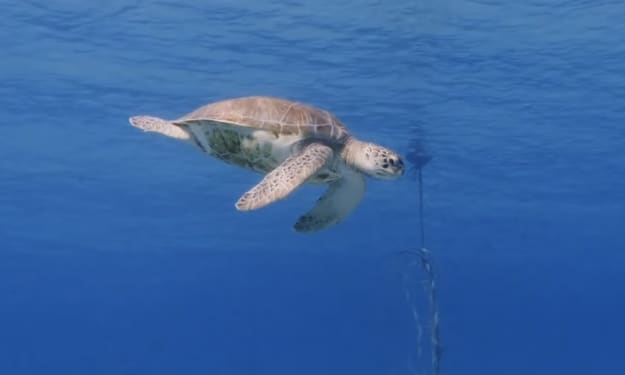
Save the Turtles
Sea turtles, majestic creatures that have inhabited our oceans for millions of years, are facing an increasing threat to their survival. In this article, we delve into the urgent need for conserving wild sea turtles and shed light on the critical issue of sea turtle consumption. Moreover, we will explore practical ways to contribute to turtle conservation, emphasizing the significance of minimizing marine pollution and waste disposal. By coming together to protect these remarkable creatures and making conscious choices, we can ensure a brighter future for sea turtles and our planet.
By Feathermoon 3 years ago in Earth