Climate
What Will the Weather Be Like Tomorrow
## What Will the Weather Be Like Tomorrow Tomorrow’s weather forecast provides an overview of the atmospheric conditions expected over the next twenty-four hours. Weather forecasts are created using scientific observations such as temperature, air pressure, humidity, wind speed, and cloud movement. These observations are analyzed through advanced computer models that simulate how the atmosphere is likely to behave. Because the forecast focuses on a short time frame, it is generally more accurate than long-term predictions. Understanding tomorrow’s weather helps people plan their daily activities, commute safely, and prepare for possible changes in conditions throughout the day. ## Will the Weather Be Sunny or Cloudy Tomorrow One of the most common questions people ask is whether tomorrow will be sunny or cloudy. Sunshine depends largely on cloud cover, which is influenced by pressure systems in the atmosphere. High-pressure systems often lead to clearer skies and calmer weather, allowing more sunlight to reach the ground. Low-pressure systems usually bring increased cloudiness and unsettled conditions. Cloud cover can affect how warm the day feels and how much daylight is available, making this an important factor for outdoor plans, travel, and work schedules. ## Is Rain or Snow Expected Tomorrow Many people want to know if tomorrow will bring rain, snow, or other forms of precipitation. Precipitation occurs when moisture in the air condenses into droplets or ice crystals that become heavy enough to fall to the ground. Weather forecasts estimate the likelihood of precipitation based on moisture levels, cloud development, and atmospheric instability. Even when precipitation is expected, it may vary in intensity and location. Knowing whether rain or snow is possible helps people prepare with appropriate clothing, adjust travel plans, and protect outdoor property or activities. ## How High and Low Will Temperatures Be Tomorrow Temperature forecasts are a key part of understanding tomorrow’s weather. Forecasts usually include a daytime high temperature and an overnight low temperature. Daytime highs typically occur in the afternoon when the sun’s heating is strongest, while nighttime lows often happen just before sunrise. Temperature is influenced by cloud cover, wind direction, and seasonal patterns. Accurate temperature forecasts allow people to choose suitable clothing, plan heating or cooling needs, and prepare for potential heat or cold exposure. ## Will Wind Conditions Affect the Weather Tomorrow Wind plays an important role in shaping tomorrow’s weather conditions. Wind forms when air moves from areas of high pressure to areas of lower pressure. The speed and direction of the wind can influence how warm or cool it feels, sometimes making temperatures seem colder or hotter than they actually are. Strong winds can also impact travel, outdoor work, and marine or aviation activities. Understanding expected wind conditions helps people anticipate changes in comfort and safety throughout the day. ## How Reliable Is Tomorrow’s Weather Forecast A common question is how accurate tomorrow’s weather forecast can be. Short-term forecasts are generally reliable because meteorologists have access to detailed, real-time data and advanced modeling systems. While weather can still change unexpectedly, predictions for the next day are usually dependable. Forecast accuracy has improved significantly over the years due to better technology, increased data collection, and improved understanding of atmospheric behavior. ## Why Can Tomorrow’s Weather Forecast Change People often notice that weather forecasts sometimes change, even close to the predicted day. This happens because new data is constantly being collected and analyzed. As atmospheric conditions shift, forecast models update their predictions to reflect the latest information. Changes in forecasts are not errors but improvements, aiming to provide the most accurate outlook possible. This ongoing updating process helps warn people about developing weather events and sudden changes. ## How Should People Prepare for Tomorrow’s Weather Preparing for tomorrow’s weather is an important part of daily life. If rain is expected, carrying rain protection and planning indoor alternatives can be helpful. If temperatures are forecast to be high or low, adjusting clothing and schedules can improve comfort and safety. Windy or unstable weather may require extra caution while driving or working outdoors. By paying attention to tomorrow’s forecast, people can make informed decisions that reduce inconvenience and risk. Understanding tomorrow’s weather forecast allows individuals, families, and businesses to plan ahead with confidence. While weather can never be predicted with absolute certainty, modern forecasting provides valuable guidance that helps people stay prepared and informed.
By America today 9 months ago in Earth
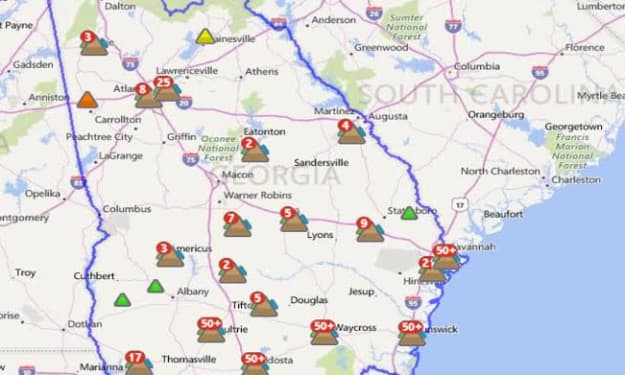
georgia power outage map. AI-Generated.
Power outages can be stressful, especially when they happen unexpectedly during severe weather. In Georgia, where storms, heavy rain, and strong winds are common, residents rely on accurate and timely information to stay prepared. One of the most trusted tools during these moments is the Georgia Power outage map, which provides real-time updates about electricity disruptions across the state. As Georgia weather continues to grow more unpredictable, understanding how to use this resource — and how it connects with local news coverage — has become increasingly important for households, businesses, and travelers alike. What Is the Georgia Power Outage Map? The Georgia Power outage map is an online platform that shows active power outages throughout Georgia. It allows users to view affected areas, the number of customers without power, and estimated restoration times. The map updates regularly, making it a reliable source during fast-changing situations such as thunderstorms or widespread weather events. During major storms, residents often check the outage map alongside local Atlanta news broadcasts to confirm whether power interruptions are isolated or part of a larger issue. This combination of real-time data and trusted reporting helps people make informed decisions. The Role of Weather in Atlanta Power Outages Weather in Atlanta can shift rapidly, particularly during spring and summer storm seasons. Thunderstorms, lightning strikes, falling trees, and high winds frequently contribute to power disruptions. Even during winter, ice accumulation and strong gusts can damage power lines and equipment. Meteorologists covering weather Atlanta events often explain how certain conditions increase the risk of outages. When these forecasts are paired with updates from Georgia Power, residents gain a clearer picture of what to expect before, during, and after a storm. Local outlets like WSBTV and Channel 2 News regularly provide storm coverage that includes outage information. Their reporting often highlights which counties or neighborhoods are most affected, offering context that goes beyond the map alone. Why Local News Coverage Matters While the outage map shows where electricity is down, local journalism adds depth and explanation. Atlanta news stations frequently interview GA Power representatives, emergency officials, and meteorologists to explain restoration efforts and safety concerns. For example, WSBTV may report on how many repair crews are deployed or whether road closures are slowing response times. Channel 2 News often shares safety reminders, such as avoiding downed power lines or using generators responsibly. This type of coverage is especially valuable during large-scale outages caused by severe Georgia weather, when thousands of customers may be affected at once. Impact on Travel and Critical Infrastructure Power outages don’t only affect homes. Transportation hubs, hospitals, and businesses must also prepare for potential disruptions. The Atlanta airport, one of the busiest in the world, closely monitors regional power conditions. Although the airport has backup power systems, widespread outages in surrounding areas can still cause delays or operational challenges. That’s why outage updates are often mentioned during breaking Atlanta news, especially when storms impact travel schedules. Businesses across metro Atlanta also rely on timely updates to decide whether to close early, switch to backup systems, or allow employees to work remotely. How Georgia Power Responds to Outages When outages occur, Georgia Power dispatches crews to assess damage and begin repairs as quickly as possible. Restoration times can vary depending on the severity of the damage and the number of customers affected. During major storms, GA Power often prioritizes critical facilities such as hospitals and emergency services. Local news outlets frequently explain this process so customers understand why some areas regain power sooner than others. By checking the outage map and following updates from Atlanta news sources, residents can track progress without relying on rumors or unverified social media posts. Staying Prepared During Georgia Weather Events Preparation is key when it comes to power outages. Experts recommend keeping emergency supplies on hand, including flashlights, batteries, and portable phone chargers. Staying informed through trusted sources like WSBTV, Channel 2 News, and official Georgia Power updates can reduce uncertainty during stressful situations. Understanding both weather in Atlanta forecasts and outage data allows residents to plan ahead — whether that means charging devices early, adjusting travel plans, or checking on vulnerable neighbors. Final Thoughts The Georgia Power outage map has become an essential tool for navigating power disruptions across the state. When combined with accurate reporting from Atlanta news outlets and up-to-date Georgia weather forecasts, it provides a clear and reliable picture during uncertain times. In a region where storms can develop quickly, staying informed isn’t just convenient — it’s necessary. By using the outage map and following trusted local coverage, Georgians can remain prepared, connected, and safer when the power goes out.
By Saboor Brohi 9 months ago in Earth
Weather and Climate Understanding the Forces That Shape Our Daily Lives
Weather and Climate Understanding the Forces That Shape Our Daily Lives Weather and climate play a central role in how people live work travel and plan for the future. From daily temperature changes to long term climate patterns these natural systems influence agriculture health economies and even global stability. Understanding the difference between weather and climate and knowing how they affect human life has become more important than ever especially as the world experiences more extreme conditions. Weather refers to the short term conditions of the atmosphere such as temperature rain wind humidity and storms. Climate on the other hand describes the average weather patterns in a specific region over long periods of time usually decades or longer. While weather can change within hours climate changes slowly but its effects are deeper and longer lasting. WHY DOES WEATHER CHANGE FROM DAY TO DAY Daily weather changes occur because the atmosphere is constantly moving and reacting to energy from the sun. As the sun heats the Earth unevenly warm air rises and cooler air moves in to replace it. This movement creates wind clouds and storms. Ocean currents air pressure systems and geographical features such as mountains and seas also influence how weather behaves in different regions. This is why one city may experience heavy rain while another nearby area remains dry. WHAT IS THE REAL DIFFERENCE BETWEEN WEATHER AND CLIMATE The main difference lies in time scale. Weather describes what is happening now or in the near future such as a hot day or a rainy week. Climate represents long term trends such as a region being generally hot dry cold or humid. For example a single cold winter does not mean the climate is changing but a consistent pattern of colder or warmer winters over many years indicates a climate trend. HOW DOES CLIMATE AFFECT DAILY LIFE Climate shapes how people build homes grow crops dress and even structure their daily routines. In hot climates buildings are designed to stay cool while in cold regions insulation and heating are essential. Farmers rely on climate patterns to decide what crops to grow and when to plant them. Tourism transportation and energy use are also closely linked to climate conditions. WHAT CAUSES EXTREME WEATHER EVENTS Extreme weather events such as heatwaves floods hurricanes and snowstorms are caused by a combination of natural atmospheric processes and changing climate patterns. Warmer air holds more moisture which can lead to heavier rainfall and flooding. Rising ocean temperatures can strengthen storms making them more destructive. Changes in jet streams and pressure systems can also cause weather to become more intense and unpredictable. IS CLIMATE CHANGE THE SAME AS GLOBAL WARMING Global warming refers specifically to the increase in average global temperatures mainly due to greenhouse gases in the atmosphere. Climate change is a broader term that includes global warming as well as changes in rainfall patterns sea levels ice melt and the frequency of extreme weather events. In other words global warming is one major part of climate change but climate change affects many aspects of the Earth system. HOW DOES WEATHER IMPACT HUMAN HEALTH Weather conditions have a direct effect on health. Extreme heat can cause heat exhaustion and heatstroke while extreme cold increases the risk of hypothermia. Poor air quality during hot stagnant conditions can worsen respiratory problems. Changes in rainfall and temperature can also affect the spread of diseases by influencing insects such as mosquitoes. WHY ARE WEATHER FORECASTS IMPORTANT Weather forecasts help individuals communities and governments prepare for upcoming conditions. Accurate forecasts allow farmers to protect crops travelers to plan safely and emergency services to respond to storms floods or heatwaves. Even simple daily forecasts help people decide what to wear how to commute and how to manage energy use. CAN CLIMATE PATTERNS CHANGE OVER TIME Yes climate patterns have always changed due to natural factors such as volcanic activity solar variation and shifts in Earth’s orbit. However in recent decades changes have been occurring faster than before. Many regions are experiencing hotter summers milder winters changing rainfall patterns and more frequent extreme events. These shifts affect ecosystems water supplies and food production. HOW CAN PEOPLE ADAPT TO WEATHER AND CLIMATE CHALLENGES Adaptation involves adjusting lifestyles infrastructure and planning to reduce harm from weather and climate impacts. This can include building flood defenses improving early warning systems developing heat resistant crops and designing cities that handle extreme temperatures better. On a personal level people can stay informed follow weather alerts and take precautions during extreme conditions. Weather and climate are powerful forces that influence nearly every aspect of life on Earth. By understanding how they work and how they affect the world people can make better decisions protect themselves and adapt to a changing environment. As weather patterns become more complex and climate challenges grow awareness and preparedness remain key to a safer and more resilient future.
By America today 10 months ago in Earth
Emergency declared in USA.
A historic winter storm known as Winter Storm Fern has unleashed devastating cold, heavy snow, and dangerous ice across a vast portion of the United States, stretching from Texas in the South to New England in the Northeast. Millions of people are affected as emergency warnings flash on phones and TV screens, roads become treacherous, and travel across the country grinds to a near halt.
By USA daily update 10 months ago in Earth
US weather forecast
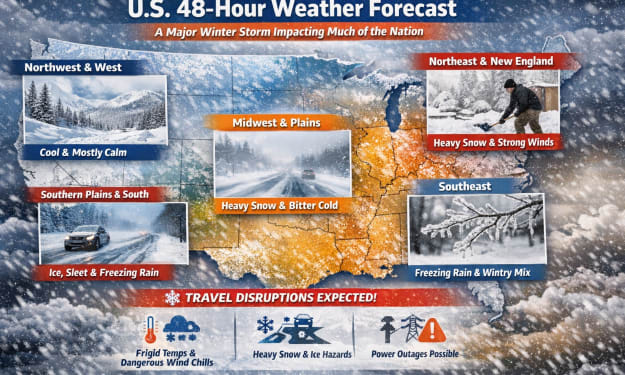
General Nationwide Pattern (Next 48 Hours) 1. Widespread Winter Storm Across Much of the U.S. A powerful winter storm is forecast to affect large swaths of the country through the next two days. It is expected to bring heavy snow, ice, freezing rain, and dangerously cold temperatures from the Southern Plains into the Midwest, East Coast, and parts of the Southeast. Heavy snow expected from Oklahoma and the Midwest up through the Ohio Valley and Northeast.
By USA daily update 10 months ago in Earth
USA Weather Forecast, Next 3 Days cold
Day 1 — Friday: Winter Storm Impact Begins Across much of the nation from the southern plains to the Northeast, storm conditions will rapidly intensify: Snow and Ice Spread — Snow and freezing rain will expand eastward, leading to slick roads and hazardous travel. Ice accumulations could be significant in certain corridors, particularly across parts of Texas, the Mississippi Valley, and the Southeast.
By USA daily update 10 months ago in Earth
Is the Ukraine–Russia War Pushing the World Toward World War III?
Is the Ukraine–Russia War Pushing the World Toward World War III? The war between Ukraine and Russia began as a regional conflict, but over time it has grown into something much larger. While it is not officially World War III, many experts, analysts, and ordinary citizens are asking the same question: is the world moving dangerously close to a global war?
By Wings of Time 10 months ago in Earth
Blizzard Warning. When Winter Turns Dangerous
What Is a Blizzard Warning? Not just snow, but a storm A blizzard warning is issued when heavy snowfall combines with powerful winds, creating near-zero visibility and dangerously cold temperatures. These conditions can last for several hours or even days. Unlike a simple snowstorm, a blizzard doesn’t only cover the ground in white—it creates chaos. Meteorologists usually declare a blizzard warning when winds reach at least 35 miles per hour and visibility drops below a quarter of a mile due to blowing snow. These storms are often accompanied by freezing temperatures, making frostbite and hypothermia serious risks.
By USA daily update 10 months ago in Earth
Winter Storm Watch. What It Means and How to Prepare
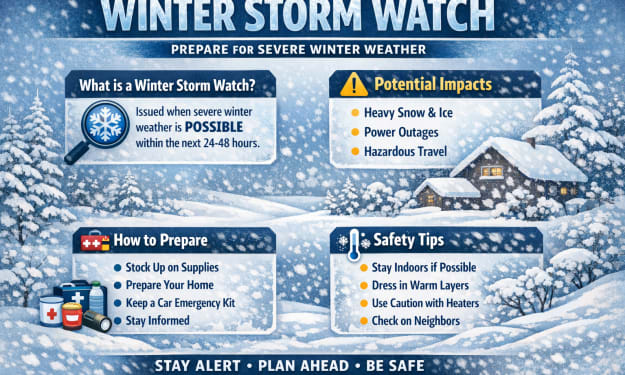
What Is a Winter Storm Watch? A winter storm watch is issued when forecasters identify the possibility of severe winter weather, but the exact timing, location, or intensity is still uncertain. This alert is different from a winter storm warning, which is given when dangerous winter conditions are imminent or already happening. The watch phase is essentially a heads-up. It allows individuals, businesses, and local governments to start preparing before conditions worsen. During this time, meteorologists continue to analyze weather patterns and refine their forecasts. If confidence in the storm increases, the watch may be upgraded to a warning or advisory. Typical conditions associated with a winter storm watch include heavy snow accumulation, ice storms, strong winds, reduced visibility, and extreme cold. These elements can create treacherous roads, power outages, and health risks, especially for vulnerable populations.
By USA daily update 10 months ago in Earth
How AI Is Becoming the Next Geopolitical Frontier
Why This Matters Right Now The world is changing faster than ever. Wars, trade, jobs, and even daily life are being reshaped—not only by soldiers and weapons, but by artificial intelligence (AI).Right now, countries are racing to control AI. The reason is simple: whoever leads in AI will likely lead in power, money, and influence. This race is already affecting global politics—and it is quietly touching the lives of ordinary people everywhere.AI is no longer just a technology.It is becoming the next geopolitical frontier.
By LegacyWords10 months ago in Earth
Northern Lights May Be Visible in 10 States Jan. 20 as Earth’s Magnetic Field “Rings Like a Bell” After CME Impact
What Happened: A Massive CME Hit Earth On Jan. 19, 2026, a powerful CME associated with a major X1.9-class solar flare erupted from the sun and traveled the approximately 93 million miles to Earth in around 25 hours — much faster than most such events. When it reached Earth’s magnetic field at about 2:38 p.m. EST, it triggered a severe geomagnetic storm, classified as G4 on NOAA’s geomagnetic storm scale. Geomagnetic storms occur when energetic, charged particles from the sun slam into Earth’s magnetosphere — the protective magnetic bubble surrounding our planet. Those particles excite atoms in the upper atmosphere, which then emit light and produce auroras. Under strong geomagnetic disturbance, the auroral oval expands farther toward the equator, meaning people much farther south than usual can see the lights. Meteorologists and space weather forecasters have described Earth’s magnetic field as “ringing like a bell” after the CME impact — a colorful way of saying that the magnetosphere is oscillating and unsettled as it absorbs and redistributes the CME’s energy. These oscillations enhance auroral activity and can sustain visible displays for hours after the initial impact.
By USA daily update 10 months ago in Earth
Temperatures Tomorrow Thursday Drop to Minus 15 Below Zero
Temperatures Tomorrow Thursday Drop to Minus 15 Below Zero Extreme winter conditions are expected tomorrow, Thursday, as temperatures fall to minus 15 below zero. This level of cold is considered severe and can disrupt daily life, transportation, and personal safety. When temperatures reach this extreme, preparation becomes essential, not optional. Understanding the impact of such cold weather helps people make better decisions and stay safe. At minus 15 below zero, the environment becomes harsh and unforgiving. Outdoor air feels biting, exposed skin can freeze quickly, and even routine activities require extra effort. Vehicles, infrastructure, and heating systems are placed under stress. For many regions, this type of cold represents the peak of winter intensity. **What Causes Temperatures to Drop to Minus 15 Below Zero** Such extreme cold usually occurs when a strong Arctic air mass moves into the region. These air masses originate near the polar areas and carry extremely low temperatures. Calm winds and clear skies during the night can further accelerate heat loss, allowing temperatures to plunge to dangerous levels by early morning. **How Cold Minus 15 Below Zero Feels to the Human Body** This temperature can feel shocking and painful, especially on uncovered skin. The body loses heat rapidly, making it difficult to stay warm without proper clothing. Even brief exposure can lead to numbness in fingers, toes, ears, and the face. If wind is present, the cold feels even more intense and dangerous. **Is It Advisable to Spend Time Outdoors in This Weather** Spending time outside should be limited as much as possible. Short trips may be unavoidable, but long periods outdoors increase the risk of frostbite and hypothermia. Anyone who must go outside should plan carefully and ensure they are properly protected from the cold. **How People Should Dress for Extreme Subzero Temperatures** Proper clothing is critical at minus 15 below zero. Wearing layered clothing helps trap body heat. A thermal base layer keeps warmth close to the body, while insulating layers add protection. A wind resistant outer layer prevents cold air from penetrating. Gloves, thick socks, insulated boots, and a warm hat are essential to reduce heat loss. **How Extreme Cold Impacts Driving and Transportation** Cold weather of this intensity can cause vehicles to malfunction. Batteries weaken, engines struggle to start, and tire pressure can drop. Roads may become icy and dangerous. Drivers should prepare emergency kits, check their vehicles in advance, and avoid unnecessary travel whenever possible. **What Health Risks Are Linked to Minus 15 Below Zero Temperatures** Severe cold increases the risk of frostbite and hypothermia. Frostbite damages skin and tissue due to freezing, while hypothermia occurs when body temperature drops too low. Warning signs include shivering, confusion, slowed movement, and extreme tiredness. Immediate warmth and medical attention may be necessary in serious cases. **How Homes Can Be Protected During Extreme Cold** Homes should be sealed and insulated to keep heat inside. Heating systems must be functioning properly to maintain safe indoor temperatures. Pipes are at risk of freezing, so keeping water flowing slightly can help prevent damage. Using safe heating practices is essential to avoid additional hazards. **What Actions Should Be Avoided During Severe Cold Weather** Unnecessary outdoor exposure should be avoided, especially during nighttime and early morning hours. Alcohol consumption should be limited, as it increases heat loss without providing real warmth. Overexertion outdoors can also be risky, since sweat can make clothing damp and reduce insulation. As temperatures fall to minus 15 below zero tomorrow, awareness and preparation are the most important tools for staying safe. Extreme cold presents serious challenges, but with careful planning and responsible behavior, its dangers can be significantly reduced.
By America today 10 months ago in Earth