Latest Stories
Most recently published stories in Earth.
Recycling
Every day, we throw things away without giving it much thought. From empty soda cans to old newspapers, plastic bottles, and broken gadgets — they all end up in the trash. But what if we told you that many of these items don't belong in the garbage? What if they could get a second life through something called recycling?
By Muhammad Farhad Khanabout a year ago in Earth
How Do I Protect My Fire Nozzle from Rain, Snow, and UV Damage
Introduction: The Importance of Fire Nozzle Protection Firefighting is a job where every second and every tool matter. Your fire nozzle and portable monitor are some of the most important pieces of equipment you have. But what happens when they are left outside, exposed to rain, snow, and the hot sun? Over time, even the toughest fire nozzles can get damaged by the weather.Protecting your fire nozzle from rain, snow, and UV damage is not just about keeping it looking good. It’s about making sure it works perfectly when you need it most.
By allweathernozzlecoverabout a year ago in Earth
Transitioning to Geothermal Heating in Urban Areas with Climate Change Experts including Rasha Anayah
Urban centers are constantly seeking cleaner and more efficient energy solutions. As climate change accelerates and cities become more densely populated, traditional heating systems struggle to meet environmental and performance demands.
By Rasha Anayahabout a year ago in Earth
Best Time to Visit Spiti Valley: A Complete Seasonal Guide for Travelers
Perched in the harsh embrace of the Himalayas in Himachal Pradesh, the Spiti Valley is a high-altitude desert, renowned for its rugged beauty, ancient monasteries and its amazing adventure terrain.
By Superb World Tripabout a year ago in Earth
How to Prepare for the Himlung Himal Expedition in 2025
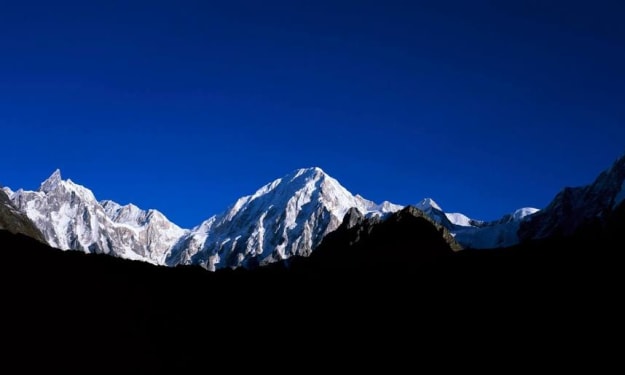
Located in the hidden Nar-Phu region of northwestern Nepal, Himlung Himal (7,126m) is one of the most rewarding 7000-meter climbing peaks in the Himalayas. Known for its accessibility, low traffic, and breathtaking alpine scenery, Himlung is rapidly becoming a favorite among mountaineers preparing for higher Himalayan climbs.
By Anya Gurungabout a year ago in Earth
The Surprising Health Advantages of Taking on the Mountains by Mountaineering Buffs like Cesar Alcantara
Mountains have long been admired for their stunning beauty and majesty, drawing adventurers, nature lovers, and fitness enthusiasts alike. However, the benefits of spending time in the mountains extend far beyond the breathtaking views. Whether you’re hiking, climbing, or simply immersing yourself in the mountain environment, these natural landscapes offer remarkable health advantages.
By Joshua Mosshartabout a year ago in Earth
Green Promises, Grey Realities
There’s a story we like to tell ourselves. A future free from fossil fuels, where cities run on sunshine and oceans are tamed by the wind. In this vision, solar panels stretch across rooftops, wind turbines turn gracefully on distant hills and electric vehicles glide silently through traffic. It’s a hopeful picture and one we desperately need.
By Dr Husain Shabbarabout a year ago in Earth
The Letter I Found After He Died
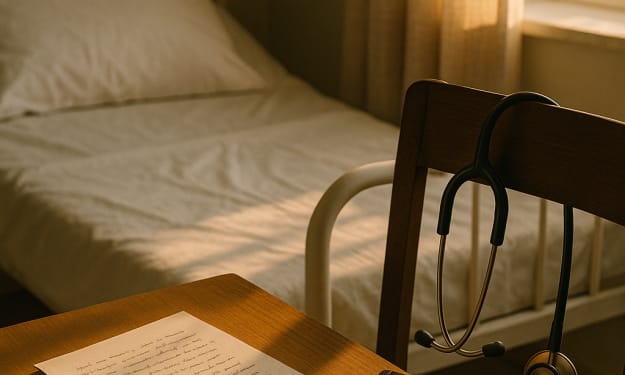
Hospitals are filled with stories. Some begin with a cry, some end in silence, and some linger long after the heartbeats fade. As a doctor, I often tell myself that I’ve seen everything — the tears, the triumphs, the losses. But I was wrong. One cold evening changed that. It was during my residency, the kind of time in a doctor’s life when sleep is rare, meals are rushed, and emotions are buried beneath protocol and practice. I was assigned to the oncology unit that month — a place where hope lived on a thin wire, and every patient knew they were in a race against time. That’s where I met Mr. Haroon. He was a quiet man in his early sixties, with sharp cheekbones, salt-and-pepper hair, and eyes that carried stories far older than he was willing to share. Stage IV pancreatic cancer. The diagnosis was grim from the beginning, but Haroon never asked how long he had. Instead, he asked for a notebook and a pen. “I like to write,” he said simply. He arrived with no family. No visitors. No flowers. Just a small suitcase, a journal, and a calmness that was unnerving. Unlike many patients, he never questioned the treatments, never cried during chemotherapy, and never asked for extra pain medication. He always thanked the nurses, even when he was too weak to lift his hand. For weeks, I monitored his vitals, adjusted his medications, and watched his body weaken while his spirit remained strangely intact. He filled several notebooks during his time there. Sometimes, I would find him staring at the wall, lips moving silently, as if rehearsing a speech only he could hear. One night, during rounds, I found him sitting up — an unusual sight given his condition. He was scribbling something feverishly. “You should be resting,” I said gently. He looked up and smiled. “Almost done.” I didn’t ask what he meant. I assumed it was another entry in his journal. A few days later, he slipped into unconsciousness. The cancer had spread aggressively to his liver and lungs. We made him comfortable with palliative care. He passed away quietly in the early morning hours, a nurse holding his hand. We cleaned out his room later that day. His suitcase contained nothing but some clothes, toiletries, and several worn notebooks. Most of the staff had grown fond of him. There was something peaceful about Haroon, something that stayed behind even after he left. I don't know what prompted me to open that drawer by his bedside. Maybe it was instinct. Or maybe it was that strange unfinished sentence — “Almost done.” Inside, I found a sealed envelope. On the front, in elegant handwriting, it simply said: "To the doctor who stayed until the end." My heart raced. I took it to the on-call room and sat down. I hesitated before opening it, unsure if I was invading something private. But curiosity and an odd sense of permission compelled me. The letter inside was handwritten: --- Dear Doctor, I don’t know your name. I never asked. I suppose that was by design. I wanted you to be just “the doctor,” because in doing so, you became every doctor — every kind soul who ever helped someone die with dignity. You must be tired. I’ve seen it in your eyes. You walk these halls like a ghost sometimes, burdened by the weight of lives you couldn’t save. But let me tell you something important — you saved me. Not my body, no. That was beyond saving. But you saved my soul. Every time you checked on me without rushing, every time you listened to my silence, you gave me the gift of being seen. Do you know how rare that is for someone who is dying? I came here to die alone. I thought I wanted that. I thought I was ready. But your presence reminded me of something I had long forgotten — the beauty of being cared for. I’ve spent the last few weeks writing letters — to people I loved, people I hurt, and people I never got to know. You fall into the third category. A stranger who meant more to me in my final days than most did my whole life. You may forget me. That’s okay. But I hope you don’t forget what you did for me. I hope you remember that sometimes the quietest kindness speaks the loudest. I am at peace now. Because of you. With gratitude, Haroon --- I read the letter twice. Then a third time. The words swam before my eyes as tears blurred the ink. I had spent my entire medical career chasing precision — diagnoses, charts, reports. But in that moment, I realized something much deeper: we are not just doctors. We are witnesses to life’s final chapter. And sometimes, our presence is the most powerful medicine we can offer. I kept that letter in my coat pocket for weeks. On the hardest days — when a child’s fever wouldn't break, when a family shouted at me in grief, when I questioned why I chose this path — I would take it out, unfold it, and read it again. It reminded me that not every victory is measured in heartbeats restored or tumors removed. Sometimes, it’s simply in making someone feel less alone as they slip away. A year later, I submitted the letter — anonymously — to a medical journal. It was published under the title “The Patient Who Thanked Me After Death.” I didn’t include his name. I didn’t need to. The story wasn’t just his — it was for every patient who leaves behind more than pain, and every doctor who wonders if they’re making a difference. I’ve met hundreds of patients since then. I’ve saved some, lost many. But Haroon stays with me. Not just as a memory, but as a compass — reminding me why I wear this white coat, why I stay the extra hour, why I sometimes sit silently beside a dying patient, even when there’s nothing more I can do medically. We are taught to cure. But we must also learn to comfort. Haroon taught me that. And for that, I will always be grateful.
By Doctor marwan Dorani about a year ago in Earth
Ancient Tools from a South African Cave Reveal Connections Between Prehistoric People. AI-Generated.
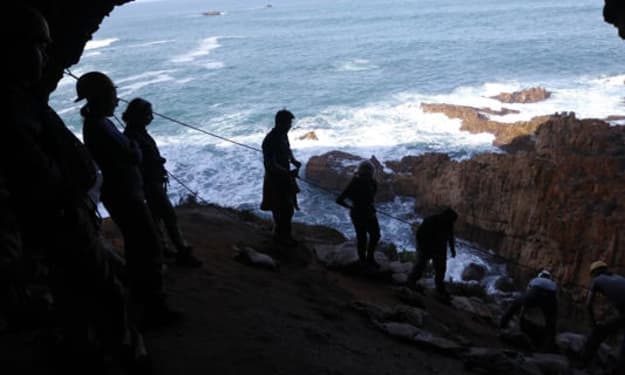
In the coronary heart of South Africa`s landscape, under layers of rock and centuries of records, a wonderful discovery has shed new mild at the interactions among prehistoric people. Ancient gear located in a cave at the southern tip of Africa have sparked a rethinking of human prehistory, revealing connections among early human groups and giving perception into the behaviors that can have fashioned their survival and evolution. These gear, relationship again to as a good deal as 100,000 years ago, spotlight a complicated internet of interaction, innovation, and lifestyle that traverses massive distances throughout the African continent.
By jihad ahmedabout a year ago in Earth