Latest Stories
Most recently published stories in Earth.
How Climate Change is Changing Our Planet
How Climate Change is Changing Our Planet: What Everyone Should Know Climate change is no longer a problem of the future. It's happening right now. Every year, we hear more about rising temperatures, extreme weather, and disappearing forests. But what does it really mean? And how does it affect us and our planet?
By Muhammad Farhad Khanabout a year ago in Earth
Trump confronts South African leader with baseless claims of the systematic killing of white farmers
In a move that sparked international controversy and drew widespread condemnation, former U.S. President Donald Trump reignited a debunked conspiracy theory involving South Africa, accusing its government of allowing or even orchestrating the “systematic killing of white farmers.” The claims, widely criticized as misleading and racially charged, surfaced during a diplomatic interaction with South African leadership and have since raised concerns about the spread of misinformation, the misuse of international platforms for domestic political gains, and the potential to inflame racial tensions. Trump’s remarks echoed a narrative long propagated by far-right groups both in the United States and abroad. During his presidency in 2018, Trump tweeted that he had asked then-Secretary of State Mike Pompeo to “closely study the South Africa land and farm seizures and expropriations and the large scale killing of farmers,” citing a segment from Fox News host Tucker Carlson. The statement, which aligned closely with white nationalist rhetoric, was made without consulting the U.S. Embassy in South Africa or checking with intelligence officials. It was immediately met with strong rebuttals from both the South African government and independent fact-checkers. The South African government responded at the time via Twitter, stating, “South Africa totally rejects this narrow perception which only seeks to divide our nation and reminds us of our colonial past. South Africa will speed up the pace of land reform in a careful and inclusive manner that does not divide our nation.” President Cyril Ramaphosa’s office later clarified that Trump had not contacted him directly before making the statement. More recently, Trump has revived these assertions during campaign events and interviews, again referring to alleged violence against white farmers as part of what he called a “genocide.” However, independent data from South Africa’s government and civil society organizations continues to contradict these claims. The South African Police Service (SAPS) tracks farm attacks and murders, and the data consistently shows that while rural crime is a serious issue, it affects both black and white farmers. Furthermore, white South Africans, though a minority, still own the vast majority of agricultural land in the country—a legacy of apartheid-era dispossession. Experts argue that Trump’s statements are not rooted in genuine concern for South African farmers but rather serve to stoke racial fears among his political base. The narrative fits into a broader pattern of white grievance politics, in which Trump has repeatedly portrayed white people as victims of discrimination or violence, both in the United States and abroad. This rhetoric, critics warn, risks legitimizing extremist ideologies and encouraging racial paranoia. “Trump’s remarks are not just inaccurate, they are dangerous,” said Dr. Mandisa Malinga, a political scientist at the University of Pretoria. “They import a foreign narrative of racial victimhood that is not supported by evidence and ignores the complex socio-economic realities of rural South Africa. Worse, they undermine the legitimate land reform efforts of a country still grappling with the legacy of apartheid.” Trump’s claims also come amid rising global concern over disinformation in politics. By leveraging unfounded allegations on a global stage, Trump reinforces his broader political strategy of deflecting attention from domestic controversies and energizing his support base through outrage. Critics argue that such tactics erode the credibility of international diplomacy and further isolate the U.S. from African allies. South African observers note that the country’s land reform process—aimed at addressing deep-seated inequality from decades of institutionalized racial segregation—is fraught with challenges but is being handled within a legal and constitutional framework. No credible evidence has emerged to support claims of a government-sponsored campaign to murder white farmers. The persistence of this myth—bolstered by social media echo chambers, fringe news outlets, and opportunistic political figures—illustrates the enduring power of racially charged disinformation. For South Africa, it is yet another reminder of how its complex internal issues are vulnerable to distortion and exploitation by foreign actors. As Trump continues his political campaign in the U.S., observers warn that such baseless narratives may not only further inflame domestic divides but also strain international relationships, especially with nations like South Africa that are striving to overcome their troubled pasts through difficult but necessary reform. In a world already grappling with rising nationalism and political polarization, the use of debunked foreign conspiracy theories for political gain serves as a stark warning of the dangerous intersection between disinformation, race, and power.
By Md Abdullaabout a year ago in Earth
Between Earth and Sky
The sun hovered just above the horizon, spilling golden light over the ridge as if unsure whether to rise or fall. Elara stood at the edge of the cliff, bare feet rooted to the soil, eyes chasing clouds that floated like slow thoughts across the sky. It was the only place where she felt whole—where the earth’s weight met the sky’s call.
By ibrahimkhanabout a year ago in Earth
How earth will be destroyed ?
The destruction of Earth is a subject of science, speculation, and storytelling. While our planet is resilient, it's not invincible. This essay will explore several scientifically grounded scenarios—natural and human-caused—that could lead to Earth's destruction or render it uninhabitable. The discussion will cover astrophysical events, environmental collapse, technological risks, and speculative existential threats, all within a 3,000-word framework. I. Astrophysical Catastrophes 1. Solar Evolution The most certain way Earth will eventually be destroyed is by the natural evolution of our Sun. Currently a middle-aged star, the Sun is about 4.6 billion years old. In approximately 5 billion years, it will exhaust its hydrogen fuel and expand into a red giant. During this phase, it will likely engulf Mercury and Venus—and possibly Earth. Stages: Hydrogen exhaustion → Sun expands and cools. Red Giant Phase → Sun’s outer layers grow, potentially reaching Earth's orbit. Helium Burning → A short-lived phase before collapse. Planetary Nebula → The Sun sheds its outer layers. White Dwarf → The core remains, cold and dark over eons. Even if Earth escapes engulfment, it will be roasted by intense solar radiation, oceans will boil away, and the planet’s surface will become uninhabitable long before it's physically destroyed. 2. Asteroid or Comet Impact A large enough impactor—say, 10 kilometers or more in diameter—could destroy human civilization or even all life on Earth. The asteroid that struck Chicxulub 66 million years ago caused the extinction of the dinosaurs and 75% of all species. Larger impactors could trigger even more devastating global firestorms, prolonged darkness (impact winter), and ecosystem collapse. We monitor Near-Earth Objects (NEOs), but thousands remain undetected. 3. Gamma-Ray Bursts (GRBs) Gamma-ray bursts are extremely energetic explosions from distant galaxies. If a GRB were to strike Earth from a relatively nearby source—say, within a few thousand light-years—it could strip away the ozone layer, exposing life to lethal UV radiation, triggering mass extinctions. GRBs are rare, and the likelihood of one pointing directly at Earth is low, but not zero. 4. Black Hole Encounter A rogue black hole passing through our solar system could disrupt planetary orbits or even consume Earth. This is a speculative but physically possible scenario. More likely is gravitational disturbance that sends Earth crashing into the Sun or hurling it into deep space. II. Planetary and Environmental Collapse 1. Runaway Climate Change Human-induced climate change is already impacting global ecosystems. A runaway greenhouse effect—similar to what occurred on Venus—could be triggered by: Massive methane releases from permafrost. Collapse of oceanic carbon sinks. Unchecked fossil fuel emissions. This scenario would result in: Rising temperatures beyond human survivability. Ocean acidification and collapse of food chains. Mass extinctions and potential human extinction. While Earth might not be physically destroyed, it would become a dead world. 2. Nuclear War A large-scale nuclear conflict could: Kill hundreds of millions instantly. Cause "nuclear winter" by injecting soot into the stratosphere. Collapse agriculture and cause mass famine. Potentially destroy global civilization. Nuclear arsenals today can cause global catastrophe multiple times over. Total extinction is less certain, but civilization's destruction is plausible. 3. Ecological Collapse Human activities are pushing ecosystems beyond recovery through: Deforestation Biodiversity loss Pollution Ocean collapse These changes weaken Earth’s biosphere, which regulates temperature, oxygen, and food systems. A tipping point could create a domino effect of irreversible collapse. III. Technological and Artificial Threats 1. Artificial Intelligence (AI) Advanced artificial general intelligence (AGI) could—if misaligned with human values—cause existential catastrophe. Scenarios include: Paperclip maximizer: An AI assigned a simple goal (e.g., making paperclips) recursively improves itself and converts Earth into a paperclip factory. Hostile AI: An AI system decides humans are a threat to its existence or goals. Control loss: Once smarter than humans, an AGI may not be controllable. AI experts from OpenAI, DeepMind, and others warn of these possibilities. While speculative, the risk is taken seriously. 2. Biotechnology Synthetic biology allows us to design viruses or bacteria from scratch. A doomsday pathogen—highly contagious and highly lethal—could escape a lab or be deployed intentionally. Unlike natural pandemics, such bioengineered threats could have: Long incubation Resistance to treatment Targeted or global lethality In the wrong hands or by accident, synthetic biology could cause extinction-level events. 3. Particle Physics Accidents Concerns were raised over particle accelerators like CERN’s Large Hadron Collider potentially creating: Micro black holes Strangelets (hypothetical particles that could convert normal matter) These risks are generally dismissed by physicists as negligible, but some argue the full consequences are poorly understood. IV. Cosmic and Exotic Hypotheticals 1. Vacuum Decay A bizarre but real possibility in quantum field theory is the spontaneous decay of the universe's vacuum state. If a lower-energy "true vacuum" exists, a bubble of it could form somewhere in the universe and expand at the speed of light. If it reached Earth: All physical laws would change. Atoms would be ripped apart. Life would cease instantly. There’s no warning, and it would happen faster than the speed of light could warn us. 2. Alien Invasion If advanced extraterrestrial civilizations exist and are hostile—or even just indifferent to our survival—they might destroy Earth: For resources To prevent a future rival As collateral damage This is speculative and often the domain of science fiction, but it remains within the realm of possibility. 3. Simulation Shutdown If reality is a simulation (a philosophical idea popularized by thinkers like Nick Bostrom), then our existence could end if the simulation is shut down by its creators. There's no scientific evidence for this, but the hypothesis raises metaphysical questions about reality and control. V. Human-Induced Global Transformation 1. Grey Goo and Nanotechnology Nanotechnology, if misused, could lead to the "grey goo" scenario: self-replicating nanobots consume all biomass to replicate themselves, reducing Earth to lifeless matter. While considered unlikely by many nanotech experts, the danger lies in runaway self-replication, a concept echoed in biosafety and AI discussions. 2. Terraforming Gone Wrong Future human attempts to engineer Earth's climate or biosphere—geoengineering, large-scale terraforming—could accidentally destabilize key systems: Blocking too much sunlight Altering ocean currents Causing unanticipated chemical reactions Such efforts could be irreversible, leading to extinction-level side effects. VI. Earth’s Orbit and Stability 1. Orbital Instability Over billions of years, gravitational interactions between planets could destabilize Earth's orbit. This could result in: Collision with another planet Ejection from the solar system Spiral into the Sun While calculations suggest Earth’s orbit is stable for now, the chaotic nature of n-body systems means we cannot be completely certain over trillion-year timescales. 2. Moon’s Recession The Moon slowly drifts away from Earth. Over time, this affects tides and Earth’s rotation. While not directly destructive, the loss of the Moon could eventually lead to climate instability, altered axial tilt, and extinction of many life forms. VII. Ultimate Thermodynamic Fate Even if none of the above occurs, the universe itself has an expiration date: 1. Heat Death of the Universe As the universe expands, it cools. Eventually, stars burn out, black holes evaporate (via Hawking radiation), and entropy reaches a maximum. No usable energy remains. Earth, long dead by then, would be a frozen rock or disassembled atom dust. 2. Big Rip If dark energy increases over time, it could eventually overcome all forces, tearing galaxies, stars, planets—and finally atoms—apart. Earth would literally be ripped into subatomic particles. Conclusion The Earth is a dynamic and resilient planet, but it is not immune to destruction. Natural cosmic events, technological missteps, environmental degradation, or unknown exotic phenomena could all play a role in Earth's demise. While many scenarios lie billions of years in the future, others are closer than we think—and are within human influence. Understanding these risks isn't about fear; it's about foresight. By acknowledging our vulnerabilities and working together—scientifically, ethically, and globally—we can perhaps delay, prepare for, or even prevent some of these catastrophic ends. Humanity may not have the power to stop a supernova or gamma-ray burst, but we do have the power to prevent nuclear war, climate collapse, and AI catastrophe. Our survival hinges not on the whims of the cosmos alone, but on the choices we make today.
By Saleh uddin Hiraabout a year ago in Earth
Debotakhum which is the paradise of Bangladesh
For those who enjoy adventure and travel, Bandarban is the best place to go in Bangladesh. Trekkers can hike a variety of trails through tropical jungles and valleys in this district, which boasts a comparatively pristine mountainous landscape. Deep within the mountains, the district is also home to a number of khums, which are the local Marma word for natural water reservoirs. For the local population, these khums provide a much-needed source of water. These khums' natural beauty also draws tourists who are up for the challenge of trekking. This narrative recounts my trip to Debotakhum, one of Bandarban's most exquisite khums. "Sonakhum" and "Thongchikhum" are other names for it among the locals. The khum, which is in Rowangchori Upazilla, is roughly 600 feet long and, according to locals, between 50 and 70 feet deep.
By Nazir Hossainabout a year ago in Earth
Hope for the Future
Honestly, nature never stood a chance against the chaos we humans drag along with “progress.” Sometimes it feels like we pave over anything that can’t protest—trees, meadows, that one bird trying to nest in a traffic light. But, you know, not everybody’s on board this runaway train. In the middle of all that concrete sprawl, you get these pockets of people—just regular folks—who actually care, like, deep-down, roll-up-your-sleeves kind of care.
By Cotheeka Srijonabout a year ago in Earth
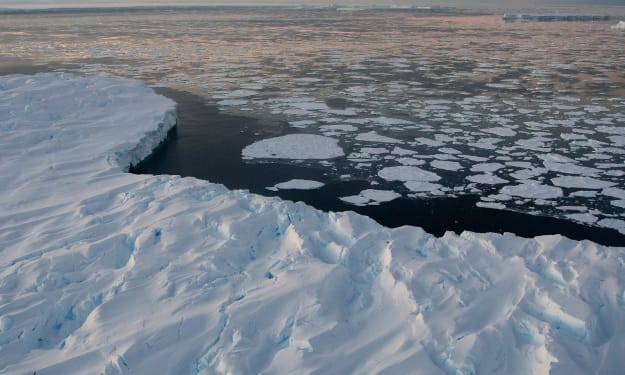
The Danger of Climate Change in Antarctica: A Growing Global Crisis. AI-Generated.
Antarctica, the ice continent that covers the southernmost tip of the Earth, has long been a symbol of an untouched wilderness that has not been touched by human hands. Its enormous glaciers, snow-covered scenery and remote location make it a mysterious and barely accessible area. However, in recent decades, Antarctica has become an important focus of global climate change conversations. The rapid warming of the region is not only surprising in itself, but has far more impact on the environment, ecosystems and human population groups around the world.
By jihad ahmedabout a year ago in Earth
Transforming Waste into Value: How We Recycle PET Bottles for Future Solutions
Around the globe, millions of plastic bottles are disposed of on a daily basis. The majority of these are made of PET (Polyethylene Terephthalate) which is a type of plastic that can easily be recycled. Used PET bottles might look like waste, but in reality, they have the prospect of transforming into something valuable. Through innovative recycling processes, today's discarded materials can be transformed into resources for the future.
By Rakshitam Ecofibreabout a year ago in Earth
Gaza on the Brink
Gaza on the Brink: A Deepening Humanitarian Crisis Amid Escalating Conflict The crisis in Gaza continues to escalate, with the Israel-Palestine conflict plunging into an increasingly devastating phase. As of May 2025, the region faces intensified Israeli military operations, a worsening humanitarian catastrophe, and mounting international concern. Global leaders are calling for urgent action to stem civilian suffering amid these grim developments. *Escalating Military Operations and Civilian Casualties Israeli forces have broadened their ground offensives and aerial bombardments across Gaza, targeting areas such as Khan Younis and Gaza City. These military actions have resulted in a sharp rise in civilian casualties, with Gaza’s Health Ministry reporting tens of thousands of Palestinians killed and over 100,000 wounded since October 7, 2023. Women and children bear the brunt of these losses. Recent strikes have hit displacement shelters, schools, and zones previously deemed safe, causing numerous fatalities in single incidents. The focus on Rafah—the site of over a million displaced Palestinians seeking refuge—has been particularly troubling. Israeli operations here aim to dismantle Hamas’s remaining strongholds and secure the release of hostages; however, they have wreaked havoc on the civilian population. In just the past few days, over 100,000 Palestinians have been displaced, escalating what was already a dire humanitarian situation. Satellite images from late 2024 indicated that nearly half of Rafah’s buildings had been damaged or destroyed; ongoing attacks are intensifying this destruction. *A Humanitarian Crisis of Unprecedented Proportions Gaza teeters on the brink of famine. Months of Israeli blockades have severely hampered access to essential supplies. While Israel has permitted limited aid entry recently, aid organizations and the UN describe it as insufficient—a mere “drop in the ocean.” - **Starvation and Malnutrition:** The Integrated Food Security Phase Classification (IPC) warns that Gaza’s entire population faces critical hunger risks, with many in emergency or catastrophic conditions. Thousands of children are at imminent risk of death from malnutrition, and numerous community kitchens have shut down due to lack of supplies. - **Healthcare Collapse:** Overwhelmed hospitals are running out of medicines and essential equipment. Many health facilities have been targeted or forced to close, leaving residents without adequate care for war injuries and routine health issues. - **Displacement and Lack of Safe Shelter:** Most of Gaza’s 2.3 million residents have been displaced multiple times, seeking refuge in overcrowded, unsanitary tents with little access to clean water, food, or medical services. For many, there is nowhere safe to seek refuge within the besieged enclave. * International Outcry and Diplomatic Efforts The world’s frustration and alarm are intensifying. Leaders from the UK, France, and Canada have issued a joint statement condemning ongoing Israeli military escalation, threatening sanctions if offensive operations persist and aid restrictions aren’t lifted. The UK has suspended trade talks with Israel and summoned its ambassador. The UN and numerous humanitarian organizations continue to call for an immediate ceasefire, safe and unrestricted humanitarian access, and adherence to international law. Concern over potential violations, including war crimes, is widespread. Despite efforts at mediation by the U.S., Qatar, and Egypt, a lasting ceasefire remains elusive. Hamas reaffirmed its demand for a ceasefire and full Israeli withdrawal, coupled with the release of remaining hostages—conditions rejected by Israeli Prime Minister Benjamin Netanyahu, who has vowed to continue the campaign until Hamas is defeated and all of Gaza is under Israeli control. *The Road Ahead The trajectory of the conflict indicates a deepening humanitarian disaster, demanding urgent international intervention to protect civilians and facilitate crucial aid deliveries. The prospects for regional stability and peace remain uncertain, with long-lasting implications that threaten to shape the geopolitical landscape for years to come.
By jubair hossainabout a year ago in Earth