Latest Stories
Most recently published stories in Earth.
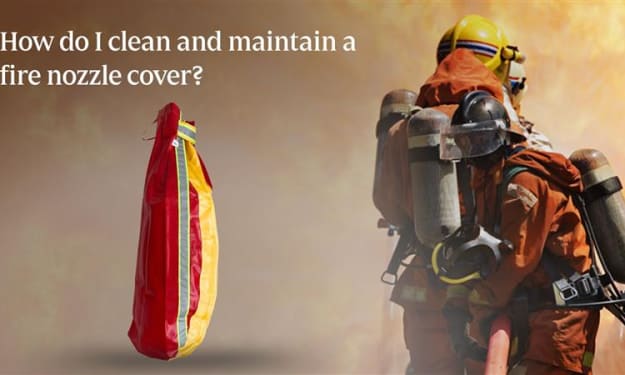
How do I clean and maintain a fire nozzle cover?
Introduction: Why Cleaning and Maintenance Matter Firefighting is a tough job. Every tool, hose, and nozzle must work perfectly in every emergency. But there is one piece of gear that often gets overlooked: the fire nozzle cover. A fire nozzle cover is not just a simple piece of fabric. It is the first line of defense for your most important firefighting nozzles and monitors. It keeps out rain, snow, dirt, and sun. But what happens when your cover gets dirty or worn out? That’s when cleaning and maintenance become very important.
By allweathernozzlecoverabout a year ago in Earth
Shielding Exposed Equipment from the Hazards of Corrosive Roadway Spray
Introduction: The Unseen Enemy on Every Road Every time a fire truck, rescue vehicle, or utility truck heads out on a call, the equipment mounted on the outside faces a silent but powerful enemy: corrosive roadway spray. This isn’t just water splashing up from the pavement. It’s a harsh, gritty mix of salt, chemicals, dirt, and debris that can quickly wear down even the toughest firefighting monitors, hoses, and outdoor machinery.
By allweathernozzlecoverabout a year ago in Earth
The Invisible Force That Anchors Life on Earth
Gravity, though invisible and often taken for granted, is one of the most fundamental forces governing our universe. Without it, there would be no planets, no oceans, and no atmosphere. Life, as we know it, wouldn't exist. This 1500-word exploration delves deep into the mechanics, significance, and mysteries of Earth's gravity, from Isaac Newton's groundbreaking insights to modern-day scientific perspectives.
By Md Muij Ahmedabout a year ago in Earth
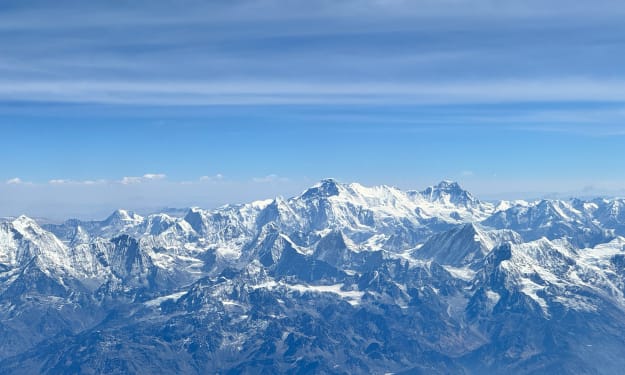
Gokyo Ri Trek Guide: A Peaceful Trail with Big Mountain Views
I have traveled many parts of the Himalayas as a guide and as someone who loves the mountains. But some treks feel more personal than others. Gokyo Ri Trek is one of those for me. It doesn’t get as much attention as Everest Base Camp, but it gives something very special peace, wide-open landscapes, and a feeling of walking through something pure and untouched.
By Anima Tamangabout a year ago in Earth
Where Should We Focus in 2025?
As climate change accelerates, 2025 marks a pivotal moment in our response to a warming world. From rising sea levels and record-breaking heatwaves to floods and wildfires, the consequences of climate change are no longer abstract predictions—they are part of our everyday reality. In this context, policymakers, scientists, and communities are faced with a crucial dilemma: Should we focus more on adapting to the effects of climate change or on mitigating its root causes?
By Iftekhar Islam Jihadabout a year ago in Earth
Where Is the Hottest Place in the Universe?
Have you ever wondered what the hottest place in the universe is? And what the actual temperature is—or was—at that location? When I used to hear that the fuel of Hell would be stones and humans, it left me puzzled. We’re used to thinking that fire needs wood to burn, so how could stones possibly ignite? How could rocks become fuel for fire? But once I began studying the universe, this mystery unraveled in the most astonishing way. I realized that the heat of burning stones can far surpass that of any wood-based fire. If you’re skeptical, like I once was, then this article is especially for you. Let’s begin with the basics. We know that water freezes at 0°C (32°F)—this is the freezing point for water, not for all substances. If something contains water molecules, it will solidify at this temperature. Now consider the average room you’re in right now—its temperature is probably around 25°C. The normal human body temperature is 37°C, and even a slight fluctuation can cause health issues, because our bodies are finely tuned to operate at this range. The highest temperature ever recorded on Earth's surface is 56.7°C (134°F), and water boils at 100°C. These are familiar figures—but the temperatures we’re about to explore go far beyond anything we encounter in daily life. Let’s venture beyond Earth. The closest planet to the Sun is Mercury. Thanks to NASA’s space missions, we now know that Mercury can reach temperatures of up to 427°C. However, it's Venus, the second planet from the Sun, that holds the title of the hottest planet in our solar system, with surface temperatures around 462°C. This is due to its thick atmosphere, which traps heat through a runaway greenhouse effect. Let’s go hotter. Molten lava, which emerges from Earth’s volcanoes, can reach temperatures of around 1,200°C. That’s hot enough to melt many metals. For instance, iron melts at 1,538°C, and beyond that, it can vaporize into gas. Imagine temperatures where solid metals behave like steam. Now let’s look at our Sun. The surface of the Sun burns at approximately 5,500°C, while the core—the heart of the Sun where nuclear fusion takes place—reaches a staggering 15 million°C. That’s fifteen million degrees Celsius. Hard to imagine, right? But the universe still has more surprises. When a massive star reaches the end of its life, it undergoes a supernova explosion—a violent burst of energy that marks the star's death. During this cataclysmic event, temperatures can soar up to 550 million°C. That’s 550,000,000 degrees Celsius. To put this in perspective, we humans struggle with 50°C weather, and here we’re talking about over ten million times hotter. Yet the story doesn’t end here. Next comes the neutron star—one of the densest and most mysterious objects in the universe. When a massive star collapses under its own gravity after a supernova, it can form a neutron star. The heat generated during this process is almost unimaginable: 12 billion°C (12,000,000,000 degrees Celsius). That’s billion with a ‘B’—making neutron stars some of the hottest known objects in the current universe. And still, we’re not at the ultimate temperature. To find the hottest point ever, we need to go back in time—to the birth of the universe itself. According to the Big Bang theory, all matter, energy, time, and space were compressed into an infinitely small, dense point known as a singularity. The universe as we know it began from this singularity in a colossal burst around 13.8 billion years ago. Now, brace yourself. Scientists estimate that at the exact moment of the Big Bang, the temperature of this singularity reached an incomprehensible 142 nonillion°C. That’s 142 followed by 30 zeros: 142,000,000,000,000,000,000,000,000,000,000°C This is called the Absolute Hot—the highest possible temperature in theoretical physics. At this point, our current laws of physics break down. Temperatures beyond this are not just unknown—they are unknowable with current science. This figure marks the upper limit of thermal energy. Beyond this, our equations, our theories, and our understanding cease to function. No object or environment in our universe—or any universe we can currently theorize—has ever reached a temperature higher than this. Final Thoughts What began as a simple curiosity about how rocks can burn led us on a breathtaking journey through space, time, and science. From volcanic lava to supernovae, from neutron stars to the very origin of the cosmos, the range of temperatures in our universe is staggering. So the next time you feel the heat of a summer’s day, remember—you’re only scratching the surface of what the universe is capable of. The hottest place in the universe isn’t a planet or a star. It’s a moment—a flashpoint in time when everything began. And that moment burned hotter than anything we can truly comprehend. ---
By Umair Khanabout a year ago in Earth
Greeny and the Heart of Mount Everest
In a world where nature’s magic weaves through every leaf and stone, there lives a small but brave guardian named Greeny. Greeny isn’t just any creature—part leaf, part forest spirit—whose heart beats in tune with the wild. His home is the peaceful Mossglade forest, where the trees whisper secrets and the streams sing melodies. But when a mysterious shadow spreads across the forest, Greeny hears a call unlike any before—a call from the highest mountain on Earth: Mount Everest is located in the Himalayan mountain range on the border between Nepal and the Tibet Autonomous Region of China.
By aadam khanabout a year ago in Earth