Television
Rick and Morty. Runner-Up in The Most Overrated Challenge.
Rick and Morty has garnered a lot of attention since its very first episode. When you think of a Rick and Morty fan you may picture a rabid jake storming McDonald's locations for sauce cups. I started off with a resonable level of interest, not attacking fast-food workers for less than an ounce of sauce, but I really appreciated the creative, intricate plots. As I remember more of the abuse I endured as a child, I have quickly become completely intolerant of the show.
By K.B. Silver 2 months ago in Critique
The Key, the Goddess, and the Abdication of Reason: Why BUFFY THE VAMPIRE SLAYER Season Five Is Overpraised
There is a peculiar standard by which works of popular art are sometimes praised: the more misery they inflict upon their characters, the more profound they are assumed to be. A heroine cries; therefore the writing is "mature." A family collapses; therefore the season has "depth." A supernatural mythology grows more arbitrary; therefore the story has become "epic." A character behaves irrationally; therefore he has become "complex."
By ANTICHRIST SUPERSTAR2 months ago in Critique
House of Dragon, S3, yawn
Game of Thrones was an enthralling HBO series with characters you grew to love, only to have the writers kill them off. I gasped aloud when Ned Stark was beheaded. His daughter, Arya, was a fighter and survived many challenges. Cersei was so evil I wanted to strangle her and her horrid son myself. She was so cruel and cunning, yet I felt sorry for her during her naked walk of shame. Tyrion Lannister was always fun to watch and see the scheming he did. Cersei was cruel to him, her brother.
By Andrea Corwin 2 months ago in Critique
Attack on Titan: The Masterpiece That May Have Outgrown Its Own Story
Few anime have created expectations as enormous as Attack on Titan. When the series began, its premise was almost brutally simple: humanity lives behind enormous walls, terrified of giant humanoid creatures called Titans. People are dying, the world seems hopeless, and a young boy named Eren Yeager dreams of freedom beyond the walls.
By Takashi Nagaya2 months ago in Critique
Neon Genesis Evangelion: A Masterpiece We May Have Overrated
There are certain works of art that become bigger than the work itself. People stop simply watching them, reading them, or listening to them. Instead, they begin studying them. They create theories, explain symbols, argue about hidden meanings, and build entire communities around the question of what the creator really meant.
By Takashi Nagaya2 months ago in Critique
Small Prophets
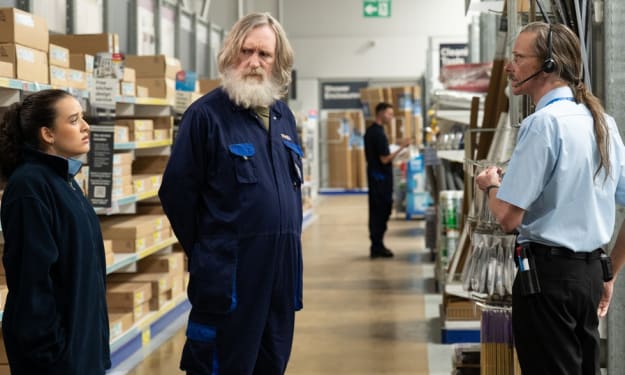
Introduction I enjoyed Mackenzie Crook's first series, "Detectorists" which I wrote about here: So when "Small Prophets" was announced, I was obviously tempted and was glad I was. If you have access to the BBC's iPlayer, you can watch it here:
By Mike Singleton 💜 Mikeydred 5 months ago in Critique
Spectacle, Dignity, and Representation in Dangerously Obese and My 600-lb Life
A comparison of Dangerously Obese and My 600-lb Life reveals significant differences in the ways each program frames the people it portrays. Although both focus on extreme obesity, they construct viewer perception in markedly different ways, encouraging audiences to regard participants either as complex individuals or as objects of spectacle. My 600-lb Life frequently employs sad music, voiceover, and intimate scenes such as bathing or struggling with daily tasks, techniques that can transform the participant’s body and suffering into spectacle rather than context. The program also centres highly vulnerable individuals who may view participation as a last resort to improve their health and survive, which may help explain why its dietary regimen is presented as particularly severe.
By Sarah Xenos5 months ago in Critique
Authorship vs Refinement
Much of the confusion surrounding artificial intelligence and writing comes from a failure to distinguish between two fundamentally different acts: originating ideas and refining their expression. These acts are often treated as interchangeable, as though whoever touches the final form must also be the source of the thought itself. That assumption does not reflect how writing has ever worked, nor does it reflect how human thinking actually unfolds.
By Peter Thwing - Host of the FST Podcast5 months ago in Critique