Structure
Productivity as Preservation
Productivity is often framed as the visible accumulation of outcomes. Words written, posts published, episodes released, metrics improved, engagement gained, and projects completed become the evidence that work has happened. Under this framing, anything that does not immediately result in external output is treated as inefficiency, distraction, avoidance, or delay. The productive person is assumed to be the person who can show visible results.
By Peter Thwing - Host of the FST Podcast5 months ago in Critique
Output vs Oversaturation
The Fear of Adding to the Noise The modern anxiety around oversaturation is not unfounded. People are surrounded by more words, videos, opinions, explanations, reactions, and interpretations than they can meaningfully absorb. In that environment, producing more content can feel irresponsible or self-defeating, as though adding anything further only contributes to the noise. This concern often causes thoughtful people to hesitate. They hold back ideas, not because the ideas lack value, but because they fear that volume itself will devalue what they have to say.
By Peter Thwing - Host of the FST Podcast5 months ago in Critique
Created Risk, Inherited Risk, and the Moral Line We Keep Erasing (A Society That Tells the Truth: Chapter 3)
The Distinction Modern Rules Refuse to Make One of the quiet failures of modern rule making is the refusal to clearly distinguish between risk created by choice and risk inherited by existence. When this distinction collapses, responsibility becomes confused, guilt spreads outward indiscriminately, and ordinary behavior is treated as morally suspect. This is not a minor philosophical oversight. It is the foundation beneath many of the injustices people now experience in public life, from transportation and health policy to everyday regulation and enforcement. When systems fail to differentiate between what someone causes and what simply exists, moral clarity erodes at every level.
By Peter Thwing - Host of the FST Podcast5 months ago in Critique
A Lesson Not Learned
At the time of this article's writing, there is a rather strong push against President Trump in the United States. The reason for this pushback is due to a lot of factors that happened early in the year 2026, and I don't have time to go through all of them right now. I will talk about some of them, but more importantly, what I want to talk about is why this phenomenon is happening, how it's happened before, and why it's important to remember what happened for the future.
By ChampionElCid5 months ago in Critique
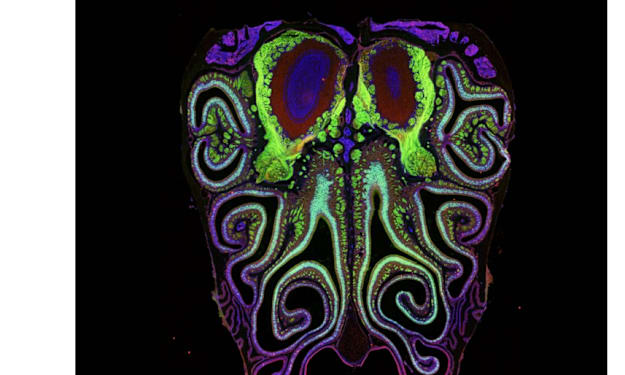
The first-ever "smell map" fills in the gaps about how olfaction functions.
One of those senses that most people hardly notice until it goes away is smell. It offers crucial alerts regarding smoke, spoilt food, and other potentially dangerous situations. In addition to influencing flavour and evoking memories, our sense of smell has the power to completely alter a moment's mood.
By Francis Dami5 months ago in Critique
One Piece
Introduction This is another series I thought I would try out, as it had a high IMDB score and looked interesting. As usually I was not initially impressed. Because of its anime/manga origins (the cartoon is also on Netflix, and it dumped me into that when I thought I was continuing with the series).
By Mike Singleton 💜 Mikeydred 5 months ago in Critique
You Brought a Pen, I Brought Glasgow
So here's the thing. I have another piece waiting in the wings of my brain about challenges on Vocal and in general—about the thoughts we have on winning and losing. My own thoughts as well. But I remembered this challenge from Harper. And given my love for ISIS—irony, sarcasm, being an iconoclast and subversive—I could not resist. Yeah. I dropped an ISIS acronym joke. Let’s look at what Harper has asked of us:
By Paul Stewart6 months ago in Critique
The Addams Family - TV Series
As a kid, The Addams Family was a favourite of mine, not as obvious as The Munsters but delightfully subversive. As an adult I bought the DVD and was not impressed with the picture quality, but five minutes into the first episode that didn't matter. Astin, Jones & Co Perfection.
By Mike Singleton 💜 Mikeydred 6 months ago in Critique
Mapping vs Listing
Much of what gets labeled as rambling is actually a mismatch between how ideas are structured internally and how they are expected to be presented externally. Many environments reward listing, where ideas are arranged in clean sequences, bullet points, or linear arguments that move from premise to conclusion in a predictable order. This structure works well for certain kinds of reasoning, particularly when problems are discrete and conclusions are already known. It does not work as well for reasoning that depends on relationships, causality, or pattern recognition across multiple domains. When relational thinkers speak, they are often navigating a different internal structure altogether, and that difference is frequently misunderstood.
By Peter Thwing - Host of the FST Podcast6 months ago in Critique