Character Development
When Nostalgia Isn't Enough: Reflecting on The Devil Wears Prada 2
When I first heard whispers of a sequel to The Devil Wears Prada, my excitement was through the roof. The original film had left a lasting mark on me – it wasn’t just about glitz and glamour, but also about ambition, self-discovery, and those razor-sharp exchanges between Andy and Miranda. Seeing the trailer for the second instalment stirred up all those old feelings, especially the scene where Andy walks into the Runway office for the first time, echoing her iconic entrance from the original. It felt like the filmmakers were banking on recreating that awe, but the déjà vu set in quickly – the trailer showcased Andy awkwardly navigating the bustling office, almost a shot-for-shot repeat, which left me wondering whether the sequel had anything new to offer.
By Sarah Xenos6 months ago in Critique
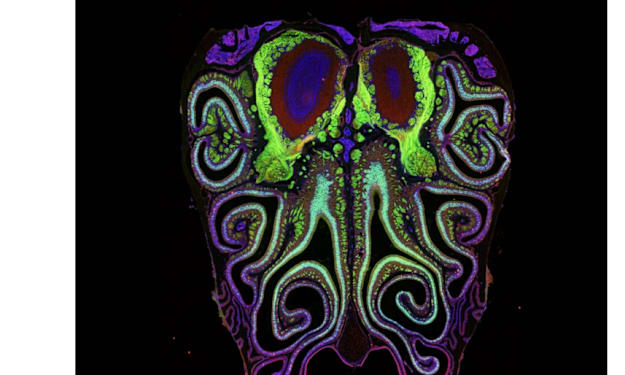
The first-ever "smell map" fills in the gaps about how olfaction functions.
One of those senses that most people hardly notice until it goes away is smell. It offers crucial alerts regarding smoke, spoilt food, and other potentially dangerous situations. In addition to influencing flavour and evoking memories, our sense of smell has the power to completely alter a moment's mood.
By Francis Dami6 months ago in Critique
Hollywood's Disability Problem Isn't Talent. It Never Was.
Hollywood has a habit of celebrating progress on disability representation without making it permanent. Every few years a film breaks through, a moment lands, and the conversation starts again — only to fade before anything structural changes.
By Jay Ruderman6 months ago in Critique
Why Modern Movies Feel Empty (Even When They’re Technically Perfect)
Modern cinema has never looked better. We have sharper cameras, bigger budgets, seamless CGI, and directors who understand pacing and structure better than ever before. On paper, we are living in a golden age of technical filmmaking.
By Mariana Farias6 months ago in Critique
You Brought a Pen, I Brought Glasgow
So here's the thing. I have another piece waiting in the wings of my brain about challenges on Vocal and in general—about the thoughts we have on winning and losing. My own thoughts as well. But I remembered this challenge from Harper. And given my love for ISIS—irony, sarcasm, being an iconoclast and subversive—I could not resist. Yeah. I dropped an ISIS acronym joke. Let’s look at what Harper has asked of us:
By Paul Stewart7 months ago in Critique
Mapping vs Listing
Much of what gets labeled as rambling is actually a mismatch between how ideas are structured internally and how they are expected to be presented externally. Many environments reward listing, where ideas are arranged in clean sequences, bullet points, or linear arguments that move from premise to conclusion in a predictable order. This structure works well for certain kinds of reasoning, particularly when problems are discrete and conclusions are already known. It does not work as well for reasoning that depends on relationships, causality, or pattern recognition across multiple domains. When relational thinkers speak, they are often navigating a different internal structure altogether, and that difference is frequently misunderstood.
By Peter Thwing - Host of the FST Podcast7 months ago in Critique
Falling Between Every System
Modern social systems are often described as safety nets. Employment law protects workers. Healthcare programs provide treatment. Disability benefits replace lost income. Unemployment insurance bridges job loss. Each system is presented as a safeguard designed to catch people when life disrupts their ability to function normally. Yet for many people living with disability, chronic illness, or injury, the lived experience is the opposite. Rather than forming a net, these systems stack vertically, each with its own eligibility rules, thresholds, and assumptions. Instead of catching the fall, they create gaps. People do not slip through because they failed to try. They fall because the systems were never designed to align.
By Peter Thwing - Host of the FST Podcast7 months ago in Critique
Customer Service . Content Warning.
Ever wake up to a bunch of illegitimate fees? Bank, phone company, car rental, airline, credit card, utility company, etc.? It happens to everyone. And when it does, we call customer service, possibly further infuriated by annoying robot systems designed to keep you from speaking to a real person and impossibly long wait times once you’re allowed to enter the queue of angry customers demanding service. It’s exasperating.
By Harper Lewis 7 months ago in Critique