
Why Modern Movies Feel Empty (Even When They’re Technically Perfect)
Great visuals, flawless pacing, strong casts—so why do so many films leave nothing behind?

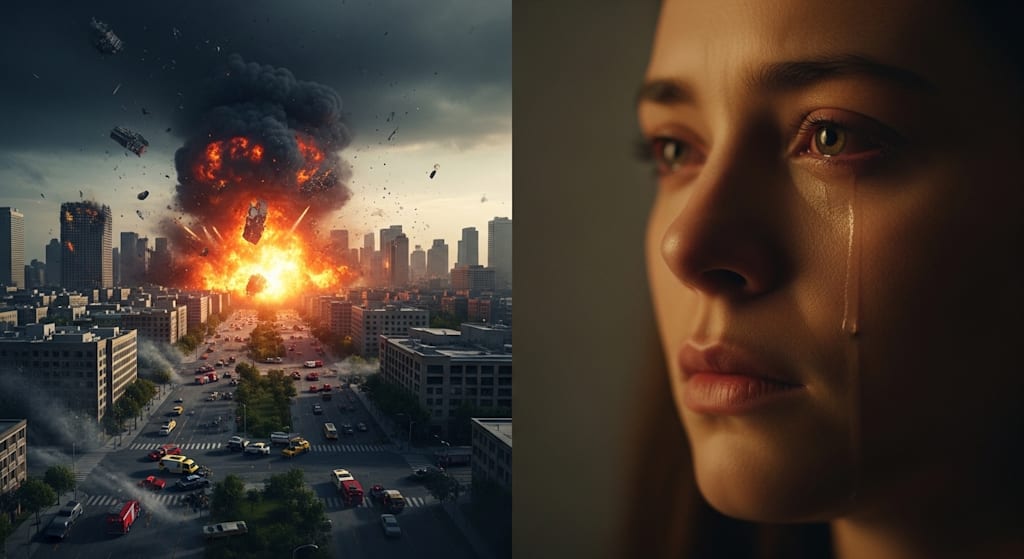
Modern cinema has never looked better.
We have sharper cameras, bigger budgets, seamless CGI, and directors who understand pacing and structure better than ever before. On paper, we are living in a golden age of technical filmmaking.
And yet—something feels missing.
You finish a movie, sit through the credits, and instead of lingering emotion or thought, there’s just… silence. Not the good kind of reflective silence. The empty kind. The kind where you struggle to remember what you just watched even though nothing was “wrong” with it.
So what happened?
The uncomfortable answer is this: many modern movies are optimized, not expressed.
They are built to function efficiently across global audiences, streaming platforms, algorithmic recommendations, and franchise ecosystems. In that process, they often lose something harder to quantify—personality.
A film used to feel like it had a point of view.
Even when it failed, you could sense a human hand behind it. A bias. A risk. A strange creative decision that didn’t always “work” but made the film memorable.
Now, many films feel like they are designed to offend no one, confuse no one, and alienate no one.
And in trying to achieve that universal appeal, they become emotionally neutral.
The problem isn’t lack of talent. It’s over-optimization.
Writers are often working within established formulas. Studios prioritize intellectual property over originality because IP reduces financial risk. Streaming platforms reward content that keeps viewers engaged just long enough to move to the next title.
So storytelling becomes less about expression and more about retention.
And that shift matters.
Because retention-based storytelling changes what gets made in the first place.
Think about how many modern films are structured: clean arcs, predictable emotional beats, familiar character archetypes. Everything is carefully designed to ensure the viewer never feels lost, never feels challenged for too long, never feels uncomfortable in a way that risks disengagement.
But discomfort is often where meaning lives.
Older films weren’t always better, but they were often more willing to sit in ambiguity. They trusted the audience more. They allowed silence. They allowed confusion. They allowed endings that didn’t neatly resolve everything.
Today, resolution is almost mandatory.
Even when a story could end on uncertainty, it often doesn’t. It circles back, explains itself, or adds dialogue that clarifies what was already emotionally understood.
It’s not that clarity is bad. It’s that forced clarity removes interpretation—and interpretation is where viewers form emotional ownership of a story.
Another issue is aesthetic inflation.
Because production quality has increased so dramatically, visual excellence is no longer distinctive. Every film looks polished. Every frame is color-graded. Every sequence is carefully lit and composed.
When everything looks expensive, nothing feels special.
Visual beauty alone can no longer carry emotional weight the way it once did. It becomes background expectation rather than impact.
So filmmakers compensate by increasing scale—bigger explosions, larger universes, higher stakes.
But scale is not the same as depth.
A film about the end of the world is not automatically more meaningful than a film about two people in a room. In fact, the opposite is often true. The more a story expands outward, the harder it becomes to stay emotionally grounded.
And yet expansion is what the industry rewards.
Franchises grow. Universes connect. Spin-offs multiply. Every successful idea becomes a system rather than a standalone expression.
Even storytelling itself begins to feel modular.
The irony is that audiences are not actually rejecting complexity or originality. Some of the most celebrated films and series in recent years are those that take narrative risks or slow down to explore character psychology in detail.
So the issue isn’t demand.
It’s what gets consistently produced at scale.
There’s also a deeper cultural factor at play: the pressure to be universally “relatable.”
Relatability sounds positive, but it often flattens specificity. In trying to make characters broadly accessible, writers sometimes remove the very details that make them feel real.
Real people are not universally relatable. They are specific, contradictory, and occasionally alienating.
But specificity is risky. It can divide audiences. And division is something modern distribution systems are designed to avoid.
So characters become smoother. Safer. More interchangeable.
The result is stories that are easy to watch but hard to remember.
And that might be the clearest symptom of all: modern movies are rarely difficult to experience, but increasingly difficult to recall.
We don’t walk away thinking about them—we just move on.
This is not a call for nostalgia or a claim that “movies used to be better.” Every era has its forgettable films. But the structural incentives shaping today’s industry are different in ways that matter.
When storytelling becomes a product optimized for engagement metrics, it risks losing the friction that makes art stick in the mind.
Because sometimes, what stays with us is not what is smooth or perfect—but what unsettles, lingers, or refuses to fully explain itself.
And maybe the real question isn’t why modern movies feel empty.
Maybe it’s whether we’ve built a system that accidentally filters out the very imperfections that once made them feel alive.
About the Creator
Enjoyed the story? Support the Creator.
Subscribe for free to receive all their stories in your feed.
Comments
There are no comments for this story
Be the first to respond and start the conversation.