
The Wu Kai Case: When Abandonment Gets Called “Intentional Injury”
A man was beaten, kicked unconscious, covered with dry grass, and left on a mountain. The court says there was no intent to kill. The reasoning still has a gap.
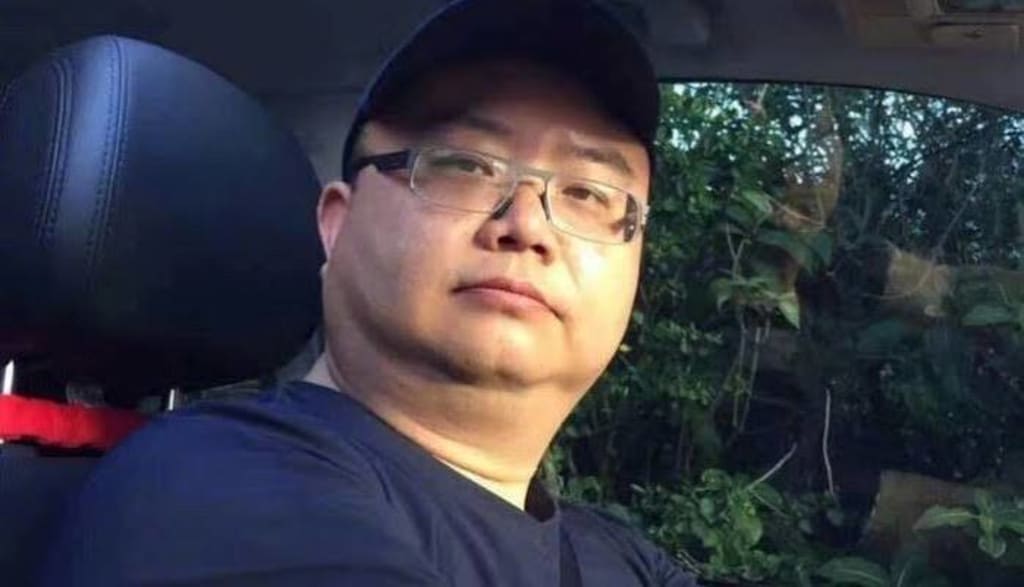
The Wu Kai case angers people for a reason that is easy to state and hard to answer. A man who had spent months exposing telecom fraud in northern Myanmar was abducted by people posing as police, beaten, had his fingernails pulled out, kicked unconscious, covered with dry grass, and left on a mountain in Jiangxi. He died there. Zhao Bing, the man who did the hands-on work, was convicted of intentional injury and sentenced to death with a two-year reprieve. “Major,” the person who paid for the operation, has not been identified. The public’s question is plain: if you beat a man half to death and leave him in the wilderness, how can a court say there was no intent to kill?
The court’s answer is that Zhao Bing was completing a task. The task was to abduct, interrogate, and delete posts. It was not to kill. In the court’s reading, Zhao Bing intended injury, pressure, and humiliation. He did not intend death. Death came as a consequence of the beating, not as its goal.
That reading has a basis in practice. In criminal law, the line between direct intentional homicide and intentional injury causing death turns on what the actor pursued. Zhao Bing kicked Wu Kai unconscious, covered him with dry grass, photographed him, reported to “Major,” and left. The court called this “letting death happen,” which is indirect intent, not direct pursuit. Cases of indirect intent often receive a suspended death sentence more readily than cases where the actor openly sought death. The court did not ignore the abandonment. It placed the conduct inside a charge that carries the same maximum penalty as intentional homicide.
The problem is that the charge may not carry the whole conduct. A lawyer’s commentary on the judgment put it carefully: the prosecution had argued that Zhao Bing accepted the risk of death, and there was room to find intentional homicide. The judgment landed on intentional injury. The charge, the lawyer wrote, “carries less of the normative evaluation.” That is a restrained way of saying the court chose the safer path. Safe is not the same as complete.
Look at what Zhao Bing did before the final night. He saw a bounty on Telegram and took the job. He negotiated the reward from 300,000 yuan to 1 million. He gathered people. He scouted the area around Huizhou. He bought cars for the operation. He followed Wu Kai to a parking lot. His men posed as police and took Wu Kai away. He changed locations. He changed vehicles. He beat Wu Kai on one slope, then another. He took orders from “Major” and sent back photographs. Each step was a choice. Each step could have stopped. None did.
A person who covers an unconscious man with dry grass on a mountain, photographs him, and leaves does not need a law degree to know what may happen next. He knows the man needs a hospital. He knows the man cannot call for help. He knows the grass will hide the body from anyone walking past. This is not negligence. It is not overconfidence. It is knowledge of extreme danger plus a decision to cut off rescue.
The court’s sentencing section includes three factors that soften the result: the charge is intentional injury rather than intentional homicide; Wu Kai’s high blood pressure played a secondary role in death; and Zhao Bing confessed. Each factor has legal weight. Together they create a gap between what the court says about the crime and what it does to the people who committed it.
The high blood pressure point is the clearest example. At most it says death had more than one cause. It does not make Zhao Bing less responsible for creating the conditions of death. A man with hypertension who is beaten, kicked unconscious, and abandoned on a mountain is still a man who was beaten, kicked unconscious, and abandoned. The medical detail belongs in the causation analysis. It should not migrate into the mitigation analysis as if it says something about Zhao Bing’s mind.
The second-instance court also said something important: Wu Kai was targeted because he kept publishing information about telecom fraud in northern Myanmar. Crimes against anti-fraud voices are socially harmful and should be punished strictly. The court refused to accept the forgiveness agreement. That refusal matters. It removes one route to a lighter sentence. But the final sentence is still a suspended death sentence. The public is left to ask where the strictness went. Was it in the charge? In the refusal of the agreement? In the word “death” inside “suspended death”? The judgment does not build the bridge.
Then there is “Major.” The court documents do not name him. Xie, who was arranged to take Wu Kai’s phone, is still at large. This is the larger hole in the case. Zhao Bing was the hand. “Major” was the brain. He posted the bounty. He named the target. He supplied the address, the photographs, and the license plate. He demanded the posts be deleted. He raised the price. He gave real-time instructions. Zhao Bing sent him photographs after each beating. When “Major” said continue, Zhao Bing continued. When “Major” said move, Zhao Bing moved.
Under joint crime theory, that is not mere encouragement. It is organization. The person who pays, plans, selects the target, and directs the violence can be a principal offender. His responsibility does not shrink because he never touched Wu Kai. If anything, it grows because he set the machine in motion and kept it running.
This matters for the next trial. If Zhao Bing can exchange “no premeditated killing,” “confession,” and “compensation” for a suspended death sentence, then “Major” will arrive with a ready argument: I never wanted death. I only asked for an interrogation and a deletion. The death was the implementer’s excess. That argument should not work. The person who buys the violence owns the foreseeable results of the violence. When the violence escalates and the buyer keeps paying and directing, the buyer is inside the chain, not outside it.
The Wu Kai judgment answers the elements of a charge. It does not answer the ordinary question that any reader brings to the facts. A man was beaten, kicked unconscious, hidden under dry grass, and left to die. The court says the men who did this did not intend to kill. Maybe the law can draw that line. The judgment still has to explain why the line holds when the abandonment is total, when the victim is helpless, and when the operation was paid for, directed, and extended by a person still free.
A suspended death sentence is not impunity. That point is true and insufficient. The public is not demanding a particular verdict. It is demanding a reasoning that fits the acts. Until “Major” is tried, the case is not closed. Zhao Bing’s sentence is one part of the story. The part that explains the money, the instructions, and the target is still missing.
About the Creator
Jin
Writer of reamstories
https://reamstories.com/jin
Enjoyed the story? Support the Creator.
Subscribe for free to receive all their stories in your feed. You could also become a paid subscriber, letting them know you appreciate their work.
Comments
There are no comments for this story
Be the first to respond and start the conversation.