
The Violin That Kept Him Alive
How Joseph Feingold Carried Music Through the Holocaust — And Into Another Life

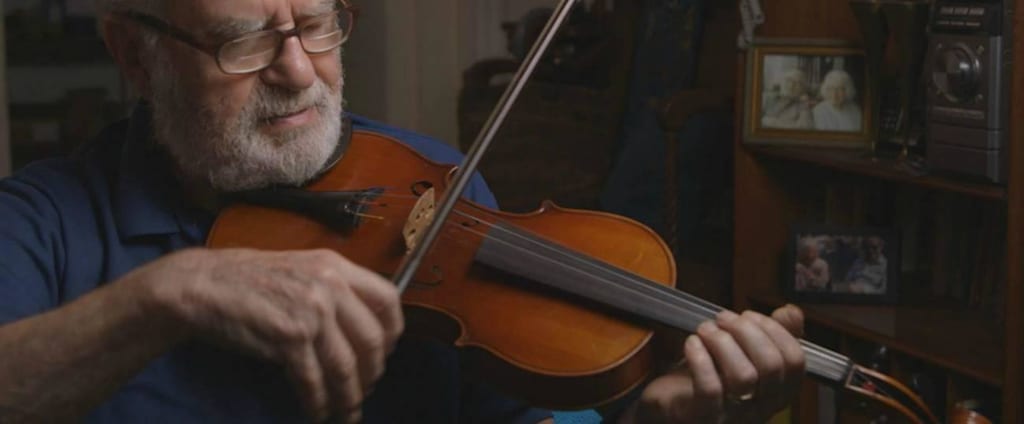
In the winter silence of postwar Germany, a starving young man wandered through a flea market carrying almost nothing. No home. No country. No mother. No childhood. Only survival. Then he saw the violin. It rested inside an old case, forgotten among the wreckage of a continent that had just finished tearing itself apart. The young man — a 23-year-old Holocaust survivor named Joseph Feingold — traded a carton of American cigarettes for it. Years later, he would still remember that moment with astonishing clarity. Because that violin did more than play music. It saved him.
Before the Camps, There Was Music Joseph Feingold was born in Poland in 1923, into a Jewish family where music flowed naturally through daily life. His mother sang. Instruments filled the house. Young Joseph learned violin as a child, and for a brief moment, life resembled something gentle. Then came 1939. The Nazis invaded Poland from the west. Soviet forces stormed in from the east. Europe collapsed into terror almost overnight. Jewish families disappeared behind barbed wire and smoke. Joseph was only seventeen when his world shattered. To escape Nazi extermination, he fled eastward with his father into Soviet-controlled territory. Instead of safety, they encountered another nightmare. Soviet authorities arrested him and sent him to a Siberian labor camp. He would spend six and a half years there.
Siberia: A Different Kind of Hell The Nazi death camps were machines of industrial murder. Siberian labor camps destroyed people more slowly. The cold itself became a weapon. Prisoners hauled timber through frozen wastelands where temperatures plunged far below zero. Hunger hollowed bodies until bones pressed through skin. Men collapsed into snow and never stood again. Disease spread silently through overcrowded barracks thick with despair. ([Tablet Magazine][3]) Joseph survived through endurance alone. Every day became primitive: Find food. Stay warm. Keep breathing. And all the while, somewhere beyond the frozen forests, the Holocaust continued consuming Europe. His mother and younger brother were eventually murdered at Treblinka extermination camp. There would be no reunion. No goodbye. Only absence. One of the last things Joseph received from his mother was a hopeful message quoting “Solveig’s Song,” a piece of music promising that loved ones would meet again someday. That promise haunted him for the rest of his life.
After the War, Europe Still Hated Jews When World War II ended, many survivors imagined liberation would bring peace. Instead, they found ruins. Joseph returned west after surviving Siberia, only to discover that antisemitic violence had not disappeared with Hitler’s defeat. In 1946, the infamous Kielce pogrom erupted in Poland, where dozens of Jews were murdered by mobs after the Holocaust had supposedly ended. Survivors who had escaped death camps realized they still were not safe. Europe’s hatred had survived the war. Joseph fled again — this time to a displaced persons camp in Germany. Imagine the cruelty of that irony: A Jewish survivor forced to rebuild his life on German soil after the Holocaust. It was there, among black markets and refugee camps filled with broken families, that he found the violin.
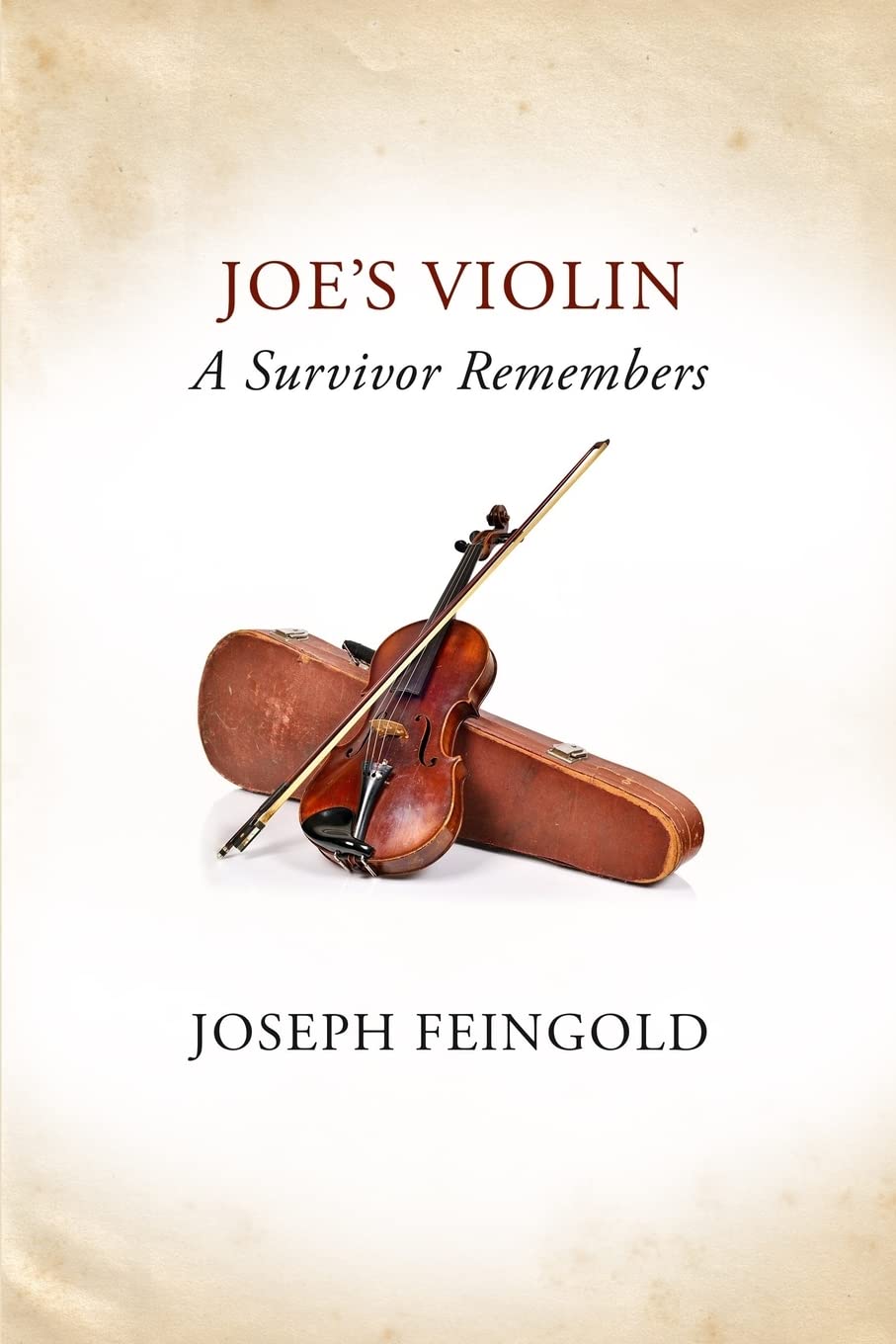
A Carton of Cigarettes for a Future The violin cost him a carton of American cigarettes — one of the most valuable currencies in ruined postwar Germany. To anyone else, it was just an instrument. To Joseph, it was resurrection. For the first time in years, he could touch something that belonged to his old life. He walked the streets playing music again. Classical melodies echoed through refugee camps crowded with survivors carrying memories too painful to speak aloud. The violin became proof that the Nazis had failed. They had taken his family. His country. His youth. But not his humanity.
America Could Not Erase the Past Joseph immigrated to the United States in 1948 and eventually became an architect in New York City. He married, built a life, and carried the violin with him for decades. But survival is not the same as healing. Holocaust survivors often describe trauma as something permanent — not a wound that closes, but one stitched into everyday existence. The violin became Joseph’s companion through grief, memory, and aging. For nearly seventy years, he played it. Sometimes for joy. Sometimes for remembrance. Sometimes because music said what language never could.
The Day His Hands Failed Old age eventually stole what war could not. Joseph’s fingers became stiff. His arms weakened. He could no longer produce the sound he wanted. For a musician, that loss can feel like a second death. Then, in 2014, he heard about a New York instrument drive organized by WQXR, collecting instruments for underfunded schools. At ninety-one years old, Joseph boarded a bus carrying the violin that had traveled with him from the ashes of Europe. And he gave it away. Not because it no longer mattered. Because it mattered too much to die with him.
A Girl From the Bronx The violin eventually reached Brianna Perez, a young student from the South Bronx attending the Bronx Global Learning Institute for Girls. She was twelve years old. The daughter of Dominican immigrants. Living in one of the poorest congressional districts in America. And somehow, through a century-old instrument scarred by war, her life collided with Joseph Feingold’s. When Brianna learned the violin’s history, she understood immediately that she was holding more than wood and strings. She was holding memory. Legacy. Survival. At one meeting, she played “Solveig’s Song” for Joseph — the same song tied forever to his murdered mother’s final message. The old man sat in silence. Not because he had nothing to say. Because grief that deep cannot always survive words.
The Documentary That Broke Hearts Worldwide Filmmaker Kahane Cooperman turned the story into the acclaimed documentary Joe's Violin, which premiered at the Tribeca Film Festival and later earned an Academy Award nomination. The film resonated because it captured something rare: A Holocaust story not only about death — but continuation. Not only about brutality — but inheritance. The violin became a bridge between generations separated by nearly eighty years. One survived history’s darkest atrocity. The other inherited its memory through music.
The Instrument That Outlived Evil Millions died during the Holocaust. Entire bloodlines vanished forever. Yet somehow, one violin survived. It crossed Siberian labor camps. Refugee settlements. Postwar Germany. The Atlantic Ocean. Seven decades of memory. And eventually landed in the hands of a child who had not even been born when Joseph Feingold first picked up a bow. That is the terrifying truth about survival: Sometimes survival is not loud. Sometimes it is simply refusing to let beauty disappear. Joseph Feingold lost almost everything to the twentieth century’s greatest horror. But the Nazis failed to destroy the music. And in the trembling hands of a young girl in the Bronx, the violin began to sing again.
Author's Note:
Various news portals and articles were used as a source for information to compile this article.
Did you like this article? How about you read my other works too?
About the Creator
E. hasan
An aspiring engineer who once wanted to be a writer .
Enjoyed the story? Support the Creator.
Subscribe for free to receive all their stories in your feed.
Comments
There are no comments for this story
Be the first to respond and start the conversation.