
The Lawson Family Murders
The Christmas Day Massacre Almost A Century Ago Still Feels Unimaginable

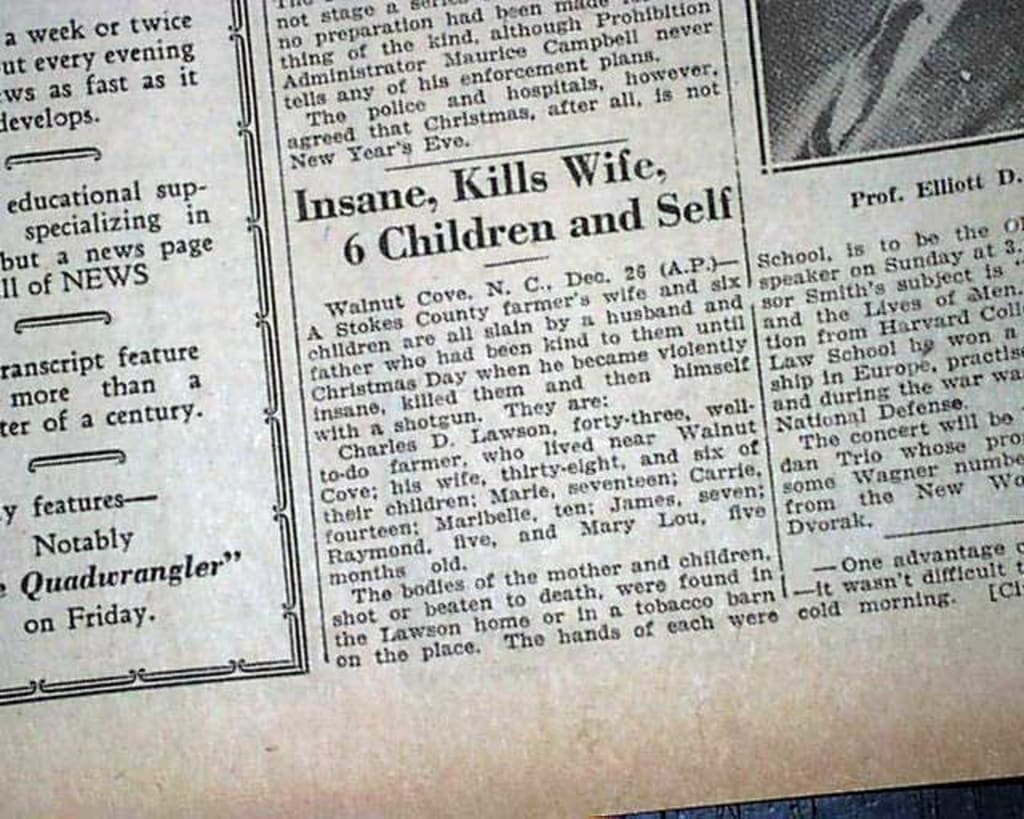
On Christmas Day in 1929, the Lawson family home stood quiet beneath the cold skies of rural North Carolina. Frost clung to the fields. Smoke drifted lazily from chimneys across the countryside. Families gathered around tables, children unwrapped gifts, and church bells echoed through the hills. Inside the Lawson farmhouse, however, something monstrous was already unfolding. Before the day was over, seven members of the family would lie dead. And the man responsible — respected farmer and father Charlie Lawson — would leave behind one of the most chilling true crime mysteries in American history. Even now, nearly a century later, the case continues to disturb investigators, historians, and readers alike because of one terrifying question: Why did he do it?
A Family Preparing for Christmas The Lawson family lived in the small farming community of Germanton, North Carolina. By all outward appearances, they were ordinary working people trying to survive during the harsh years leading into the Great Depression. Charlie Lawson was known as a strict but hardworking man. He and his wife, Fannie Lawson, raised several children in a cramped tobacco farm home. Money was scarce, but in December of 1929, something seemed unusually different. Just days before Christmas, Charlie took the family into town for a rare shopping trip. He bought new clothes for everyone. Photographs were taken of the children — an expensive luxury for a poor farming family. Witnesses later recalled that Charlie appeared oddly cheerful, even generous. That detail would become horrifying in hindsight. It looked less like a family celebration… …and more like a farewell.
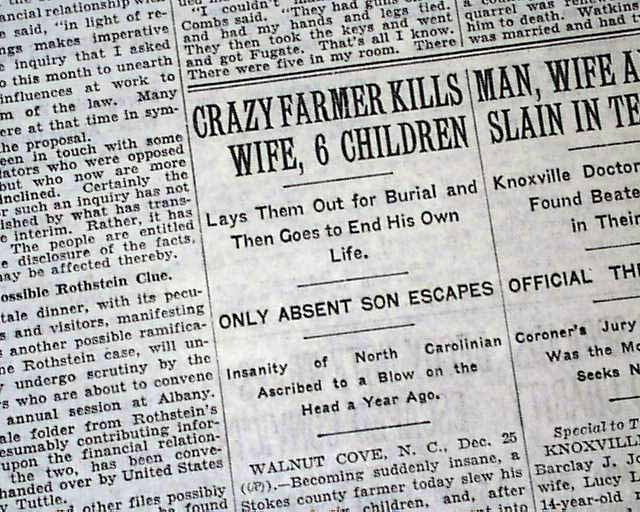
Christmas Morning: The Killings Begin On the morning of December 25, the Lawson children awoke expecting gifts and food. Instead, they walked into a nightmare. Charlie Lawson began by sending his eldest sons away on errands. Whether this was deliberate planning or coincidence remains debated, but it ensured the strongest males in the household would not interfere. Then he waited. Near the tobacco barn, Charlie ambushed his daughters, Marie Lawson and Carrie Lawson, as they headed outside. He shot them both with a shotgun. Accounts suggest he may have bludgeoned them afterward to ensure they were dead. Their bodies were reportedly arranged with disturbing care, their arms crossed and rocks placed beneath their heads like grotesque pillows. But the slaughter had only begun. Charlie returned to the house carrying blood and death with him. Inside, panic erupted. He murdered his wife Fannie. Then came his young daughters, Maybell Lawson and Mary Lou Lawson. Finally, he killed four-month-old James William Lawson in his cradle. The brutality shocked even hardened investigators. Some victims were shot. Others showed signs of blunt-force trauma. The farmhouse became a chamber of blood and silence. Only one child inside the home survived: eldest son Arthur Lawson, who had been sent away earlier. After murdering his family, Charlie Lawson walked into the nearby woods. Moments later, a single shotgun blast echoed through the trees. He had killed himself.
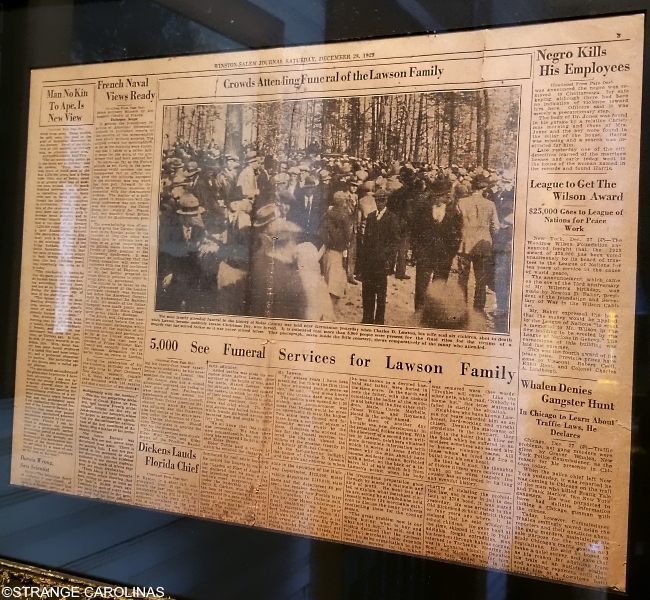
The Horrifying Discovery When neighbors and relatives arrived, they encountered a scene so gruesome that many reportedly carried the memory for the rest of their lives. The bodies remained inside the home as visitors gathered. Incredibly, people traveled from surrounding towns to see the murder house. Reports suggest crowds walked through the cabin itself, staring at the corpses as though visiting a carnival attraction. This was America in 1929 — before modern crime scene preservation, before psychological profiling, before national media ethics. Death became spectacle. The Lawson home transformed overnight into one of the country’s earliest true crime obsessions. Newspapers across America covered the massacre in graphic detail. Rumors spread rapidly. Every possible motive was examined. Yet none fully explained the horror.
The Dark Rumors Almost immediately, whispers began circulating about Charlie Lawson’s relationship with his eldest daughter, Marie. Some claimed the two shared an inappropriate closeness. Others alleged Marie may have been pregnant. No definitive proof was ever discovered. But the rumors refused to die. Investigators and historians later noted strange details surrounding the case: Marie was reportedly Charlie’s favorite child. Witnesses claimed tension existed within the home. Some believed Charlie feared public disgrace if secrets became exposed. If true, the murders may have been driven by panic, shame, and the desperate desire to destroy the evidence of scandal. Others proposed different explanations. Some believed Charlie suffered a severe head injury months earlier that altered his behavior. Reports indicate he had experienced strange mental episodes after being struck in the head. Today, psychologists examining the case from a modern perspective have suggested possibilities ranging from psychosis to paranoid delusion. But no theory removes the sheer terror of what happened inside that farmhouse. Because regardless of motive, Charlie Lawson planned the massacre carefully. The new clothes. The family photograph. The errands that removed witnesses. The timing on Christmas Day itself. It all points toward horrifying premeditation.
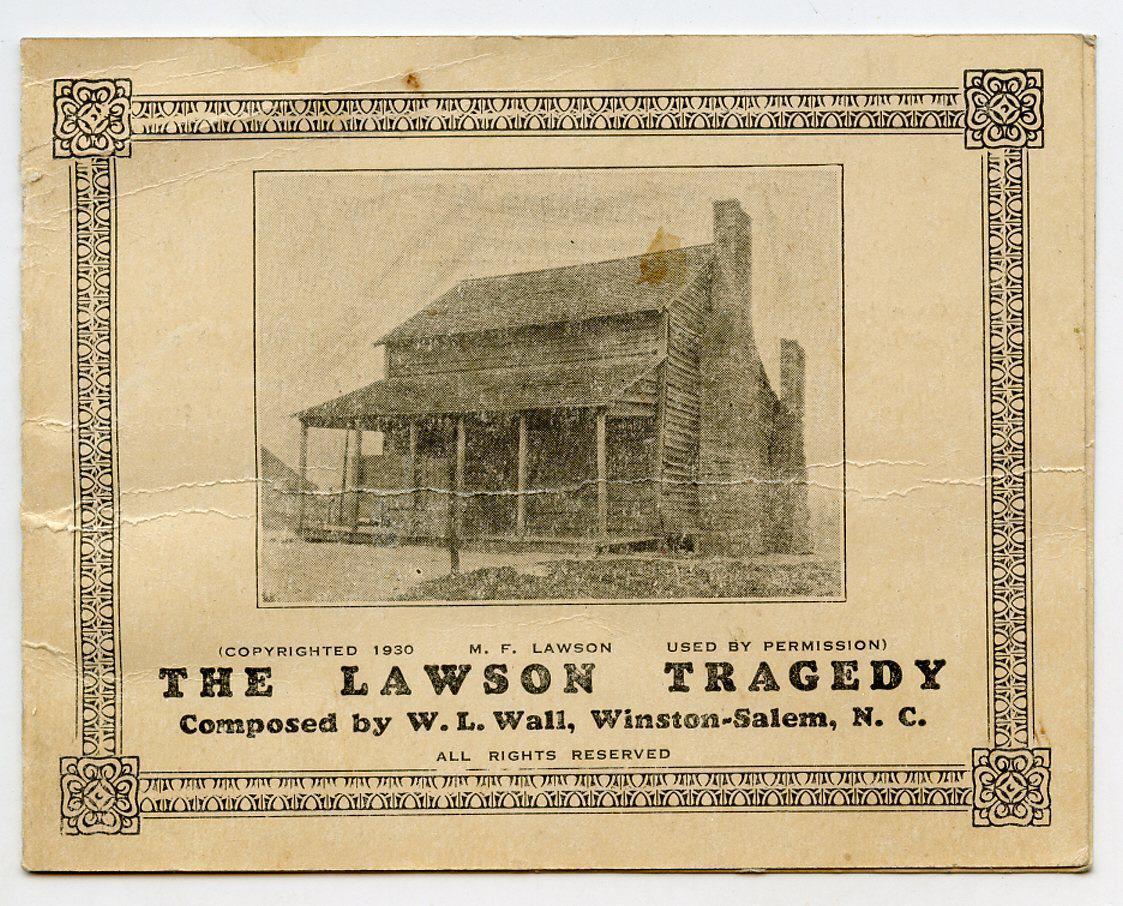
America’s First Viral True Crime Story The Lawson murders became embedded in American folklore. Songs were written about the killings. Ballads circulated through Appalachia for decades. Tourists visited the murder site. Relics from the home were sold and displayed publicly. Even the family’s bloody cake stand was reportedly exhibited years later as a macabre attraction. The surviving Lawson spent the rest of his life shadowed by the massacre. He endured endless public fascination while trying to rebuild shattered identities. Meanwhile, the murder house itself became legend. To this day, the Lawson Family Murders remain one of the most discussed crimes in North Carolina history because the case feels deeply unsettling in ways modern crimes often do not. There was no robbery. No gang. No outside intruder. Only a father systematically executing his own family on Christmas morning. The intimacy of the violence is what continues to disturb readers nearly 100 years later.
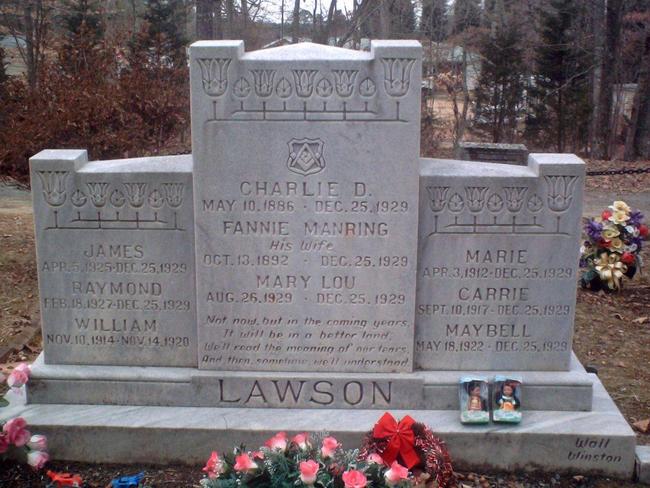
The Legacy of Blood The Lawson case endures because it represents something terrifyingly human. Charlie Lawson was not viewed as a monster before the killings. He was a neighbor. A farmer. A father. That is what makes the story unforgettable. Evil did not arrive from outside the home. It sat at the family dinner table. And on Christmas morning in 1929, it picked up a shotgun. Nearly a century later, historians still debate Charlie Lawson’s motives. Was it insanity? Hidden abuse? Fear of exposure? Brain trauma? A combination of all three? The truth likely died with him in those North Carolina woods. But the echoes remain. A family photograph taken days before annihilation. Children smiling beside the man who would murder them. A farmhouse filled with silence and blood on Christmas Day. And a mystery that refuses to disappear.
About the Creator
E. hasan
An aspiring engineer who once wanted to be a writer .
Enjoyed the story? Support the Creator.
Subscribe for free to receive all their stories in your feed.
Comments
There are no comments for this story
Be the first to respond and start the conversation.