
The Geylang Bahru Murders: Singapore’s Most Haunting Unsolved Slaughter
The horrifying slaughter of 4 home alone children

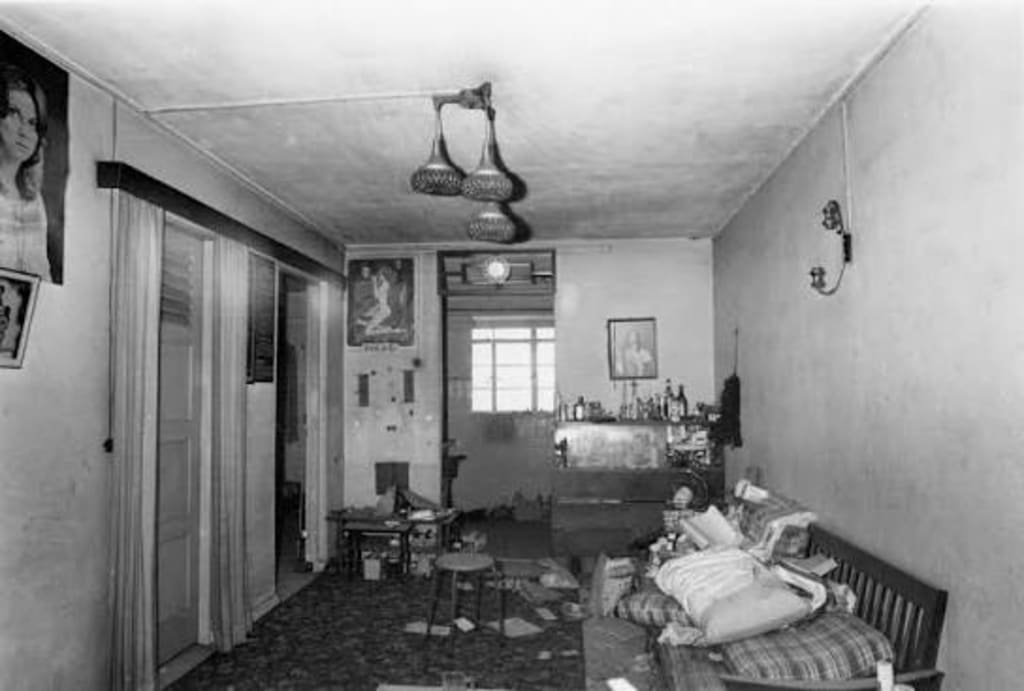
Singapore is often described as one of the safest countries in the world. Streets remain busy long after midnight. Children walk to school. Families sleep with little fear of violence creeping through their doors. But on the morning of January 6, 1979, that illusion shattered forever. Inside a cramped one-room flat at Block 58 in Geylang Bahru, four children were butchered so savagely that even veteran investigators struggled to comprehend what they were seeing. The killer vanished without a trace. No arrests were ever made. Decades later, the case remains one of Singapore’s most horrifying unsolved murders.
A Family Like Any Other The Tan family lived modestly in the working-class neighborhood of Geylang Bahru. The parents, Tan Kuen Chai and Lee Mei Ying, worked hard operating a school minibus service. Life was routine, predictable, and ordinary. Their four children filled the tiny apartment with noise and life: • Tan Kok Peng, 10 • Tan Kok Hin, 8 • Tan Kok Soon, 6 • Tan Chin Nee, 5 The older boys attended Bendemeer Road Primary School, while little Chin Nee went to a nearby kindergarten. By all accounts, they were cheerful children from a close-knit family. Nothing about January 6 seemed unusual. At around 6:35 a.m., the parents left home for work while the children were still asleep. It was a normal morning. One they had lived countless times before. They had no idea it would be the last time they would ever see their children alive. The Silence At approximately 7:10 a.m., Lee Mei Ying made her routine phone call home to wake the children for school. No answer. She tried again. Still nothing. A third attempt also failed. Concerned, she asked a neighbor to knock on the apartment door and wake the children personally. But nobody responded. The silence inside the flat felt heavy. Unnatural. Yet nobody imagined what had already happened behind those walls. When the parents finally returned home after 10 a.m., they stepped into a nightmare that would scar Singapore forever. The Bathroom The apartment was drenched in blood. Then came the screams. Inside the bathroom, the bodies of the four children had been stacked on top of one another like discarded objects. They wore only T-shirts and underwear. Their small bodies were covered in deep slash wounds. The violence inflicted upon them was almost beyond comprehension. Reports stated that each child suffered at least twenty wounds. Their throats had been cut. Their heads hacked repeatedly. The oldest boy, Kok Peng, had injuries so severe that one of his arms was nearly severed. Young Chin Nee’s face had been mutilated by the attack. Investigators believed Kok Peng fought desperately to protect his siblings. Clumps of long hair were found clenched in his hand, suggesting he struggled directly with the killer before dying.
The scene horrified even experienced officers. Singapore had seen murders before. But not like this. Not on children. Not this level of rage.
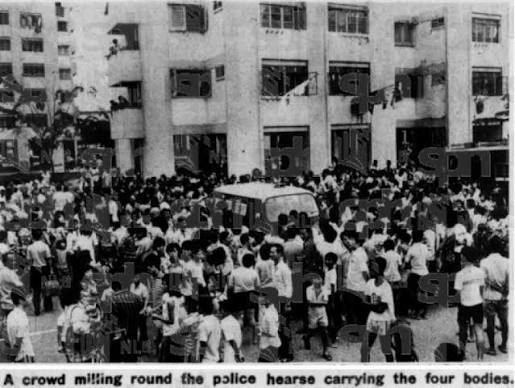
A Killer Who Knew Them Police quickly discovered something deeply disturbing. There were no signs of forced entry. Nothing valuable had been stolen. The flat had not been ransacked. Investigators concluded the murders were not random. The killer likely knew the family — and perhaps the children themselves. Bloodstains were discovered in the kitchen sink, indicating the murderer had calmly washed up before leaving the apartment. The suspected murder weapons — believed to be a cleaver and dagger — were never recovered. Police interviewed over a hundred people. Friends. Neighbors. Relatives. Associates. Nobody was charged. And then, just when the horror seemed unbearable enough, the killer reached out to the grieving parents directly. The Chinese New Year Card Two weeks after the murders, the Tan family received a Chinese New Year card. On the front were cheerful images of happy children playing. Inside was a chilling handwritten message: > “Now you can have no more offspring, ha-ha-ha.” The message was signed: > “The murderer.” The cruelty of the taunt stunned investigators. But what truly terrified them was the personal knowledge contained within the note. The sender referred to the parents by intimate nicknames — “Ah Chai” and “Ah Eng” — names mainly used by friends and family. The killer also appeared to know that Lee Mei Ying had undergone sterilization after the birth of her youngest child, meaning she could no longer have children. This transformed the case from a horrifying murder into something even darker: A deeply personal act of vengeance. Someone close to the family may have slaughtered four innocent children simply to punish their parents. Theories That Still Haunt Singapore Over the decades, countless theories emerged. Some believed the murders stemmed from gambling disputes or financial conflicts. Others suspected jealousy or revenge involving acquaintances close to the parents. One persistent theory suggested a conflict involving lottery winnings and family resentment. But no theory was ever proven. The evidence slowly faded with time. Witness memories blurred. Potential forensic traces became harder to analyze. Though modern DNA technology could potentially reopen the investigation, authorities have never publicly announced any breakthrough. The case remains frozen in time. A Nation That Never Forgot The Geylang Bahru murders became permanently etched into Singapore’s collective memory. The case has been revisited in documentaries, television reenactments, online discussions, and true crime communities for decades. Many Singaporeans still regard it as the nation’s most disturbing unsolved crime. Not because of mystery alone. But because of the unimaginable brutality inflicted on four defenseless children. Even today, older residents who remember the headlines speak about the murders in hushed voices. The image of those children stacked in that bathroom remains impossible to erase. Years later, Lee Mei Ying reportedly managed to reverse her sterilization procedure and gave birth again. But no amount of time, no new child, no passing decade could truly erase what happened inside that apartment in 1979. The Horror That Never Ended Most murder cases eventually find resolution. An arrest. A confession. A courtroom. Closure. The Geylang Bahru murders offered none of those things. Somewhere, perhaps long dead now, the killer lived freely after slaughtering four children with terrifying ferocity. They escaped one of the largest murder investigations Singapore had ever launched. And that is what continues to make this case so terrifying. Not only the violence. Not only the bloodshed. But the fact that someone capable of such cruelty disappeared completely into ordinary life — leaving behind only silence, grief, and one mocking New Year card that still chills readers nearly half a century later.
Author's Note: various news sources and available informations were used to write this article. if you liked this, how about you try my other works too?
About the Creator
E. hasan
An aspiring engineer who once wanted to be a writer .
Enjoyed the story? Support the Creator.
Subscribe for free to receive all their stories in your feed.
Comments
There are no comments for this story
Be the first to respond and start the conversation.