
The FBI’s Most‑Wanted Professor: A Decade Behind the Lectern
He walked onto a top Chinese campus with a fake name and a hidden past. The gaps that let him stay there for ten years weren’t about one person slipping through—they were built into the system.
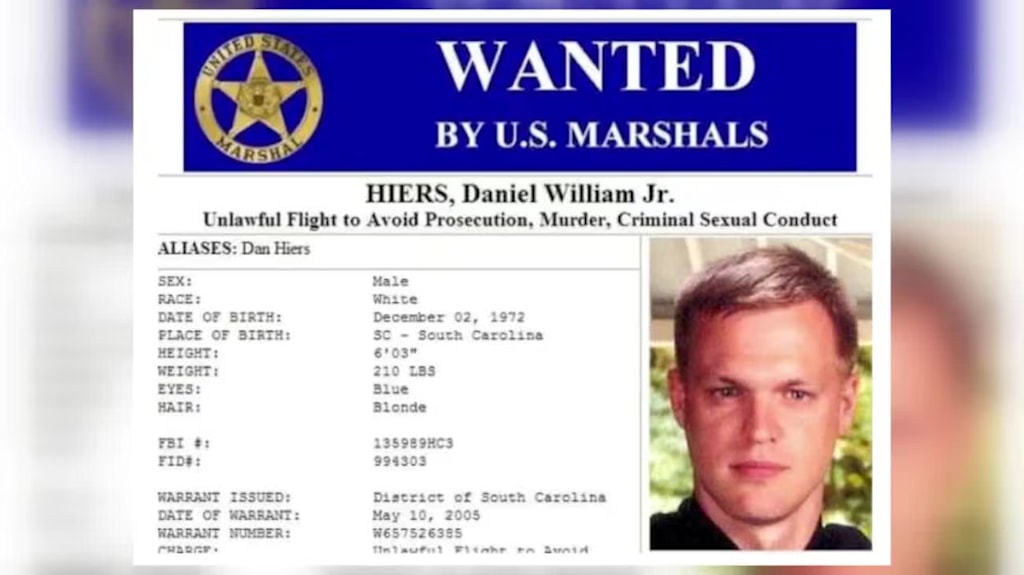
In 2018, Chinese police took into custody a foreign teacher who had taught at East China Normal University for more than a decade. In 2024, that individual was formally transferred to U.S. law enforcement. Six years passed between those two dates. From my own enrollment in 2019 to the moment I learned of this case, another five years had gone by.
I checked the records. The news was first released by the American side and received little coverage domestically. Not because the case was trivial: this man had been a South Carolina police officer before being placed on the FBI’s top‑fifteen most‑wanted list for multiple felonies. He changed his name, fabricated an identity, entered China, and taught at a key university for over a decade.
The problem breaks down into three distinct layers, each with its own technical constraints. None can be brushed aside with a blanket statement like “poor management.”
Layer One: University hiring checks
East China Normal University was neither the first nor will it be the last institution to encounter such an incident. The issue is not negligence by any single school, but rather the fact that, for the past ten‑plus years, the vetting process for foreign faculty in Chinese universities was never designed to uncover cross‑border criminal records.
What the administration received were documents provided by the applicant himself: a certificate of no criminal record, notarized academic credentials, and letters of recommendation from previous employers. These were issued by foreign notarial bodies, complete with official stamps and translations, formally impeccable. The university had no direct access to U.S. state criminal databases, nor did it have the authority to query INTERPOL’s systems. More crucially, around 2010, virtually no university budgeted for third‑party international background checks. It wasn’t about saving money; the very concept did not exist in the sector. The process simply assumed the applicant was truthful as long as the paperwork looked complete.
After hiring, administrative oversight focused on teaching hours and student evaluations. The school tracked nothing regarding the teacher’s off‑campus activities, background re‑checks during visa renewals, or any new prosecutions in his home country. Contract extensions were based solely on job performance, and residence permit renewals only verified employment and tax records. This “hire‑and‑forget” system allowed a fugitive using a fake name to remain undisturbed for more than a decade.
Layer Two: The technological gap at border control
This individual entered China in the late 2000s. At that time, facial recognition and fingerprint scanning were far from standard at Chinese ports of entry. Border inspections relied primarily on matching passport names, dates of birth, and document numbers. With a completely new alias and forged passport, his old name and photo on the wanted list became effectively invisible. INTERPOL’s Red Notices depend on exact matches. If the name didn’t match, the system raised no alert.
This was not a case of border officials “looking the other way.” Under the technical conditions of that era, anyone who changed their entire identity package had a reasonable chance of passing through. The first line of defense checked names, not people. After biometric technologies became widespread, this particular loophole was closed, but that came later.
Layer Three: Institutional barriers in cross‑border law enforcement
From the 2018 arrest to the 2024 handover, the process took six to eight years. The core reason is singular: China and the United States do not have a bilateral extradition treaty.
Without such a treaty, standard extradition procedures cannot be invoked. China had to resort to an immigration‑based removal route: first determining that the individual had violated Chinese residence regulations, revoking his visa, then deporting him administratively and handing him over to U.S. authorities. Every step along this path required separate diplomatic confirmation: the U.S. had to provide sufficient evidence to establish his true identity; China had to independently verify his entry records and criminal facts; and both sides had to agree on judicial arrangements after the transfer. With no standing information‑sharing mechanism, all communication proceeded case by case.
That this particular case eventually succeeded shows that both countries retain pragmatic cooperation space on major transnational crimes. But the eight‑year duration also demonstrates the cost of having no treaty.
Three gaps overlapped to let one man hide for over a decade.
If the university’s vetting had been stricter, he would never have set foot on campus. If border control had been able to compare biometrics then, he would not have entered the country. If an extradition treaty had existed, the transfer would not have dragged on so long. But in reality, each of these three systems operated under its own legitimate logic: a university is not a police department; border control at the time checked names; diplomacy does not predicate cooperation on an extradition treaty.
This was not a failure of any single party. It was three normally functioning systems that, within their respective boundaries, happened to leave a blind spot at their intersection.
Post‑event improvements are verifiable.
At ports of entry, facial recognition and fingerprint collection are now standard, and limited information exchanges with multiple countries’ law enforcement databases are advancing. On the university side, the Ministry of Education has in recent years promoted the use of internationally accredited third‑party background checks, and “periodic re‑review” clauses for foreign faculty appointments have been written into contracts at some key institutions. Internationally, while no extradition treaty exists, the scope of mutual legal assistance agreements is expanding, and fast‑track channels for fugitive searches based on immutable traits (fingerprints, DNA) are under negotiation.
These are not empty promises. They have been implemented or are in the process of being rolled out.
Back to that initial feeling of “alumni unease.”
By the time I enrolled, this person had already been arrested, so I never crossed paths with him. But even if I had entered a few years earlier and sat in the same lecture hall, nothing would have changed: a person who entered the country legally, held a valid visa, and fulfilled his teaching duties on campus would have walked through the classroom door without anyone having grounds to stop him and check a foreign wanted notice.
What made me think this was worth writing down is not the drama of the story, but the three boundaries it exposes upon peeling back: the university’s vetting boundary, the border control technological boundary, and the international judicial cooperation boundary. Each boundary was reasonable in its own time, but where the three converged, a gap was left.
That gap is being filled. The cost of filling it, however, has been a decade and a half and one transnational case.
About the Creator
Jin
Writer of reamstories
https://reamstories.com/jin
Enjoyed the story? Support the Creator.
Subscribe for free to receive all their stories in your feed. You could also become a paid subscriber, letting them know you appreciate their work.
Comments
There are no comments for this story
Be the first to respond and start the conversation.